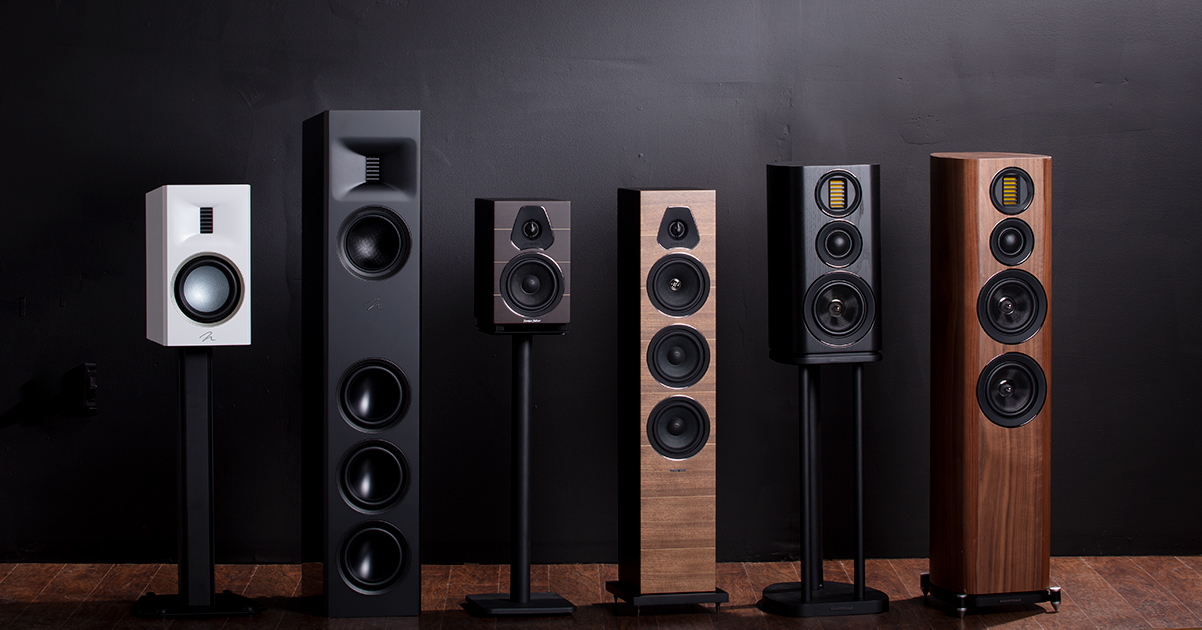
Home speakers buying guide
Find the right pair of speakers for your space

In this article: We'll cover all the basics about home stereo speakers, including...
- What are stereo speakers?
- What speaker size should you choose?
- Speaker specs and why they matter
- Are high-end speakers worth it?
- How to get the most out of your speakers
...and we'll also cover powered speakers for a streamlined setup.
It's hard to forget my first time hearing true stereo sound from good speakers. Growing up, I had this cheap system given to me as a birthday present. I rocked it for hours almost every day (Sorry Mom and Dad!), showed it off to my friends, and was proud of how it sounded.
Later on, I was hired by Crutchfield and promptly humbled. I heard demos from high-quality amplifiers, sources, and speakers that changed my perception of music. It was startling at first; I started hearing things in tracks I'd never heard before, and almost felt like I was attending a live performance.
That experience changed my mind on how good a pair of speakers can be and led me to being the speaker junkie I am today. If you get the right speakers for your musical preferences and for your room, you open up so many possibilities to hear your music in a new way. It's incredibly rewarding and not all that difficult to get started.
We'll take a look at some considerations before diving into types of speakers and room placement. But first...
What are stereo speakers?
A traditional stereo speaker setup has three parts: a left speaker, a right speaker, and an amplifier. Prior to the invention of stereo (or "stereophonic" sound, as it was first called), sound was played in mono, meaning one channel. That meant you could have one speaker playing all the sound. The sound was okay, but it lost much of the depth and excitement of the music.
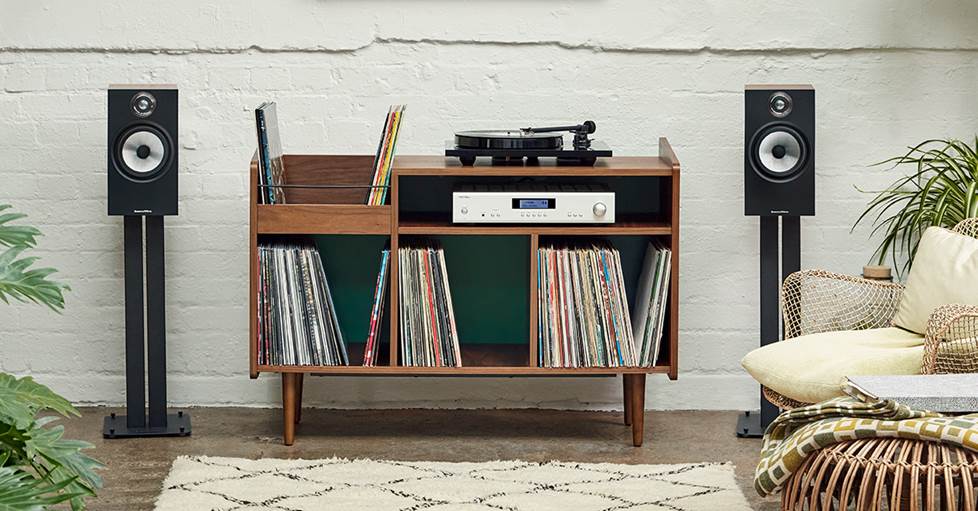
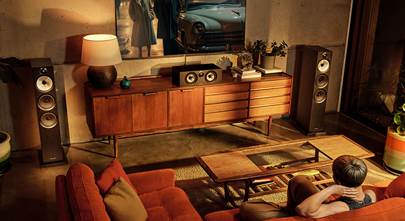
A stereo speaker system consists of a dedicated left and right speaker, like the setup shown here.
With stereo, the audio is divided between your left and right speakers depending on the data encoded in the track. Think of it this way: if the track was recorded with a piano playing on the left side and a guitar on the right, you should hear them in those positions respectively when they play through your speakers. That's where the term "soundstaging" comes from. Soundstaging is an imaginary three-dimensional "stage" that's created by stereo speakers.
What size speakers should you choose?
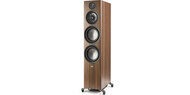
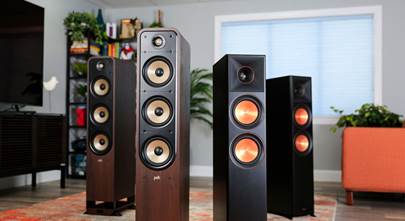
You'll want your new speakers to be a good match for the room they're going in. If you have a large living room, floor-standing speakers are your best bet. Floor-standing speakers (also called tower speakers) often have bigger drivers and can dish out more bass thanks to their large enclosures and acoustic chambers.
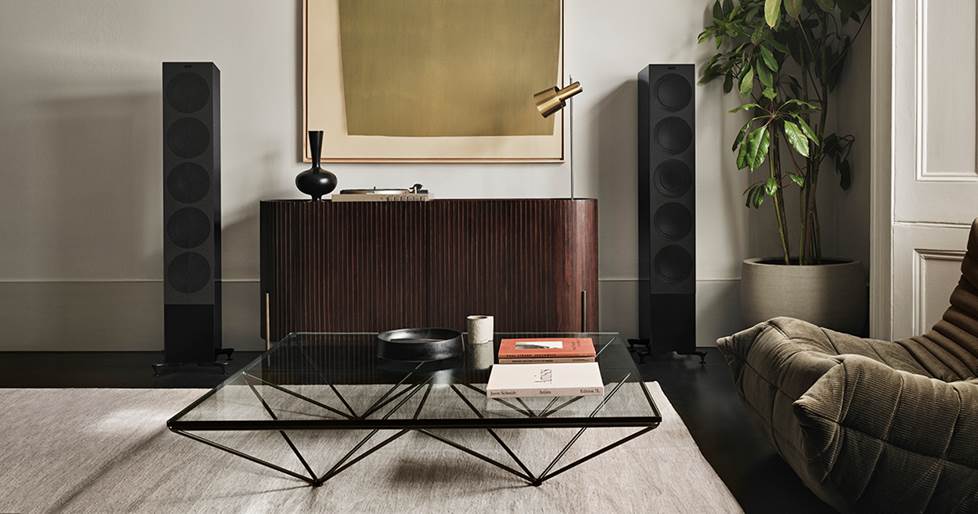
Tower speakers, like the KEF R11 Metas shown here, are perfect for larger areas, like living rooms or dens.
If you're working with a smaller room, like an office or a bedroom, a pair of bookshelf speakers would be my recommendation. They're nowhere near as large as tower speakers, making them great in terms of placement flexiblity. You can place them on a pair of speaker stands, or even wall mount them.
It's not uncommon to find bookshelf speakers with the same tweeter and mid-bass driver as their floor-standing counterparts, but don't expect them to have the same bass response. Their smaller drivers and cabinets mean they won't dig into low bass notes with the same impact of a tower speaker. If you're a bass-head like me, then you may want to consider adding a powered sub to your system for low-end authority.
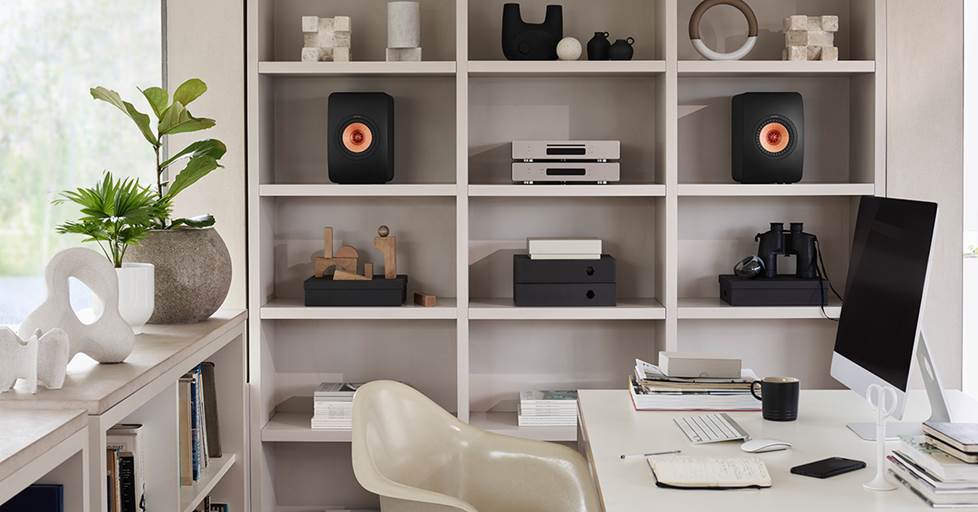
Compact bookshelf speakers are perfect for smaller rooms where space is at a premium.
How do you like to listen?
Another thing to consider is how you listen to your music. Do you want to rock the whole house? Or do you prefer background music and easy listening?
I like to use my living room system when I'm in the mood for a loud, house-shaking concert. My living room isn't huge, but it is the largest room in my home and I've built my setup to accomodate it.
However, in my home office, I use a pair of powered bookshelf speakers (more on those later) for light listening and background music. If I'd gotten towers instead, I'd have overbought and would have likely never used them above 25% of their potential. Think about how and where you listen to your tunes and you'll prevent yourself from over- or under-buying.
Speaker specs 101
Speaker specs may seem like a confusing jumble of numbers, abbreviations, and strange symbols at first. There are really only a few that you need to keep in mind when shopping for speakers.
Frequency response
This is one of the first specs I like to look at when shopping for speakers. A speaker's frequency response is measured in Hertz (Hz) and shows the frequencies the speaker is capable of playing. The first number tells you how deep of a bass response the speaker has, while the second number tells you what high frequencies it can hit. The wider that frequency response is, the more dynamic and full your sound will be.
Sensitivity
A speaker's sensitivity rating tells you how efficient it is at turning power into volume. The higher the number, the more volume you'll get with less power. This spec is dervied from a test where the speaker is pumped with one watt of power and its loudness in decibels (dB) is recorded by a microphone placed one meter away.
The higher the number, the better has always been my rule of thumb when it comes to sensitivity. Say you're comparing two speakers. One has a sensitivity of 89dB and the other has a sensitivity of 92dB. The 92dB speaker needs half as much power to deliver the same volume as the 89dB speaker.
Power handling
You'll also need to consider how much power a speaker can handle. We list power ranges on every passive speaker we carry. This gives you a good idea of how much amp you should buy, or whether or not your current amplifier is up to the task. The first, lowest number tells you the absolute minimum power required to power the speaker. The second, highest number lets you know the maximum wattage the speaker can handle for an extended period of time.
It's crucial to match your speakers to your amplifier's power output. If you underpower your speakers, your sound will be hollow and thin. If you overpower them, you could cause the speakers to distort, which can and will damage them over time. But, matching speakers to amplifiers isn't too difficult; just make sure your amplifier's output power is within the range of what the speakers list in their specs.
Impedance
The last thing to consider is the speaker's impedance. Without opening a big can of worms, understand that impedance is the electrical resistance the speaker presents to your amp, and that it fluctuates. For the sake of simplicity, manufacturers give impedances as single numbers.
Most speakers out there have an impedance of 8 ohms, making them compatible with most amplifiers. Higher-end models may have a 6-ohm or 4-ohm impedance. Those lower impedances can cause amps that weren't designed to push large amounts of continuous current to overheat and shut off. If you've got your eye on a pair of 6- or 4-ohm speakers, just make sure your amplifier is rated for them.
Are high-end speakers worth it?
While browsing our site, you may run across speakers costing thousands of dollars apiece. You might wonder if there's really that much of a difference between those and the $500 models you were checking out.
If you have a discerning ear, high-end speakers may be worth considering. After hearing hundreds of expensive speakers in my tenure at Crutchfield, I can attest that they have a better sound than most speakers. But why is that?
High-end speakers are made with better materials throughout. They use advanced cone designs and compositions, unique internal cabinet bracing designs, furniture-grade finishes, custom crossovers, and sound isolation platforms. Some even have multiple driver arrays for even greater separation and soundstaging.
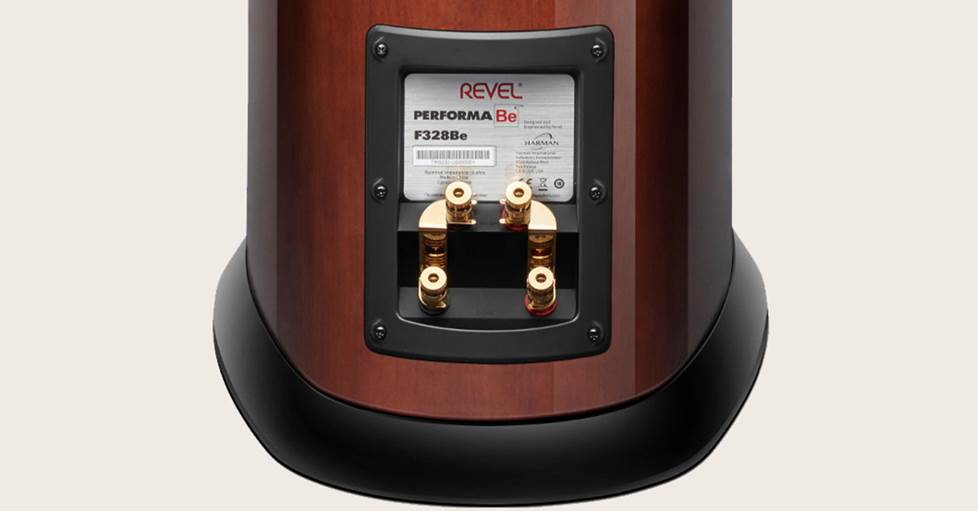
Some high-end speakers have two pairs of binding posts you can use to bi-amp/bi-wire the speaker for better sound.
It's not uncommon for them to use high-quality gold binding posts or silver wire throughout their circuits either. High-end speakers were built to stand apart from the rest of the pack, and that's what they do.
But, all that comes with the caveat that more often than not, high-end speakers require high-end amplifiers. Most upper-end speakers require more power — and cleaner power at that — and need an amp that's up to the task.
If you have an open-ended budget and want the best of the best, you can't go wrong with audiophile-grade speakers.
Get the most out of your new speakers
So, you've got your shiny new speakers. Now what? How do you get the best sound out of them? Speaker placement is a topic that cannot be glossed over. Speakers are a game of angles, and having your speakers in the right positions makes a world of difference.
One thing I'd recommend is pulling your speakers away from your wall. This is even more important if your speakers are rear-firing/ported. By bringing them away from the wall, you reduce the likelihood of sound-muddying room reflections. In the case of rear-firing speakers, it allows them more room to "breathe", which helps add more oomph to the speaker's bass output.
The other thing you'll need to do is angle your speakers inward towards your listening position. Your speakers should make an equliateral triangle with your listening position. This creates the perfect "sweet spot", wherein the sound, imaging, and staging is the best.
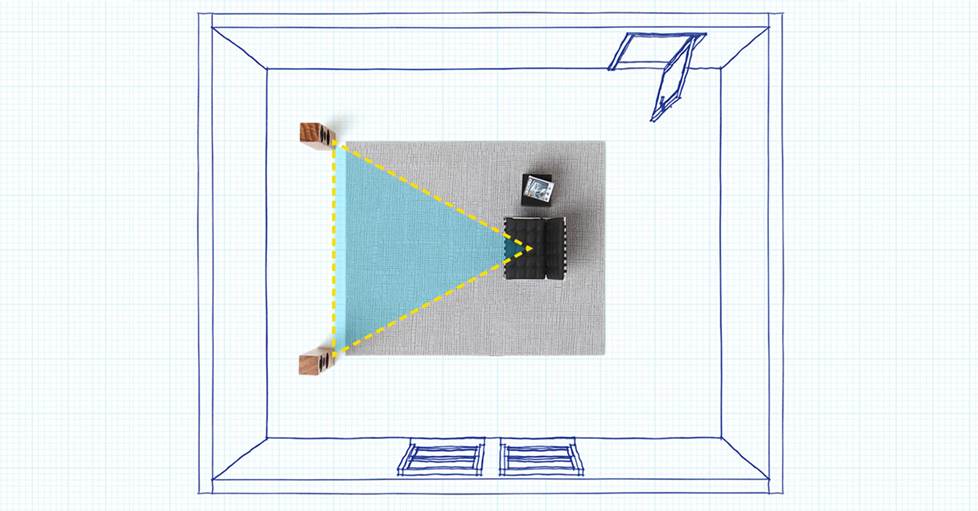
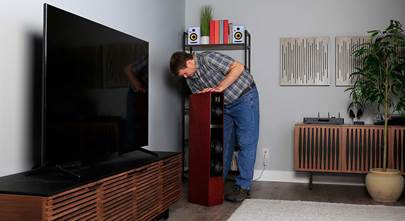
Angling your speakers to create a listening "sweet spot" is crucial for getting great sound from your new speakers.
For more information on speaker placement, read my buddy Kramer's speaker placement guide.
Making the right connection from your speakers to your amp is also important. You'll want to make sure you're running the right gauge wire for the distance you're covering. Conductor material is also a consideration. Speaker wire is an in-depth topic that exceeds the scope of this article. For more info on choosing the right speaker wire, check out our article on it here.
How to match your speakers with an amplifier
There are lots of ways to power your speakers, from integrated amplifiers to stereo receivers and more. That may make it seem like picking the right amp for your speakers is a gargantuan task. To make the choice simpler, break it down into three questions:
- Does the amplifier provide enough power for my speakers?
- Is the amplifier stable at the impedance of my speakers?
- Does the amplifier have the connections I need for the rest of my components?
If the answer to those questions is "yes", then the amp will likely work well for your system.
Of course, there are more things to consider, like whether you should get an integrated amp or a stereo receiver. My advice on that is to go for an integrated amplifier or power amplifier for higher-end systems, and a stereo receiver for more budget builds. Stereo receivers have amplification and an AM/FM tuner built in. Integrated amps and power amps are often no-frills and focus solely on getting you the best sound possible.
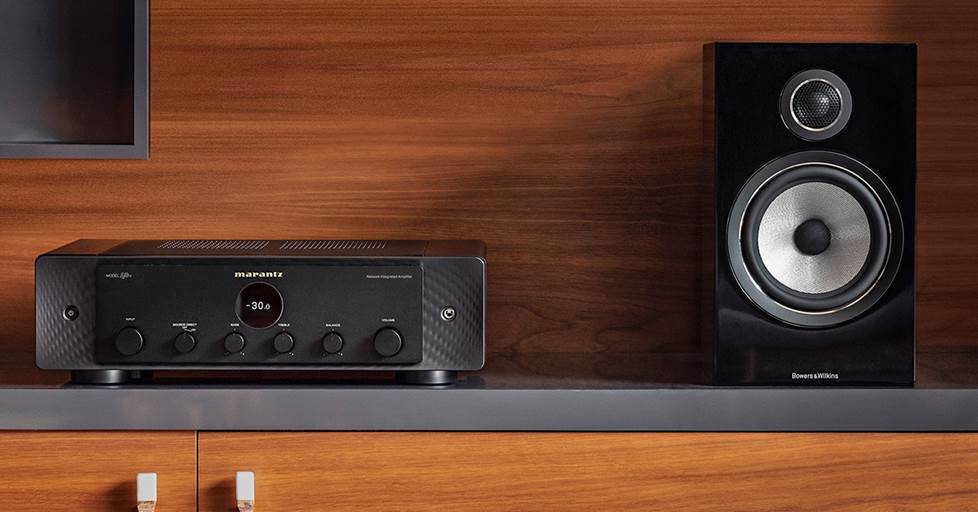
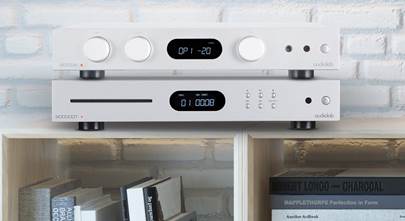
Integrated amplifiers, like Marantz's Model 40 (shown here), are purpose-built for maximum sound quality.
If you want to learn more about those types of amplifiers, check out our articles on stereo receivers, power amps, and integrated amps.
Don't want an amplifier? Try a pair of powered speakers
We've only talked about passive speakers that need an amplifier so far. But there's one category we haven't touched on: powered speakers.
Powered stereo speakers are an excellent option if you'd like to get great sound without having to run an amplifier and speaker wire. Some models are compact and work well for desktop systems (like mine) or table setups. Others are pretty beefy and have no trouble filling even large rooms.
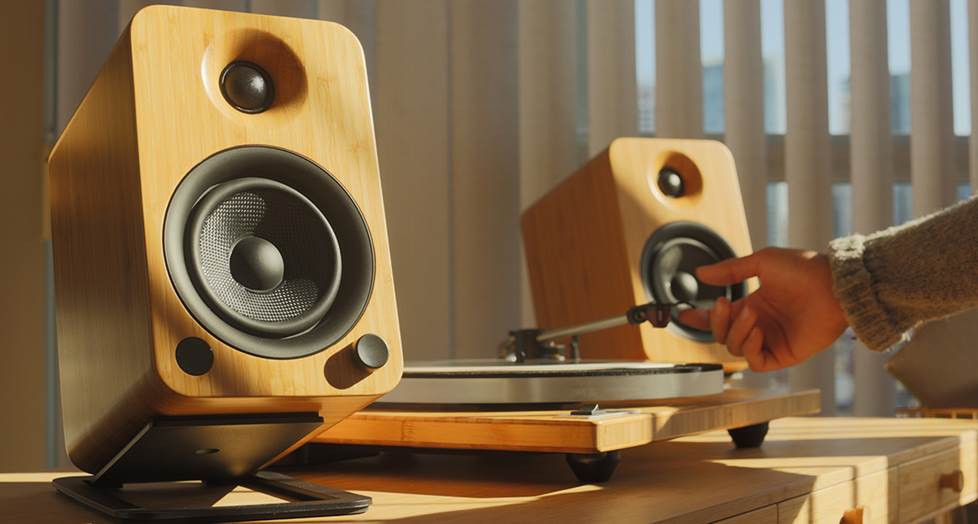
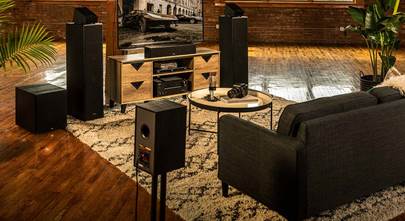
Powered stereo speakers provide excellent sound without taking up a lot of space in your room.
I was skeptical about them at first, but I've since been proved wrong time and time again. I've heard powered speakers that sound just as good as passive ones. Most models come loaded with features like Bluetooth and Wi-Fi and have plenty of rear-panel connections for hooking up other components.
If you'd like a more comprehensive explanation on how they work and which ones we recommend, check out our Best Powered Speakers article.
Got questions?
One of the great benefits of shopping with Crutchfield is working with an expert who gets hands- and ears-on with the speakers we carry. For one-on-one shopping advice, contact us today.
Free lifetime tech support is included with every Crutchfield purchase.



Scott from Ocean Shores
Posted on 5/2/2026
I sold stereo gear in the 70s and 80s. JBL, Klipsch, Polk Audio. Owned JBL 4311 monitors, Polk 10, 12, and the first SDAs. I own Magnepan .7s. I'll never go back to dynamic designs again. Planars are so much better in all areas-except bass, but that's why subwoofers were designed, right? At least audition some planars before making your final decision.
Jim
Posted on 11/1/2023
Excellent and easy to understand information. I guess i was just lucky picking out my components before reading this.
Mohamed shoukry from Egypt
Posted on 6/25/2022
Hello I need your guidance as I want to buy pair of ground standing speakers that will be connected to Denon AVR system, which one is better:- 1- Paradigm phantom v4 (Canadian made) 2-Jamo s606 with s60 cen 3- JBL E90 4- Infinity primus 300 tower( made in Denmark) Thanks for support M Shoukry
Omar from St.Marys
Posted on 3/8/2022
So many different options adds to the confusion. Looking for speakers floor standing or bookshelf for a 1,760 cubic foot living room. I enjoy almost everything as I have a SiriusXM acct. Any sort of educated answer from the pros would definitely help my choice 10x's easier. 2nd floor apt BTW, Thanks
Randy from Greenville
Posted on 10/30/2021
Thank you Eric. A follow up question, will the improved accuracy of the 3 way speaker (psb, b&w, Jamo) for example help with dialogue while watching tv over my Klipsch RF620s. With my Marantz NR1200 I need to stay with towers. I tried a Klipsch a RC62 and 2 RB 61s in the past with a pioneer receiver and did not like it for music and it was just okay for tv. Thank you again.
Eric Angevine from Crutchfield
on 11/1/2021
Randy from Greenville
Posted on 10/26/2021
Nice article. Is there a big difference between towers with say 2, 6 1/2" drivers (Klipsch rf620) and other towers of similar size that are 3 way speakers (PSB or B&W) Also important I guess is efficiency. I have a Marantz NR 1200 (75 w per channel) , does this have enough power for towers in the 88-91 d range? Thank you.
Eric Angevine from Crutchfield
on 10/27/2021
Keith from Madison
Posted on 6/12/2021
I'd think twice about powered speakers. To me its seems like the design engineers don't have the design right or the manufacturers are using cheap components that can't handle the heat. I've fixed both self powered speakers and subwoofers and the problem is either bad capacitors located inside the cabinet or power transistors inside the cabinet that have overheated. And, all the transistors are OEM so they can't replaced outside of a dealership do it.
David west from Plattsburgh
Posted on 12/1/2020
Hi, thank you for your info,it's a big help. Question? Why would I want to spend money on a larger amp to run low efficiency speaker? Why not just get 91 db speakers and run a low power amp? In the end what is the difference? Which one sounds better? Thanks again david west
Eric Angevine from Crutchfield
on 12/2/2020
Mark
Posted on 10/3/2020
Hello Kramer, given my budget or I am comparing at Q Acoustic 3050 I home theater package and Jamo H809 home theater package. The main purpose is to listen to Music mainly classical rock or Pop which will be 70% and the rest 30% dedicated to watching movies. So what is your choice or do you suggest any alternatives in this budget range. Thank you in advance. Regards, Mark
Kramer Crane from Crutchfield
on 10/5/2020
One other option I'd consider in that price range is the Klipsch Reference Premiere RP-280F. It's fantastic with both music and movies, and doesn't need a ton of power to produce rich, room-filling sound.
Ken Reiff from Long Beach
Posted on 5/24/2020
I was considering the klipsch RP600M for my bookshelf speakers. However I just realized that they will need to be placed next to the wall on my bookshelf. Does that mean that I should consider something else?
Kramer Crane from Crutchfield
on 5/26/2020
Feel free to give us a shout if you'd like to discuss more options in depth; we're happy to help anytime.