Rock your boat with a marine-rated receiver
Add awesome sound to your offshore adventures

In this article:
When you're planning to upgrade your boat's stereo system, it all starts with the right marine-rated receiver. In this article, we'll explain what makes these rugged receivers different from their automotive cousins, and we'll also take a quick look at the different kinds of marine receivers.
Look for a marine-rated receiver
Recycling is a wonderful thing, but recycling an old car audio receiver for use on your boat is a not-so wonderful idea. Compared to a boat, your car is a pretty stable environment. Sure, you may forget to roll up the window before a rain shower, but for the most part the interior of your car is snug, safe, and dry.
You can’t say the same about your boat, though. Even when it's tied up at the marina, the cockpit is assaulted by sun, water, humidity, and, if you’re on the coast, corrosive salt spray. Any one of these can be tough on electronics, but put them all together and a regular car receiver will be good for little more than ballast after only a season or two.
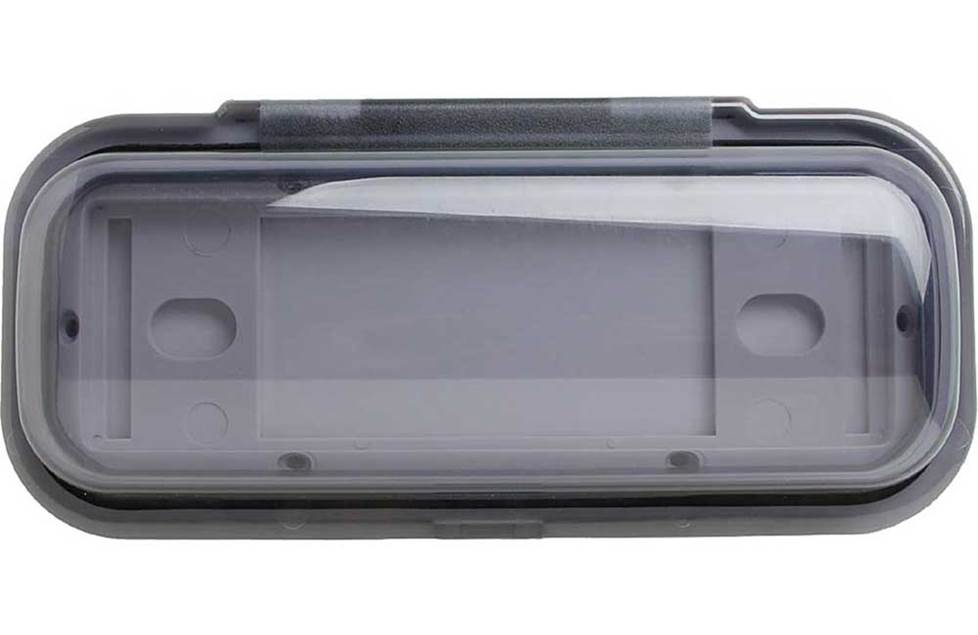
A marine-rated cover like this one (we stock several) will protect your DIN receiver from heavy spray
Protection from the elements
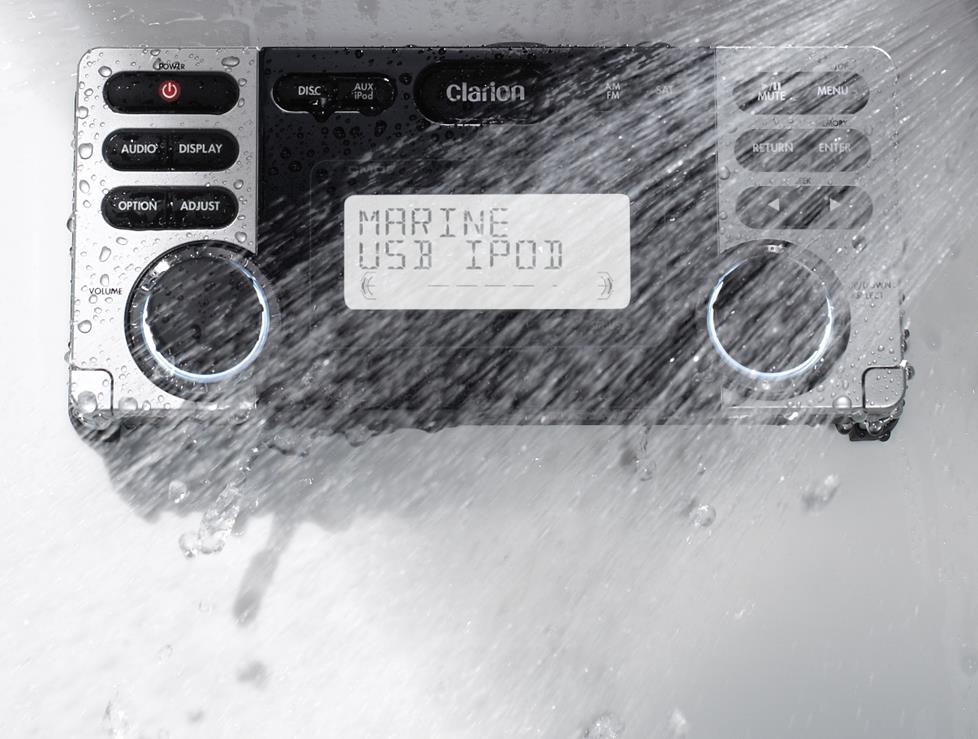
Marine-rated receivers are designed and tested to withstand the extremes of a marine environment. At a minimum, most marine receivers feature a conformal coating on the circuit board. This coating adds a level of water and corrosion resistance to the internal electronics, though it doesn’t guarantee direct protection from the water. If you’re planning on installing your receiver in a location that gets wet frequently, check to see if a protective cover is available.
When your receiver’s mounting location is more exposed to the elements, though, look for receivers that are built to be waterproof. Many of these receivers boast "IP" ratings, a European standard for “Ingress Protection." IP measures the degree of protection the unit has from water projected against the exterior. A higher number is better – for example, a receiver rated to IPX-5 is protected from water projected against it coming from a nozzle at a flow rate of 12.5 liters per minute at a specified pressure and distance for three minutes. A receiver rated at IPX-1, on the other hand, is protected against the equivalent of a light rain shower.
Sun can be almost as harmful to your receiver as water, since UV rays can damage and crack the faceplate if your receiver is constantly exposed to bright sunlight. Since you can’t smear sunscreen on your receiver, look for models with UV protection. And if you go boating in salt water, consider receivers that meet the ASTM (American Society of Testing and Materials) B117 standard for salt spray and fog exposure.
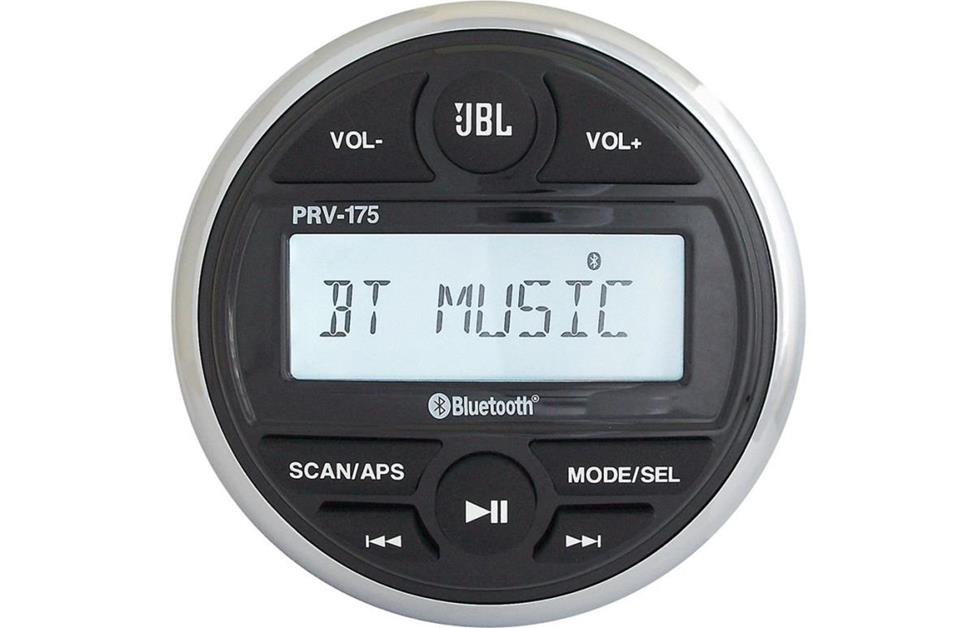
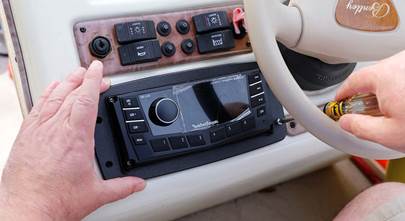
Marine receivers come in all shapes and sizes. This JBL fits into a standard gauge opening.
Plenty of entertainment options
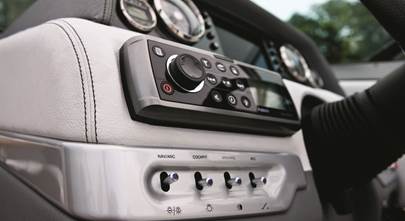
Marine-rated doesn't have to mean "boring" anymore. Today's marine receivers are built tough, but they're also built to keep you and your crew thoroughly entertained while you're out on the water. Many marine receivers are built to work with marine wired remote controls. The controls let you operate the receiver from a remote location, so you can install the receiver below decks and operate it from the cockpit, or access it from another spot on the boat.
Some receivers can handle multiple remotes, so you can control your music from different parts of your vessel. As with a car receiver, it's important to choose a model that has the inputs and outputs you need. iPod® controls, plus USB and auxiliary inputs, let you play music from multiple devices.
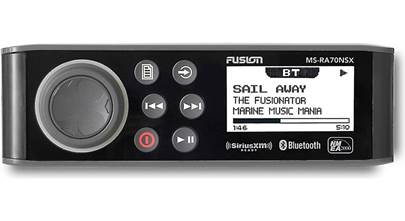
With connections for SiriusXM satellite radio and HD Radio tuners you can further expand your musical horizons. If you enjoy streaming Internet radio stations or hands-free calling, look for a receiver with built-in Bluetooth® connectivity. If you plan on cranking up the volume, make sure your receiver has plenty of preamp outputs, so you can add marine amplifiers, speakers, and subwoofers.
Let's get started!
If you're ready to start building your boat's new stereo system, our expert marine audio advisors are here to help. Give us a call or chat today!




Comments (0)