How to choose a home theater projector
Plus tips on projector setup

In this article: I’ll cover some projector basics that will help you find the right fit for your lifestyle ...
- Projector vs. TV
- Room considerations — lighting and layout
- Resolution — do you need a 4K projector?
- Light source — lamp or laser?
- Brightness and contrast
- Sound considerations
... plus a few additional helpful features and some installation tips.
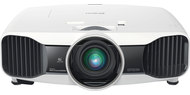
These days, the projectors from major manufacturers all look impressive. But each has its own unique strengths and weaknesses, and no single model will be the best choice for every application.
If you're considering a projector, this article will cover the basics and what to look for. I'll mainly be discussing home theater projectors, but we do carry some business projectors in our commercial display section, as well as a few pocket projectors for personal use and travel.
The cost of setting up a projector system has dropped in recent years with plenty of reliable home theater projectors in the $700 to $1,000 range. If you can afford to spend more, you’ll generally get higher resolution, better video processing and scaling circuitry, and higher-quality lenses.
Projector vs. TV
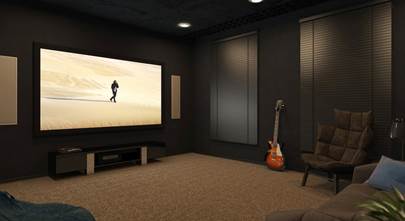
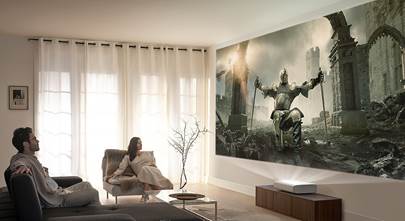
TVs keep getting bigger, but projectors still come closer to truly re-creating the viewing experience of a movie theater. Whether you prefer movies, sports, gaming, or a mix of entertainment, a larger screen is the most impactful upgrade you can make. The biggest TV we currently sell is 98", while many projector systems have screens that are 120" or larger.
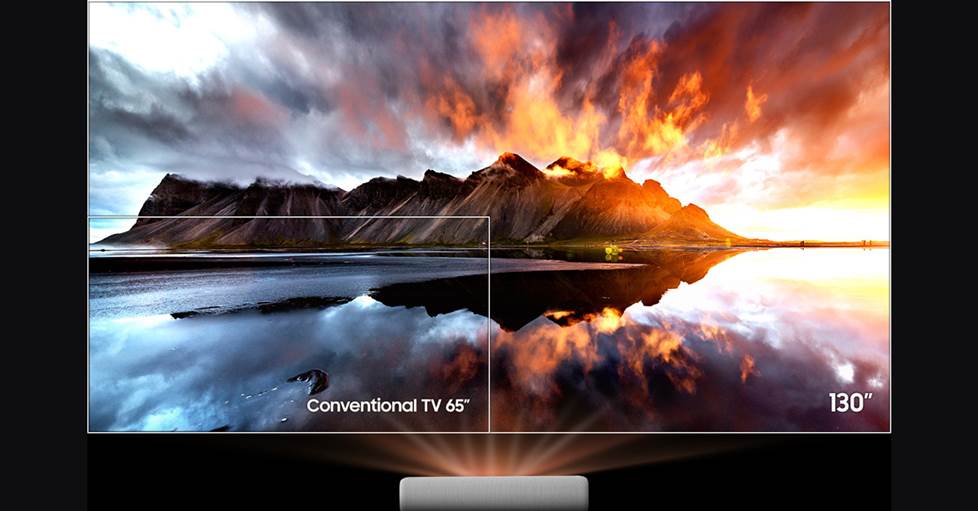
A projector system can give you a picture that is quadruple the size of your average TV.
But it's a matter of taste, and projectors don't make sense for everyone and every room. Unlike a TV, a projector is really a two-piece system: the projector and the screen. Projector screens come in a variety of sizes, with surfaces that are optimized for different projectors and room lighting. Their cost should be factored into your decision.
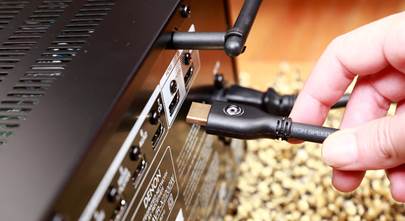
Home theater projectors typically have fewer inputs than TVs, and many lack any type of built-in tuner or internet capability. Most projectors have only two HDMI inputs for connecting Blu-ray players, satellite receivers or cable boxes, video game consoles, and media streamers like Apple TV® and Roku.
Where is it going?
There are a couple of important things to be aware of if you're considering a projector. Your room lighting and configuration are two big factors.
How bright (or dark) is your room?
For the best projector performance in a home theater, try to reduce or eliminate light in the room, whether it's daylight or room lights. Rooms with few windows are good candidates, especially if your viewing is heavy on movies.
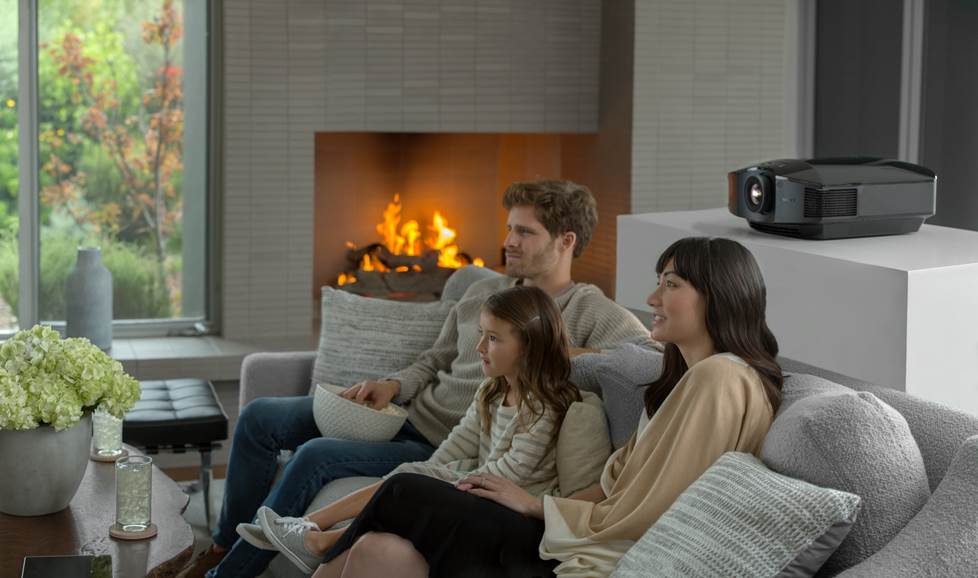
Higher-brightness projectors and ambient light rejecting screens can work together to create beautifully crisp pictures even with room lights on.
If you plan to use a projector in a room that gets a lot of sunlight, you can always limit your viewing to nighttime or install blackout shades on the windows. If that’s not an option, look for a projector that gets bright — at least 2,500 lumens. There are also special ambient light rejecting (ALR) screens that use multiple layers and optical coatings to negate the effects of ambient room light.
Room layout
Projectors need to be a certain distance from the screen. For standard long-throw projectors, this “throw distance” might be inconveniently far away. If you’ve got a short room, or you don’t have a good spot to mount the projector near the back of it, an ultra short throw (UST) projector might be the way to go.
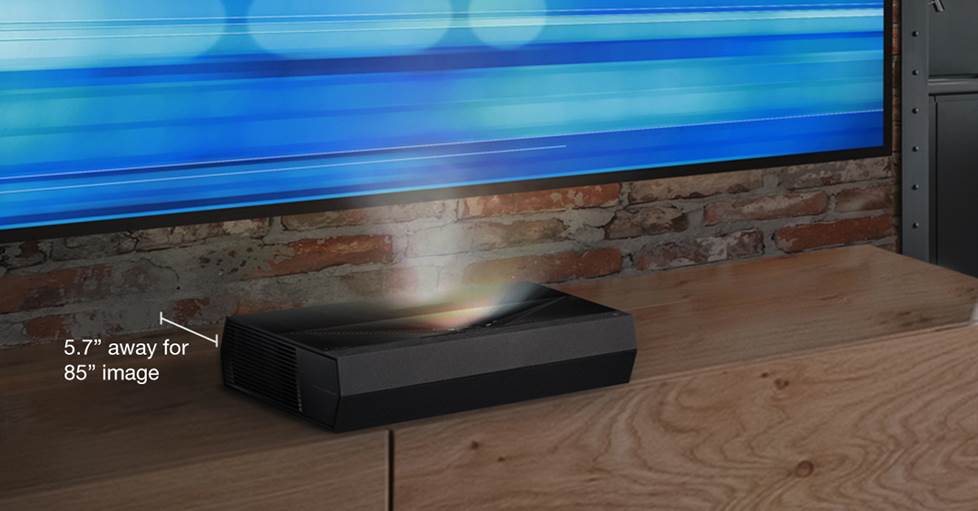
UST projectors can be placed almost directly under the screen, right near your video sources, so you don't have to worry about long cable runs between your components and your projector.
A UST's lens design and steep projection angle will magnify even minor surface imperfections, so it’s especially important to get a high-quality screen.
Resolution — 1080p vs. 4K
A projector’s "resolution" refers to the number of pixels on the imaging chip — measured from side to side and top to bottom. Most of our projectors are still 1080p — 1920 x 1080 pixels. They offer an economical way to get a big, bright picture.
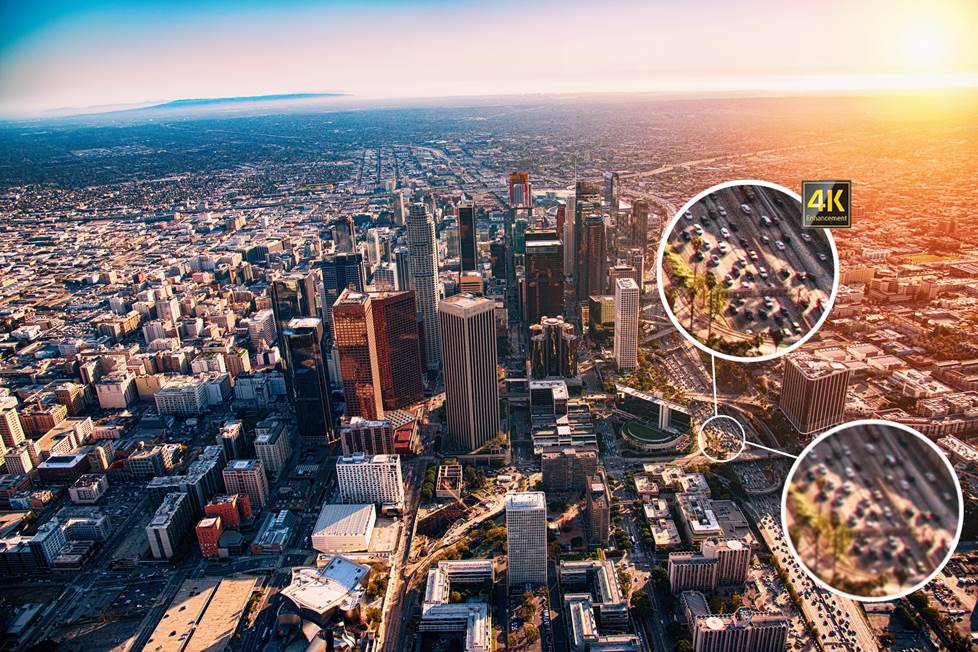
Compared to HD resolution, 4K makes the main objects in any scene look sharper. It also reveals more background detail, so images look more realistic and dimensional.
Projectors listed as “native 4K” deliver over four times the details of full HD — 4096 x 2160. As the resolution gets higher, the size of each pixel gets smaller. This results in images that look more seamless, with less noticeable "pixel structure." They are going to deliver the most detail, but they’ll have a price tag to match. But if you’re going really big with your screen, it’s probably going to be worth it.
A few manufacturers make projectors that use “pixel-shifting” to display a resolution that’s higher than their chip’s native resolution. They do this by projecting parts of a frame very rapidly one after the other, with the pixels shifted diagonally. Your eyes perceive it as a single fluid image containing all of the original detail in the 4K video signal. These projectors are a step between 1080p and native 4K. We also have a few native 4K projectors that use pixel-shifting to display an 8K resolution.
Types of imaging chips
There is more to an imaging chip than its native resolution. Different brands use different types of chip technologies to create a picture: LCD, DLP, or LCoS.
LCD, or liquid crystal display, models use a similar technology to the one used in many TVs. These projectors use three LCD panels — red, green, and blue — to create the full-color image you see. This is the display technology used in Epson projectors.
DLP stands for digital light processing. This is the type of projector most theaters use. The imager, or Digital Micromirror Device (DMD), is covered in tiny mirrors that reflect light toward or away from the screen. Most DLP projectors only have one DMD, so they use a color wheel to display different colors. For a small number of viewers, this can cause an annoying distortion called the “rainbow effect.” Higher-end models that use three DMDs — one each for red, green, and blue — do not cause this issue. We offer DLP projectors from Optoma, Samsung, and Hisense.
LCoS — liquid crystal on silicon — is kind of a cross between the first two. They use liquid crystal chips like LCD projectors, but they are reflective like DLP models. These projectors tend to have excellent native contrast and black levels. Sony’s version of LCoS is called SXRD, while JVC calls theirs D-ILA.
Lamp vs. laser
Another factor to consider is the life of your projector's light source. Some projectors rely on a lamp with a typical life of 2,000-5,000 hours. The hour rating actually represents the lamp's "half-life" — the point where its brightness has diminished by half. A lamp will still work past its half-life, but it will continue to gradually lose brightness.
When you replace the lamp, picture quality returns to like-new brightness. But you won't be able to simply run to the hardware store for a lamp. These projectors use special high-pressure bulbs that cost between $200 and $500.
Laser projectors, on the other hand, last up to 30,000 hours of use — with no deterioration in quality. They have a higher up-front cost but are virtually maintenance-free. They also turn on instantly, offer greater energy efficiency, and run cooler than lamp-based models.
Projector owners who mostly watch movies and special events run their projectors an average of about 8 hours a week. For a projector with a 2,000-hour lamp, that translates to 4-5 years of use before you need to replace the bulb. But if you use a projector as your main TV, logging say, 4 hours per day, you'll be looking at lamp replacement in under a year and a half. A laser projector would last you 15-20 years with similar usage.
Brightness and contrast
All projectors deliver enough brightness for watching movies in a dark room. If your room has more ambient light, go for a projector with higher light output to keep the picture looking sharp. Higher brightness also helps if you're displaying an extra-large image (110" or bigger).
Good contrast is also critical for picture quality. The contrast ratio spec measures the difference between the brightest whites and the darkest blacks a projector can show, but it can be hard to compare this spec accurately between projectors because they don’t all measure it the same way.
For example, projectors with a dynamic iris can increase or decrease the amount of light projected through the lens to improve contrast scene by scene. So they often list only a “dynamic contrast” spec that is a measurement of blackest black in a dark scene against the brightest white in a very bright scene. This is a cool feature, but it’s important to note that dynamic contrast will look much inflated compared to a projector who lists ANSI contrast, which is measured in a single frame of video.
Sound considerations
Many projectors have no sound capability, and ones that do often have only tiny speakers. So you’ll probably want to plan for a sound system: passive speakers and a receiver, a sound bar, or powered speakers. Powered PA speakers are a good option for outdoor setups.
In some cases, you'll need to connect your source’s video output to the projector and run the audio separately to your receiver or sound bar. Projectors that support Audio Return Channel (ARC or eARC) can simplify those connections. And speaking of sound, if the projector will be located near you, look for a model with a quiet cooling fan. Higher-end projectors, especially those with a laser light source, tend to be quieter. Running any projector in Eco mode will also reduce noise, but it will cost you some brightness.
A few more features to consider
In addition to the important specs outlined above, the following features can add fun and functionality to your projector setup.
Projectors for gaming
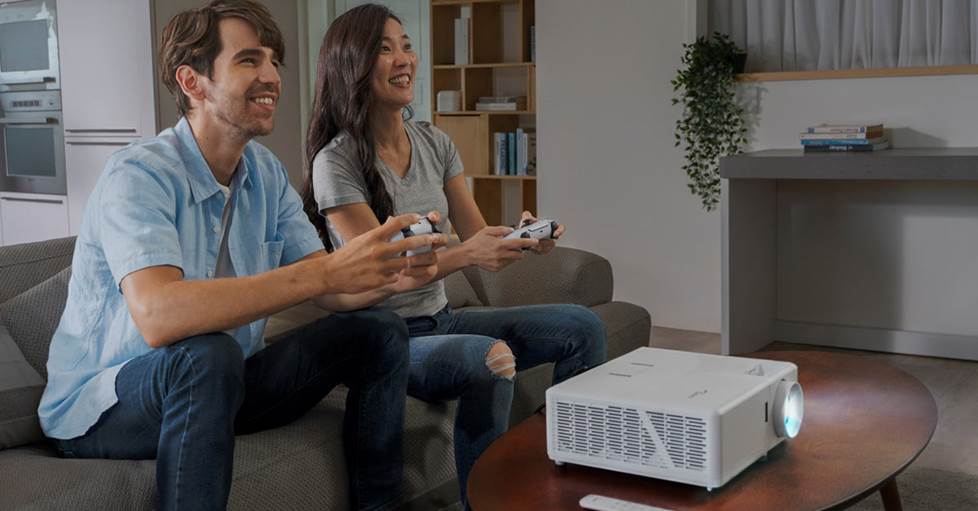
Gaming fans who want to upsize their play area with a projector system have more options than ever.
If you want to use your projector for gaming, look for one with a quick response time, like Optoma's UHZ66. They also have a dedicated game mode that optimizes settings for better shadow detail.
Image adjustments that expand placement options
Projectors with lens shift allow you to move the projected image up or down, left or right, while keeping the projector stationary. This opens up more placement options because you can position the projector off-center in relation to your screen and still get a perfectly true image.
Keystone correction can also fix the picture shape, but at a cost. It adjusts the image's shape using internal processing that can slightly degrade the quality of the image. Nearly all projectors offer keystone correction, but only some offer lens shift.
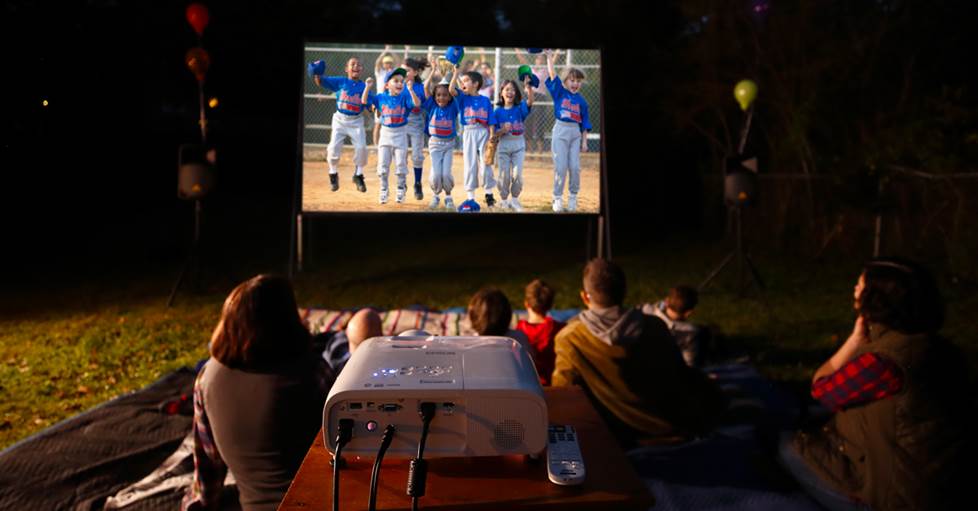
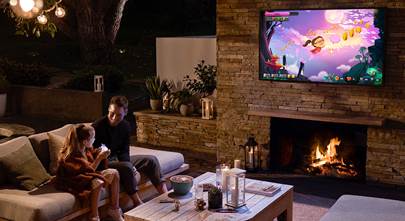
If you're lugging a projector out to the backyard, you’ll want to consider the size and weight.
Best projectors for outdoor movies
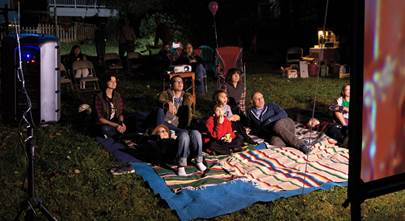
Outdoor movie nights are becoming a popular pastime. To get a good, crisp image on an outdoor screen, you'll want a projector with high light output. We recommend a minimum of 2,000 lumens to cut through outdoor light pollution.
Projector installation tips
Most people use their projectors mainly for "event viewing" — movies at night and the occasional sports broadcast. If that's your plan, the simplest option is to set up the projector on a table or other flat surface. You can keep it stowed away in a closet or cupboard when you're not using it.
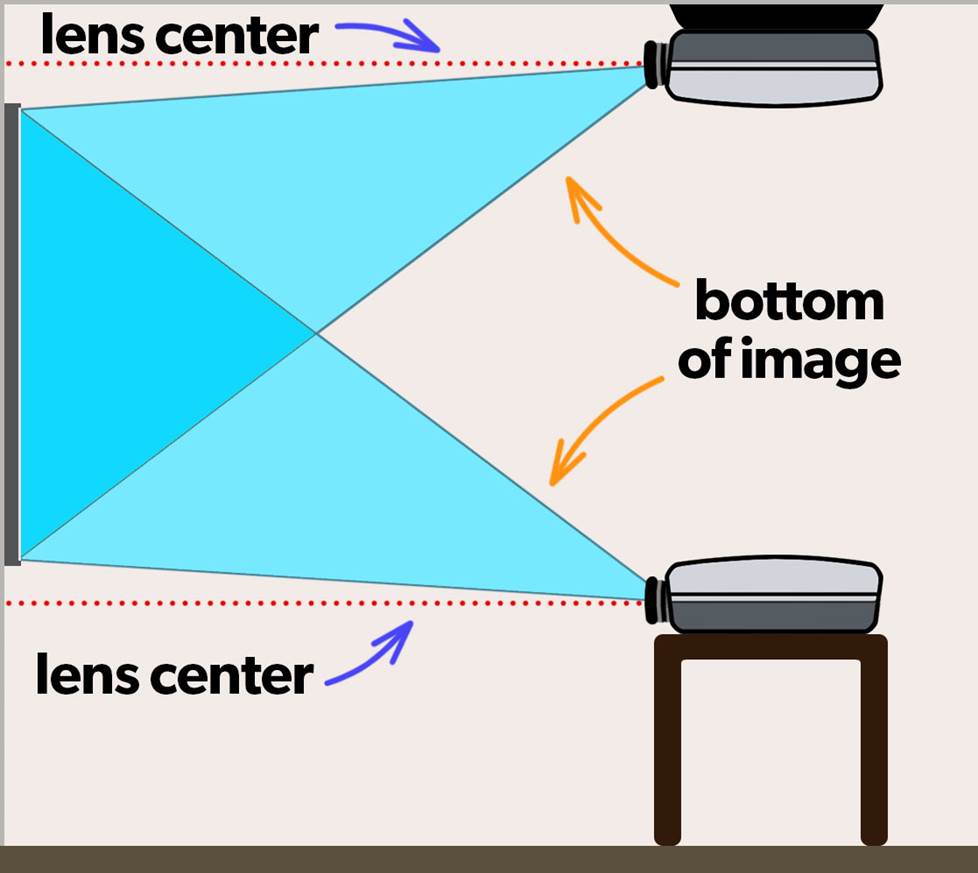
A projector's image can be raised for table placement or lowered for ceiling mounting.
As the illustration above shows, a projector's image doesn't follow the lens precisely. The image is offset a bit to allow placement on a table or ceiling mounting. Either way, it's important to make sure the lens is parallel to the screen. If the projector and screen aren't correctly aligned, the image will look like a trapezoid instead of a rectangle.
Ceiling-mounting
If you have more of a dedicated home theater in mind (or if you want to keep your projector out of the reach of small children), you can ceiling-mount it. This makes for a neat, uncluttered look, but it does call for some DIY skills.
Note that for ceiling mounting, you typically flip the projector upside-down. We carry ceiling mounts for most of our projectors, so that part is straightforward. But the projector also needs AC power, plus a video connection from any source you want to feed to it. It's not a problem for new construction, or if you're remodeling, but installation is trickier in a finished room (especially if there's not an attic overhead). Check out our guide to in-wall wiring for more help with this.
Throw ratios
With any projector, the further you position it from your screen, the bigger the image will be. You’ll want to make sure that your room will work with the "throw ratios" of your prospective projector. This spec tells you the relationship between a projector's distance from the screen and the width of the image.
Long-throw projectors are best for ceiling-mount situations where the projector will be placed further back in the room, behind the viewing position.
An ultra short throw (UST) projector can project a large image from very close to the screen, so it’s a smart choice for smaller rooms. We even carry custom cabinets designed specifically for UST projectors.
Room to breathe
Finally, consider the fact that the high-output lamps in projectors generate a lot of heat. Wherever you end up placing your projector, be sure to leave plenty of space around it to ensure proper ventilation.
Don't forget the screen!
To get the best picture quality from any projector, you should get a screen that is a good match for your projector and room. Check out our projector screen buying guide for more information on choosing the right screen. Or you can opt for a pre-paired projector/screen combo like these Hisense systems.
Personalized advice from our team of experts
Have questions about which projector would best fit your room and viewing preferences? Our expert Advisors know the gear inside and out. Contact us for personalized shopping advice.
Free lifetime tech support is included with every Crutchfield purchase.



Philip from Raleigh
Posted on 12/23/2023
For the Sony VPL-XW5000ES or Epson Home Cinema LS11000 projectors, should I ask the electrician to install 240v or a regular 120v ceiling outlet??? Which is correct for their respective power requirements?
Emily S. from Crutchfield
on 1/25/2024
Brian Russell from Brandywine
Posted on 8/7/2021
After many months of searching articles, I still have a question and I have not been able to find a specific answer. I have the Sony projector, VPL-VW1100es. I know that the projector does not accept HDR signal from 4k UHDR discs, but my Sony Blu-ray player converts the HDR to SDR. From what I have read, the metadata communicates what the intended color was supposed to be and the display maps it to its capabilities. Secondly, I have found in articles that Sony products communicate and automatically show best possible picture/color when connected. The projector is able to produce 100% of colors in the DCI-P3 color space, which would be the majority of colors in today's 4k UHD Blu-ray disks. Since the colors on HDR disks are in the wide color gamut, do I need to select the DCI-P3 color space on the projector in order to show the extended color gamut, or will the player/projector still map those colors where they should be? Would selecting any other color space other than DCI-P3 limit the colors shown to the 709 color space? Any clarification would be great, Brian Russell
Emily S. from Crutchfield
on 11/4/2021
MARY LOU CARLIN from PENNSAUKEN
Posted on 2/8/2021
Good information is there any updates to this information
Emily S. from Crutchfield
on 2/9/2021
Dan D Nordmann from Dallas
Posted on 6/19/2017
Excellent article! Clear and concise with many great points I might not have considered. Will be saving this gem as I engage the shopping process. Thank you much!
Dave from Grove
Posted on 9/20/2016
Very good coverage or the items to consider in selecting and setting up a projection system. Now to start narrowing items down.
SC
Posted on 7/16/2016
Excellent article! It's extremely inclusive and packed with all the info needed to get us novice started. Glad that I don't have to continue searchingsearching multiple sites to find info on projectors.
Anthony from Hurlock, Md
Posted on 12/10/2015
Super informative really enlightened.
Greg
Posted on 11/11/2015
Great summary with useful detail, thanks.