Power protection buying guide
What's the best way to protect your gear?

In this article: We’ll talk about how power protection can prevent damage and extend the life of your AV gear…
- Why you need power protection
- What do you need to protect?
- Surge protectors vs. power strips
- Line conditioners vs. surge protectors
- Types of power protection devices
...and give you some tips to help you get started shopping.
Not many people are aware of just how much damage voltage fluctuations and power surges do to home electronics. To my dismay, a lot of people seem to think “If wall power is good enough for my coffee maker, it’s good enough for my stereo.” That line of thought is okay until a storm rolls through and fries that coffee maker or, worse, your expensive TV.
Why you need power protection
Home theater receivers, TVs, gaming computers, and sound bars are expensive investments. I think most folks would agree that those assets are worth protecting as much as possible. But what do they need to be protected from? The power coming from your home AC outlets, of course. The voltage leaving those wall outlets can be very unpredictable and unstable.
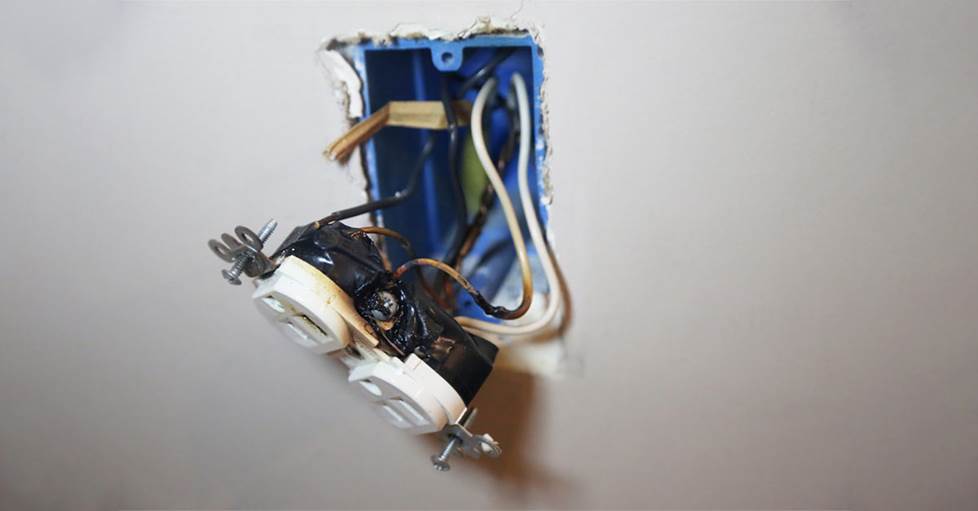
Smell something crispy after a power spike? It doesn't take much for one to fry electrical outlets and the devices attached to them.
Power spikes and how they affect performance
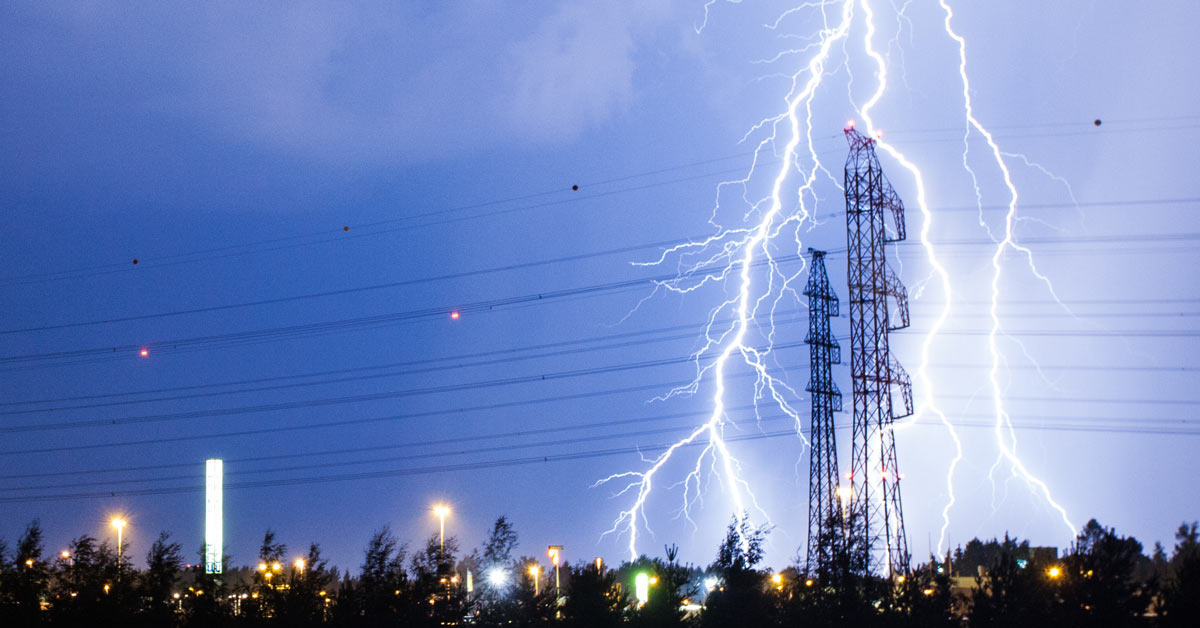
Voltage spikes, power spikes, power surges: All different names for the number one fryer of home electronics. Larger spikes caused by lightning strikes can fry your equipment in an instant, but smaller spikes can cause electronics to degrade over time.
Spikes have no trouble finding their way into your equipment and wreaking havoc without some form of power protection in the way to soak up excess voltage.
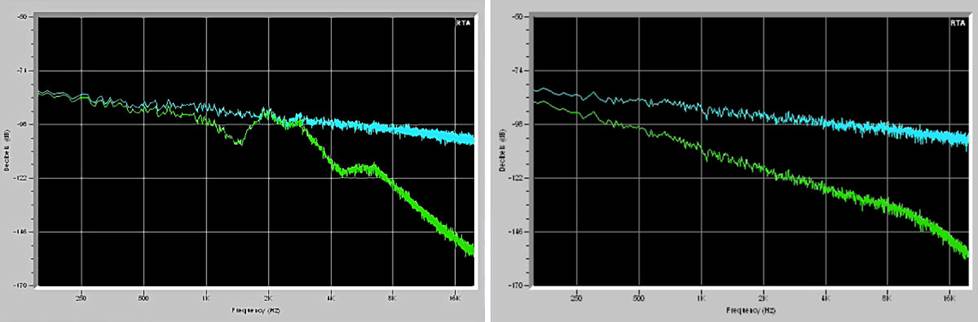
The graph on the left shows dirty power coming in through a normal wall outlet. The graph on the right shows the corrected voltage that Furman's Linear Filtration Technology provides.
Dirty electricity
Whereas large power surges often suddenly damage your gear, dirty power is a slow-burning, silent equipment killer that happens when the voltage from your wall outlet fluctuates above and below 120 volts (which happens more often than you'd think.)
Power supplies and electronics are rated for a specific voltage (120 volts is the US standard.) Any deviation up or down from 120 volts slowly chips away at the stability of sensitive components. Over time, the integrity of the electronics inside degrades to the point of failure. It’s not a matter of “if” it happens, but “when”.
You'll notice your components failing when you start hearing speaker channels going in and out or your speakers suddently start sounding faint. Both are tell-tale signs that your amplifier is on its last legs. Video-wise, your receiver or TV's HDMI ports may be intermittent or non-functional or you may see flickers on your TV screen.
What to protect?
You'll want to protect the following:
- TVs and monitors
- Desktop computers and laptops connected to chargers
- CD players, turntables, and NAS drives
- DVD and Blu-Ray players
- Cable boxes and DVRs
- Gaming consoles
- Streaming sticks/devices (like Roku, AppleTV, and the like)
- Routers and modems
- Receivers, amplifiers, pre-amplifiers, and external digital-to-analog converters
- Sound bars and wireless speakers
- Powered speakers and subwoofers
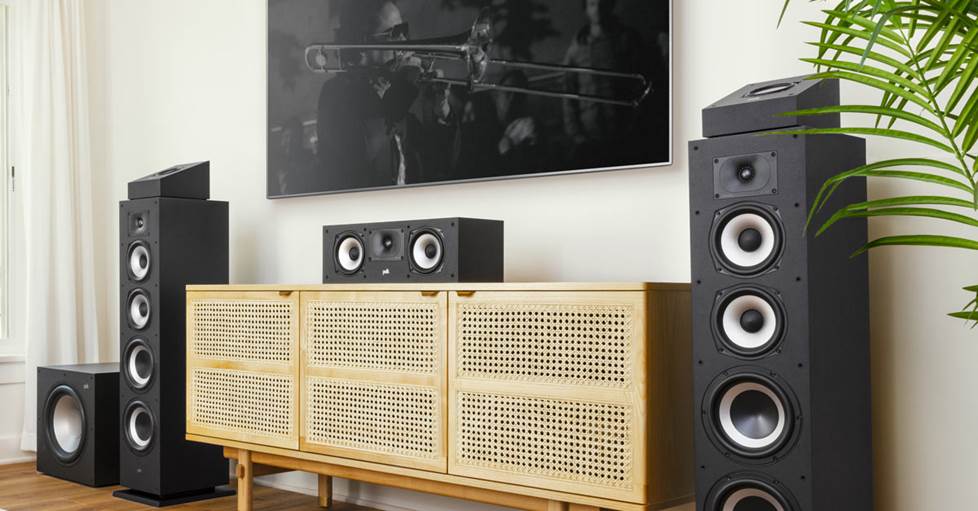
Home theater systems and TVs are expensive investments. It's best to protect them as much as you can.
Connected equipment warranties
If your equipment gets damaged while connected to a surge protector with a connected equipment warranty, the manufacturer will provide up to the amount specified in the warranty to replace the gear that was damaged. The more expensive the surge protector, the higher the replacement value. It's a nice safety net to have since your surge protector’s performance has a big impact on the life of your gear
What's the difference between power strips and surge protectors?
Power strips you buy at big box stores are more or less glorified power distributors. They're often cheaply made and don't offer much in the way of protection, shy of a circuit breaker or an on/off switch.
On top of that, power strips don't have anything to filter out power noise, like EMI (ElectroMagnetic Interference) and RFI (Radio Frequency Interference), that may be lurking in the line.
Surge protectors, on the other hand, do offer protection against voltage spikes and noise. Their internal resistors, called varistors, absorb excess voltage and only allow the right amount through.
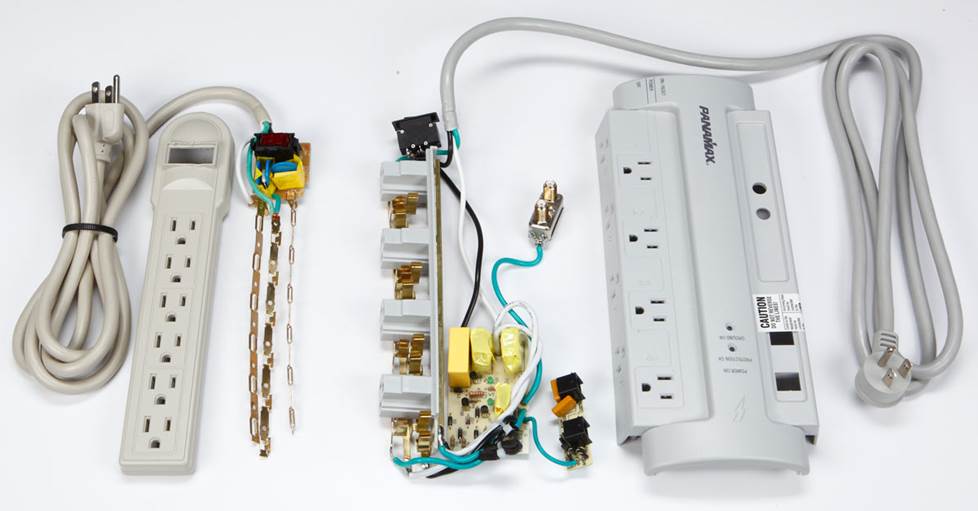
The difference between a regular power strip (left) and a Panamax surge protector (right). The Panamax has more heavy-duty parts on the inside to soak up excess power and keep your gear safe.
How do you know you've picked the right surge protector? All surge protectors have a joule rating that tells you how much of a spike they can handle without failing. The higher the joule rating, the better protected your equipment is, so it's best to get the highest rating possible within your budget.
You should never plug a surge protector into a power strip or another surge protector. Daisy-chaining things together like that will overload the protection circuit, rendering the surge protector useless and leaving your gear exposed to harmful spikes.
Do you need a line conditioner?
While surge protectors protect your gear against harmful power spikes, a line conditioner cleans up dirty power by correcting voltage fluctuations and removing electrical noise. Line conditioners help to keep your wall power at a stable 120 volts.
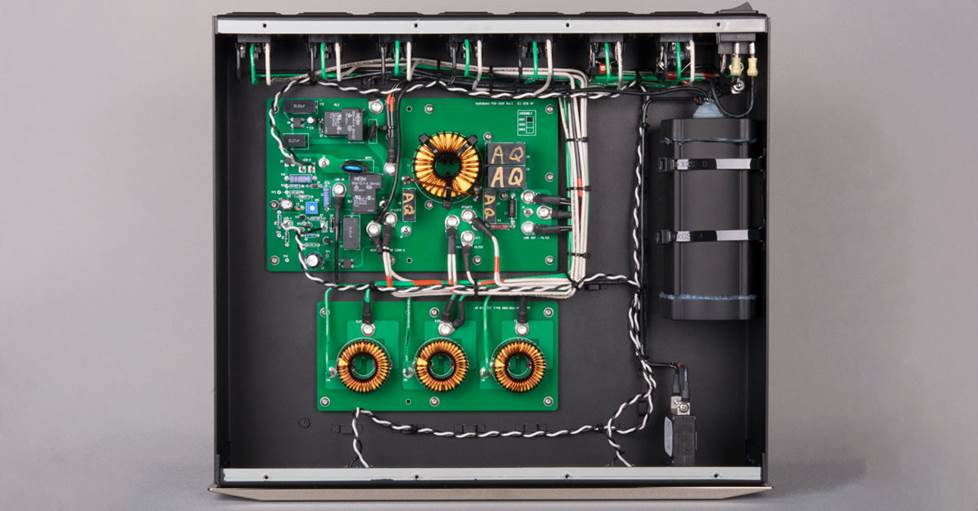
A peek inside AudioQuest's Niagara 3000 component-style power line conditioner and surge protector shows its solid construction.
I strongly recommend getting one. You can go with a dedicated one, like iFi's AC iPurifier. Combo surge protector/line conditioners like Panamax's SP8-AV are more common overall, and their dual-purpose nature makes them inherently more handy to have around.
Line conditioners do an excellent job at extending the lifespan of your gear. They help to maintain the constant voltage your equipment looks for. On top of that, a line conditioner will help to keep noise out of your signal, which will improve the sound quality of your tunes and the picture quality of TV shows and movies.
Find the right power protection device
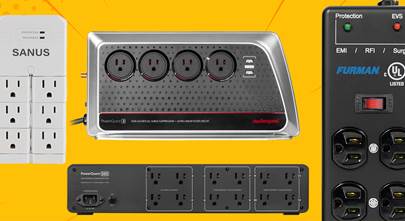
Now that we’ve covered why wall power is harmful, it’s time to go over things you can use to protect your gear. Line conditioners and surge protectors come in many shapes and sizes. No matter their form factor, all are designed to keep your gear from receiving otherwise lethal voltage spikes and some also have a line conditioner built in.
Strip-style surge protectors
Strip surge protectors are the most common and often the most affordable. They have six to eight protected outlets you can connect your gear to. Some even have coaxial outlets to protect cable lines and phone inlets/outlets to protect landline telephones.
There's also an extension cord available for Panamax's strip surge protectors. The extension is ten feet long, so you'll have loads of placement flexibility no matter the outlet layout of your home.
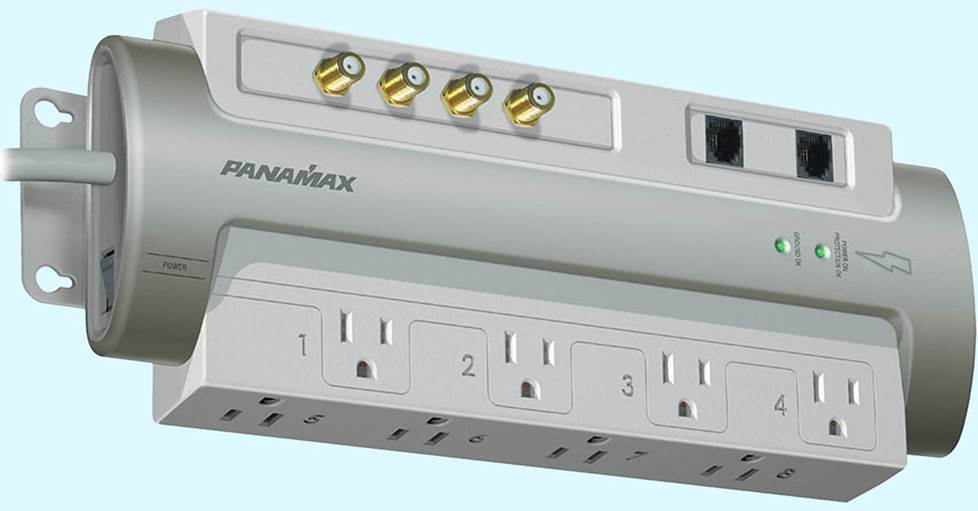
Strip surge protectors, like Panamax's PM8-AV, have lots of outlets for connecting equipment and ample power protection.
On-wall surge protectors
Worried about not having space for a traditional surge protector? On-wall surge protectors are built to save space and to protect what matters most. Most have two to six outlets. Some offer nifty USB ports for charging phones and a useful front-panel protection indicator.
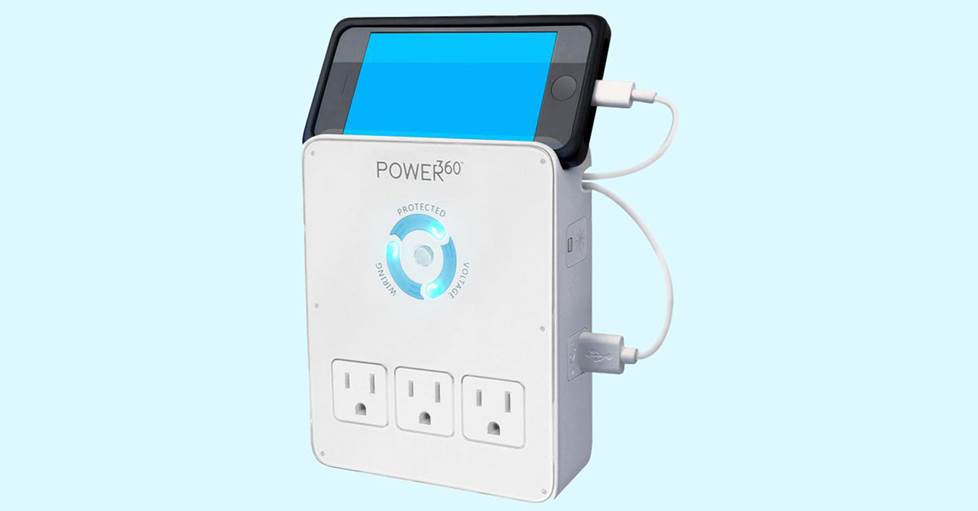
Panamax's Power P360-Dock is a space-saving on-wall surge protector with USB ports for charging phones and other devices.
In-wall surge protectors
In-wall surge protectors are the sleekest, most space-saving option and are great for tight spaces. They can replace your existing wall outlets and fit behind most wall plates for a seamless look. We recommend getting them installed by a professional.
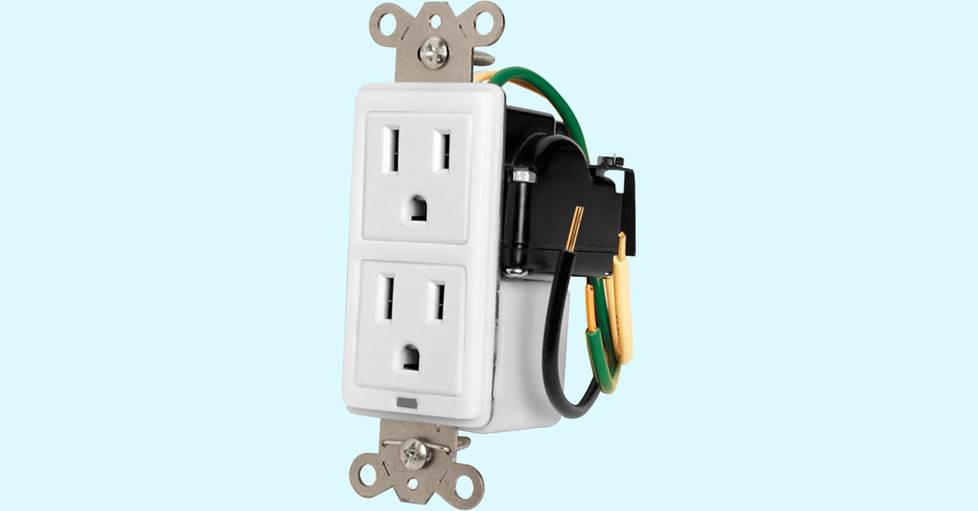
Tight on space? In-wall surge protectors like Panamax's MIW-SURGE-1G are great for cramped spots, like behind your TV.
Component-style surge protectors
Component surge protectors are larger than other types. They offer tons of protection and most have line conditioners already inside. Given their bigger size, they have no trouble blending in with any home theater or home stereo eqipment. Not only do they offer loads of protection, but they also come with great connected equipment warranties.

Component surge protectors tend to offer more protection. It's not too uncommon to see ones like Furman's Elite 15i protecting an expensive home theater system.
UPS devices
UPS (uninterruptable power supply) devices have an internal battery that keeps them and any connected devices powered up in the event of a power outage.
They give you enough time to save your game, properly shut down your computer, or send that important email you might have been working on. They’re mostly used for computers and game consoles but can be used with home theater or stereo equipment so long as the voltage/wattage output is sufficient.
You'll want to check the specs on any UPS you're considering to make sure it’s compatible with your home theater gear and won’t damage your equipment.
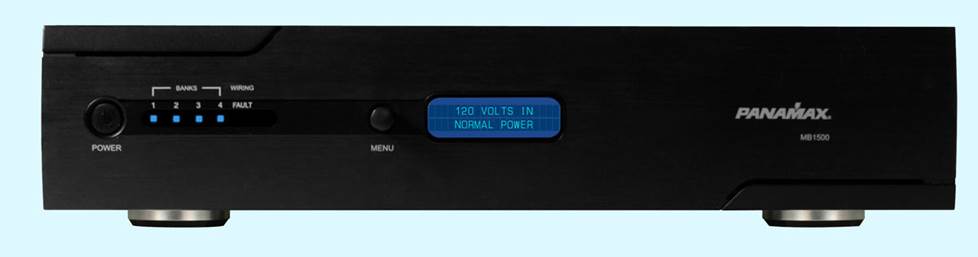
Panamax's MB1500 is a stellar UPS device that also has voltage regulation and power conditioning circuits. Three birds, one stone.
Other ways to upgrade your system for better performance
Stock power cables do a respectable job of keeping noise out, but sometimes they can act as a magnet for interference. When that interference is introduced into a video or audio signal, there’s a subtle yet notable degradation. If you're a videophile or audiophile, the quality of your signal is paramount.
I'd recommend checking out some of the upgraded power cables we offer. They tend to have better shielding, better grounds, and conductor layouts that are designed to prevent distortion.
Need help?
If you've got gear that needs protecting but aren't sure where to start, give our helpful advisors a shout. A lot of them have power protection equipment themselves and would be happy to help you make the right choices for your setup.



Robert from Pittsburgh
Posted on 10/2/2023
I'd like to see the answer to Tom Gibson's question regarding whole-house surge protection at the circuit box, and, what effect, if any that has on "clean" electricity for the whole house.
Catherine Storey from Valdosta
Posted on 1/23/2023
Thanks for the great info! I had no idea what a line conditioner was or why I would ever need one. Definitely getting a couple now!
robert surkein from joliet, Il
Posted on 11/25/2022
Three years during a summer thunderstorm, a very close lightning strike knocked out AV systems at opposite ends of our home. In one, the HDTV suffered damaged to its HDMI connectors; in the other, the AVR had damaged HDMI connectors. Both devices were rendered non-functional and non-repairable. Afterwards, I learned that HDMI ports are apparently especially vulnerable to voltage/current spikes. I have since contacted several vendors about how to best protect my electronics from another event like this. No one could/would give me a straight answer. (Too much liability involved?). I always thought that a UPS (that separates delicate electronics from the outside power supply) would be the ultimate solution. But this wasn't recommended either. Does Crutchfield have any suggestions? Thanks.
Phil Seaberg from Quincy, WA
Posted on 9/9/2021
You made no mention of sacrificial vs. non-sacrificial surge protectors. Sacrificial surge protectors have an unknown life expectancy. The most commonly used type of surge protector uses a Metal Oxide Varistor (MOV). Cheaper surge protectors use MOV's which are sacrificial and if both your neutral and ground lines have a surge (voltage) it goes to your appliance. POOF! MOV's deteriorate over time. The usual recommend replacement time is 2 years. Non-sacrificial surge protectors store the surge and release it down the neutral wire in a 2-volt stream.
Ronald S Pacheco from Sanford,Maine
Posted on 9/8/2021
I have a monster power hts1600 surge protector that I've had for 10 years or more was wondering if I should upgrade Thank You
g g
Posted on 7/30/2021
Put a date on your articles. Was this written in 2021? 2018? 1998? Who TF knows. Undated articles are USELESS.
Tony
Posted on 7/12/2021
Protect everything you can w/the best you can afford! Even so when a storm is pending we unplug everything from coffee pots to modem/routers to all AV equipment to ANYTHING w/a micro processor. Some things you can't like my washer/dryer combo
Andrew Heller from Oak Lawn
Posted on 10/11/2020
Question. What is the smart way of hooking up your AVR equipment with a surge protector? The way I have it hooked up, I'm using one surge protector to power all my gear... I have about 8 or 10 different things hooked up like 2 powered subwoofers my AVR and TV Xbox, Nintendo Switch, Cable box, 4K Blu-ray Player. Should I invest into purchasing a few surge protectors and use them in different wall outlets? Because I feel like I am using too much power or something and my subwoofers feel like they aren't getting the power they want. Thanks :)
Drew from Gastonia
Posted on 3/17/2018
Why does an automatic voltage regulator push these devices near 1K when commercial AVR are around 350?
Tom Gibson from Lomita
Posted on 12/19/2017
What about a whole house surge protector located at the circuit box. Would this be adequate protection?