All about subwoofers
A comprehensive checklist and reference guide for putting a subwoofer in your vehicle

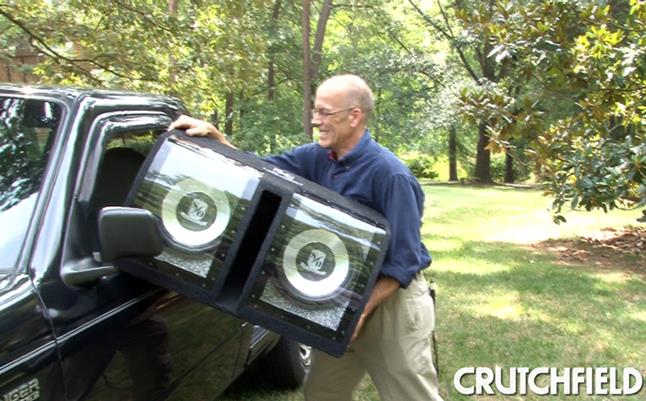
It's a good idea to plan out the system completely, before you buy the gear.
When planning a bass system, customers ask every day about where they should start. Doing it properly takes some planning and forethought, especially if you're starting small and intend to expand over time.
How big of a subwoofer system will you need?
When putting together a bass system, the first questions to ask are:
- How much bass do I need?
- How many subwoofers?
- How much power?
The answers depend on the type of audio system you have currently, and what your end goals are. Estimate the power your subwoofer system may need in order for the bass to musically blend and balance well with your existing system. If you have:
- A factory radio — you won't need more than 50 to 200 watts RMS of power for the bass.
- An aftermarket receiver — you might want 200 to 300 watts RMS of power.
- Amplified speakers with around 50 watts RMS per channel — 250 to 500 watts RMS is a good starting point.
- A system with 100 watts RMS per channel — having at least 1,000 watts RMS, or more for the sub is not uncommon.
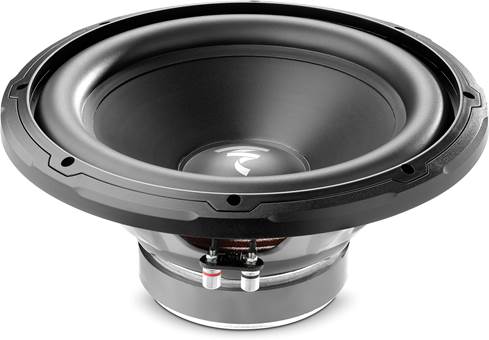
Focal RSB-300 Auditor Series 12" subwoofer
Choose a subwoofer and enclosure
The sound quality and volume of bass depends not only on the specific component sub you get, but also what style and size of enclosure it mounts in. For some background in what to look for in a subwoofer, see our Subwoofers FAQ. Then go to Subwoofer Enclosures article for help finding out which enclosure will work best for you. For further help in deciding which sub to get, you can look at our Subwoofer Shopping Guide.
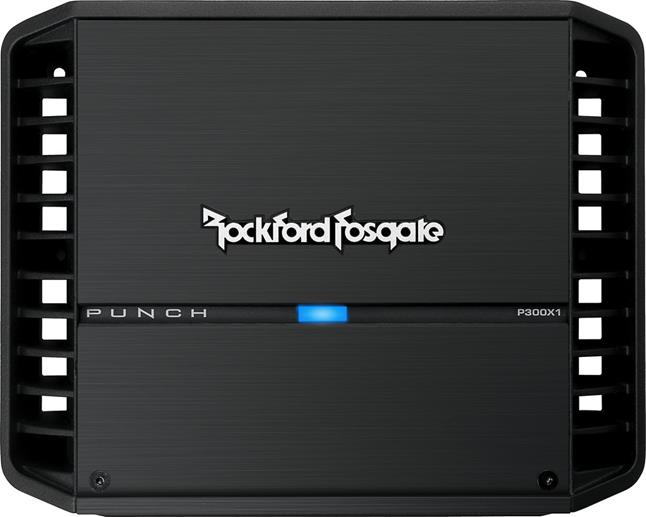
Choose an amplifier
Mono, 1-channel amplifiers are designed to work best with subwoofers and often feature filters and tone controls specifically made to handle bass. You will want an amp that can put out up to the subwoofer's top RMS wattage rating.
To learn more about amps, check out our Car Amplifiers FAQ. For help in picking which amp to get, see our Car Amplifier Shopping Guide.
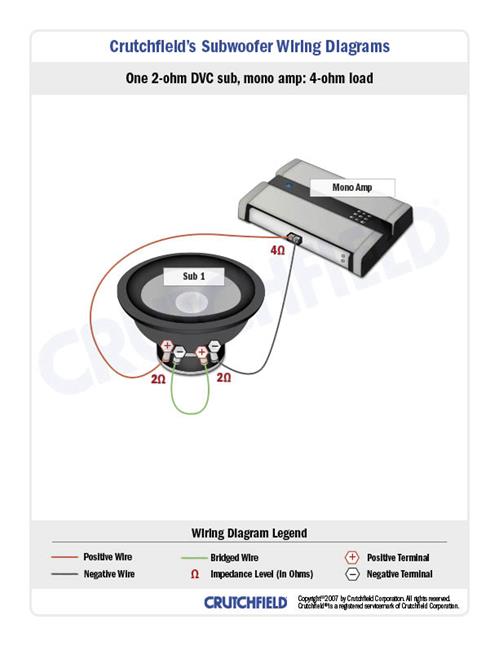
Plan out the wiring scheme to be sure the sub and amp can work together
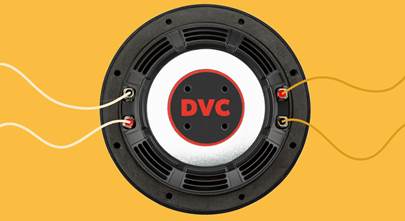
Subs come in different impedances, and in dual and single voice coil models, in order to work in a variety of systems. An amp puts out more power to a low impedance sub than to a higher impedance sub. So, to find out how much power an amp can deliver, you have to know how the sub will be wired. To make some sense of all this, you can refer to a couple of articles: Dual Voice Coil Subwoofers and Wiring Subwoofers — What's all this about Ohms?
You might need to adjust your choice of sub or amp, so they'll work together properly. Changing your set-up on paper is a lot less challenging than exchanging purchased gear. Check out the different ways subs get wired in our Subwoofer Wiring Diagrams. These diagrams can help you decide which method will work best for the gear you've chosen.
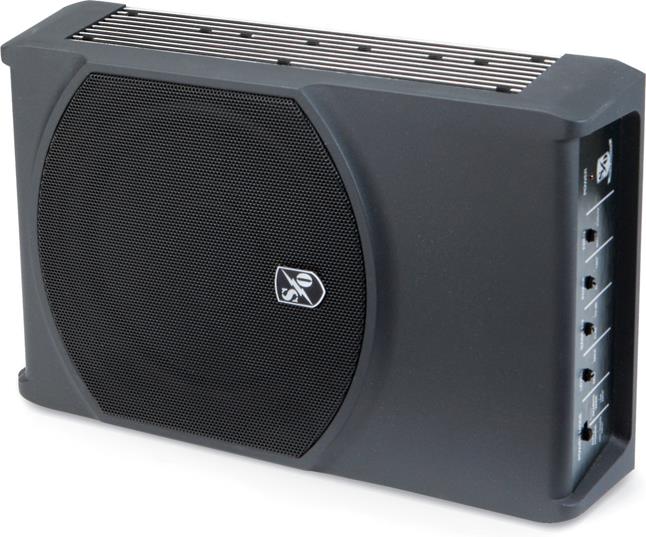
Sound Ordnance B-8PTD compact powered sub
A powered subwoofer is an easier solution
For many people, a small, self-contained, powered subwoofer will provide more than enough bass for their system. After positioning the powered sub, all you need to add are power cables and signal wires. You can learn more by watching the Crutchfield video on 
MTX ThunderForm custom-fit powered subwoofer for 2004-08 Ford F-150 SuperCrew and SuperCab
Vehicle-specific enclosures with subs
Instead of the usual "sub-in-a-box," you might want to consider a vehicle-specific enclosure. Made to fit your car or truck, this enclosure contains a high-quality sub and fits into a convenient spot in your vehicle. Some enclosures even include a built-in amp, for the ultimate in stealth bass. You don't lose much (if any) space, the sub is perfectly matched to its enclosure, and it has a factory look that won't alert potential thieves to your expensive sound system. To see if there's a vehicle-specific enclosure for your car or truck, visit our vehicle selector.
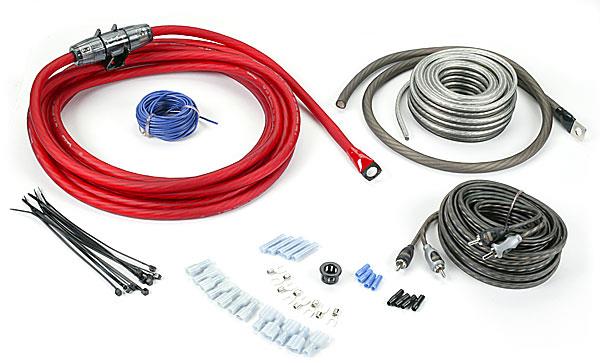
Rockford Fosgate RFK4X 4-gauge wiring kit
Amp power wire kits
It is absolutely essential for an amplifier to receive its full share of electricity through large power wires, in order to operate properly and safely. The wattage of the amplifier determines what the proper size power wires should be. Amplifier manufacturers usually recommend a particular power cable size for each of their amps. Or, you can use our Cable Gauge Chart to figure out the power cable size that's best for your system.
Amp wiring kits contain most of what you need to hook up your amp. Some kits even come with signal wires, the RCA patch cords that allow the signal to get from the receiver to the sub amp.
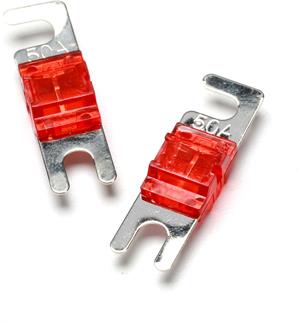
Install Bay MANL50 Fuses
Fuses are for your safety
Always install the in-line power fuse near the battery. If something failed back by the amp, you don't want a live, high current wire stretched throughout your car and engine compartment, because it could possibly heat up and start a fire.
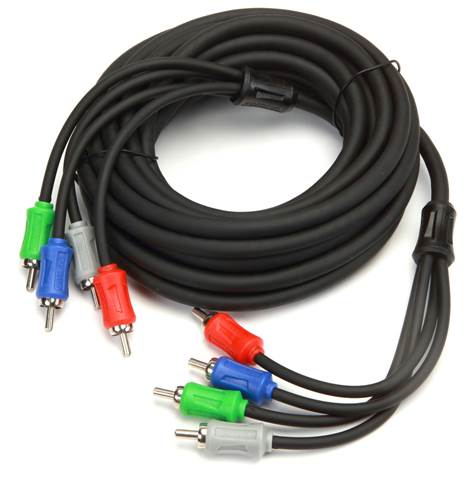
Crutchfield 4-Channel RCA Patch Cable
The signal wires
The music has to have a way to get from the receiver to your sub amp. If you have an aftermarket receiver, it probably has RCA outputs you can use. Plan on getting new, high-quality patch cables. If you have a receiver with no RCA outputs, you can tap into the existing factory speaker wires with new speaker wires, to use for a high-level input to your amp. The amp, of course, has to have a speaker-level input feature for this to work. To prevent noise, all signal wires should run through your vehicle as far away from any power cables as possible.
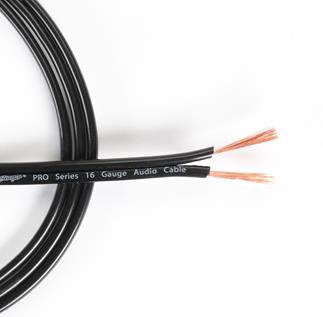
The speaker wires
If your sub system is going to put out more than 1,000 watts RMS, you can use 12-gauge speaker wire. But 16-gauge speaker wire works well for most installations. Take a hint and order twice as much as you think you need. You never know when a sub or amp's position will need adjusting and you'll be thankful you have the extra length.

And don't forget tools
There are some tools and connectors that will make your sub installation much easier. Take a look at what you might need in our video on Car Stereo Installation Tools.
Gather the gear
Before you start working, make sure you have everything you need. You'll want to gather your component sub(s), enclosure, speaker wire, amplifier, (or a powered sub), an amp wiring kit, signal cables, and any tools you think will come in handy.
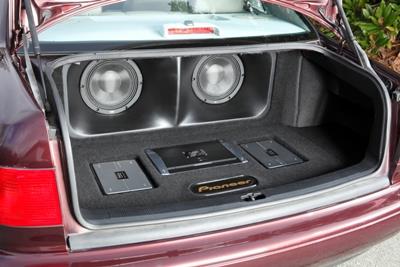
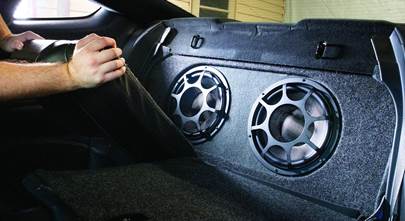
Pioneer Stage 4 system with two 10" subs
Now is the time to install it
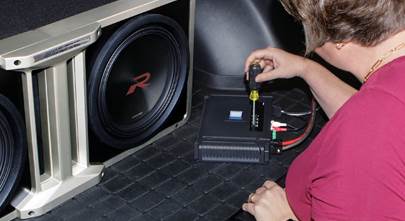
To see how an amp installation is done, see our Amplifier Installation Guide, and watch our video on Installing a Car Amplifier. You can also check out the Subwoofer Installation Guide for more tips and suggestions.
Make sure you always disconnect the car battery's negative, ground cable before working on the electrical system. Also, make sure the fuse is out of the in-line fuse holder until the installation is complete. Only then should you re-connect the battery ground and install the fuse.
Test — does it turn on and off correctly?
Make sure all volumes and gains are set to their minimum, and make sure all filters are off or disengaged. The sub amp should come on when you turn on the receiver. If the amp stays on even after you turn off the ignition, then you need to go back and re-wire the remote turn-on lead correctly to a switched power source. An amp that's always on will drain your car's battery in a hurry.
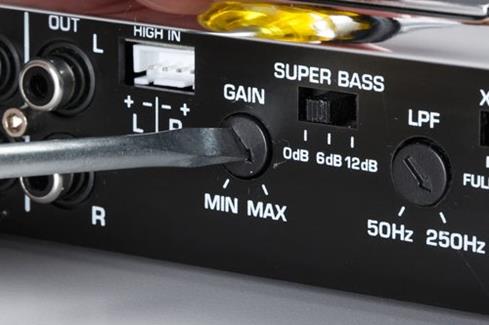
Turn the gain up until it distorts, then back it off until the sound is clean again.
Tune your sub
Properly setting the gain and the filters of your sub amp is crucial to getting good bass without causing damage. See Tuning Your Subs for the "by ear" method of tuning your system. Another method involves using test tones and a multimeter to set the amp's gain to a target output voltage. Our Test Tones article helps explain that.
A lot of people notice changes in a new subwoofer's tone after a few months of play. Whether this "breaking in" period really effects the sub or not, a second tuning, a few months after the first, will make your ears happy.
Don't blow it
There are two ways to blow a sub. The first way is to over-power it: constantly playing music at a power level well beyond what the voice coil can stand. Eventually, it burns up.
The other method of blowing a sub doesn't involve power, but distortion, often called "clipping." That crumbling, crackling, gritty, or hissing sound can destroy a subwoofer no matter what the volume. There're a couple reasons why. One is that during the flat parts of a clipped signal, although plenty of current flows through the voice coil, there's no movement, and hence no cooling. When that happens, the coil overheats.
Another reason is that severely clipped waveforms force the sub's coil and cone to try to move at infinite speed when changing direction. That can't happen, and either the cone or the coil dies. Under-powering is often the contributing factor in a blown sub because a distorted signal gets applied in an attempt to get more volume.

Don't stress your vehicle's electrical system
Capacitors should only be used if your lights dim a little on hard bass hits. For more information, see Capacitors FAQ. If your lights dim a lot whenever the music plays, then your sound system is overwhelming your vehicle's electrical system, and could damage the battery and alternator. Refer to the article entitled Car Lights Dim When the Music Plays for some suggestions on how to solve that problem.
Rock on, but be cool
If your car stereo can be heard a block away, that's impressive -- but it might not make the best first impression. Enjoy your music, and share it with those who'll appreciate it, but don't infringe on someone else's right to peace and quiet.
Speaking of sharing, send us some photos of your finished installation. Our Custom Car Showroom is a great place to show off your system, or find inspiration for your next car audio project.
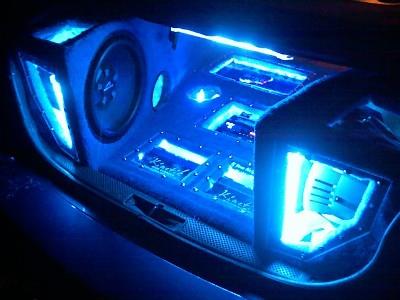
Jared S's 2004 Chevrolet Cavalier







Jeremy Butler from Greer
Posted on 11/27/2023
Question: I have two Rockford Fosgate T2500-1 bdCP amplifiers strapped together at 1 ohm total ohm load. I am running a dual voice coil subwoofer wired to 1 ohm, with an RMS output of 2,500 WRMS. I am actually planning to upgrade to another dual voice coil subwoofer at 1 ohm, with 4,000 WRMS. I see a great deal of content around lower powered systems and proper speaker wire. Currently, I am running 8 awg speaker wire now. Is this considered sufficient with the upgraded sub? For complete power, I have 2 runs of 1/0 AWG from front battery (upgraded XS Power AGM) to rear battery (large XS Power AGM & 500 Farad Cap), both fed by 370 amp alternator. Each RF amplifier has 1/0 AWG Power and Ground. All fused properly. Just questioning the speaker wire at this point. Thanks.
Buck Pomerantz from Crutchfield
on 11/28/2023
RICH from MCHENRY
Posted on 2/10/2023
Hello, I'm looking for a DVC 10" Subwoofer to pair with my Sony DSX GS80 unit. The unit has a built-in amp that can push 80 watts rms at 2ohms on each channel. I'm wiring the front/rear speakers in parallel and using the 2 rear channels for each VC on the subwoofer. According to the sony manual, you can drive a sub in this configuration. The manual states that i need to use a 4-8ohm sub but i have to select 2ohm load in the unit prior to powering everything up. Can I use a dvc 2 ohm sub as well?
Buck Pomerantz from Crutchfield
on 2/10/2023
nick from belmont
Posted on 5/30/2022
Im running 2 skar evls 12in 1250 watts rms each. what size wire do i need to run from my skar amp to my subs? currently using 12 gauge. the amp is skar skv2 2500.1d = 2500 rms
Buck Pomerantz from Crutchfield
on 5/31/2022
Michael Johnson from Brooksville
Posted on 4/13/2022
hi i was wondering what kind of amp/amps i would need to run four tx65 max power 200 and 100 rms per set (so im getting two sets so i can run four of them) I also have tweeters as well. Also would like to add two vd-10 subs which are either daul 2 ohm or dual 4 ohm not sure which set to get they are 800watt total and 500 rms. Please help im new to amps and have no idea which amp or amps i need i would like to have only one amp to run the whole system but i hear that is not possible. please help me thank you.
Buck Pomerantz from Crutchfield
on 4/13/2022
Lewis Lennox from Nairobi
Posted on 12/15/2020
Hello. I recently bought a DVD Home theater Philips HTS3410D whose total power output power is 700W. It's a second hand and lacks the subwoofer. Can I get 1000 W subwoofer to replace it?
Buck Pomerantz from Crutchfield
on 12/15/2020
sonny from atascadero
Posted on 12/4/2020
i have a kicker comp r subwoofer with 500 watt rms with 1000 peak at 2 ohms and i'm looking for a good amp do you have any suggestions
Jaeden Roxas from Adelaide, Australia
Posted on 10/27/2020
Hi, Was Wondering what size cable to run to my x2-400w (rms), 4 ohm dvc sub woofers, are there any formulae you use to determine this? I understand that 16 gauge would work, but would I gain any real audible performance by using 12 Gauge etc.? Cheers
Buck Pomerantz from Crutchfield
on 10/27/2020
Craig Donahue from Macon
Posted on 10/15/2020
I'm currently running (6 gauge wire) from my amp to one 12"sub.My question is I upgraded to a rockville 1000 rms amp and one 15" DS18 subwoofer 900 rms watts.(Do I need to change my 6 gauge to 4 gauge)?
Buck Pomerantz from Crutchfield
on 10/16/2020
Dylan Harper from London
Posted on 10/11/2020
Is it OK o run a 300 watt sub, off one of the four channels of my amp which is rated at 65 watts per channel. The front speakers are on components so only using two channels for the fronts
Buck Pomerantz from Crutchfield
on 10/13/2020
William Schroeder from South Milwaukee
Posted on 3/4/2020
So we just put 2 pioneer 10 inch subs in my girlfriends Honda Accord with a Evo2 amp... her car is a 2017 and we are running the subs with a stock head unit and just running a reviver instead of off the radio, but when all doors are closed the subs starts hitting super hard, constant wounds no fluctuation in power, but as soon as you open a door or break the current of the vehicle the subs stop.. what could this be?
Buck Pomerantz from Crutchfield
on 3/5/2020