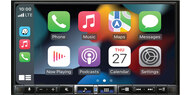
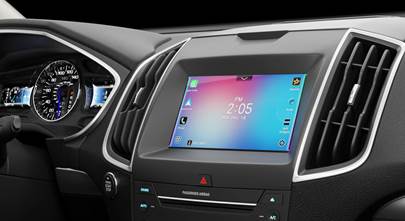
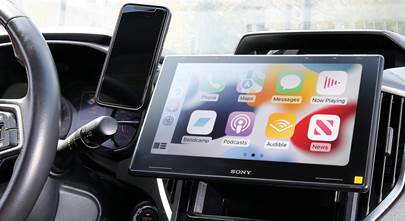
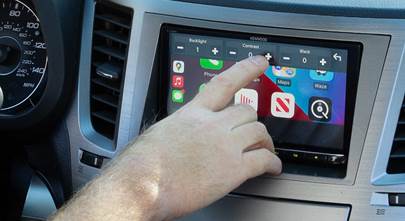
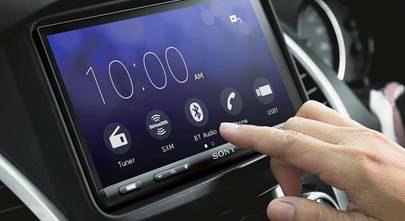
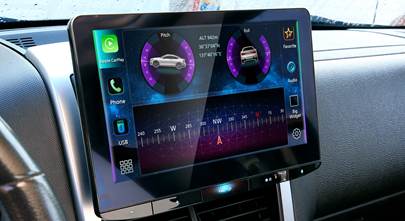
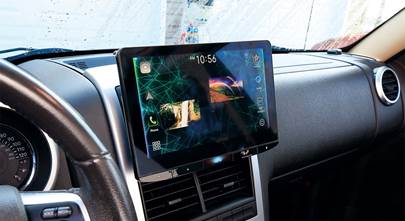
Hello and welcome back to Crutchfield, the podcast. I'm your host, Jr, joined in studio by my co-host Eric. How you doing this morning? I am doing great. Fantastic. Even have you enjoyed the year we took off from making a podcast. Um Well, yeah, absolutely. What you do with all your free time, just been studying consumer electronics, just nonstop, you know, just, just, just studying them. I've been in season four prep mode for the last year, you know, me. So, yeah, this is officially season four of Crutchfield, the podcast, uh dropping here in 2024 which also is kind of a big deal around here. Uh Because uh Crutchfield was born in 1974 which makes Crutchfield 50 years old this year and I will be turning 50 this year. So 1974 was a good year. It was a good year for some things. We'll leave it at that. And uh and also we did the math and between your experience in the consumer electronics industry, which includes some time before Crutchfield and your time here at Crutchfield and all of my time, which is all at Crutchfield. 50 years of experience. You are listening to 50 years of experience right now. Wow, in celebration of 50 years of Crutchfield and of course of JR. So uh what are we gonna do for season four? Well, we thought we would try a slightly different approach uh to Crutchfield, the podcast. We want to be a little bit more helpful, informative. We wanna be a resource you can use to make educated, smart, successful decisions for what consumer electronics do you want in your life. We want to be helpful this time around. We'll mix it up. I like it. We're thinking we might actually provide some, you know, logic and advice that people can take and apply to their lives to make them happier. Let's give that a shot. We're gonna start this season with a four part series that we're calling. How to choose the perfect car stereo for you and your car. I take it and over the four different episodes, we will discuss the major components of your car stereo and why you may or may not need them in your stereo. Basically, what will it take to make you happy driving around in your car listening to whatever you want to listen to. We're gonna start here in episode one. Really diving into the main thing that you interface with when it comes to a car stereo, which is that piece in the dash, right? Uh the radio, the stereo, the head unit and then uh in episode two, we'll dive into speakers. Episode three, the big speakers, the subs, the ones that make bass and in episode four will hit on amplifiers. Uh, and, uh, if you listen to all four, you should have a pretty good idea of how to choose the right stereo for you and your car. That's right. You want to get started. Let's do this. In today's episode, we're focusing on really just that part of the stereo that's in the dash. Uh, it's got a lot of names, industry jargon. Uh, depending on who you're talking to, they might call it different things. We're gonna let you know what all those names are here so you can make sense of it. We'll let you know some of them, I've heard them called all kinds of things over the years. But, uh, yeah, I think even between you and I, you know, we, we typically lean different directions on what we call these things. You know, I think you said head units, head unit, that's my go to, I just sort of like that term and it just rolls off the tongue. Uh, but yeah, that's what I call that. Uh, again, we're talking about the thing in the dash with the display. It usually shows you the radio station you're listening to and the time with the buttons in the middle for volume. And I think, I think they understand what we're talking about. It's where you control the music you're listening to that thing in the dash. That's the part we're talking about. I call that a head unit. What do you call it? Uh, I usually call it a deck but I think our customers typically call it a stereo, a stereo. The stereo receiver is another pretty common term, car stereo receiver. That's right. Yeah. So this thing, I mean, right out of the gate, it can be called all of these things. I don't understand why people get confused. I don't know, I don't get it. Some people might just call it the radio right. In all of those terms are referring to that thing in your dash with the buttons in the display that controls the music infotainment center that gets fancy that thing that, so do you need one? Do you need a new stereo? I mean, Crutchfield has been around since 1974 selling new stereos for cars. Uh Are they still relevant? Do people still need new stereos in your car? Yeah, absolutely. Um, you know, of course, today's cars are way more advanced. The infotainment center that comes in cars today. Uh there's a lot more going on, right? So those cool features that come with a new car today, we can actually bring a lot of those cool features to uh to an older car just by simply upgrading that head unit radio deck receiver, stereo thing. Yeah, the world of car stereo is definitely changing, right? And in a lot in the last few years, the stereos that come with cars have gotten a lot cooler. They, in fact, I would flip over what you just said on its head and say that the factory stereos are now doing a lot of the cool things that aftermarket stereos have been doing for years. 100%. Absolutely. And these days in a lot of modern cars here in 2024 you get the stuff you need for most people to be happy, right? You get a pretty good integration with your phone, your car, play your Android Auto, a touchscreen there. Beautiful backup camera. You got a bunch of cool stuff happening, right? And so, uh they've also integrated the stereo into so many other things in the car, right? A lot of times it's the same, uh, that thing in the dash is also the thing that controls your air conditioning and your heater and your defroster and all of that stuff. I'd love to know whether or not our audience likes that on modern cars. Maybe, maybe I'm showing my, my ears a little bit, but I don't really want to have to engage a touchscreen to, uh, I don't know, turn on a seat warmer or, uh, you know, move a mirror or something like that in a car. It's a bit much. But, uh, but I get it, uh, you know, you open up a new car, you know, a car door, these days look in the dash and it kind of looks like a, often a floating ipad or something in there and there's a lot going on with those electronics. So, as a result of this oftentimes you at this time anyway, you can't replace the radio in a lot of modern cars and we're seeing it go that way for more and more cars every year. So there are solutions for those cars. That's what we're talking about here though. The cool thing is, is that because they've done their work at the car manufacturers, you get some of the cool stuff. The reason a lot of people replace their car stereos is to make it. So their phone integrates into their driving experience really nicely. So you can play music and podcasts and audio books so that you can use Google Maps or Apple Maps on your uh on your commute, you know, that sort of stuff. And so you want that phone connectivity and if your car doesn't really have that, that would be a big reason why you might want to replace your stereo. And if your car is a little bit older, it probably doesn't have that and it's also more likely that you can replace that radio. Absolutely. So, and that's kind of the trend we normally see in this industry is uh you know, the latest, the latest of cars, we can't always replace the radio in a, you know, 2024 vehicle Right. Uh, usually it's gonna be, uh, you know, a few years before, you know, all the kits and harnesses kind of catch up, uh, to be able to, to replace those radios. So we'll see maybe these fancy cars that are coming out now with the, uh, integrated touchscreens, maybe down the road, we will have a replacement solutions for those. Uh Of course, we can do things to improve the sound on even those cars. Uh We're just not typically starting at the head unit uh in, in those situations, but we're talking about head units today anyway. And for a long time, the reason to replace a head unit was to fix a problem, right. The factory stereo might not work anymore. Your volume knob got stuck. Uh It just, you know, it, it just, it's broken, it doesn't work much. So we've got, we've always received a ton of calls from people that would need to fix that problem. They lined out from the dealership that it would cost them an arm and a leg to replace the factory head unit. So they come and get one way better from us that uh uh all of a sudden it does some cool new things for half the price. Yeah, absolutely. Also for many years and it's still the case people replace their stereo that the head unit, the receiver uh to make the car sound amazing, right. So there's folks that are really into car stereo uh that want it to be awesome and they realize the benefits of a new receiver uh when building a big amazing sounding audio system. So a head units integral to that experience, it can be a part of the puzzle. If you're looking to, you know, we're talking then speakers and amps and other things, you know, topics for other days. But uh in a lot of situations, that's the kind of the starting point for those types of systems. Absolutely. Another reason you might want to be able to tweak the sound a little bit more than you could with your factory radio. Uh, you know, being able to adjust just the base in trouble is good a fader back and forth balance, left and right. Uh, and then of course, a lot of new stereos give you significantly more control of the sound than that, like with the 10 band EQ and digital signal processing and time alignment. So we're not gonna go super deep into that kind of stuff. Uh, we're gonna kind of skim the top, we're meat and potatoes of this, of replacing that head unit. Uh, but yeah, absolutely. They are, uh, audio file type of head head units out there that, uh, will give you a cleaner signal and allow you to adjust the frequency for each driver, uh, in that car by driver. I'm not talking about the person behind the wheel. I'm talking about speakers. Yeah, we're not trying to nerd out on the super techie side of this, we're trying to actually, uh, make it a little bit more accessible for those of you that may never even have considered replacing your car stereo and are now thinking you might need to or want to for some reason. Hopefully we've identified maybe a reason that applies to you. One more backup camera. Sure. Yeah, backup camera for a big truck, you know, maybe you have an older truck and, you know, so once you've had a car with a backup camera and you really appreciate that and being able to get that, uh, on a, on a older car, you know, 10 year old car that maybe didn't have it or even older than that. It's a really neat future, especially on a larger vehicle. I find it's, it's great for safety there. We're replacing the head unit for safety, for safety, for the safety of you and your Children and the other cars in the parking lot and the Children in the neighborhood and the bicycles that are, that are left in the driveway. Exactly. Yeah, that's a big reason. And of course most cars come with that now, but if you have an older car that didn't come with a backup camera, the best way to do that is to put a newer radio in your dash with a big screen on it and a backup camera. Uh, and, uh, we have lots of options for that. So we're gonna dive into what you should consider when getting a new stereo. And of course, the car has to be considered right. Older cars, classic cars, newer cars, these are all totally different animals and need to be approached appropriately for. Now, for the purposes of this exercise, we're gonna assume you have a car where the radio can be replaced and that we can replace it with some combination of kits and harnesses and adapters and stuff to make it all work. Uh For cars that we can't replace the radio on, we have other solutions. We'll dive into that on a totally different episode. Uh for classic cars. That's a totally different animal. We'll dive into that on a totally different episode for now, we're gonna try to appeal to the masses here where the majority of you have a car where the stereo can be replaced and you might want to, what should you consider? So I might be a bit biased. But I think the first step to this whole process, hear me out here now, go to our website and put your car in our website. We have this cool tool and I know I'm kind of leading people here. Right. And we're not, we don't, we're not trying to be silly, but seriously, out of the entire industry, we have the best tools, the best website for being able to figure out what can be done in your car and what fits in your car and we lay it all out there and you know, you can quickly put in your vehicle and find out whether or not replacing the radio is even an option these days. So, um I think that should be the first step if there's any questions of whether or not you can do the thing you're trying to do start there. Um, but then at that point, you know, once we know you can do that now, now we can start considering, you know what sets one radio apart from another. Alright, let's dive into it. We've got some, we've got, we've got, I would think about four big buckets of car stereos. Uh We've got a whole bucket full of basic car stereos. Well, let's talk real quick about who that bucket might be for, right? Um You know, maybe you want to get Bluetooth audio into a vehicle. You don't want a touchscreen, you don't want all that complication. You don't want that extra light source, you know, up in your dash. Um, but you want Bluetooth, I mean that's a, that's pretty common still to, you know, uh folks might have a, you know, a secondary vehicle or it could be a primary vehicle. Sure. And they just want to be able to listen to their Spotify uh while cruising around and yeah, that gets that done pretty simply if you've got C DS lying around, these are, this is where you're gonna find CD players, uh, more commonly than with the bigger fancier radios. Many of them don't have the ability to play a disc. So we still sell it ton of these. Uh, and, you know, most people would think they're probably a little simpler to operate. Right, because the touchscreen isn't there. Um, and for some people that is, uh, that's right where they want to be, just give me Bluetooth audio so I can play my phone, you know, just, uh, give me AM FM and potentially let me spin a CD and, uh, and I'm good to go and that's a radio for you. And, you know, you can get those radios in the smaller size. Uh, they're like about two inches tall. That's a pretty standard size for car stereo. You've seen them around for years. They've also got them that are twice as tall as that because many dashes on cars have a larger opening performance. Why not take advantage of that with a bigger, like a four inch tall radio? It'll have a bigger volume knob, bigger buttons, bigger display, performance wise. They're exactly the same but a little bigger display. Uh, never hurts. Yeah. And so, uh yeah, you should be able to get one of those that will play any source you want to play, uh, whether it's CD, Bluetooth AM FM Radio, radio, Sirius XM USB auxiliary input. Uh, you're pretty well covered, you can get what you need. It will not cost very much. Uh, and, uh, even the install probably will be simpler and less costly. Uh, so that's your basic car stereo. They still exist. We've got em, we can fit them in your car. And if you're looking for that simple, inexpensive but still really great sounding audio solution, new stereo, we've got you covered. There you go. That's still a thing. Basic bucket. The basic bucket, the next bucket is, uh, gosh, it's probably where there's a lot of excitement about car stereo right now. Uh And that is the touchscreen radios. Now, I'm not talking about the ones that are like outside of the dash, not the ones that look like an ipad has been glued to your dash. That's the next we'll get to that. This is, this is the touchscreen where the touchscreen itself is in the radio, right? It doesn't stick out from the dash so it's flush with the front of your dash. It just sits in there. Those screens are typically 6.5 to 7 inches if you measure them corner to corner, like you do a TV. And uh these touchscreen radios. Now that's a, that's a huge jump in capability from those basic stereos. Now, power and performance wise, maybe that's not where the jump is, but the integration with a smartphone we're talking now we have it before it was, we were just doing Bluetooth or OX uh you know, to get the audio out. But now we have a visual representation of what we're listening to potentially. Um And you know, in this very large bucket of, of radios, they are not all created equal, there is some huge differences um in when you're talking about these types of these types of stereos, but the entry spot on these has come down quite a bit in the last few years. It used to be that to get a touchscreen radio that was really good at integrating with your phone. And by that, I mean, uh Apple, Carplay and Android Auto, uh more on that in a second, but to get that, it was gonna be a minimum of 700 bucks. And now we're down in the $300 range. That's amazing. And now even wireless Carplay and Android Auto isn't that much 45, 600 bucks. Uh So let's talk about Carplay and Android Auto and why this is, this is a huge reason people want new stereos and this is a feature, not all these touchscreens have this. So, you know, that's one of the things you want to ask yourself is what level of integration do you want with your smartphone? And you know, for this, uh for this discussion, we're assuming that you have either an Apple or an Android smartphone. And uh you know, if you do have one of those phones, Carplay or Android Auto is so much better than any other kind of integration. You know, it's supported by the manufacturers. Um It's supported by the phone companies and you know, when, when you have those two things working in unison. Oh man, it is a really neat display that promotes safety and gives you those cool features like navigation. Um you know, Spotify, you know, album art and information, you know, it, it really becomes an extension of your smartphone before Carplay and Android Auto became a thing. It was kind of the Wild West. You know, all the different car stereo manufacturers were trying to figure out, hey, can we develop an app? How can we make your smartphone work in a cool way with our stereo? And they all had their own different flavor of that and it was hard to keep track of and it was, that's what they were trying to do is mirror your phone. Um and that's, that's not what this is about, it's not just a mirror of your smartphone, it is an extension and you know, software specifically designed to work in your car. Yeah. Thank you Apple, thank you Android uh for creating this interface, right? You, you solved the problem. It's built into the phone. It's powered by the phone. When you get your phone connected to the stereo, it's basically like your phone is built into the stereo and the Carplay experience and the Android Auto experience is the same no matter which brand of car stereo you buy, whether it's the least expensive option with Carplay and Android Auto or the most expensive. It doesn't matter. It's the same. It allows you to play, uh, music from any music app on your phone. Uh, you can make and receive phone calls. You can do texting with voice. So you're not trying to type and text while you're driving. Uh, you can listen to books and podcasts and sports and all of that stuff and it's just, your phone is on the screen of your radio. Thank you, Apple. Thank you Android Auto. And it's not even very expensive to get that in your stereo. If you have one of those phones, you probably want it, whether you know it now or not, you probably want that. Absolutely. Um So that kind of thing brings us to the next kind of divider. You know, if we've decided that we want that integration or maybe we decide that's not important to us and all we really want is a screen for a backup camera, right? That's kind of where I'm, I'm thinking, uh, you know, a typical customers thought process would be right. So I think most people will decide that. Yeah, it's worth it. I want to get that navigation, you know, in my dash. I want to have all those safety features built in. Um, and uh, the next thing is I see where you're going, but I wanna, I wanna, I wanna point out something that you should focus on the bucket. We've been living in here for the last two minutes. The touchscreen models that do not float, right, the non floating touchscreens if you want to play DVD s in your car, which I don't know who needs to do that, but it's still a thing. Some people might want to put a disk, a DVD, a CD, that kind of thing into a, uh, a head unit and play it. Your floating touchscreens pretty much don't have. That's a good point. If you want that ability, you don't want a floating touchscreen, you want one that's just compact and in the dash. Uh, and that has a slot for a disk. So that is something just to, just to think about. Maybe you want to play a DVD on the, on a rear seat video entertainment system for the kids in the back and have control of it from the driver's seat. You might want a DVD player in the dash to make that happen and that's where those live is in that bucket of car stereos. Um There was one last thing, um, I think you thought I was going to progress to the next bucket, but it wasn't going back to Android Auto and Carplay. Ok. The next to me leap once we've gotten there, wired or wireless, you know, it's, it's interesting, I think that some people just assume it's wireless, right? Because, well, we have this, our phone's always talking to our radio. It's got Bluetooth And uh yeah, that's a little different than all the features you can get from Carplay or Android auto, the units that we have that require wired connection. You know, that that's your USB C, you know, connection into the side of your phone and your phone would be out maybe on your dash or, you know, you'd have to consider where that's gonna be. Um, but, uh you know, you're gonna maintain that connection now. That's cool because it's a, it's a great connection, your phone's made to work with it and it's also gonna keep your phone charged. So there are some benefits there, but you will have to plug your phone in lightning cable or USB C every single time to get that experience, which is what I have in my truck. When I get in my truck, I have an F 150 I get in, I put my phone on the dash. I plug the cable in. Carplay gets going and now I'm ready to drive. So wireless car play. Um, you could have that same situation getting into your truck and you leave your phone in your pocket and you get all those benefits still of full on car play connection. Now you're not charging it obviously. Um, but, uh, you, you're getting, you know, and every time you get in your truck, it's automatically there for you. So, um, you know, that I mentioned this because it is one of those jumps and price point. Honestly, if you're, you know, going down that shopping path, you know, you're typically gonna add, uh, you know, 100 and $5200 more probably to get to that next level, uh, of, of, uh, of radio. Um, and it's not up to me to decide whether or not that's important to you. Um, I would, uh, I would, uh, you know, think about it for yourself. What makes the most sense. So if I want that wireless experience, I get in my car. There you go. So you've got it both ways. I do. So, and the benefit there is the short trips to the store. If I'm gonna go out for lunch after we're done recording this podcast, I'm gonna leave my phone in my pocket. I'm gonna drive to the place, I'm gonna get the food, I'm gonna drive back and I'm never gonna even have to touch my phone. I don't even think about it. It's just always, it just works just there. But if I'm gonna take a road trip or drive for any length of time, I am still gonna get the phone out and plug it in just to keep it charged. Um But that's not required for that wireless Carplay or Android auto connection. So, uh it's nice to have it for those short trips. It is nice to not have to plug it in every single time. Um But I, I still do plug it in. A lot of the time. So wireless is great if you don't, if you want that, especially if you have a lot of short trips in your life. One last reason you might want a touchscreen radio in your car is for significantly better and easier control, control of everything, right? So when you have just a regular radio with no touchscreen, you have buttons and a display and maybe a knob on a touchscreen radio, you've got that touchscreen interface for changing radio stations, adjusting the settings, uh next track and back track, things like that. Uh Also uh a lot of them have some pretty fancy settings for sound so you can adjust an EQ and you've got maybe 10 little up and down sliders, you can go in and really tweak the sound and a lot of that is gonna be significantly easier to do on a touchscreen radio than it would be on a radio without a big screen. So that would be a reason as well. So, uh that of course, in the backup camera uh and all of that stuff, I think that's a good reason. And a lot of people are very excited for a touchscreen radio, which is again what I have in the truck, what I have in the car is a little different than what I have in the truck. Much bigger touchscreen. So I would say that probably belongs in a different bucket. It does the third bucket. So we had basic bucket and then we had touchscreen bucket and now we're going into, what do you want to call this bucket? The floating touchscreen bucket, floating, touchscreen bucket, a bigger bucket. It has to be because these radios are huge. They can be. Now, the part of the radio that goes in the dash is still the same sizes, right? Like that part, the fit, uh, it still works the same way old radios have worked for years, right? They're standard size or sizes we can fit them in the dash, but that's not where the magic happens. The magic happens on a display that sort of floats in front of the dash, you know, a few inches out from your dash is where the actual display is and the benefit of this can be a significantly bigger display. I think Tesla probably made this popular. It started a trend. It's hard to find cars these days, modern newer cars, a lot of them have this style of stereo, right where it doesn't feel like uh a central component in the middle of your dash. It's now a touchscreen that sort of rises up out of the dash or it's a floating touch from even on your factory radios. And this concept uh is a very much a thing now in the aftermarket radio world. Um so that you can have uh 89, 1011 inch touchscreens sitting there on your dash. Uh and I gotta tell you. I didn't think I cared about having that big of a touchscreen until I went ahead and put one in my car and it's a 10 inch floating touchscreen and everything. All the buttons for anything is bigger and easier for me to find with my finger while I'm driving. And they mentioned you 50 now so I can see why that'd be an advantage. Eyesight, not what it used to be, but when I go back and get in my truck where I now have just a regular basic touchscreen. Oh, everything feels so tiny and hard to pinpoint accurately. Hit the buttons on the car, play to do the thing. And uh so yeah, I get it floating touchscreens. Uh They're huge, they're awesome and they take everything you can do with a touchscreen and just make it bigger and beautiful. Yeah. So there's a couple of considerations I think we'd want our customers to kind of think about if, if they're, you know, considering this type of uh solution, um because there's a lot that goes on in the dash other than the radio too, right? So you kind of want to make sure you're, you know, you've got the real estate for it, right? So putting a 10 inch screen probably isn't the best solution for every vehicle out there. Oh, yeah, you should take a look at your dash and figure out where are the uh the heating and air conditioning vents? Where are the hazard light buttons and the controls for your H VAC system, uh, will a large floating touchscreen that's significantly bigger than the factory radio was. Is it gonna block access to important things? And they're not all 10 inches? Right? Like we also have them that are like 78 inches. Uh, so just slightly larger than what the, uh, in dash radio would be. And, uh, you know, they all come with some level of adjustment to. So once you get the radio in the dash, the screen can be mounted a little higher, a little lower. Um, sometimes some brands even give you some like tilt and, uh, and swivel sort of options. Some even make the floating touchscreen removable. So if you're concerned about theft, uh, that's a thing to consider. Many of them are not removable. Don't plan on that unless that if that is important to you because you park in a place where you're concerned about theft and you want a floating touchscreen, you might want to get one that's removable. We have them, most of them are not that. So just be on the lookout for that. There's a way to find it on crutchfield.com call and talk to an advisor, they can make sure to get, get you one that has that. Um, but that's definitely something to consider as well. And of course, these guys come with Carplay that we've talked about a good bit. They come with the Android auto. Uh that consideration of wired or wireless is still present, not all of them are wireless, not all of them are wired in this category. You're gonna want to think about that. Um But uh you know, everything's bigger. It looks a little bit more modern. Uh It's a, it's been a growing category for us over the last couple of years. Uh When alpine introduced their first one, I was like, whoa, this is really different. We wonder if this is gonna stick around and not only did it stick around, it's just grown and grown and groomed. So, uh, pretty cool. Uh Let's move to our last bucket which is still touchscreen radios, the basic ones and the floating touchscreen ones. Uh But now you need to think about, do you need one that has built in navigation? Ok. So we haven't discussed it a whole lot. But with Carplay and Android Auto, you have navigation in any radio that offers that you can access Google Maps, Apple Maps, Ways and several other gps uh, traffic, you know, apps uh to get you from point A to 0.1 you like, whichever one gets you. Uh, they're the quickest that you like. We're not here to judge personally. I go back and forth between Google Maps and Ways, which I know they're kind of the same thing these days, but they're different. Still, to be honest, we all like ways on a long trip. It's a, it's you get out there on the interstate and you're moving along, it's, it's nice to be aware of traffic safety issues before you get there. So, what kind of cars might be stopped and parked on the side of the road? You want to know that for sure, whether they have slightly obstructed view of them or something, you know, before you get there. Exactly. Yeah, absolutely. Yes. Um, so you have navigation, right. So most likely you don't need a head unit that has built in navigation because you already have it. However, if you live in an area where cell phone signal is sparse, right? If there's not a lot of coverage on the cellular network where you want to drive, you might want built in navigation. Uh, because built in navigation uses the same satellites. Google Maps uses. But the difference is, is the maps are stored in the radio, like on a piece of big piece of memory in your radio has all the maps with all the points of interest and all of that stuff. And regardless of whether you have cell signal, as long as you can see the sky, where the satellites in the sky, you're good, you can route yourself where you don't want to go. So they'll typically come with an antenna that is specifically made for GPS. And, uh, you want to talk about who those are for who, I mean, they could be for anyone. Right. But, uh, I've sold those to a lot of truckers, you know, you're going cross country, right? Truckers love those people with rvs, you know, that are maybe, you know, checking out the national parks and, you know, they can't always rely on their phone for that connection. You know, it's great for folks, uh, you know, out, out that are wanting to explore this great nation of ours and overlanders. Absolutely. So, uh, it's a pretty expensive option. It's a big upgrade. It's gonna cost you several 100 bucks to get up to the level of a radio that has built in navigation. And uh, so I think there's fewer and fewer people that need it. This is a cellular network gets more, you know, complete uh, coverage, right, of just about everywhere. So you probably don't need that anymore unless you do and we got that. Yep. Alright. So those are the four buckets and that's most of the stuff you need to consider when buying a new stereo. Uh, I wanna talk a little bit about the idea that the radio and the car need to be to one another. Your radio is so fancy. Now, it has basically a computer in it. Your car also has a computer in it. Many of them actually, if it's less than, you know, if it's 20 years old, uh, it probably still has a computer in it. Uh, and so it, it might stand to reason that you need some little device uh that is basically also a computer to make the computer in your car happy with the computer in your new stereo. Uh And there are very fancy interfaces that are necessary for a lot of modern cars to even allow you to replace the radio and not lose any of the features and capabilities of your car. And for many vehicles, we're gonna have a couple of different solutions for wiring those two things together, your car and their new radio. And uh you know, there's some good news here though, you know, because there's different solutions because we want to maybe retain different features, right? And they're not all, you know, they're not all going to be able to retain every feature. So, uh the good news though, the good news is we've got that figured out. Uh we've got a very robust vehicle research team, so they're constantly almost on a daily basis. They've got a brand new car in the bay and they're taking it apart and they're checking the wiring. We've got people that research the heck out of this. So we know everything you need to know about the car side of things. Obviously, we've got all the radios here in our four big buckets over in the warehouse. So we just go grab them and we've researched those. So we know everything you need to know about those. And of course, we have, we have all those fancy interfaces and we work closely with those companies that make them so that we know which interface you're going to need for which radio you've chosen for the vehicle you have. That is a every time a case by case basis that we put those packages of install gear together. Uh And so you might need a fancy kit to physically make it fit. You might need an interface to make it function the way it needs to. You might need antenna adapters. When you do this on crutchfield.com, you enter your car, you choose a radio, it'll tell you which of that stuff you need and it's different stuff. If you're going with like a basic radio, a touchscreen radio, a navigation radio, you might need different things. Why don't we give you an example of one or two of those things that we can retain that people maybe don't think about right at the beginning. Um So this is gonna sound a little techie, right? But there's a company called IDA Link, uh what they call it A DS but they make a product called the I Datalink Maestro RR. It is a radio replacement module. It is, that computer is a really good little computer. Yeah. And it is uh what it specializes in is retaining factory functions. Like if you uh controlled the heating and air conditioning on the display of your factory radio, you might think you can't replace that. A data link has actually done the research and the R and D to make it possible to make those H VAC controls work on your new stereo. You will need their interface, you'll need a stereo that has a specific connection on the back for their interface. And of course, a car that we have that adapter for. Right? So if you uh wanna make sure you get that you can, there's actually a little place on the website when you're looking at car stereos where you can say I want my radio to have an IDA link port and it'll have that and you'll be able to retain more stuff than you could without it in a lot of cars. Yeah, that's actually one of those stepping stones that makes some radios cost a little bit more than others, right? That ability to connect to IDA link to retain a lot of those factory features. Yeah. And so the major marquee brands of car stereos, most of those radios, the touchscreen models have an datalink port on them. Some of the lesser expensive uh brands that are awesome stereos that we love. They might not have that datalink port. That doesn't mean you can't use them. It might mean some of those features can't be retained, some of the functionality might be limited. Uh but uh and you don't always need the idea to link Maestro to make it possible, right? So, like I said, it's all a case by case basis. Uh We've got you covered and uh we can make sure you know what you, what is going to happen when you replace the and then you can decide if you're ok with losing this or that feature or if you want to pay a little extra to make sure you retain those things. One last thing you need to consider with any stereo you buy is what is your end goal for the sound and the overall quality of the sound in your car. If you're thinking about uh the stereo being the first step in a major system build, right? Where you're gonna be replacing speakers, you're gonna be adding subwoofers and amplifiers, things like that. Um You need to think about does the new stereo uh have preamp outputs? Right? Uh These are RC A outputs that send the audio out to separate amplifiers to power your speakers. When you do that, it allows you to power your speakers with a lot more power than any radio has built in. They all have amplifiers from the basic $50 radio to the $2000 fancy floating touch screen. I mean, they all have built in amplifiers but they're not big amplifiers that provide lots of power. Yeah, we'll talk about RM SS versus peak power down the road in more detail when we get into AMP amps and the actual conversation on amplifiers. Um But uh you know, typically we're looking at around around 20 watts, right? Some are a little more some are a little less, but that's usually what the head units are bringing to the, uh, to the table. And uh, if you replace an older car stereo, it's, you're probably getting a lot more power out of that new radio. Putting a new stereo in the dash of an older vehicle is a fantastic first step because it will provide all of your factory speakers a little bit more juice. They will sound better. You will then probably want to replace those speakers at some point because you will have gotten the bug. That's a great way to get started. But if you're already, if you already know you're gonna be building a system where you're using uh separate amps, just make sure your new stereo has at least six channels of preamp outputs, make sure they're good and strong, at least four volt preamp outputs. I know we said we weren't gonna get super techie. But if you're thinking of doing that, you want super techie, we're talking to you four volts. Uh nice clean power that way, you know, a nice clean signal, I should say. Uh and then uh yeah, then you gotta have something you can build on right now. You've got that 1st, 1st thing in place for you to be able to grow your system. I think we need to wrap this up. I think so. Yeah, we can talk about head units all day, but I'm gonna go back and say good news. Again, we've got folks that will talk to you about head units, you know. Sure. Yeah. So not only is the website very, very helpful and has a lot of the vehicle research and all that stuff built in. But if you want more, if you want the, the human touch, we've got it. Uh, people here are on the phones available every day, uh, just call or chat with them online and they can help you, they can look up your car, they can do all the button pushing for you and help you find the perfect stereo for you today as well as one that will suit your future needs as well. We've got you back on that. Uh And this is again the first episode in a four part series where we're diving into how to get the perfect car stereo for you and your car, it starts with the head unit. Uh And then in the next episode, we're gonna talk speakers and we're gonna dive into subs and then amplifiers. So if you have questions, you'd like us to answer on the podcast, we are open and willing. We'd love for that to happen. Uh podcast at crutchfield.com. Uh is the email address you can do that. Uh Just send us a note and we, if we can, we'll address your question on a future episode. Cool. I think that's it for this episode. Uh Thank you so much for listening. Uh on behalf of our producer Lex, on behalf of Eric, I'm Jr. Thanks for listening over and out. We'll see you on the next one. See you.