Podcast: Ep 63 Direct replacement radios from JVC/Kenwood
The future of car stereo is now: Direct Replacement from JVC/Kenwood and ADS

In this episode:
Factory car stereos have become so much harder to replace in the last few years. The radio in the dash is so integrated with the vehicle systems and features that it can be almost impossible to replace. Now, JVC/Kenwood have teamed up with ADS (the makers of the iDatalink Maestro OEM interface), and the result is Direct Replacement. Finally, we can offer radio replacement solutions for millions of cars that were previously difficult or impossible to upgrade.
In this episode JR and Huffy (aka Eric) interview Kelvin Riviera from JVC/Kenwood to discuss how this all came about, get into some specifics about Direct Replacement, and have some fun talking about the future of car stereo. If you want to see the Kenwood Direct Replacement stereos, here’s our YouTube video. To find out if there’s a Direct Replacement option for your car, enter your vehicle and then go to Direct Replacement
(0:00 - 2:29)
Hello and welcome to Crutchfield the Podcast. Before we start the show, I'd like to ask for your help. This is not one of those podcasts that needs your donations to survive.
Bill pays us to talk about the coolest stuff on the planet. He provides the studio, the mics, the computers, everything we need to do a podcast. However, this show's existence could be in jeopardy if we don't get more people listening.
So all I'm asking of you, dear listener, is for you to tell a friend about the show. You've got someone in your life that loves tech, stereos, music, touch, right? Yeah, them. Share it with them.
Maybe that person who's always calling you for tech support on their TV, their phone, their internet. Maybe share it with them. The other thing you could do that really helps is to like or follow the show.
Leave a comment. Review the show. Some kind words, if possible.
Maybe even a question you'd like us to answer on the show. Podcast players like Apple and Spotify seem to really like it when there's engagement with the listeners, and frankly, so do we. We'd love to hear your thoughts on the show and answer any questions you might have.
Okay, that's enough begging. Let's start the show. Hello and welcome to Crutchfield, the podcast.
I'm JR, training manager here at Crutchfield, joined in studio today by Eric. How you doing, buddy? I'm doing great. You know what? What? I'm just gonna do it.
Can I start calling you Huffy on this show? Do we think that's professional enough? I mean, your real name is Eric, but no one calls me that. Every day, all day, ever since I've known you, I call you Huffy because that's what we call you, except for these sacred hours that we record this podcast when you said, hey, let's keep it professional and call me Eric. And I was like, no one really calls me Eric here at Crutchfield.
No one's really called me Eric. It's well, I don't want to date myself because I mean, they already know that you're way older than me, but it's been a while. It's, it's been a long while since high school.
(2:29 - 5:24)
You used to have a license plate that said I'm Huffy. Yes. Yes.
I used to. Right. You've just been Huffy.
And now I can't tell you how many times I have had to edit out me calling you Huffy. Uh, I mean, Eric, uh, on this show. Ooh.
So you think it'll be actually a little bit more efficient just to call me Huffy? Yes. Yes. It's an efficiency game.
That's the sole reason. All right. I'm fine with it.
We'll give up just a tad, just a little bit of professionalism. Throw that to the side. Okay.
I like it in, in, in, and instead we'll be more efficient. Yes. Yeah, sure.
All right. This is, this is staying in the episode, isn't it? Yeah. Okay.
All right. Yeah. We're going to leave this in.
Okay. So, so everybody, so listeners at home understand that it's the same person that I'm just calling Huffy. Okay.
Thank you, Huffy. I appreciate that. You're welcome.
This is the second podcast episode we are doing this month. We've been doing like one a month so far this year, but June is special. We had two.
June was special. How do we do it? I mean, hard work, no doubt. No dedication.
Yes. Just some of the words that come to mind. That is true.
Our last episode was a bonus episode in which we tried to answer the question, is Tom Cruise right about having to go to the movie theater to really enjoy watching a movie? And if you have not heard that episode, you're missing out. We did research. Yeah.
We interviewed a movie expert from Alamo Drafthouse Cinema. Yes. And we had probably one of my favorite guests of now, I'm just going to say it.
We've had a lot of awesome guests, but we've had, but we have my favorite guest of all time. No kidding. Yeah.
Uh, you brought in one of your boys to give us the perspective, uh, the youth perspective. Yes. Yes.
And he had opinions. He did. And he was genuinely funny.
Well-spoken. Uh, like he, he clearly is going to have a future in broadcasting if he wants to. All in all, it was a really fun episode talking movies, talking movie theaters, talking home theaters, talking video games.
Uh, oh, and it was really fun when he educated me on all the slang that kids are using. So yeah, I don't know if it's stuck though. We'll, we'll, we'll see.
Did he have fun on the podcast? He had a lot of fun. Good. I am so glad.
And I hope you dear listener, don't miss that episode. It was probably one of the most fun episodes we've done so far. So let's move on though.
Today's episode features an in-studio interview with Kelvin Rivera from JVC Kenwood. He joined us to talk about the new direct replacement radios and the future of car stereos in general. Uh, Huffy, you got any thoughts on the future of car stereos? It's been, you know, the, the world of the radio in the dash has been changing a lot, right? There's certainly change on the horizon.
(5:24 - 6:44)
We're seeing that now. Right. But I think the good news is no matter what kind of car you're buying new or used, um, people want better sound, right? And the manufacturers have truthfully gotten better at making their car stereos, uh, more integrated into the car and, and knowing that even in the most premium sound system in a new car, there's ways to make it even better.
And I'm just better. That's, that's a loaded term, right? But, but, you know, turn it up, improve the music, the, the, the audio quality, improve the imaging. You know, I think people are still going to look for that.
And that excites me. Well, I mean, car stereo, uh, we we're always going to have the ability to replace speakers, add amplifiers, things like that. Right.
Uh, but what's, what's looked rather bleak over the last five to 10 years, like looking towards the future over these last, over the last decade, it has not been a pretty picture. It hasn't because dashes, like you mentioned, integrated, uh, big touchscreens next to impossible to replace the radios in so many cars. And we just thought, man, the, the world of car stereo might, you know, our bread and butter might be changing.
(6:45 - 6:53)
Yeah. Everything we do might have to stay out of the dash moving forward. And luckily we weren't the only ones, you know, worried about this.
(6:54 - 7:23)
And that's what Kelvin Rivera is here to talk about with us today is a completely new approach to replacing the radio in the dash. Uh, and it's thanks to companies like JVC Kenwood and ADS, the makers of the iDatalink maestro interface, and those two companies combining forces to create kind of a new way of doing car stereo. And, uh, I don't want to steal any more thunder.
(7:23 - 7:39)
Let's get to the interview. My name is Kelvin Rivera. I work for JVC Kenwood and I am the East coast product specialist.
(7:40 - 7:53)
East coast product specialist. Correct. Can you tell me more about what that means? So that means that up until recently, I do the digital marketing.
(7:54 - 8:03)
I also do training and I am in charge of events like this so far. So, uh, Instagram, Facebook, Twitter, X, whatever, that kind of stuff. Yes, exactly.
(8:03 - 8:10)
Uh, and you also do like training for places like Crutchfield and other retailers and stuff. Correct. Yes.
(8:10 - 8:18)
So like I was mentioning earlier last night, we did a series of webinars for another company. Um, Knowledge Fest is fastly approaching. Yeah.
(8:18 - 8:24)
So. And, uh, you work for JVC Kenwood. Is that the employer? Yes.
(8:24 - 8:46)
Uh, and I, I have to wonder how many people in the general population understand that this is one company now, despite there still being two brands. What's, what's your experience with that? So it gets, it gets difficult to explain, uh, the best way that I can put it. When that merger happened, both companies, you know, started producing very similar product.
(8:46 - 9:07)
However, they do have their differences. What are the differences? Like, could you sum them up real quick? So when we speak at Kenwood, uh, really what comes to mind is efficiency. Uh, it's a very streamlined process, a very cleaned, uh, cleaned up most, mostly in the gooey aspect of it for the radios.
(9:07 - 9:16)
And when you think Kenwood, that's going to be like the fun cousin. So it's going to be a lot more vibrant. It's going to be a lot more interactive.
(9:17 - 9:23)
Um, it really resonates more with the youth a little bit better. Uh, when it comes to interactions with the receivers. That makes sense.
(9:23 - 9:32)
That's why I've always gravitated toward JVC. Cause, cause it's youth was a long time ago for you. Well, whatever.
(9:33 - 9:36)
I can say that because I'm older than you. Yeah. Yes.
(9:36 - 9:43)
Yes, you are. Much older than me. So like when it comes to reliability, both receivers are extremely, extremely reliable.
(9:43 - 9:57)
It comes down to apples and oranges. What identity do you prefer best? Kenwood does have the Exelon and the Exelon reference lines, and that does set them apart a little higher in the ecosystem of, uh, car audio. However.
(9:57 - 10:04)
Kenwood and Kenwood Exelon. That's kind of like Toyota Lexus, right? Right. Is that the analogy? I mean, that does make sense.
(10:04 - 10:14)
That's why I've always gravitated toward Kenwood Exelon. It says the Honda driver, a Honda and then Acura. Right.
(10:14 - 10:15)
Right. Right. Right.
(10:15 - 10:18)
That's the analogy there. Yeah, sure. It's all right.
(10:18 - 10:22)
I tell people my Volkswagen has a Porsche motor in it. There you go. So I get it.
(10:23 - 10:54)
When, when I started at Crutchfield in 1996, I remember coming into the reception area on day one and on the little table next to my chair was a Crutchfield catalog, the current one at the time. So this would have been like June 96. Uh, and on the face of the cover of that catalog was a Kenwood single din CD player, and right next to that, it said power up and, uh, that has stuck with me ever since you guys, uh, you know, have been making.
(10:55 - 11:14)
You know, a list top tier head units for as long as I've been in any way involved in car stereo. Uh, so, uh, Kenwood was the first car stereo I ever purchased from Crutchfield and put in my car. Uh, so Kenwood has a warm place in my heart, uh, for sure.
(11:15 - 11:23)
We definitely appreciate that. And I will say that was a year before I was born. And JR's old.
(11:24 - 11:29)
I am also the most mature person in the room. Fair. Sure.
(11:29 - 11:47)
Ouch. So I say that to point out that Kenwood knows how to do car stereo, right? They've evolved like all car stereo companies, most car stereo companies have evolved, right? Uh, they went from cassette to CD. They went from CD to, uh, iPod.
(11:47 - 12:06)
They went into Bluetooth, uh, a car play, wireless car play, big screens on these radios, floating touch screens, single DINs, double DINs. Uh, navigation kind of came and is going away in favor of like Google maps instead of built-in navigation. Even though you guys have some of the best navigation around.
(12:06 - 12:10)
Thank you. Uh, well, you were smart. You partnered with Garmin, so it just makes sense.
(12:11 - 12:26)
Uh, and, and all of that to say, I mean, like what I think of Kenwood, yes, you make amps, subs, speakers. But when I think of Kenwood, I think of your head units, your stereos. Like that's what I identify with, uh, from you guys.
(12:26 - 12:58)
And we've said many times internally too, uh, we are, we absolutely have interests in other ventures, like, you know, speakers and amplifiers and they're very good products, but primarily as the general population sees us, we are a head unit company. Which I would imagine for a number of years now has probably caused some self-reflection as a company, right? As cars have become much more difficult to replace the head unit in. Exactly.
(12:59 - 13:41)
Uh, how long has Kenwood sort of identified that as a trend and that they needed to do something about it? So without divulging things that I may not be able to divulge, um, more likely than not for the, for the past four or five years, it's become a trend that we've noticed and started to act upon. So you, you, you've seen the cars with their own floating touch screens and big, beautiful touch screens, and they're all integrated with the AC controls and the car information and the engine, the CAN bus system, the computer in the car displays everything on the radio. And if you're going to replace that, you got to do something with that.
(13:42 - 13:50)
Right, right. It can't just be sliding in a doubled in deck anymore. No, those days are quickly going away and we still get at Crutchfield.
(13:50 - 13:59)
We still get tons of people that have cars that are old enough where we can just put a singled in or doubled in. Right. It can have a screen or a floating type.
(13:59 - 14:47)
We got tons of options for a ton of cars, but as the cars get newer, they get harder and a less and less every year. Uh, can we do anything with, right. And, uh, so you guys have been thinking about that too, four or five years, something has been in the works and it's right now, as we record this podcast on the last Friday of May, uh, you'll be hearing this, uh, listeners, you know, a few weeks after that, but right now it's like front page news on crutchfield.com that you guys seem to have cracked the code, right? Because our approach for a while now has been, well, what else can we do? Since you can't replace the radio, we can add amps, we can add speakers, we can add subs, we can make the factory radio sound great.
(14:48 - 15:03)
But you're got, you guys, uh, have these direct replacement solutions now that seem to totally change the game. Can you talk about that? Oh, absolutely. And I'll, I'll provide a little bit of backstory cause I feel like it's important for the context, but.
(15:03 - 15:07)
That's why you're here, Kelvin. Yeah, exactly. We're doing the thing.
(15:07 - 15:31)
We're doing the thing. So, I mean, before I even started working for JVC Kenwood, I was a tech for about seven years. So I feel blessed, um, with the special position that I'm in, that I was able to see what the audio industry in terms of radios was becoming, like you said, uh, cars were harder to integrate with.
(15:31 - 15:51)
I mean, there were times where a car would pull into the bay and I'd look at the radio and I'm like, thank God I'm not doing that. But once I came on board and heard of this project, it truly. I don't want to say resonated with me cause it could, I feel like that could go down a corny street, but I mean, it I'll go even corny.
(15:51 - 16:11)
It made my heart sing cause it was one of those things where knowing what was going on in the bay, what the audio industry was becoming and seeing this product in the final stages. When I came on board to ship was astronomically awesome. This is the best way I could put it.
(16:11 - 16:23)
Yeah. So I want to talk, we got so many things I want to talk to you about, uh, the radios themselves, right? Because you have direct replacement from both Kenwood and JVC. Correct.
(16:24 - 16:59)
Uh, and they're, they come in a few different form factors and the, I think before we get into that though, they're the, the other piece of the puzzle is that how do you make it work with the car, uh, which requires an ADS product, the data link solutions, right? And they've been making the radio replacement modules for years. They've had a few kits for a few cars. Uh, but this is a whole different ballgame, uh, that because they are making kits specifically for your radios, the direct fit replacements and specifically for a lot of cars.
(16:59 - 17:21)
Um, what's it been like working with the guys over there at IDataLink? Those guys, honestly, there isn't a second where they don't know what they're doing. Like they're just on top of everything. And truly for a product like direct replacement to function and work, it needed some, it needed a company like Maestro to be able to make interfaces that would just make it work.
(17:22 - 17:24)
Yeah. You're going to hear ADS. You're going to hear IDataLink.
(17:24 - 17:30)
You're going to hear Maestro. That's all the same thing, right? ADS is like the company. IDataLink is like the brand.
(17:30 - 17:48)
Maestro is the product. Right. Uh, and so, uh, how, like were the Maestro guys over at Kenwood's headquarters or were the Kenwood guys over at Maestro's headquarters? How did you guys collaborate and figure out how to do this? So to give credit where credit is due, originally this is Maestro's brainchild.
(17:50 - 18:12)
They came to us, uh, with an idea that was, hey, we're getting worked out of the dash. And in order for the Maestro side of life to keep on succeeding, we need something that's going to integrate with these cars, uh, coming up and further. So they came to us with the idea of a modular radio.
(18:13 - 18:27)
It was a raw screen. The size is eight inches because that is the most common screen size upon cars at the moment. And said, Hey, can you make this work? I feel like this is going to change the game really.
(18:28 - 18:35)
Uh, and we said, yes. Now to give a little backstory as to why they originally came to us. Um, I don't know if it's common knowledge or not.
(18:36 - 18:50)
However, we were Maestro's first partner, uh, when they came out with the Maestro RR module. Uh, so they tried other avenues without naming names. And ultimately they came to us and we were the only ones that said, yes.
(18:50 - 19:08)
I remember that. Uh, when we had our first IDataLink Maestro training and it was revolutionary for all of us, we're like, wait, what? It's basically a computer, um, that needs to be programmed, but it only works with Kenwood and there's a special connection, right? But, uh, it made a lot of sense for them to do it that way. Right.
(19:08 - 19:21)
And then when, once that was proved successful, that could be replicated out to the other brands. Exactly. And I mean, so not to foreshadow or anything like that, but kind of to speak on it a little bit.
(19:21 - 19:40)
Um, when we came or when the idea for direct replacement was brought up and we said, yes, uh, it almost felt like the exact same process. So for me, it wouldn't be far fetched to in the future, maybe see other companies hop on board. And ultimately that's what we want.
(19:40 - 19:52)
Cause again, we're actively being worked out of the dash. Something's got to change for us to be able to stay relevant in the car audio industry, and that's not just Kenwood. That's I feel like everybody.
(19:53 - 20:07)
Yeah. I feel like a lot of companies are realizing that ADS, a data link, have this figured out better than anybody else. Uh, they are, you know, they, they've taken a lot of time to do that, right.
(20:07 - 20:19)
And a ton of research and development, and it would take replicating that and probably ending up with the same basic product, why not just partner with them? Right. So exactly. Yeah.
(20:19 - 20:31)
Kind of makes sense. Plus there's some connection, right? Like, uh, Matt Yerger is the guy who, uh, we know he's the one that from ADS who comes here and does training. Um, before that he came here and did training for Kenwood.
(20:31 - 20:33)
Right. I assume you know that. Yeah, absolutely.
(20:33 - 20:55)
We met Matt as a Kenwood rep. And then all of a sudden he's like, I'm here on a different company. And he does a lot of the videos that you'll see on YouTube and crutchfield.com. If you're looking at maestro products, all those really cool animated videos that are like, here's every nut and bolt visualized for you to do this install.
(20:55 - 20:57)
He does that. Like he's the guy. Yeah.
(20:57 - 21:01)
No, he's amazing at it too. And it's funny. Cause I talked to him about it all the time.
(21:01 - 21:08)
Cause I'm a little bit of a 3d animation nerd. And he's like, oh yeah, no, this started as a passion project. Yeah.
(21:09 - 21:17)
Everyone's got their own passion. We've got some of those, uh, those videos on, on the Kenwood products pages on our website. So very, very cool.
(21:17 - 21:21)
Yeah. Yeah. The new videos for these direct replacement solutions is pretty awesome.
(21:21 - 21:31)
So, so they came to you and said, we have the brain to make this all work. We just need somebody to make the stereo. We're not going to start making stereos.
(21:31 - 21:34)
You make stereos. We've partnered with you in the past. You're Kenwood.
(21:34 - 21:41)
Right. Uh, so, uh, what can you do? And, um, was it simply, okay. We see what you're asking for.
(21:41 - 22:03)
We'll just put a Kenwood stereo in a new form factor, or did you update redesign? Like, is this just an old Kenwood in a new box or is there more to it than that? No. So there's a ton of R and D that, uh, went into it. I mean, immediately what jumps out is if you look at any product outside of the Exelon line, those small receivers were insanely difficult to get an HD resolution display into.
(22:03 - 22:20)
So every single one of the direct replacement, uh, radios, eight inch and 10 inch variants have an HD resolution display into them. So, but that's just one example of everything that had to be, or had to go into designing this radio. Is that on the Kenwood and the JVC side then? Correct.
(22:21 - 22:26)
Yeah. Yeah. Cause when you guys first came out with the HD screens, that was like a Kenwood exclusive.
(22:26 - 22:29)
Right. It was a step up. It was, uh, the good stuff had the HD screen.
(22:31 - 22:45)
Bingo. Now I will say the, um, in terms of redesign as well, uh, the chassis had to be completely overhauled. Uh, cause if you pull it out of the box, you'll notice it's much smaller than anything else we put on the market so far.
(22:46 - 23:14)
So a lot of work had to go into making components even smaller without having to sacrifice any of the functionality that everybody knows Kenwood and JVC for. So, uh, I've seen the training, uh, I've seen what we are showing on the website. So here's my understanding of how this works, right? Kenwood or JVC direct replacement is a chassis, the brain, right? It's the box where all the magic happens, goes inside the dash and you never see it.
(23:14 - 23:15)
Right. Right. Into a factory location.
(23:15 - 23:22)
Into a factory location. Like it is sized to fit into a lot of dashes where a factory box used to be. Correct.
(23:23 - 23:40)
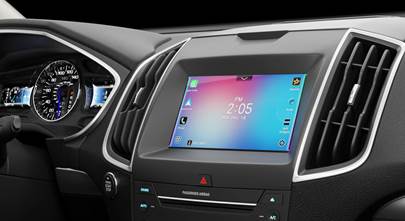
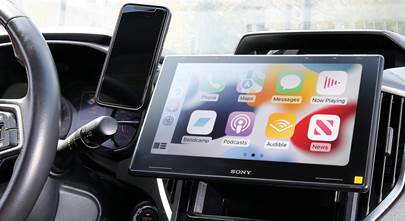
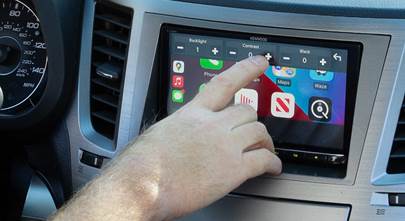
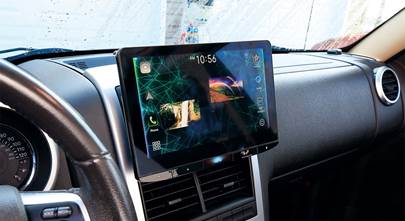
Uh, and then separately, there is a screen that either mounts where the factory screen was and is a direct replacement of the eight inch screens. Or in some cars, you could go with a floating touchscreen that has a specific mount that will work in that car. Correct.
(23:41 - 23:54)
Yes. And the mounts and all of that, that's where ADS comes in, right? Then not only are they doing the brain, but they're making the physical nuts and bolts of how to mount these screens and this chassis in these dashes, right? Exactly. Yes.
(23:54 - 24:19)
And a ton of R and D went into, uh, developing those brackets on their side. Um, like if you look at other companies that make those solutions, they're 12 solutions that Maestro IdataLink came up with, uh, for their apex line covers about 45 million cars on the road today, which is absurd. That's huge.
(24:19 - 24:37)
It's huge. I mean, and not only solves the problem of, I mean, I've been into many shops and every single one of them has that dash kit wall. So not only does it solve that problem, uh, it solves a problem of financial overhead for these shops, but one kit can cover many different vehicle solutions.
(24:38 - 25:04)
So it's downsizing a lot of what the consumer base needs to buy in order to put a radio in a vehicle. Because these kits, unlike a lot of kits over the years, even IdataLink kits, uh, these kits are different because they don't change the cosmetics and even the actual dash pieces, right? Like the original dash piece where the HVAC controls are all that stuff around the radio. That's not replaced.
(25:04 - 25:07)
No, not at all. These solutions. No, everything is integrated.
(25:08 - 25:22)
Uh, and a lot of the solutions up until this point, we're like, I guess we got to take that big part of the dash out and put a whole new piece in that allows for a radio. We have to relocate the HVAC controls and the hazard lights button and all of that stuff. Right.
(25:22 - 25:29)
And this is just way simpler and I would imagine way cheaper, uh, than doing it the other way. Correct. Yes.
(25:29 - 25:58)
I mean, so God forbid, one of the examples that we use all the time is hiring techs right now in the industry is kind of a nightmare, but that's beside the point not to go down the rabbit hole, but let's say you got a new guy and you put them on a car and this car just requires a slew of modifications, cutting the dash, that's something obviously you don't want because it's, it's a liability. They could be inexperienced. However, whatever, or what this product does is completely eliminates that.
(25:58 - 26:08)
Yeah. For about like 98% of the solutions of direct replacement. It's as simple as like, if you can take the radio out, you can put this in no modification, no cutting.
(26:09 - 26:29)
Yeah. And that's where the Crutchfield master sheet still comes in handy, right? That along with the videos that Matt has put together, uh, and whatever else you can find on YouTube, you'll get the radio, the factory radio out. That's, uh, the hard part in most vehicles is how do we make this new thing fit? And that you've got that figured out now.
(26:29 - 26:38)
Uh, so there's 12 of these kits out here, uh, initially at launch. At launch, there will be 11 kits. 11 kits.
(26:38 - 26:52)
By the end of the year is when the 12th one comes in. Okay. Uh, and how did you guys decide what vehicles to prioritize? Like what, what, why these 11 or 12 kits? So it boils down to popularity.
(26:52 - 27:09)
Um, these are going to be the most popular vehicles on the road. Uh, so obviously we wanted to reach as many clients and customers as we could at first. Um, but later down the road, if this becomes successful, like you were mentioning before, this is a modular chassis with a screen.
(27:09 - 27:29)
So the bones and the groundwork of the modular chassis are there because everything is going to function exactly the same, really, we're just limited by screen size at this point. If you look at around 2014, 2015, and 2016, right? Those are the vehicles that we are seeing in the bay today. Cause generally it works in a 10 year frame.
(27:29 - 27:34)
That we're finding that we find the same thing with our customers calling us. Uh, that's the sweet spot. Exactly.
(27:35 - 27:52)
But when you look at the numbers that they ran, that was about 68% of vehicles on the road today can get radio replacements, which is, it's a good number and it's going to keep us fed. But if you fast forward to 2022, that number drops to 19% of vehicles on the road today. So it can be worked on.
(27:53 - 28:10)
So in, in another six or seven years, we're all going to be hurting unless there are solutions like this, right? And thankfully the solution came, uh, because they reran the numbers with direct replacement on the market, hypothetically, and those numbers shoot up to 70% of vehicles. Wow. That's huge.
(28:11 - 28:18)
Now that is just for phase one. There are other phases planned and ideally new screen sizes. However, that depends on the success of the product.
(28:18 - 28:31)
That makes sense. So this is a, it's more than a, I wouldn't call it a pilot, right? I mean, you guys are all in on this, but if it turns out people don't care. Then who knows what happens with phase two? I don't want to think about it.
(28:32 - 28:48)
Which kind of brings me to a big question. Like, I mean, I bought a car last year. Uh, and I mean, I, it's the first time ever, uh, that I have owned a car and I have, I'm not planning to replace the radio.
(28:48 - 29:11)
Uh, it's got a huge touch screen. It's got all the features I want. Uh, it's what are the things maybe, maybe this is just, you know, you need to get your, uh, fortune teller hat on, or maybe, you know, what are the things down the road that people are going to want? Like, why do I need a new stereo? If this, I mean, the radios that cars are coming with today are better than they've ever been.
(29:12 - 29:29)
So where does that, like, why do I need a new Kenwood in there? So my biggest proponent would probably be longevity of the OEM systems. Cause when you look at some of these cars that are coming out, I mean, yes, they're great, the pictures are beautiful. The there's really nothing that you can change on them.
(29:30 - 29:46)
That was also the case for, for example, the Cadillacs with the Q systems when they first came out. And it was an awesome radio flip down and everything. But, um, from my experience there, they get replaced a lot because of a delamination issue that happened.
(29:48 - 30:02)
So longevity would be one, um, that makes sense. Then you would have to replace it with a product that, you know, is going to have the same issue because you're replacing that one with another a factory product. Yeah, exactly.
(30:03 - 30:23)
So, yeah, that, yeah, that's a, that's a tough spot. That'd be a tough sell. But I mean, the other side of life to that is, uh, how good do these works work or how, how good do these radios work in the long run? Um, not to inflate myself or anything, but I have a 24 GTI and I hate the infotainment system in that thing.
(30:23 - 30:38)
I mean, it's, it's has problems from the factory of just completely desyncing. Uh, I'll be using navigation and it'll just go away. I mean, it's, it's great car, but that's a terrible experience on my end because I get lost all the time.
(30:38 - 30:57)
I got lost coming down here. Uh, I have a Subaru is my second Subaru and I haven't had any problems with this one, but the one I had previously, I bought it in 2020, constantly dealing with, uh, it was wired only car play. And I mean, half the time it just wouldn't work and I'd have to disconnect it, reconnect it.
(30:57 - 31:12)
And then it would usually fix. Uh, I mean, you don't, you don't typically have problems like that with Kenwoods and most other, you know, top tier aftermarket car stereos. And I'm sure there's a quality control from factory, but I can speak on Kenwoods.
(31:12 - 31:22)
It's a very rigorous quality control process. Uh, so generally problems like that. I mean, if you do encounter them, that's why I have a job and get a paycheck.
(31:22 - 31:51)
But then on the other side of that is most of our customers don't really see them, those issues. Uh, so in these direct replacements, you have the built in look and you have the floating touchscreen. Look, is there overlap? Do people have the choice in some cars to go built in or floating touchscreen, or is that based on dash configuration and your choices made for you? Like what's the deal with that? So it, it, it, it's a little bit of both, um, depending on the dash configuration.
(31:51 - 32:18)
Let's say you have a vehicle where the opening is just way too indented into the dash. I mean, at that point, you're pretty much subjected to just the eight inch. However, for example, some Fords have the luxury of either they can put the eight inch, uh, variant in depending on what dash they have, or if they have, let's say the four inch dash, they can upgrade to a 10, which previously wasn't even possible, right? That's a huge difference.
(32:18 - 32:31)
It is those four inch screens are ridiculous. They feel so tiny now. Uh, I also have a truck with a, uh, a six and a half inch touchscreen, uh, that I installed many years ago that felt huge at the time.
(32:31 - 32:44)
Um, but I've had, you know, a 10 inch floating touchscreen in one Subaru and the factory one is huge and my new one. And that little six and a half inch screen that used to feel so huge is, is just almost unbearably small now. No, absolutely.
(32:45 - 33:19)
I mean, so, I mean, that's another, uh, highlight of direct replacement. So before you could do that solution where you could put a six and a half inch receiver into the dash, but you're still downsizing from the original eight, right? So now you can swap an eight for an eight and not have to deal with that downsizing. Do you have a feel yet for the general population? Do they prefer floating touchscreens or do they prefer it built in? Cause I, we, we present that all the time to customers and, you know, some people will say, oh no, I don't want that big thing hanging out on my dash.
(33:19 - 33:42)
And other people are like, how big can it be? Uh, do you have a feel for like generally, uh, is it really like a 50, 50 toss up or is there a, a trend one way or the other? That is what I find a 50, 50 toss up. Now I can tell you it's definitely dependent on preference because me myself, I am wholeheartedly bought into the eight inch flush mount OEM look. Okay.
(33:42 - 34:02)
I, if I had to replace my radio, it has to look exactly the same, just better features. And I, I truly believe that the eight inch is going to be the bread and butter, but the 10 inch also has great benefits to it as well. In the example of the Ford, again, with the four inch screen, there's no way to put an eight in there, but the cubby fits a 10.
(34:02 - 34:12)
So you can drastically upsize your, uh, radio. Yeah. Oh, I was trying to find an example of a vehicle where we had where the answer would have been no before.
(34:12 - 34:28)
No, a lot of them used to be nose. So the infinity platform was one that was, it's because it's so heavily integrated into the vehicle, right? So that would be a case. Even when I was installing customer comes in with that, Hey, I hate my radio.
(34:28 - 34:37)
What can I do to fix it? I mean, sorry, Mr. Customer, I can put in a Bluetooth module and send you on your way. But as far as that radio goes, it's living there now. That's not the case.
(34:38 - 34:47)
Yeah. Uh, that's huge. I think the thing that excites me the most about this, um, you know, Kenwood has made great head units for a long time.
(34:47 - 35:19)
We're kind of used to some of the integration with the I data link products, but just simply being able to say yes to those customers where before the answer was just, just a flat nose. No, I mean, and as you're alluded to, we try to find other cool things they could do, but you know, if they wanted wireless car play, you know, we weren't doing that in the dash and right now we have great solutions from great partners that, uh, we can now say yes to some folks. So look forward to hearing those calls where people get surprised by our answer.
(35:19 - 35:30)
So, you know, we'll have customers that'll call in that maybe they've talked to us before and the answer was no. And now all of a sudden, Hey, I checked again and now y'all have something. Tell me about that.
(35:31 - 35:39)
Right. How exciting is that? So no, exactly. So, uh, I, now I can't list them off the top of my head, so don't quote me, but, uh, it's about 27 different vehicles.
(35:40 - 35:56)
Awesome. Can you list those for me, please? You've just said not to ask him to do that, but I can tell you that, uh, from the no customer, uh, quote unquote is what I've been calling them. Um, there is a massive excitement on the market.
(35:56 - 36:13)
One of the biggest examples that I can think of, uh, immediately for that. So during the development of the kits, Australia asked us to develop a kit for their Holden Commodore, which is an insanely popular vehicle down in Australia. So we don't get a lot of calls about that.
(36:13 - 36:15)
No. But shout out to anyone who has one though. Go ahead.
(36:16 - 36:22)
You know, drop us a message. But the U S counterpart to that would be the Chevy SS. Oh, okay.
(36:22 - 36:40)
Okay. So it's the exact same, uh, exact same platform, exact same frame. Now, when we made the marketing for the Australia, uh, division and they released those ads, somehow that advertisement ended up in a Chevy SS owners group over here, stateside.
(36:41 - 37:04)
And to this day, they have not stopped blowing up our inbox asking when it's coming out. Fortunately, now the answer is it's out. So you can stop, but it's great to see, because the question was never, how much is this going to be? It's when is it coming? How can I get it? How fast can I get it into my car? Makes sense.
(37:04 - 37:38)
Yeah, that's, that's awesome. That's a clue that might be part of the answer to my next question. Uh, do you think the people that will be most excited about this are the ones that simply want updated technology in their dash connectivity with their phone navigation, whatever, or will it be enthusiasts who are building out full systems and now they have more outputs that are, you know, the way you want them, not factory radio outputs, but aftermarket radios with preamp outs, optical, digital outs.
(37:38 - 37:52)
Uh, is it, is it that segment? And that sounds like the group you're probably talking about. They're probably more to be like that, but what are your thoughts on that? So in fairness, I think there's excitement across the board. Uh, obviously, let me explain.
(37:52 - 38:00)
I got to go. I got to go when I got to go in. So the reason I say that is because obviously, of course, the enthusiasts are going to be excited.
(38:00 - 38:15)
There's finally something available for my car. But the other side of that is, again, this is falling back on my installer experience, the industry has shifted more towards integration rather than just replacement. Uh, and that's just across the board.
(38:15 - 38:51)
Uh, I truly feel like gone are the days of fast and the furious where I want like the brightest and shiniest looking doodad in my dash, uh, everybody wants to, I mean, preserve, honestly, the second largest investment they ever make outside of a house is your car. So they just want to keep that integrity of what the manufacturer wanted the dash to look like without changing it way too much. And, you know, another side benefit, uh, of not changing the way the factory radio looks, uh, even though it's not a factory radio anymore is that it doesn't become a thief magnet either.
(38:52 - 39:07)
Right. Um, how easy is it to install these direct replacements? I feel like a lot of people are going to hear that and go, Oh, that sounds complicated. That sounds maybe harder than a typical car stereo installation, which we've been helping people with for many, many years now.
(39:07 - 39:28)
Uh, is this very much a do it yourself or project, or is this a, you should take it to an installer type of project? There are some, there are some where I would recommend professional help, uh, but for a vast majority of them, it's, if you can take that radio out again, you can put it in. Uh, it's really that simple. Um, the brackets fit in the factory spot.
(39:28 - 39:42)
So there's no guesswork. Uh, really if you can flash them on the module for maestro, that's probably quote, unquote, I mean, I, I almost like shy to say the hardest part, but, uh, it's really simple too. Yeah.
(39:43 - 40:00)
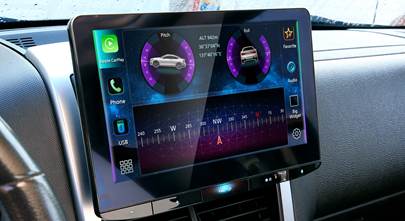
I wrote down the words pitch and roll because I wrote that down really quick on the, on the infinity. I was, I was watching if it has a direct replacement radio and I was watching the training that you guys did, uh, the video of it. And I thought pitch and roll.
(40:00 - 40:10)
You don't hear that with most radios that we sell. Uh, can you tell me more about that? Yeah, absolutely. So the pitch and roll function, I mean, I kind of hold it near and dear to my heart.
(40:10 - 40:20)
Uh, I've, I've heard the word gimmick before, but I promise you it's not. Uh, so I'm originally from Maryland. I come from a state where a lot of people hit the sand dunes in ocean city.
(40:20 - 40:39)
And a lot of people climb those rocks in the mountains. Yeah. So being able to see where your vehicle is sitting on the fly may seem like, uh, I don't know, just like a feature that's cool to look at, but for the guys that actually use it, I mean, you're, you know, when your vehicle's about to tip, some of these guys even know what exact degree it's about to tip at.
(40:39 - 40:52)
So being able to see that information, they can know, Hey, I'm approaching tip or, Hey, this climbs dangerous. I should probably go back down. So it really does provide important information for the people that need it.
(40:53 - 41:08)
And is that information coming from the car's computer and now it's displayable on these new stereos, or is the pitch and roll calculated by the, the ADS product or the Kenwood or what? How did, how do we get this information? Yes. That's what I thought. That is the best answer yet.
(41:08 - 41:20)
Yes. So the, it's a little bit of both. So for vehicles that don't provide the information on the CAN bus, uh, our, uh, the function works because we have a built-in gyroscope, uh, to the radio itself.
(41:20 - 41:41)
So that provides the information on vehicles that don't have that information available. But then on the other side of that vehicles that naturally have that information on the CAN bus, the maestro can actually read that and it can display it to our radios. So when that happens, our internal gyroscope gets turned off and it uses the vehicle's gyroscope.
(41:41 - 42:05)
That way it's a higher values that are displayed. I'd be curious. Um, is there any features and you talked about pitch and roll a little bit, but are there any features that, um, are kind of, maybe they're a little bit of a secret right now, but you're kind of, you're, you're excited that they're there and you wish that they would get more love, you know, like any kind of hidden gems in there.
(42:05 - 42:24)
So honestly, for me, it's not a new feature, um, but I rarely see it used as the accessory control panel through the radio itself. So, so paint me a picture of how that would be used. So, I mean, it's a menu that you can pull up and those, um, have three slots available to you.
(42:24 - 42:41)
Now, what that does is it'll actually talk to the maestro. And once you press on the, that accessory control button on the screen, you can turn on third-party exterior accessories. So something like a light bar as an example, a light bar, a winch through the radio itself.
(42:41 - 42:57)
So now you don't have to put more buttons or holes in your dash. You can just use the radio and it will perform that function. Now, again, this is the way that it works is it talks to the maestro and then the maestro itself has external triggers and it would trigger those triggers that does, yeah, it does.
(42:57 - 43:02)
Yeah. Um, but that will turn on the outside. Uh, third-party accessories.
(43:02 - 43:25)
So, I mean, that's something that I would love to see more people implement because again, just further solidifies the story of OEM. Uh, is there any, uh, cool application? So if that's a feature that's been around for a while, um, and of course it's included here, is there any, like, what's the coolest application of that, uh, uh, of that feature that you've seen? I mean, you mentioned winch, that's cool. Light bars, that's cool.
(43:25 - 43:54)
I didn't personally see it, but my predecessor, yeah, my predecessor and his counterpart actually managed to run a, what is it like a remote control car track off of this third-party accessory at a show from the head unit, from the head unit to the maestro and from the maestro to, I guess, whatever was externally triggering this racetrack race track. Yeah. So like a kid's toy kind of racetrack maybe, or exactly.
(43:54 - 44:02)
Well, that's not something you hear about every day. I just thought like, when I heard that, I was like, oh man, I really wish I would've seen that in person. Cause that just sounds cool.
(44:03 - 44:17)
That's why that's exactly the question I was going to ask next. But I mean, honestly, so with direct replacement, of course it fits a lot of vehicles. Uh, but really I see this being extremely popular with off-road markets, especially with clearly that.
(44:17 - 44:28)
So yeah, the most, most folks don't have a winch on their car. If they do, you're planning on getting your vehicle dirty and perhaps trapped. Exactly.
(44:28 - 44:39)
But I mean, external triggers of light bars and winches, I mean, that is something that can be used widely in the aftermarket for the off-road vehicles. Yeah. Which makes sense.
(44:39 - 44:50)
You know, when you're looking at the, our two most popular vehicles that we get calls about are, you know, full-size trucks like the F-150 and Sierra. Um, and then the other one is Jeep Wranglers. Yeah.
(44:50 - 45:02)
Hands down. So, you know, the, that 12 volt accessory, I mean, that really, really, uh, appeals to them. These direct replacements have an optical digital output.
(45:03 - 45:10)
The Exelon reference line does. Exelon reference only. So then you're going for the Lexus version of the Kenwood.
(45:10 - 45:19)
Correct. So the optical digital output, what is the primary reason somebody would want that? I would assume it's for hooking up an external DSP. And you would be absolutely correct.
(45:20 - 45:40)
Don't your radios already have a really good DSP in them at that level? So yes, they do. Um, now a lot of people on, you know, the, in the car audio industry would venture to say, oh, it's not true. DSP, unless I can control all, I don't know, 16, 32 bands or whatever they want to do.
(45:41 - 45:55)
Um, fact of the matter is that, I mean, DSP is important for when you're thinking about sound quality, but we had a very small majority. Ask for the optical out. The thing is that small majority rightfully.
(45:55 - 46:04)
So I'm not taking it away from them is very loud. So, so we ended up bringing it. That happens from time to time in many, many things, but yes.
(46:04 - 46:16)
Right. But I mean, it, I feel like it's a stronger platform because of it. Uh, it truly does sell the story of Exelon reference, a higher tier, um, better components now optical out.
(46:17 - 46:26)
So thank you so much for coming down here today, Kelvin. I know you had to make the drive from, uh, where it was around Baltimore. But honestly, I, it was a pleasure.
(46:26 - 46:33)
I do it all over again. Well, thank you once again for coming in, uh, answering all our questions. And, uh, I'm pretty excited about this.
(46:34 - 46:41)
I think our advisors are pretty excited about this. Uh, and it's all over the website now. So now customers can get excited about this as well.
(46:41 - 46:49)
Uh, being able to say yes, where we used to have to say no is, uh, it's pretty awesome. Oh, absolutely. And it's, it's been a pleasure again.
(46:49 - 47:03)
Um, but I, I can't, I can't see, I can't even put it into words how excited I am for this product. I know you can't see this at home, but he's getting emotional right now. I know I'm getting misty eyed.
(47:03 - 47:12)
I'm like, I'm trying to hold back tears. This changed my life. Well, uh, and I don't even think you're joking all that much.
(47:12 - 47:27)
No, I'm not really not. Yeah. It's, it's nice to be a part of a product that is essentially future-proofing what I already thought was from an outside source diminishing.
(47:27 - 47:33)
Yeah, absolutely. That pie got a little bit bigger again. And that's, that's what we're excited about for sure.
(47:33 - 47:38)
It feels like it's truly the next generation of car stereo. It does. Yeah.
(47:38 - 47:46)
A lot of innovation. I think it's going to push other manufacturers. Like you said, would that be a positive? If, if more people buy in and there's more competition, that's more innovation.
(47:47 - 47:52)
That's more, uh, more solutions for our customers. And that's great. Even when you have put a better myself.
(47:52 - 47:58)
Exactly. Even when you have other comp competition for this space, you were still the first. Yeah.
(47:58 - 48:05)
Right. And every one of our advisors will know that for the long haul. Uh, and just like you were the first originally with iDataLink.
(48:05 - 48:15)
So yeah, you should put that on a t-shirt. Oh, they did, by the way, I should have worn it today. I have mine in my office and I meant to change into it.
(48:15 - 48:17)
I forgot. Yeah. Uh, I said it three times now.
(48:17 - 48:21)
I'll say it one more time. Thank you once again for coming in, Kelvin. It's been a pleasure.
(48:21 - 48:46)
It's absolutely been a pleasure. Thank you guys for having me. Oh, so Huffy.
(48:46 - 48:50)
I really liked that guy, Kelvin. Uh, it was good to have him studio. He's a good dude.
(48:50 - 48:55)
Yep. Answered all of our dumb questions. Uh, he even seemed to enjoy it when you dropped your silly puns.
(48:55 - 49:03)
Uh, I tried. I don't know if, I don't know. You want to shed some light on those? I probably edited out all of your silly puns.
(49:03 - 49:07)
I don't know if our audience at home will listen. All right. We're, we're just about ready to wrap this thing up.
(49:07 - 49:20)
Um, but I, I do want to, I do want to give a nod out to our, uh, our sponsor. Uh, every single episode of Crutchfield the podcast is sponsored by Bill Crutchfield. He's the one that pays us to do this.
(49:20 - 49:24)
So there you go. Uh, today's not a sponsor. Ooh.
(49:24 - 49:31)
Hey Jr. Have you ever installed a car radio? Many, many car radios. All right. Well, I've got a product for you.
(49:31 - 49:35)
Oh, tell me more. Installing a car stereo. Don't fight with the tight spaces.
(49:35 - 49:42)
Grab the pro fit wire worm, the installer's secret weapon. Today's not a sponsor is the wire worm. That's right.
(49:42 - 49:51)
I love the wire worm. I know you do. Just tape your wire, fish it under the dash through panels or carpet.
(49:51 - 49:55)
Boom. You're done. At 48 inches long, it's rigid and flexible.
(49:55 - 50:11)
Perfect for corners and safe on interiors. The, we have several wire worms in the install bay here at Crutchfield headquarters that we use with training classes and such. I have purchased wire worms that I keep in my personal toolboxes.
(50:11 - 50:14)
Yes, of course. I get a discount. They're already not that expensive.
(50:14 - 50:17)
1299. Yeah. My price a lot less than that.
(50:17 - 50:24)
Yeah. Uh, and, uh, they're fantastic, uh, because they do exactly what they're supposed to do. They're rigid.
(50:24 - 50:27)
They're tough. They're long enough. I think I said that that was all in the commercial.
(50:27 - 50:34)
Yeah. Oh, am I just, can I read a review? Uh, I've got one ready. You got one? I've got a long one.
(50:34 - 50:37)
Okay. I imagine. I know you like the short ones and there's some great ones.
(50:38 - 50:40)
So go for it. Maybe we picked the same one. I don't know.
(50:40 - 50:50)
Amazingly useful. Now it sounds like you knew that I was going to do the wire worm because you already have a, I'm just, I just looked stuff up. Okay.
(50:50 - 50:51)
Okay. Yeah. That's what's going on.
(50:51 - 50:56)
Okay, cool. Um, all right. So this is coming from Kyle from Chicago.
(50:56 - 51:00)
Did you pick Kyle from Chicago? I did. You did. Kyle's was the best review.
(51:01 - 51:06)
I'm so glad we agree on this. Uh, so here we go. Here's Kyle's review of the wire worm.
(51:06 - 51:13)
Is it technically a $12 strip of plastic? Yes. Buy it anyway. It's shockingly useful strip of plastic.
(51:13 - 51:18)
Just the right amount of bending this bendiness. That's in quotes. I know like that.
(51:18 - 51:21)
Yeah. Yeah. It's one of those handy things.
(51:21 - 51:37)
You don't know how much you missed it until you have it. I've got wires through several parts of my car during the stereo installation that I flatly could not have done without this. And it will for sure be staying in the toolbox for future projects, both in the house and in the car.
(51:38 - 51:40)
What a wonderful review. Go Kyle. Yeah.
(51:41 - 51:43)
Amazingly useful. Five stars. Yeah.
(51:43 - 51:49)
$12.99. It is a very useful piece of plastic. Everyone should have one in their toolbox. You will use it.
(51:50 - 52:01)
And you know, like Kyle, uh, he was thinking $12 for a piece of plastic and then he got the piece of plastic and he's like, yes, $12. $12.99. Whatever. You find a lot of uses for it.
(52:01 - 52:05)
Uh, you know, after the initial installation, for sure. Very handy. Boom.
(52:05 - 52:10)
Well done with the whole, not a sponsor thing, buddy. Oh, I thank you. This episode of Crutchfield.
(52:10 - 53:04)
The podcast was hosted by Huffy and JR recorded in our underground bunker studio at Crutchfield headquarters in beautiful Charlottesville, Virginia. If you've got a name suggestion for our new studio, by the way, please send us an email podcast at crutchfield.com. Big thanks to our guest, Kelvin from JVC Kenwood for, uh, he actually drove all the way down here from Baltimore just to join us for this podcast. So big thanks to him for taking an entire day basically to, uh, to join us on this show and talk about Kenwood JVC direct replacement radios, we would love to solve your consumer electronics mysteries on this show want to know what kind of stereo we'd recommend for you or your house, your car, your truck, your, whatever, send us an email podcast at crutchfield.com and, uh, you know, try to stump us, try to make, don't, don't give us the easy stuff.
(53:04 - 53:08)
We, we do. We've done that. Let's give us something challenging.
(53:08 - 53:15)
See if we can figure out how to solve your consumer electronics problem. There you have it. You up for a challenge, Huffy? Yeah.
(53:15 - 53:19)
Maybe the answer is the wire worm. Maybe we've already answered that. That could be.
(53:19 - 53:26)
And lastly, thank you to Bill Crutchfield for continuing to pay us to talk about the coolest tech on the planet. Thanks Bill. Yes.
(53:26 - 53:27)
Thank you, Bill. Thank you. Huffy.
(53:27 - 53:47)
We'll see you in July. I do have a optical digital question. I wrote down.
(53:48 - 53:54)
Nice. We should, we should shed some light on that question. That fiber optic.
(53:54 - 53:59)
Yeah, I gotcha. Yeah, yeah, yeah, yeah, yeah. The jokes are right over my head.
(53:59 - 54:05)
The jokes are funnier when you have to explain. His job is puns. So I'm a sucker for puns.
(54:05 - 54:09)
So it's good. And the worst, the better. It wasn't the best.
(54:09 - 54:12)
Yeah. I laughed. There you go.
(54:12 - 54:15)
I'll take it. That's a win. Rrrrrrrrrr two.
(54:16 - 54:23)
It sounds like, uh, someone's making droids for star Wars. And you start looking at our maestro, uh, model numbers. You know, it's funny.
(54:23 - 54:29)
Cause they're companion modules. There you go. Crack the code.
(54:29 - 54:33)
There it is. I might have to insert that into the episodes. Please.
(54:33 - 55:01)
Yes. Are you going to do my optical pun? This might that might be the little little snippet. I play at the end before before the opening or after the end It might be you'll be an Easter egg somewhere Very good, then.
That's why I'm here Because you inspire Easter eggs You inspire content that doesn't make the regular part of the show You're welcome. Yes Someone's got to do that is content. That's right



Comments (0)