There is only one answer
Audio-Technica engineer Shiwaku Nonomi on headphone design, mentorship, and learning to trust herself

S
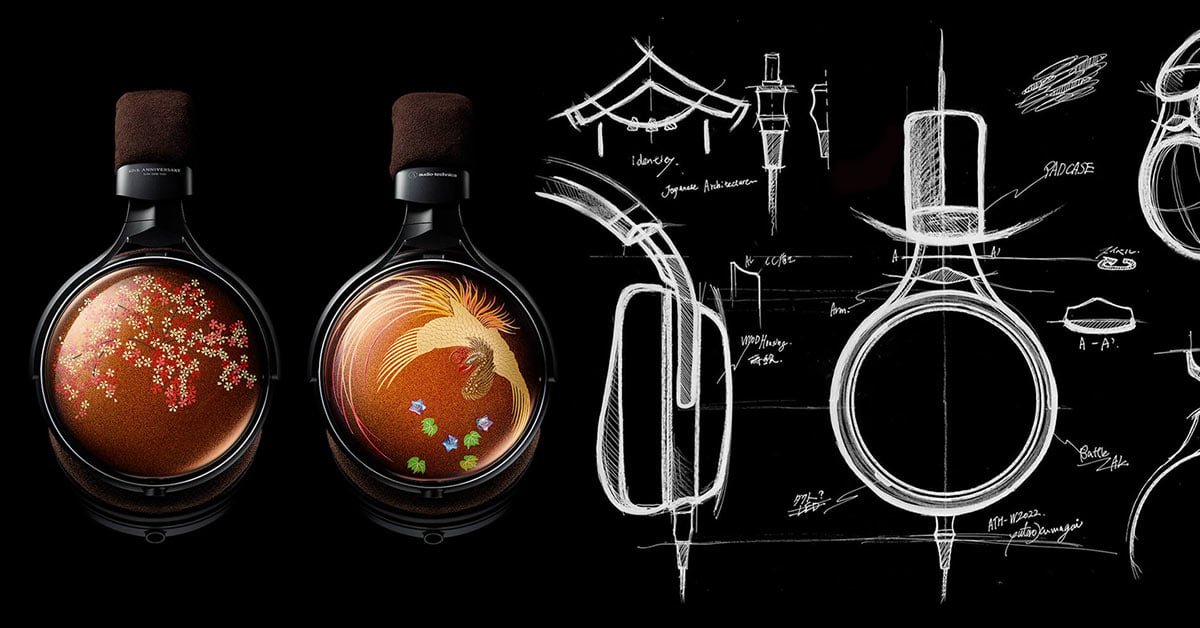
hiwaku Nonomi remembers waking up in a panic. It was back in 2022, and her latest project, Audio-Technica’s 60th anniversary W2022 headphones (pictured above), was weighing on her.
“I saw those headphones whenever I closed my eyes," she told me from her home near the company's headquarters in Machida, a quiet, hilly pocket of Tokyo. "They haunted me in my dreams."

Audio-Technica engineer Shiwaku Nonomi works on a headphone driver at the company's headquarters in Machida, Japan. Behind-the-scenes images provided by Audio-Technica.
A lead designer and engineer on several flagship models, Shiwaku was no stranger to high-stakes releases. But the artisanal, small-batch W2022 wooden headphones represented a new challenge and a turning point in her career.
Up until that point, she always believed there was one answer when it came to headphone design. Then, for the first time, she was struggling to find it. "We made at least 50 adjustments to the driver," she said. "We couldn't get it right."
Talking headphones, from Virginia to Machida
I spoke to Shiwaku-san earlier this year with the help of our interpreter, Ashley. When I requested the interview, my plan was to discuss two newer, highly praised open-back models: the ATH-R70Xa, a set of reference monitors, and the ATH-ADX7000s, the company's stunning new flagship headphones. But we ended up exploring the older W2022 project — and how it forced her to abandon instincts that had served her well over the years.

I originally wanted to discuss building headphones (like the pictured ATH-RX70a) with Shiwaku, but our conversation led somewhere even deeper.
Shiwaku had also been featured recently in a brilliant short documentary about the headphone creation process called Always Listening, by New Zealand-born, Tokyo-based filmmaker Nick Dwyer (available on YouTube). The film offers a fuller visual portrait of Shiwaku's world, but our conversation gave me a different view.

Shiwaku Nonomi during our remote interview, with Ashley providing the interpretation.
I learned how those anniversary headphones tested and strengthened the trust between an apprentice engineer and the mentor who had shaped her career.
Discipline and joy
During our interview, Shiwaku discussed successes and challenges alike with a smile. Patience, she explained, is part of the job. “Oftentimes, it takes years to develop a new product or driver technology from scratch,” she said. “Even when we are improving or altering an existing driver unit, it can take three to four years.”

Shiwaku has a hand in every part of the design process.
So, when recalling moments of doubt — and literal nightmares — her positive attitude still radiated through my computer screen. Having just watched Always Listening, her personality felt familiar.
Shiwaku described her day-to-day as both breezy and challenging: propulsive and chaotic, sure, but also meditative and reflective. There’s a built-in dichotomy that’s evident in her leisurely daily bike ride through Machida itself. Lush greenery and vibrant botanicals line the streets — but Tokyo’s rushed murmur is still within earshot.
In the film, she describes the “joyful feeling” of releasing something new into the world, but also candidly laments that, “listening to music has become work for me… I can’t help but analyze it.”

Shiwaku in a critical listening session at Audio-Technica.
And when she’s in analytical mode, it’s all focus and intent. She told me she has a strict no-screen policy and the lights are kept low when she’s making critical tuning decisions. It’s a stark contrast to the natural daylight from the lobby's floor-to-ceiling windows. The listening lab is kept dark and intimate, cut by a single focused beam of light.
This approach is learned behavior from all her years at Audio-Technica. Specifically, under the structured guidance of the company’s long-running chief headphone engineer and head of R&D, Hiromichi Ozawa.
Learning to listen
You can see Shiwaku's full headphone origin story in the film, told with hand-sketch animation over a percussive soundtrack. But here are the main beats: while riding in the car with her father as a child, she escaped the drone of AM talk radio with her portable cassette player.
FULL DOCUMENTARY: Always Listening (2025)
Director: Nick Dwyer
Animator: Nanami Sakurai
Runtime: 15:38
Produced by: Panic Ball Productions
She nearly wore out her tape of The Carpenters — with Karen’s vocals soaring and cymbals splashing — through a set of classic on-ear, foam-pad headphones. Later, her older brother introduced her to a whole other level of sound. Larger over-ear cans, with better noise isolation and purpose-built drivers.
One headphone brand that stuck out was Audio-Technica.

True to its roots, Audio-Technica continues to develop intricate, highly engineered turntables and cartridges.
By the time Shiwaku joined the company just over a decade ago, they were one of Japan’s best-known established audio companies. Audio-Technica first built turntable cartridges in 1962 and they’ve grown into one of the go-to brands for vinyl enthusiasts, studio professionals, and the high-end headphone crowd.
Enthusiasts at specialty audio shows like CanJam often gravitate toward Audio-Technica's high-performance open-back or handcrafted wooden headphones. But when I talk to showgoers, many of them name the immensely popular M50x studio monitors as their “gateway” into higher-quality personal audio.
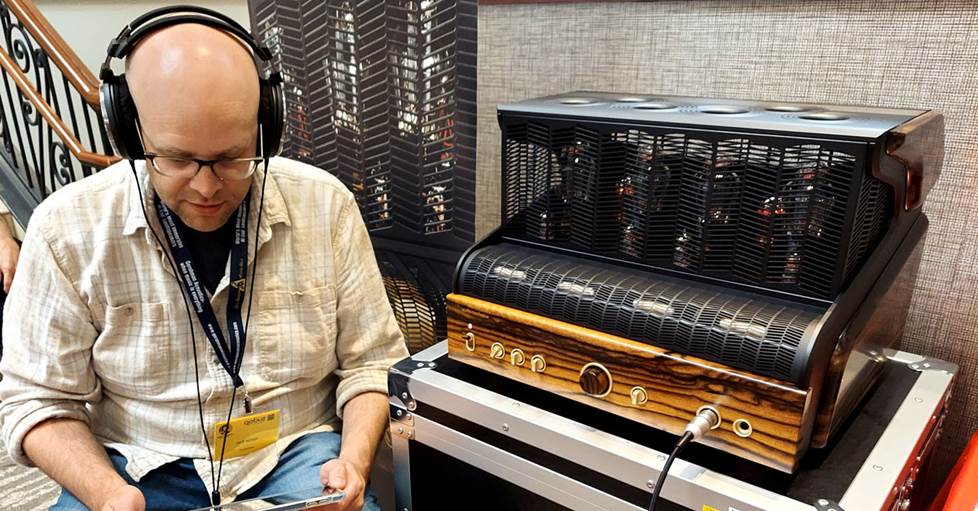
I've seen Audio-technica's flagship ATH-ADX7000 headphones and limited-run $108,000 HPA-KG Narukami headphone amp (with its rare “Kurogaki” wood grain) draw major crowds at shows like CanJam and Capital Audiofest.
Shiwaku’s own path to Audio-Technica headphones was paved by her natural curiosity. When she first heard them, she wondered, “how can these headphones reproduce so much more sonic detail than the ones I grew up on?”
That curiosity propelled her through school, where she studied Chemistry in college and had a knack for playing music.
And it landed her at the company. She admits that when she first joined Audio-Technica, she felt the weight of their history. “Working at a company like this,” she said in the film, “it’s impossible to be unaware of the prestige around you.”

Shiwaku at Audio-Technica headquarters, surrounded by vintage gear from the company's legendary audio history.
But when she was assigned her first task, she remembered her engineering training and fell back on her instincts. Identify the challenge and solve one problem at a time. She soon found herself entrusted with increasingly ambitious projects.
She contributed to wireless earbuds aimed at broader audiences and before long, joined Audio-Technica’s flagship headphone team. That’s where she eventually began reporting directly to Ozawa — a company legend who helped pioneer many of their signature acoustic innovations, including wooden headphone housings.
And this luminary would teach her what to look for and listen for in a set of truly world-class headphones.
Trust the engineering process
Creating a set of headphones takes teamwork. It may seem like that goes without saying, but as Shiwaku explains, it requires a highly coordinated effort toward a common goal — often between teams and individuals with conflicting priorities.
“So, usually what happens is the engineer will go to the production team with something in-hand already,” she said. “With mass-appeal products, we sometimes get a proposal first. But with higher-end headphones, the flow is: we have the prototypes done and then we present them for production.”

Shiwaku and a colleague at Audio-Technica, where creating headphones requires patience and collaboration.
That’s where Hiromichi Ozawa comes in. He fields the pitches from Product Managers, tracks design breakthroughs from the various teams, and keeps track of the various trends. Then, he decides which projects to greenlight.
A patient approach
“Sometimes, this is a long-term game where we’re constantly working on it while we’re starting and completing other projects,” Shiwaku said. “That’s why sometimes it can be three or four years down the road, where we discover something and we’re like, ‘okay, we’ve really created something cool or worthwhile here.'”
One such breakthrough was their single driver unit. Traditionally, headphone drivers are constructed as separate parts working together. Lately, though, Audio-Technica has been doing things a little differently under Ozawa’s watch. All the separate parts of the driver are combined, then fused with the baffle into a single entity. This seriously cuts down on resonance and allows for quicker attack and a precise sound.

Audio-Technica's new flagship open-back ATH-ADX7000 headphones are the result of years of refinement.
One of their top acoustic engineers, Hiroyasu Suzuki, had the idea to improve their previous flagship open-backs — the ATH-ADX5000, released in 2017 — by using this single-unit driver philosophy. Shiwaku said that idea marinated for years before it would ultimately make its way into their new ATH-ADX7000 flagships.
The patience built into the creative process extends beyond the products themselves. Shiwaku explained an engineering culture where good ideas may sit for a while, but they never truly disappear. That patience also shapes the relationships built around them.
Finding her place
At company events, Shiwaku plays guitar and sings in an all-women band with fellow engineers. Early in her career, senior women engineers told her that work at the company wasn’t assigned differently because of gender. Expectations were the same and so was the support.

Shiwaku plays gigs with Usagi no Dance ("Rabbit's Dance"), an all-women band of Audio-Technica engineers.
Most of the engineers I've interviewed over the years have been men, so I was curious why she thought women at Audio-Technica seemed to thrive in these roles. “Well, we naturally get along through everyday conversations, discussing things, or going out to eat together,” she said. “I think everyone genuinely enjoys that, and precisely because there are fewer of us, we tend to come together more closely.”
She said that support didn't erase the pressure to prove herself. There were times when she felt motivation to show that she belonged and that she could serve as a mentor to others. And underneath that, a desire to earn her own trust.
She's built that confidence, project by project. Nowhere is that more evident than in her work on the ATH-ADX7000.
Developing the ATH-ADX7000s
Audio-Technica’s newest flagships pack a punch. The ATH-ADX7000 open-back headphones are the product of philosophy Shiwaku spent years learning: don't chase a sound. Get the engineering right and the answer will follow.
These headphones serve up a lot of what you’d expect from an audiophile offering: a premium build, free-moving air, and a crisp, layered sound with heaps of high-end detail. But there’s a striking mid-bass presence that feels like a stark departure from the field — and gives percussion a distinct emphasis.
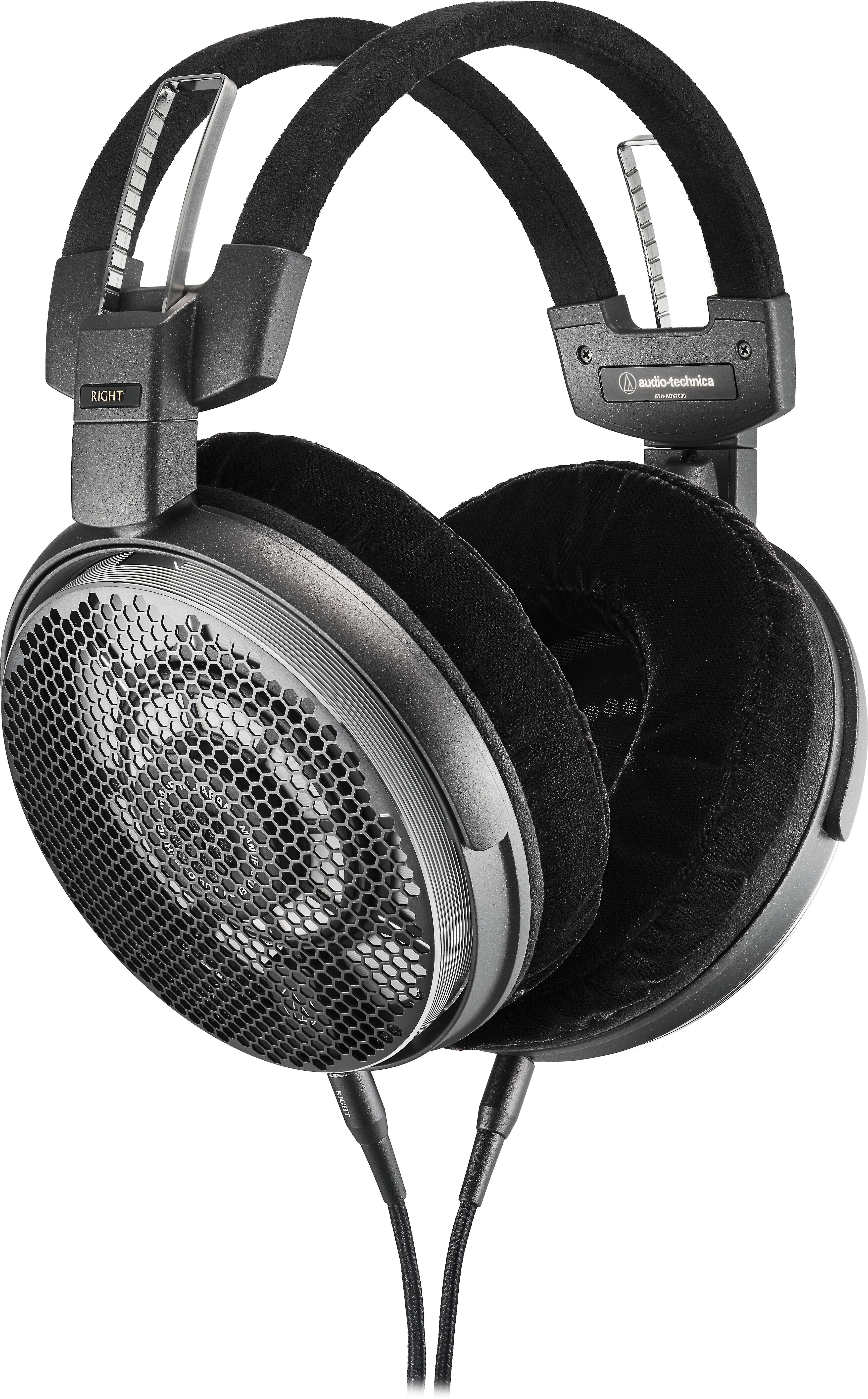
Griffin Silver, the headphones.com reviewer also known as Listener, summed it up well: “There is a palpable warmth and fullness to the presentation. This means that kick drums have a better approximation of large quantities of air moving — rather than being completely defined by their ‘snap.”
When I personally first heard the ADX7000 headphones, it felt like a bold, defiant tuning choice. A conscious sonic choice, made directly in contrast to the norm.
Shiwaku said that Audio-Technica approaches sound tuning a little differently than that. “The ‘warm’ tuning and drum separation you describe? That’s actually only the result,” she said. “We’re trying to make the headphone drivers work properly, so we’re not necessarily listening and trying to aim for certain sound aspects.”
She said that if they get the engineering process correct, the sound should fall into place. So the company’s idea of tuning is making sure the diaphragm — the large, vibrating plate that’s responsible for pushing air and creating sound — moves in a “one-to-one correspondence” with the incoming electric signal.
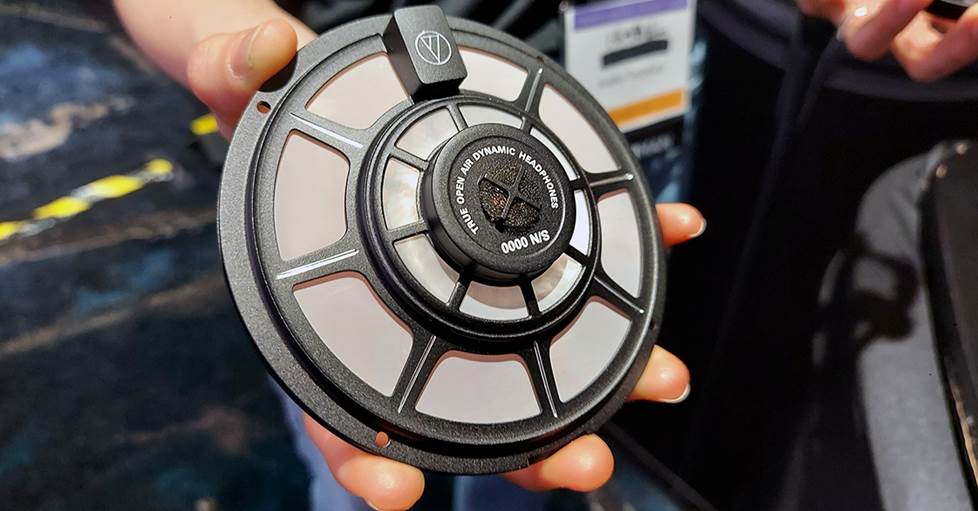
A look at the oversized, open-air dynamic drivers found in the flagship Audio-Technica ATH-ADX7000 headphones.
“This is the most important thing,” she said. “It’s no good if the diaphragm moves too much and no good if it doesn’t move enough. The more precisely the diaphragm moves, the more sonic depth and detail can be expressed.”
Surely, though, they must listen to the headphones, right? "Of course," Shiwaku told me, they listen constantly. That’s how they judge if they got that one-to-one driver ratio right.
But the mindset is always focused on the movement of the diaphragm. Too tight, the sound leans thin and hollow. Too loose, the bass is boomy and the sound in general is distorted. “Like when you’re singing in the shower,” she explained.
So, listening is how Audio-Technica knows when they got it right. “The sound is our ‘answer,’" Shiwaku said, "and there is only one answer.”
But what happens when you don’t know the answer?
Searching for the answer
One reason why Shiwaku talks so confidently about the ADX7000 is because it was built on the bones of its predecessor. The “answer” was pretty clear from the beginning. Another reason for her confidence was that she had survived and thrived through the creation of another set of headphones, where the path to the answer was more grueling.
This was the W2022 60th anniversary project I talked about in the intro. Those wooden-cupped headphones that she told me kept her up at night a few years back.
The W2022's titanium challenge
Audio-Technica knew they had to make a splash to honor the 60th-anniversary milestone. For the central driver unit, Ozawa, the boss, wanted to work with materials that were totally new to the engineers. “The idea was, ‘it’s the 60th anniversary, let’s challenge ourselves,’” said Shiwaku. “But that meant we didn’t have a standard for comparison — or a clear-cut answer.”
Titanium is a lightweight, rigid material with strong damping characteristics. When well-harnessed, these are all strong sonic traits. But it can get unruly.
So, dialing in the sound became the exact game of whack-a-mole that Audio-Technica aims to avoid. Shiwaku and team focused on different instruments and specific frequency bands, then adjusting accordingly. It was as if their whole tuning philosophy had flipped.

Fine-tuning the W2022 headphones proved more difficult than expected.
“As I told you earlier, there is only one answer when it comes to that central driving unit and it’s overall casing,” Shiwaku said. “But we couldn’t find the answer — I couldn’t find the answer — so you start to question the entire premise!”
And once the second-guessing started, Shiwaku said, the whole process became more complicated. There were two main prototypes passed around the team, who would make adjustments to both. Shiwaku described a "never-ending" series of packing in damping material, listening, making tweaks, and then listening some more.
“The center of the diaphragm was prone to rolling and [moving out of sync], so we’d pack damping material loosely at first,” she said. “That would fix one problem, but then another would arise, so you start thinking ‘what if we packed it in tighter?’ Well, then you restrict the driver movement a tad too much.”
In most headphones, she can typically count the number of major final tuning adjustments on both hands. This time there were over 50. She said that this crucial late pre-production stage took about four months longer than usual.
“That’s why [these headphones] appeared in my dreams,” she said. Well, that and the pressure of the company’s diamond anniversary. Plus, the fact that only a limited batch of 100 would be made worldwide — ending up with the most discerning listeners and company superfans. And, once her team was done, each earcup would be painted by an artist’s hand, using the traditional Japanese maki-e lacquer technique.
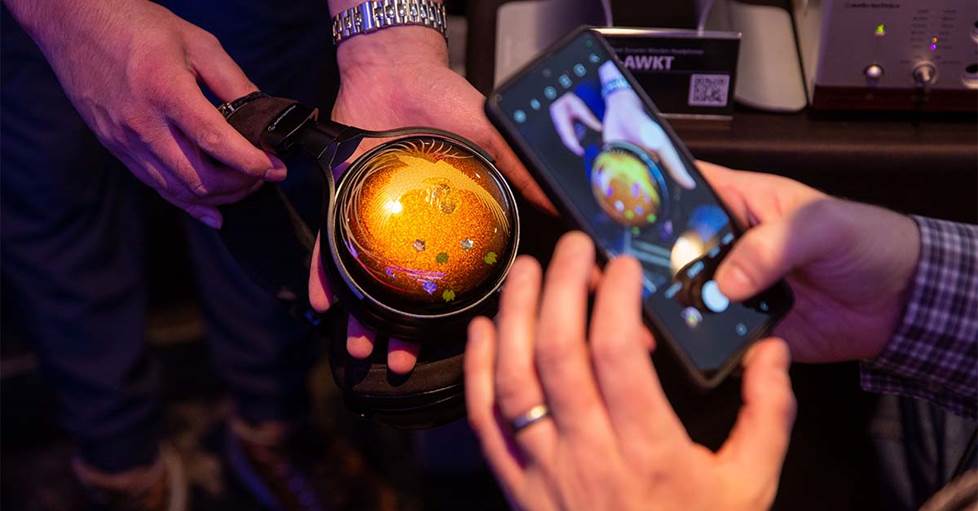
Audio reviewers and headphone enthusiasts found the W2022's sound as captivating and special as the hand-painted ear cups.
Then there was living up to the challenge from Ozawa, the ever-present mentor.
So, when these ¥1.2 million headphones (about $9,000 at the time) were released to rave reviews, suddenly other pieces started to fall into place.
A show of trust
When Nick Dwyer and Audio-Technica originally agreed to collaborate, Hiromichi Ozawa was supposed to be the subject of Always Listening. The boss had other plans. “I feel like I was tricked,” Shiwaku recalled, with a faint glimmer in her eyes that indicated she was only half joking.
“When the 'R' series headphones were being made, they wanted to make a documentary about it,” she said. “Ozawa-san asked me to join him, Nick, and the crew for a dinner to discuss the film.”
Hiroyasu and some other co-workers were there, dining, drinking, laughing, and chatting. At one point during the meal, Nick, the director, and Ozawa conjured up an idea. Although Shiwaku got the idea that they had already discussed it before dinner.

In one pivotal scene of Always Listening, Shiwaku moves with purpose through Audio-Technica HQ, navigating sprawling staircases as the camera struggles to keep up
They decided Shiwaku should be the star of the film. After all, she had proven she could take uncertainty and unfamiliarity in stride. Look at how she handled the titanium drivers in the W2022 project.
“Shiwaku was so incredible,” Nick Dwyer told me over email. “I just wanted to share her personality, passion and charm with the world through that film.”
So, for the next few months, Shiwaku didn't just have the pressure of an important product release. She had a 15-person film crew following her, with two cameras focused on her every move.
“I remember the stairs scene the most,” she said with a laugh. “They wanted to do multiple takes, so for what felt like forever, I’m just running up and down these stairs, with basically like 15 guys in black t-shirts with lighting rigs chasing me.”

For once there was nothing to analyze, just time to simply listen and enjoy.
In the film’s climactic scene, Shiwaku is hanging out with her co-workers and bandmates at a listening bar in Tokyo. “That was a jazz and vinyl bar in the Ochanomizu neighborhood, near our Technica House." (The company's loft-style demo and office space.) Neighboring the tech-hub of Akihabara, Ochanomizu itself is a musician’s paradise with guitar shops, record stores, and specialized instruments dealers lining the streets.
And it was the perfect place for Shiwaku to let go of her analytical instincts. Of course, the unmistakably mellow opening chords of The Carpenters’ version of “(They Long to Be) Close to You” were piped through the speakers. And she allowed herself to vibe to the background music.
Watching the film back after our discussion, I also see a parallel character journey. Shiwaku allowed herself to slip into a main character role. And through her humble and confident actions, served as a role model for others.
One last question
Before we wrapped up, I asked Shiwaku Nonomi about “measurement culture,” like I do with most headphone creators. Some headphone customers and enthusiasts have grown hyper-focused on frequency response measurements. They can make their mind up about a set of headphones, based on what they see on a graph, without ever listening.
Shiwaku said it’s not something she would do, because she strongly feels that the frequency response doesn’t give you the entire sonic picture. You can't fully account for how a headphone will sound on a listener's head.
But, she said she's pleased that there are so many educated, sophisticated listeners out there — and that there’s access to learn. That’s not a bad thing.

Shiwaku checks a set of headphones on Audio-Technica's measurement rig.
It’s also good to keep manufacturers and headphone creators honest and held to a standard. Plus, some people don’t have access to the headphones — so measurements at least give them a reasonable ballpark idea of what to expect. And remember, Audio-technica's philosophy has always been that good sound is simply the result of good engineering.
Yeah, I said to our interpreter Ashley, but doesn't it worry Shiwaku that people will judge her work by what squiggly lines on a graph tell them? Before they ever even hear the headphones?
Shiwaku gave a charming smirk and quick shrug before giving a very brief answer in Japanese.
The rough translation: “Eh, let them measure.”
Need more help? Contact us!
Have questions about headphones? Contact us today.
Our expert Advisors know audiophile headphones inside and out. Your Advisor can send specific Crutchfield pages to your screen, saving you a lot of browsing time. You'll get a shopping cart loaded up with everything you need.
Free lifetime tech support is included with your Crutchfield purchase.








Comments (0)