Podcast: Ep. 55 TV's sound better with a full surround sound system

In this episode:
We are excited to be talking about home theater in this third episode of our four-part series on TV sound. JR and Eric dive into the speakers needed for surround sound and the home theater receivers that power those speakers. If you are considering whether home theater is the thing for you, this episode should give you the guidance you need.
If you want more, check out our beginner’s guide to home theater receivers and our introduction to home theater speakers. For info on where to place your speakers, our article on speaker placement for home theater has you covered.
JR
So there's a lot of things to consider when picking out speakers. You can go to Crutchfield.com, use speaker compare. That might help you actually pick out which speaker speaks to you.
Eric
You like that? I like what you see what I did there. I'll see you speak one more time.
JR
It's speak, we speak your name. Hello and welcome to Crutchfield, the podcast and to our third episode in our four episode series called how to make your TV sound awesome. I am training manager, Jay are joined in studio by Eric once again.
How are you doing, buddy? I am great. Happy to be here.
Eric
It's a fun topic we're about to get into.
JR
This one is near and dear to our hearts for sure. We've already covered making your TV sound awesome with a sound bar, with two channel speaker setups. We're going to, in the next episode, talk about how to do it with headphones.
But today, this episode, it's all about doing it the right way, doing it the way that we want to do it. Right. If you want the most movie theater like experience with the best, most accurate surround sound, there really is no other way to do it than to actually have a bunch of speakers.
Actually surrounding you all powered by a home theater receiver. Yes.
Eric
The good stuff.
JR
So how do you choose the right speakers? The right power for your room, your movies, your game, your sports, whatever it is you want to watch, wherever you want to watch it with who you want to watch it with. There's a lot to cover here.
Yeah, this could easily be a six episode series, right?
Eric
Yeah, we are.
JR
We're going to attempt to compress that down into one episode. Yes. And try to give you all of the basics so that you can start shopping and figure out what you need to build your own personal home theater system.
Yeah, we should jump right in because there's a lot to cover. Let's do it. Let's start with the speakers.
Yes. This is where you should start when picking out a home theater system. Don't start with the electronics.
Start with the speakers and get them the right speakers for your room.
Eric
Yeah. So right out the gate, uh, to me, the most important speaker out of all these speakers that we're going to be picking up is the center channel. That's going to handle most of the dialogue.
So don't skimp on the center channel. Make sure you get a really good, as large of a center channel as you're willing to accept in your space is the right center channel for you. And then we can build the rest of the surround sound around it.
And there can be a lot of different form factors here, right? But that center channel is going to do most of the heavy lifting up to like 70% of the information. And in most movies is coming right from that one speaker.
All those other speakers are important, but that center channel is really doing the heavy lifting.
JR
So you need to think about this when you're considering which of the rest of your speakers you're going to get. Should you mix and match them? Maybe you want to use some speakers you already own, or should you buy a complete system?
Uh, and the, the most important part of that is making sure your center channel matches your left speaker and your right speaker. The front three speakers should go together. So they're using the same tweeters and woofers and materials so that dialogue from movies sounds the same on your front three speakers, your surround speakers, your subwoofer, all the other speakers in a home theater system.
It doesn't matter as much, but that center channel critical, your front, your front three should match.
Eric
Yeah. Ideally that's the case. We understand you might have some old speakers that you absolutely love and you want to use those for stereo sound.
Cool. Well, we'll get you close, but we're going to really, you know, focus in on what the center channel, what those tweeter materials are and try to get you as close to it as possible.
JR
And the center channel is the reason when you start looking at home theaters, you see numbers like 5.1, 7.1, right? It's the reason those are odd numbers, right? Because all the other speakers are pairs of speakers.
Your front left and right, surround left and right, surround rear left and right, at most left and right. The center channel, there's no left and right. It is just the center channel.
It gets dedicated information on a specific channel encoded in the surround sound of your movie or your TV show so that the actors on screen sound like their voices are coming from the screen. Yeah, it's really important. Let's talk a little bit more about those numbers though.
So now we know why the first number is always an odd number, right? And the minimum is a five, right? If you want a full on surround sound, you need five speakers surrounding you, two front, two back and a center channel.
Eric
Uh, that's been around for a long time. Also known as like Dolby digital. You may have heard DTS mentioned, but yeah, five speakers, uh, has kind of been the standard for surround sound for, for quite a while now.
What do you get when you go to a seven channel system? Additional rear speakers. When you really want to fill out that area behind you, um, for larger rooms is usually where we see them.
JR
If your couch is backed up against the back wall of your room, you don't need 7.1. 5.1 will get it done.
Eric
Absolutely.
JR
Uh, but if there's space behind you, put two more speakers back there and you've just, uh, made your surround sound bigger. Like you're in a bigger room, like a movie theater. Exactly.
Uh, most movie theaters also have speakers above you.
Eric
Yeah. And that's when it gets pretty fun. Do we want to talk about the subwoofer first though?
Not yet. Okay. We'll get back to that.
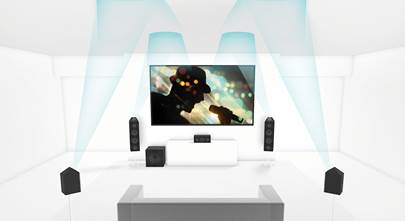
All right. So typically, uh, those speakers, we call them height speakers these days. Now, in ceiling speakers have been used for surround sound for a long time, but as soon as Dolby Atmos was introduced, now we're starting to separate those height speakers from those traditional rear surround speakers.
And that really adds that third dimension of, of, uh, height. You can really place that sound as a result of that around the room. The sound engineers can do some amazing things and really make you feel like you're in that scene on that movie that you're watching.
JR
Uh, I, I was, uh, took part in a Dolby Atmos demo the other day where it was a scene in a movie where there was a lot of rain involved, right? And it would cut from inside a building to outside the building. And every time you cut, when we went back outside the rain, it literally sounded like it was raining from above, uh, in the room during this.
And that's what Atmos and those height speakers can get you. Uh, there's a couple of ways to do them. You can put them in the ceiling, like cut holes in your drywall, run wires to them and install them physically above you for the best height speakers, uh, and experience.
There's other ways to do it. If you can't do that, uh, you can put speakers on top of your other speakers that are aimed up at the ceiling.
Eric
So the sound bounces back down at you, that's typically done at an angle and, uh, the results, you know, it kind of depends a little bit on your room. You're the, the slope of your ceiling, you know, and, and how tall those ceilings are. But most of these receivers have room calibration kind of compensate for some of those things.
But anyway, yeah, that, that solution, uh, is really popular just because it doesn't require, uh, you installing new speakers in the, in, in your ceiling.
JR
So, uh, what I would say is the minimum number of speakers is a 5.1. We're going to get to the 0.1 in a second. Uh, and that's where home set home theater surround sound starts. The max is 7.2 0.4. Like that's where it kind of tops out, which means seven speakers horizontally surrounding you ideally like ear level. If you're picturing this, right. And then the 0.4 is because you could have up to four height speakers above you. And there's lots of permutations in between, like a 5.1 0.2 system would be five speakers surrounding you. One subwoofer and two Atmos speakers.
Eric
Yeah, that's enough for a lot of 5.1 0.6. So you can actually have even more speakers in your ceiling, but you know, typically the 7.1 0.4 is where it's at for a large room. If I'm building a system, you know, if you're building a room around a system and you can do that, uh, go for it. It's awesome.
JR
So that hopefully makes some sense of those numbers. Now let's dive into the 0.1, right? The 0.1 and the 0.2, 5.1, 7.1. Yeah. Uh, that's the subwoofer, right? It's called the 0.1 because it's an LFE or low frequency effects channel. It's built into the surround sound and it's not a full range channel.
It's just the base. Yeah.
Eric
And it's not, it doesn't need power from your receiver. And that's why we've separated it, uh, you know, in this industry to kind of say, yeah, we know that speakers there, but it doesn't require power from your amplifier. Those subs have built-in amplifiers of their own, and you'll see crazy power on those sometimes, you know, from a hundred Watts for a subwoofer way up there to well over a thousand Watts for a sub.
And for a large room, you might need that kind of power to really get the impact. You know, if you're a home theater, uh, you know, if, if, if you're really into movies with explosions and things like that, you're going to want, you know, one of those higher powered subs.
JR
I mean, you, you really shouldn't even be considering a home theater system without a subwoofer. Yeah, no, definitely not. Yes.
You can get big floor standing speakers that will have a lot of base, but it's not the same as a dedicated rumble machine, right? Uh, and so that's what subwoofers are, are for in your movie theaters. When you go there, they have many subwoofers in those movie theaters.
It's part of what makes the, the impact, uh, of a big movie.
Eric
We talked about the importance of the center channel and the next most important speaker in a home theater set up to me personally is a subwoofer. I've often compared it to the kind of the meat and potatoes of a home theater setup. If you're making a stew, you know, meat and potatoes are the most important part is doing all the heavy lifting in the stew.
Now the salt and pepper is important too. And that's, that's fun. Right.
And that's where all those effects speakers come in really important to this too. But the meat and potatoes, you know, and home theater center channel subwoofer, that's, and then that's going to, how many, how many other speakers?
JR
And so that's the first thing to decide is how many makes sense for your room, smaller rooms, larger rooms. You're going to need different amounts for different size rooms. Figure out which set up or orientation for home theater makes sense for your room first.
Once you know that, then you can dive into which speakers. And again, we need to think about your room. The right ones for your room.
Should they be large and imposing and obvious, or should they disappear into your room? We know that the front speakers need to match your center channel speaker. You need to think about things like how much music you're going to be playing versus just movie and TV watching.
Bigger speakers will typically be more musical than smaller speakers.
Eric
Yeah. Are you tuning this for one spot or do you have multiple viewing and listening positions in the room? Because if that's the case, you might find that you want two subwoofers.
That's a possibility.
JR
7.2.4. Yeah, that would be a, yeah, it'd be a pretty sweet system. So, uh, and then of course there's the aesthetics of the speakers. You can get ones that are all different colors, white, black, woodgrain, uh, small, large.
And, uh, of course you might even want speakers that disappear into the room. So you could go with in wall speakers.
Eric
That's a thing. Absolutely. I've seen that used quite a, quite often when people are fabricating a actual home theater, we're talking about, you know, a room in the house that mimics the look of a real theater, like a movie theater.
And, uh, you know, those setups, they don't want necessarily to have floor standing speakers around because that's not what you see at the movie theater. Everything's in the wall. So, uh, yeah, even in those setups.
Yeah, absolutely.
JR
And if you're doing like a projector, for example, a projector screen can be acoustically transparent. So in wall speakers behind the screen. That's exactly how they do it in movie theaters.
So, uh, all of those things should be considered as you're picking out your speakers. Uh, and of course it also comes down to what speakers do you enjoy listening to a different brands? You know, they'll had, uh, you know, their own sort of color to the sound, uh, different materials in the tweeters.
So there's, uh, a lot of things to consider when picking out speakers, you know, you can go to crutchfield.com use speaker compare that might help you actually pick out which speaker speaks to you. Um, okay.
Eric
You like that? I like what you see what I did there.
JR
Why don't you speak one more time? It's we speak your name. Um, so, so you first need to figure out how many speakers then determine which speakers you like, uh, both for their sound, uh, for their aesthetics and for how they are going to work into your home theater room.
Uh, once you've got all the speakers picked out, then it's time to choose a home theater receiver.
Eric
Yeah. And now we can start looking at those and have an idea of what our power requirements are. We can have an idea of how many channels of power we need that gets back into that, you know, that number 5.1.2 or 0.4. And, and you know, you, you'll know what you need to take care of. That's why we want you to start with the speakers first.
JR
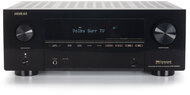
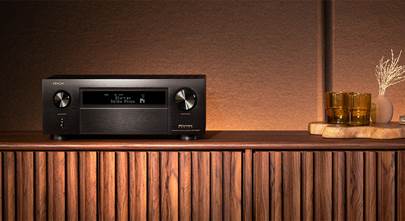
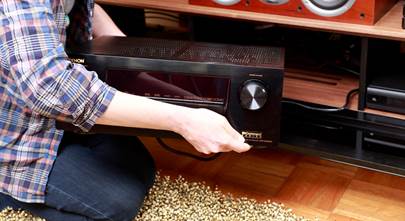
Yeah. So with a home theater receiver, which a lot of us will call an AVR or audio video receiver, home theater receiver, HTR, AVR, it's all the same stuff. That's the same alphabet soup.
Eric
Again, we do that to you. We know we apologize.
JR
We don't like it either, but that's what it is. There you go. So number of channels, this is a major consideration, uh, because now, you know, how many speakers make sense for your room.
Maybe you've say decided a 5.1.2 receiver makes sense. That means five speakers surrounding you, two Atmos and one subwoofer. That's seven channels of power, the five surrounding you and the two in the Atmos.
The 0.1 sub is takes care of itself. Yep. So you need a, you need at least seven channels in your receiver to get that done.
Eric
Yeah. And most of our home theater receivers these days are going to be able to take care of that. That's what most of them engineered for.
JR
Uh, but sometimes you might want a few extra channels of power and a general good rule of thumb here is to buy a receiver with at least two more channels than you know, you need at a minimum.
Eric
It gives you future flexibility, might give you some wiring options, uh, for the, for the, your current setup. You know, there's things you can do with the, within the settings to maybe buy amp, a pair of speakers, uh, or maybe have some, some passive speakers in another room work off of it. So, so that's why we're just trying to think ahead, uh, when we're looking at, uh, how many channels of power you might need.
JR
But it would be annoying to have to buy a totally new receiver just to get two more speakers playing somewhere. Yeah. You don't have to do that.
If you build in some headroom there. Yeah, exactly. You also need to think a little bit about power, right?
When you pick out speakers, they have power ratings, right? That how many, how many Watts of power they can handle. And when you see receivers, they are advertising how much power they put out.
Correct. And it is kind of important to make sure your speakers work with your receiver. Correct.
Eric
However, don't sweat this. No, it's, it's not as crucial of an equation as it is sometimes with say, picking out the right subwoofer amplifier for a car subwoofer. Like then we really want to make sure we were paying attention.
But, uh, here, uh, most of our home theater receivers are going to work perfectly fine with most of our speakers that you're going to use in a home theater setup.
JR
That really is true. Now, if you're looking at some high end speakers, you might need to really up your game on the home theater receiver. And if you're looking at a high end home theater receiver, you might want to up your game on the speakers, right?
They kind of go together. Exactly. But most, most mainstream speakers and most mainstream home theater receivers will work just fine together.
So don't worry too much about the power. Yep. Another thing to consider is how many HDMI inputs does your home theater receiver have?
Now this is, I mean, for a little while there, this was an issue.
Eric
Yeah. These days, you know, more and more people are doing their, uh, their, their streaming directly from their television. So it becomes less of an issue these days, but maybe you're someone who has a lot of game consoles and of course those would be awesome in a nice home theater.
Um, or, you know, you still spin disc, you know, you got a Blu-ray player, you know, there's, there's a lot of, uh, uh, considerations there, but, uh, you know, usually you're going to see something like five HDMI inputs on most of our home theater receivers, which is going to cover 99% of people.
JR
Yeah. Really? Most of them have enough inputs for most of us.
The G another general rule of thumb though, is to get at least one more HDMI input than, you know, you absolutely have to have. So that again, if you get a new piece of gear and you can hook it up, uh, and, uh, you know, multiple HDMI outputs is another thing to consider if you're trying to send video out to like a separate TV, a second TV, another, another TV in another room. Uh, if you have a projector and a TV in one room, you know, TV's there for just watching the news and jeopardy or whatever.
And then you drop the projector screen down when it's movie time. Um, you might need a receiver with multiple HDMI outputs to make that happen.
Eric
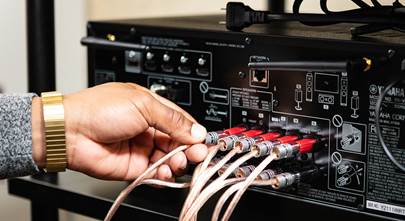
Yeah. So here we're just talking about connectivity, flexibility, you know, if you ever, uh, if you, if you're on our website and you take a look at these, uh, these receivers, we got detailed images of the back of them. And sometimes that can be a little intense.
It's a little intimidating for folks, you know, when, when you have that many inputs and, uh, and outputs, but you know, that's just about flexibility. You're, you're not going to hook into all of those, uh, inputs and I've never seen a customer do it. I've never seen that situation, but it's about the flexibility, the headroom, as you mentioned earlier, to be able to connect things in the future that you might not own yet.
Uh, and be able to play all your speakers. So really a home theater receiver is kind of the heart and the brain of a surround sound system. So, you know, taking your time to pick out the right one is an important part of the puzzle.
No doubt.
JR
And not all HDMI connections are created equal. Uh, if you are connecting, uh, some of the newest gaming consoles, you absolutely need to make sure the receivers, HDMI connections are HDMI 2.1, which gives you the ability to make those games look as good as they can look.
Eric
Yeah.
JR
Uh, and in general, I recommend getting a receiver with HDMI 2.1 inputs just to make sure that you're future proof for a little bit longer.
Eric
We don't like that term future proof here.
JR
Notice I said for a little bit longer, I qualified because there's no indefinitely future proof solution that doesn't exist. Um, but you can make the receiver, uh, you know, legitimate for longer, uh, if you have the HDMI 2.1. Yeah, absolutely. And then of course the other inputs are important.
If you're, uh, hooking up, uh, music sources, uh, are you trying to get it connected to your home network so that you can send music to it over wireless, uh, wifi, airplay, things like that. Um, you might have Bluetooth, it might have USB, you might be hooking up a record player, right? All of those things are considerations as well.
So in addition to how many HDMI and how good are the HDMIs, does it have all the other types of inputs that you might need? That's a big consideration when picking out a home theater receiver.
Eric
Yeah, certainly. And then, uh, also with the connectivity, there's a handful of the manufacturers that can integrate with some of those whole home audio solutions as well. And they do that in a couple of different ways.
Um, but you know, is this system going to be part of a whole home audio system? That's it's important to consider that at that, uh, you know, while you're making that list of how many inputs I need.
JR
And if so, which one? So here's the deal. Those whole home audio or wireless music, multi-room systems, uh, Sonos is a big one.
You may have heard of them. There's a couple other ones. Yamaha has Musicast, Denon and Marantz have Heos.
Uh, there's Bluesound. There's several of these different systems and they all use like an app on your phone so that you can play different songs in different rooms at different volumes at the same time, all controlled by one app on your phone. It's pretty sweet way to play music all around your house.
And you might want your home theater to be like one zone of a, of a big system like that. And if that is the case, you're going to want to consider which wireless music system is the right one for you. If you've already gotten started by building one of those systems, that's a factor, right?
You need to make sure your receiver has that system built in or is compatible with it.
Eric
Yeah.
JR
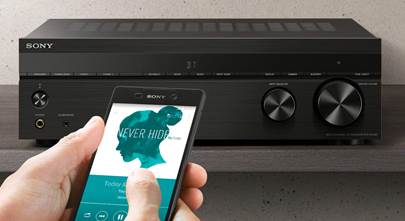
Uh, for example, if you have Sonos, you would strongly want to consider either an Onkyo or a Sony home theater receiver. Because they are quote unquote Sonos ready.
Eric
You're going to have to add some additional gear, uh, to those receivers. It doesn't have Sonos built in or anything like that. Uh, but it is made to play a little bit more seamlessly, uh, you know, across those brands.
JR
And if you have a Heos wireless music system, that's a Denon and Marantz thing. So you should be looking at Denon and Marantz home theater receivers.
Eric
You don't need to necessarily buy an extra piece there that, you know, there it's built in.
JR
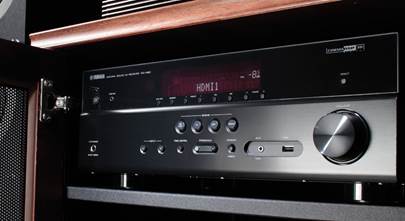
So Yamaha has Musicast. So if you have a Musicast system, uh, with speakers in other rooms, Yamaha receiver would be a nice addition to that system. And their Musicast wireless home system is built in.
Uh, NAD has blue sound integration and there's several other things like that. So, uh, that is definitely a consideration for, you know, playing music as a zone in your big system. Absolutely.
Uh, on that note, a couple of, of these home theater receivers have the ability to make wireless rear speakers happen.
Eric
Yeah, that's really, really popular. We field questions about that all the time. Our advisors are constantly getting questions about, you know, how can I get wireless rear speakers?
So we know it's important.
JR
Um, and we talked about a way to do this in episode one, where we talked about soundbars, right? Like the Sonos Arc with a couple Sonos speakers is a way to do wireless rear surrounds. But if you want full on home theater receiver type surround sound, uh, then you're, you're looking at either Yamaha or Sony receivers.
At the time of this recording, those are the only two brands that do it. That might change, right? There might be some other integration with some other brands, but you can use Yamaha powered Musicast speakers as your rear surrounds.
All you'll need to do is plug them into the wall for power and connect them using the app on your phone with your Yamaha home theater receiver. So wireless rear speakers are not super common. Mostly if you're doing what we're talking about in this episode, you're probably willing to run wires, uh, under your carpet, under your floor and your ceiling to speakers in the back of your room.
Like a full on home theater surround sound system. It takes a little bit more effort and time to get them installed and working properly. Um, a wireless set of rear speakers is a way to save a little bit of that headache.
Eric
Yeah. You are going to probably pay a little bit more for, uh, for those speakers just because, well, they've got the amp built into it, right. And they've got the ability to talk wirelessly.
So, you know, just all these are just kind of some of the things you're going to want to think about, you know, it's, it's not. Untypical, untypical D tip help me out there. It's not a typical, that's the one it's not a typical, uh, for, uh, us to, you know, recommend a hundred feet of speaker wire for, you know, for a surround sound system.
Right. And you're sitting there thinking, well, man, a hundred feet. Well, if you, if your rooms, you know, 20 by 20, which would be a good size room and you can need to get speakers all the way around you, you start doing that math.
You get, you start running out, you start running long runs of speaker wire pretty quick. So, you know, if you can save on that, uh, that hassle, uh, by getting some wireless rear speakers, Hey, go for it. And, but it is going to limit, uh, your, your options as far as the surround sound receivers, which is great.
We're just narrowing it down, making sure we get the right one for you.
JR
All right. Now we're going to get into something a little bit squishy because I'll start off by saying that every product Crutchfield carries is a product Crutchfield believes in, right? We've done the research.
We know it's from a reputable company, from a, from a vendor that we know and respect. Uh, and it's a product that serves, uh, serves needs. And we also keep track of how satisfied our customers are with our products, right?
We do this with tech support and reviews on the website. We pay attention to that stuff. And if there's going with this now, if there's products that don't quite live up to the hype, the expectations, then we will stop carrying those products.
So literally anything you see on our website, we believe in it. Absolutely. That doesn't mean they're all the right thing for everybody.
Right. And when it comes to home theater receivers, specifically, most of you, the majority of people will be best served by one of the main and most popular brands of receivers. And I'm going to get specific here.
Yeah. Yamaha, Onkyo, Denon, Marantz, and Sony.
Eric
I dig it. That is exactly the ones I would recommend. And we carry some other brands that are really, really high end brands, you know, audio file type of brands.
JR
Things like Anthem, Arcam, uh, NAD, right? These are some well-known brands, some audio file. Yeah.
Rotel is another one of those, right?
Eric
Yeah. Rotel. Yeah.
So these are, these are exactly that right there. They are two channel lovers, stereo lovers brand. Like these are incredibly high end brands.
JR
And now they make home theater receivers, right? Because they know you want that. Um, and if you aren't already into one of these more boutique brands, you probably will not be as happy with them as you would be with one of the, the more mainstream brands.
Why do you think that is? I know you have thoughts on this. You're chomping at the bit.
Why is this a thing?
Eric
Well, so the brands that you mentioned, the first group of brands, you know, those, the, the major home theater brands, those, those folks, they all make receivers. Around $500, you know, they're making receivers that are meant to appeal to anyone that might be getting into home theater. So the user interface experience tends, it's well thought out.
It is a fairly intuitive, right? These other brands, well, they're audio file companies. And because of that, you know, they're, they're assuming you have a certain level of knowledge when it comes to an advanced audio setups.
And I think we just find that the user interfaces on the, for the companies that make a $500 receiver tend to be a typically, uh, a little, a little easier to use than the ones that really are just coming in for those audio file customers. So it'd be like, you know, I'm trying to think of a, a, another analogy, but imagine picking up a has to stay in consumer electronic. All my analogies are consumer electronics, but picking up like a point and shoot camera and being able to use it because you're literally picking it up and pointing at something and hitting the button.
Versus being given, uh, an advanced, uh, XLR, right. With all the different controls, right. DSLR.
Yeah.
JR
Did I say XLR? Yeah.
Eric
Yeah. Well, there I did it again. Great.
Um, if someone gave you like a, a photographer's, uh, DSLR camera, right. You know, with the more complicated lenses and flash and all this stuff, that's going to be a lot harder for you just to grab and use. And I feel like those, the, the, that first group of companies, they are appealing to, to, to the folks that just want that thing to work and sound good.
And it's just easier to use. I, I, I think that's probably the easiest way to simplify it.
JR
Yeah. So just tend to be a little bit easier to use just because they're more expensive. Doesn't mean they're the right or better choice for you.
Uh, they're often more feature rich, but that comes at a cost of being a little bit more complex to set up. Uh, they often do have some really nice amplifiers, but it takes a really complicated room calibration system to get them sounding the way they're supposed to sound.
Eric
We have some customers that are incredibly happy with that type of product and you might be that kind of customer, but typically it is the customer that understands that they are, they're going to be in for a, uh, an in-depth setup process and they're willing to stick through it. And they've been here and done this before. And, and, uh, for those customers, those products can be wonderful.
I mean, they have some of the best amplifiers in the industry, right? That's some good stuff that we just mentioned there, but for most customers, um, most, you don't need a degree in audio to set up most of our mainstream brands of home theater receivers.
JR
They take you through a nice onscreen display. That's like, here, do this. Now do this.
Now do this. Put the mic out on your couch. Now do that.
Listen to it. Make some sounds. Okay.
You're done. It's set up and it's set up for your room and will sound great. That might not be good enough for a, uh, an audiophile level listener.
Who's like, no, no, no. They, uh, it's not quite perfect. And I need it to be more perfect.
Eric
Yeah. I'll steal one of your words.
JR
I need more tweak ability. Yeah. Ultimate tweak ability.
And sometimes there's computers involved. Yeah, seriously. Right.
So, uh, I want to, I want you to rest easy knowing that the mainstream brands of home theater receivers. Again, Yamaha, Onkyo, Denon, Marantz, and Sony are going to be amazing home theater receivers for the majority of people that want home theater. So, uh, yeah.
So stick with those. Agreed. Whew.
That's a lot. That was a lot. We powered through that pretty fast.
Eric
Yeah.
JR
Also, do you wish we had broken this up into two, three, four, five, six episodes where we talk about these things in significantly more depth? Do you have unanswered questions, information you thought we were going to tell you in this episode, but maybe we didn't send us some, send us your question, uh, crutchfield, the podcast, or I think it's podcast at crutchfield.com. That makes sense.
There you go. That email comes directly to us. And, uh, if we get some emails and some questions, we would love to answer those on a future episode.
Yep. So send them on in. Also, if you have a more pressing need, go to the crutchfield.com at the top, there's a phone number. Call it, talk to one of our advisors. They can help you figure out, uh, all of the stuff involved in getting a home theater system that is perfect for you specifically.
Eric
Yeah, and if you disagree with anything we said you can reach out directly to JR and what's what's yours what's yourself No, no, not here. Okay, never mind. I Don't know.
I think we gave some hot takes.
JR
There's some 888 955 6000 that's the number I'm seeing at the top of the web.
Eric
There we go. Perfect. That should get you.
JR
Yeah And so there's also we have a lot of articles on this So if you want a deep dive without having to call us We're gonna put links to a bunch of these different articles in the show description here on this episode So that you can you know, do your own research at your own leisure if you like We have one more episode in our series of how to get your TV to sound awesome We've covered sound bars. We've covered stereo speakers. We've tackled home theater The last way we're gonna deal with in this series is to make your TV sound cool with headphones Yeah, it's a totally different animal than what we just talked about yeah, and that is up for next episode so stick with us We'll see you back here then and thanks for listening.
Eric
See ya




Comments (0)