Best high-end home theater receivers for 2026
Our top picks for discerning A/V enthusiasts

In this article: We examine just what makes a home theater receiver earn the "high-end" moniker and share our top recommendations...
- Modern features, time-tested craftsmanship — Sony ES STR-AZ7000ES
- Ample power and top-notch processing — Yamaha AVENTAGE RX-A8A
- An A/V masterpiece — Anthem MRX 1140 8K
- Good looks, superb sound — Marantz Cinema 30
- Efficient Class G amplification — ARCAM AVR31
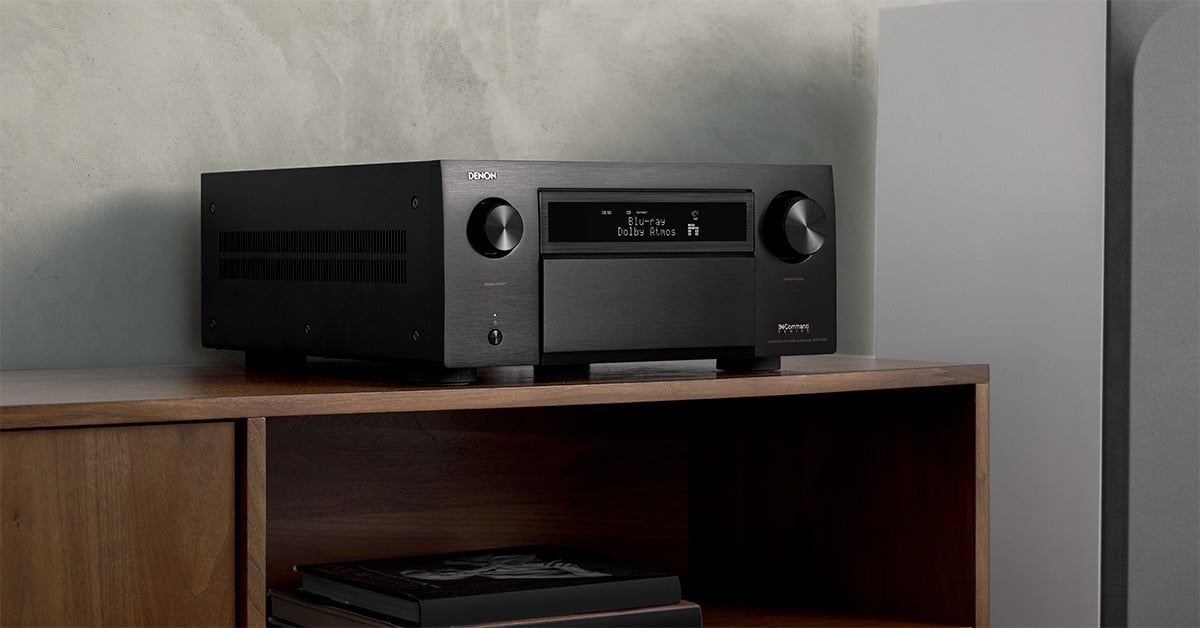
- Most surround sound configurations — Denon AVR-A1H
Home theater receivers have become one-stop shops for all the media you can handle. And since nearly all of them have Wi-Fi®, Bluetooth®, support for cutting edge surround sound, and 4K compatibility, you may be wondering — when they're priced from just a few hundred dollars to thousands of dollars, what are you getting for those extra bucks?
What's the best home theater receiver that Crutchfield carries? That's a difficult question, because there is no "one receiver to rule them all." What may be right for you may not suit the wants and needs of someone else.
What do you get when you pay more?
Crutchfield has a variety of home theater receivers at all price points, but not all of them offer the features and performance that would qualify them as “high-end.” We focused on several aspects of home theater receivers that predict stellar performance, then selected several that represent the best of their brands. We’ll explain what sets them apart before we get to the picks.
More power!
High-end receivers typically have high-current, shielded power supplies, which not only offer up lots of power, they offer it up quickly when your music or movies call for it. For instance, when a movie scene goes from dead silence to a loud explosion, that demands a lot of power very quickly from your receiver. And since the power supplies are shielded from the more sensitive components of your receiver, electromagnetic interference has less chance of corrupting the audio signal.
High-current power supplies also allow you to choose less-efficient or low-impedance speakers, such as 4-6-ohm speakers. These tend to be demanding speakers that are more revealing and have more dynamic range.
Transformative sound
You’ll find toroidal transformers in most high-end receivers. This electronic component is an element of the power supply. It transfers power from one circuit to another through electromagnetic induction. That may sound really techy to someone who just wants great sound, but trust me, it’s important.
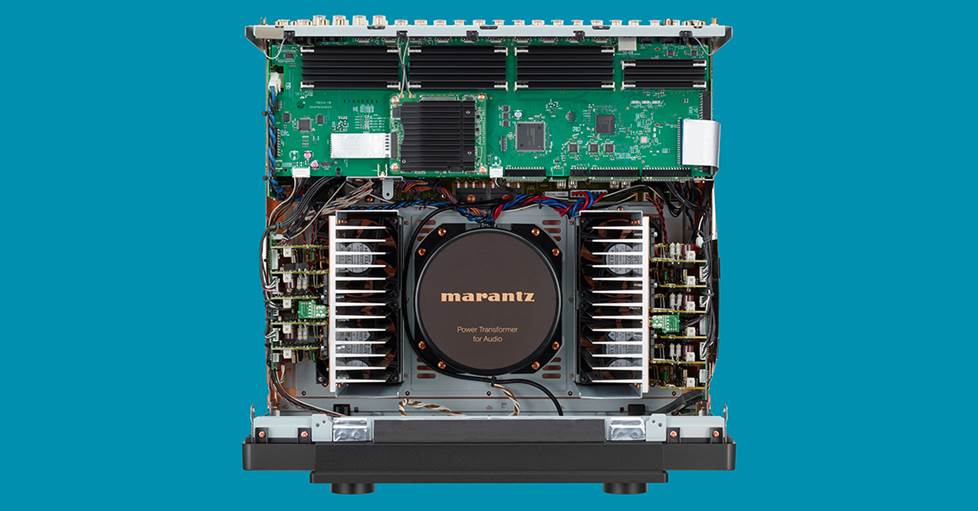
Heat sinks protect delicate circuitry from the high temperatures generated by this Marantz's toroidal transformer.
Going back to the audio signal, toroidal transformers have lower noise, precise power delivery, reduced heat, and more longevity. In short, better sound in a receiver that will last longer than a low-budget pick. Plus, they’re more compact than transformers used in the past. Translation — your new multi-channel home theater receiver might fit in the same space as your dad’s old 2-channel system from the '70s.
Expanding your system
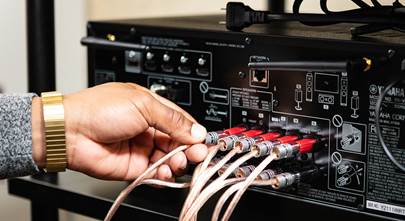
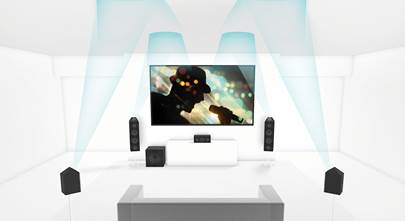
Most high-end receivers have multi-channel preamp outputs. That means you can add one or more amplifiers to your system. Perhaps your car chase scenes don’t have enough screech and growl. Or, you have to turn up the volume to hear small details like a stick cracking underfoot, but the sound distorts at higher volume. You can add a more powerful amplifier to your system for those moments. Some receivers give you the ability to add more surround sound channels if you add an external amplifier to power the extra speakers.
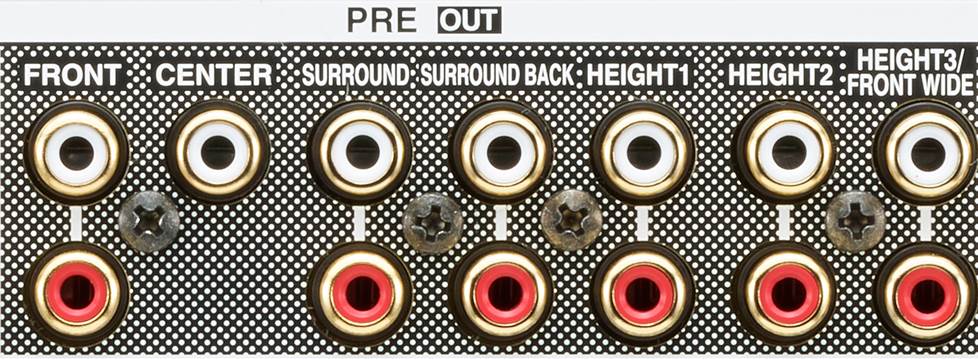
Multi-channel preamp outputs allow you to bypass the onboard amplification of the receiver. You can attach a separate amplifier for more power or to expand your surround sound.
All about that bass
For high-impact movie nights, you need bass, which means a separate, powered subwoofer. Most people opt for just one subwoofer, but increasingly, some opt for two, three, or four subwoofers.
Some receivers will have discrete subwoofer outputs. That means you get a separate audio signal going to each subwoofer to “shape” the low-frequency effects to your movie. If there’s a rumbling tank on the left side of the screen, you’ll get more bass on that side of the room. This is different than having a single, mono signal going to your subwoofers. Discrete sub outputs are not necessarily a hallmark of a high-end receiver, but due to the additional, detailed bass from this feature, I’ll call it “nice to have.”
Hear every detail
You can have the most beautiful scene delivered to your TV or projector in 4K resolution, but what is it without the audio? If your system can’t deliver realistic sound, movie nights are a lot less fun. That’s why all the receivers we recommend in this list have an audiophile-level digital-to-analog converter (DAC). The sound effects make you feel as if you’re part of the action, and the soundtrack music brings out the emotions of the scenes. The DAC brings clarity and dynamism to every part of what you’re watching.
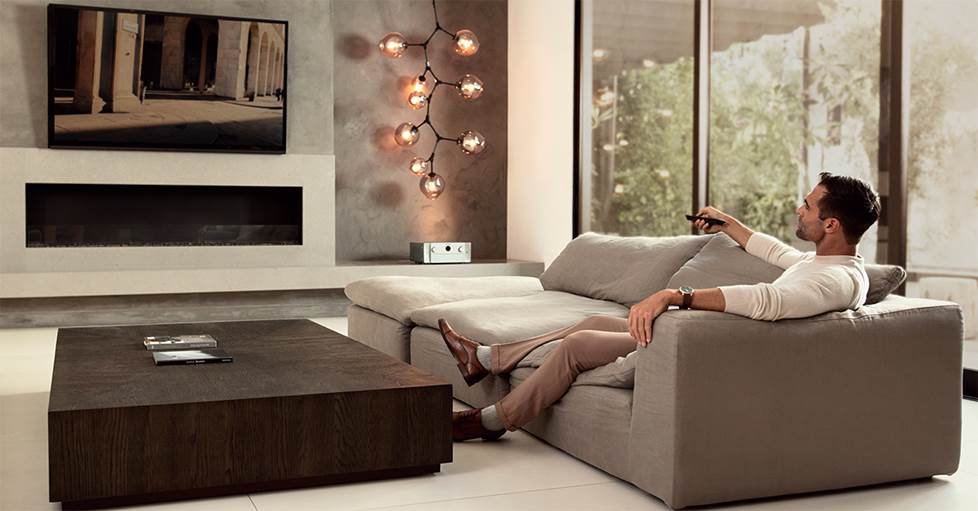
An audiophile-grade DAC adds a new level of detail to your music, bringing nuanced sound to your listening sessions.
Of course, video is not always the primary use of these receivers. As part of the home entertainment hub, audio sources are connected for music-listening. The DAC will process your digital music sources like streaming services or CD players to bring you enjoyable listening experiences. And even if you’re watching a concert instead of listening to just music, the DAC should make you feel like you’re in the front row.
Another consideration is the prevalence of high-resolution music. This is music delivered at a higher bit rate than CDs. A high-end receiver should have a DAC that can decode high-resolution music, whether you’re streaming or using a USB-connected source. Of course, whatever your source of high-resolution music, you should consider whether the receiver can process high-resolution audio through all inputs, or just a select few.
Tailor your sound to your space
Ideally, a home theater system would have a dedicated room in the perfect shape, soundproofed, and with no reflective surfaces. However, most systems share space in other rooms, such as the living room or den. The acoustics of those rooms are affected by windows that reflect sound, curtains and furniture that absorb sound, high or slanted ceilings, and the general shape and layout — everything in your room has an impact on your system’s sound.
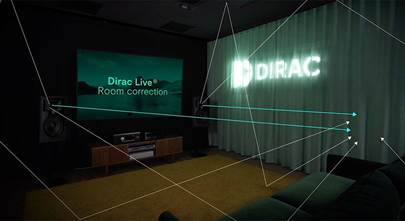
There are treatments to improve the acoustics of your room, such as soundproofing panels and bass traps, but they can only do so much. Overcoming the limitations of your space is the job of room correction software. All our high-end receivers include room correction software and a microphone to measure test tones. Room correction software will make changes to the sound output of the receiver to compensate for the shortcomings of your space.
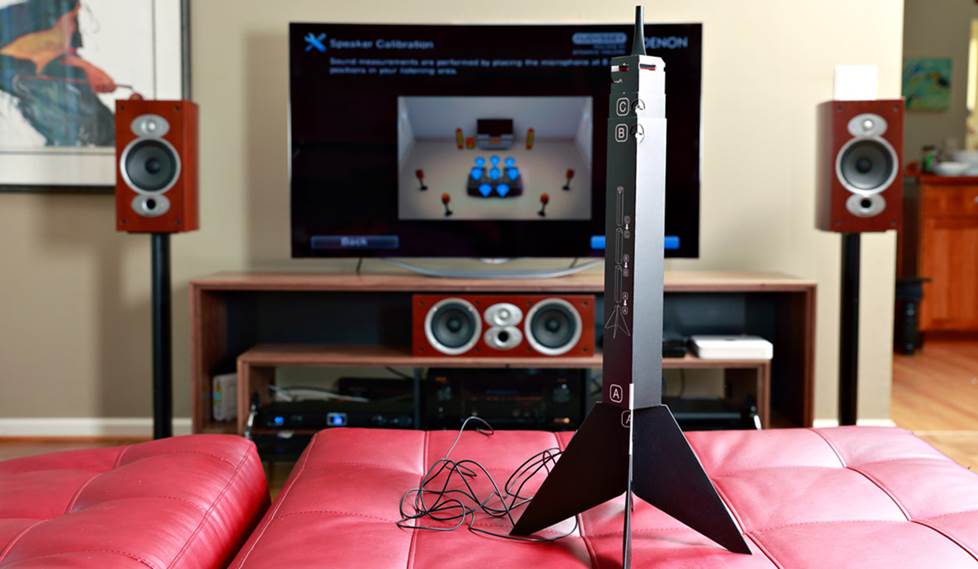
Some rooms are acoustically challenged. Room correction can smooth out the rough edges for the best sound possible.
Some receivers have proprietary room correction software — YPAO for Yamaha and ARC Genesis for Anthem, for example. However, Dirac Live, which is widely considered to be one of the best room correction programs, is available for many brands, either free with the purchase of the receiver, or for a fee paid to Dirac. Carefully check the receivers you’re considering to see if you’ll have to buy a Dirac license, and possibly a calibration microphone different from the one included with the receiver. You may need to use a Windows® or Mac® laptop to use Dirac.
Built to last
When buying gear online, you don’t get a chance to see it, hear it, touch it, or smell it (please, don’t taste electronic equipment). All you have to go on is the online description, photos of the internal components, and the experience of other users. However, look for certain features that denote a receiver’s build quality.
A sturdy chassis minimizes vibration and resonance that affect sound — bonus points if it’s made from or lined with copper, which helps shield against RF and EMF interference. Yamaha even adds a fifth foot to their AVENTAGE receivers for stability and vibration absorption.
You may be able to see photos online of the internal workings of your preferred receiver. The multiple, cylindrical components? Those are capacitors to facilitate amplification and signal flow. Generally speaking, the more power, the bigger the capacitor. And where is the toroidal transformer? It's usually hidden in a round or square metal housing emblazoned with the receiver brand. Sometimes, the manufacturer will have a photo of the transformer that's uncovered, and it looks like a wire-wrapped donut.
On the outside of the receiver, gold-plated input/output connections resist corrosion and oxidation for a clean signal without distortion. Also, some receivers have XLR connections for passing audio signals, along with RCA connections. XLR is used for the cleanest, most distortion-free audio transmission, and you’ll only find it on the highest level of home theater receivers. But, if you have audiophile gear that connects with XLR cables, you’ll want to consider this.
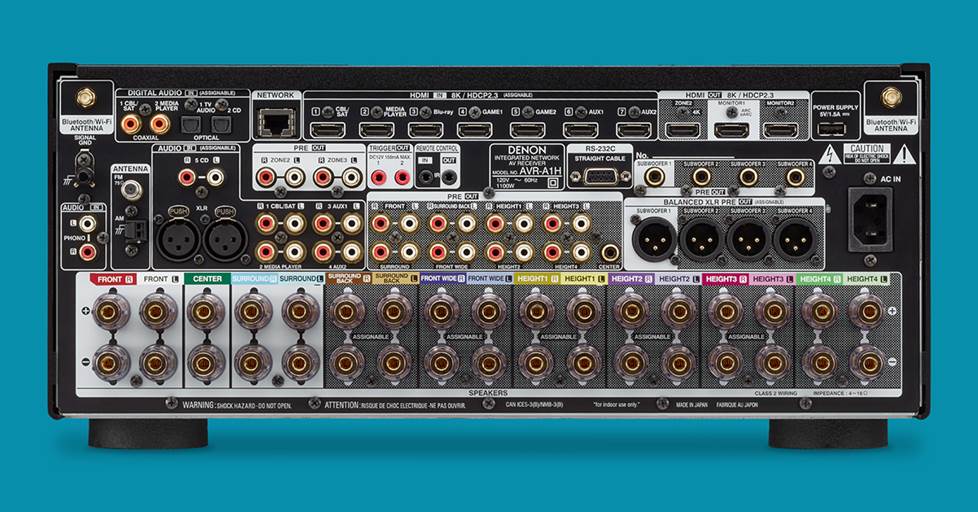
Gold-plated outputs and XLR connections indicate the high quality of this Denon receiver.
A note about receiver weight:
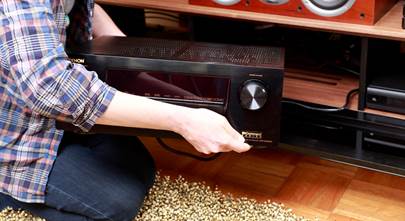
In the past, heavier was considered “better”, meaning that the receiver was built from high-quality components that tended to be weightier. That’s not necessarily true now, due to the rise of smaller components that perform just as well — if not better than — older components. However, some high-end receivers do tend to weigh more than basic receivers, because of sturdy vibration-reduction construction, along with larger power supplies and toroidal transformers, which can add to the heft. An extra person to help with unpacking and placement of your receiver is beneficial, and your back will thank you.
The crème de la crème of home theater receivers
Using the criteria discussed above, along with customer feedback, we created this list of the best high-end receivers Crutchfield offers. A short list of features and a small description of each receiver are provided for you, but for full details, click the receiver's link to visit our product page. At the time of publication, the list is in order of price from low to high.
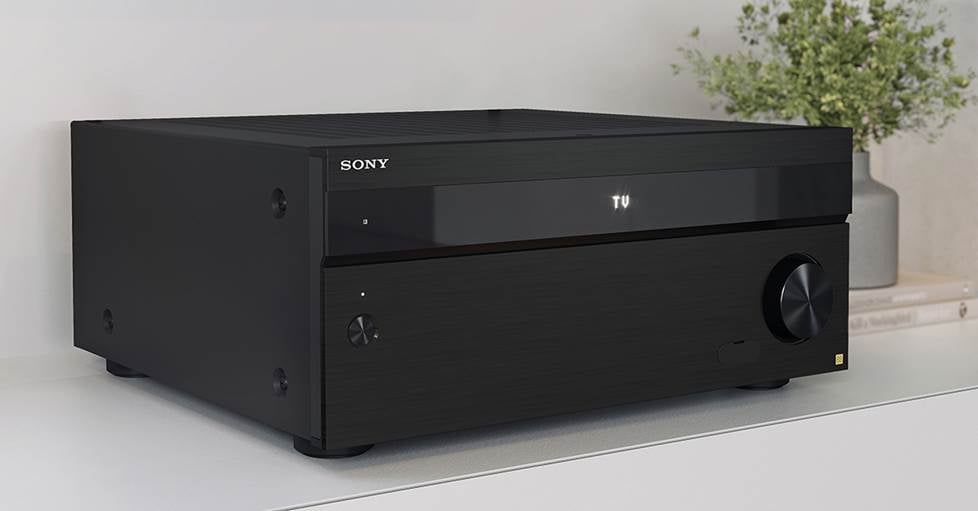
Modern features, time-tested craftsmanship — Sony ES STR-AZ7000ES
Sony's legendary craftsmanship is reflected in the Elevated Standard (ES) construction of the ES STR-AZ7000ES. Every electronic component, screw placement, chassis element, and choice in materials was considered for its ability to optimize performance. The ES receivers were fine-tuned by Sony engineers for an ultra-immersive home theater experience.
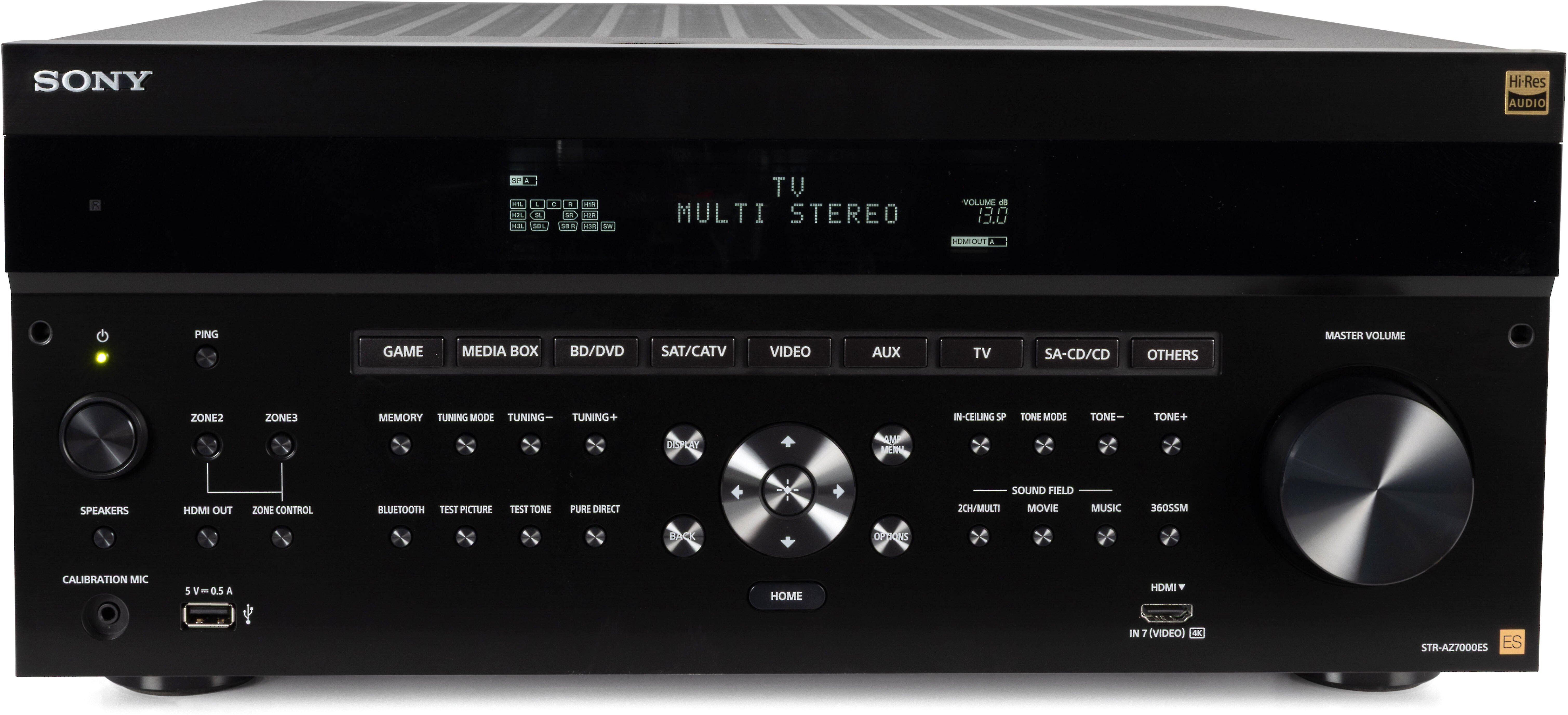
A high-performance DAC and a 13-channel discrete amplifier with loads of power ensure you can hear the fluttering wings of a hummingbird in a nature documentary at low volume. Or, bask in the thunderous rumble of timpani in your favorite symphony without fear of distortion. Tune your system with Sony's Digital Cinema Auto Calibration IX (D.C.A.C IX) to ensure superior surround sound, whether you're watching an action flick or a romantic comedy.
Details
- 13-channel amplifier
- 140 watts per channel into 8 ohms (20-20,000 Hz) at 0.09% THD, with 2 channels driven
- Dolby Atmos and DTS:X® surround sound decoding
- Digital Cinema Auto Calibration IX and 360 Spatial Sound Mapping calibrate the sound to match your room and speaker configuration
- built-in high-performance 32-bit DAC
- premium componentry meets ES standards for audio performance
- 13.2-channel preamp outputs
- works as a Roon player
- HDMI 2.1 audio/video switching: 7 in, 2 out
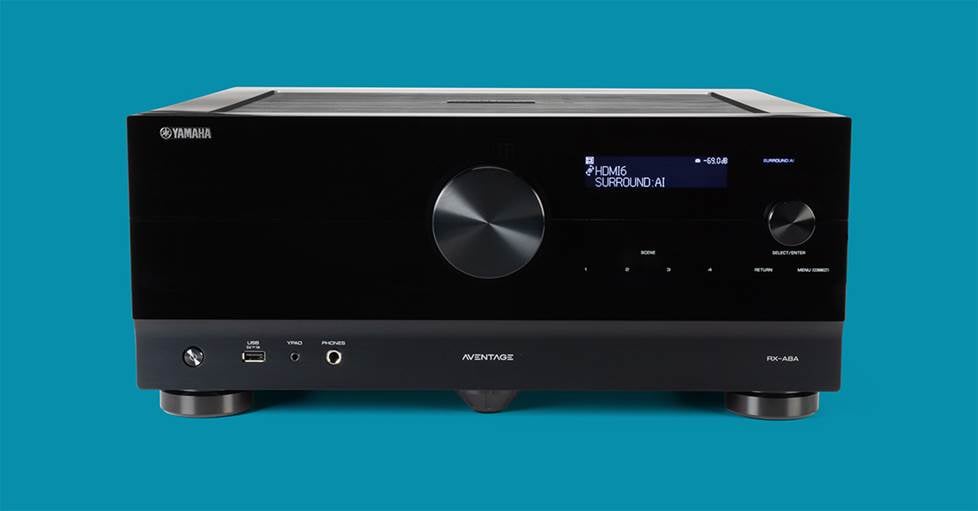
Ample power and top-notch processing — Yamaha AVENTAGE RX-A8A
The AVENTAGE Series receivers represent the highest level of engineering and design from Yamaha. Dual ESS Sabre DACs, 4K/8K video processing, and a sturdy, vibration-resistant chassis are rolled into one attractive package. The result is an exceptional audio and video experience.
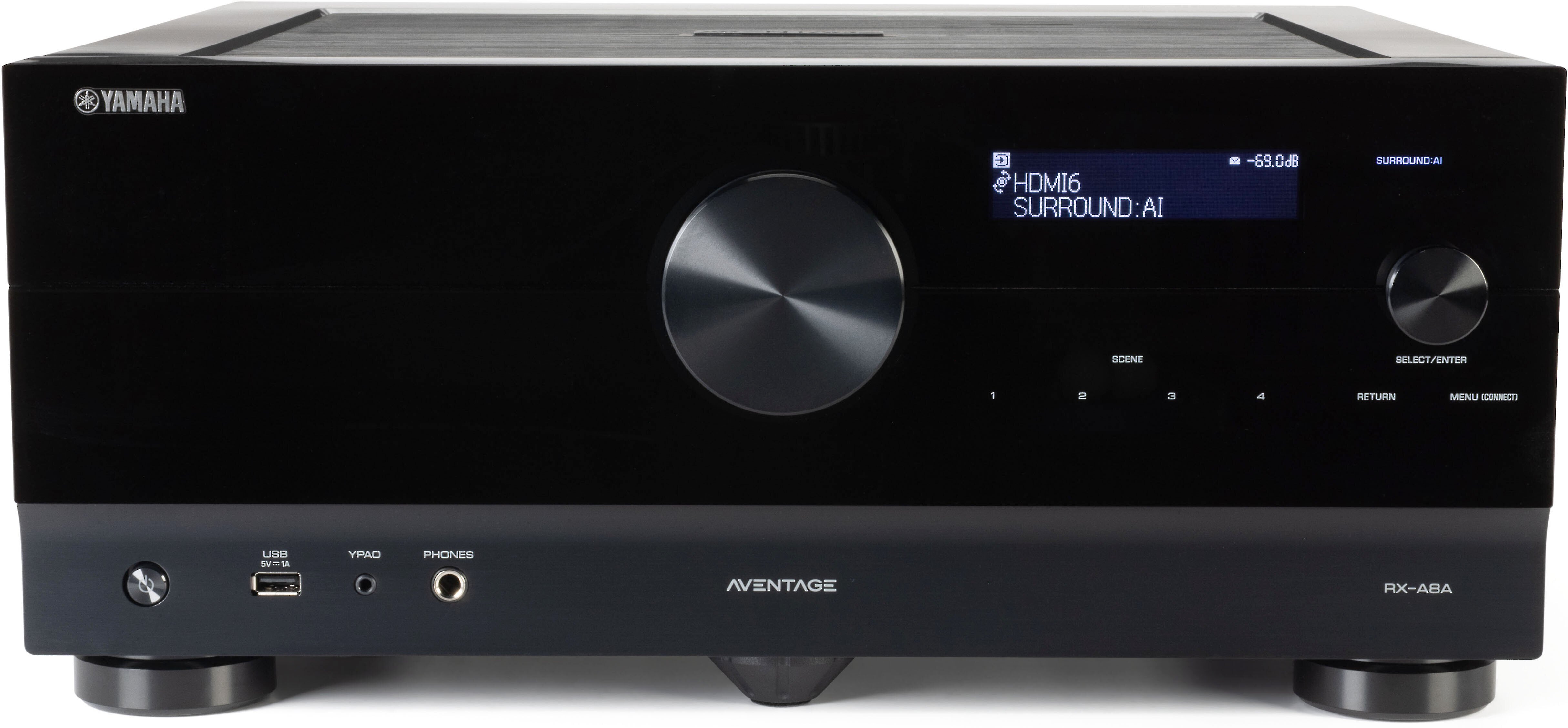
The RX-A8A has a discrete 11-channel amplifier. This receiver has 150 watts of power per channel (2-channels driven), so it can drive even inefficient speakers with authority. And, after fine-tuning your sound system to suit your chosen space with the YPAO (Yamaha Parametric Room Acoustic Optimizer) room correction, your music and movies will come to life.
Details
- 11-channel amplifier
- 150 watts per channel into 8 ohms (20-20,000 Hz) at 0.06% THD, with 2 channels driven
- Dolby® and DTS® surround sound decoding
- H-shaped cross frame adds additional stability to the chassis while reducing vibrations
- YPAO (Yamaha Parametric Room Acoustic Optimizer) room correction
- dual ESS 9026PRO audiophile digital-to-analog converters
- HDMI 2.1 audio/video switching: 7 in, 3 out
- 11.2-channel RCA preamp outputs
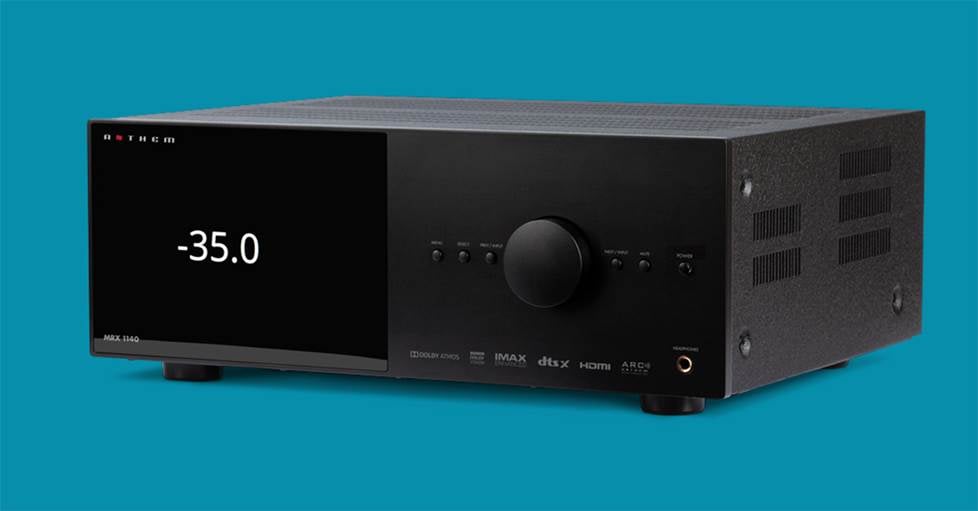
An A/V masterpiece — Anthem MRX 1140 8K
An Anthem home theater receiver was one of the first pieces of gear I listened to when I joined Crutchfield. I was blown away by the natural sound and the minute detail in the soundtrack of the movie we were watching. The MRX 1140 8K has a premium 32-bit/768kHz DAC for high-resolution sound, Dolby Atmos and DTS:X capability, and robust power supplies (including a Toroidal transformer) that deliver maximum performance.
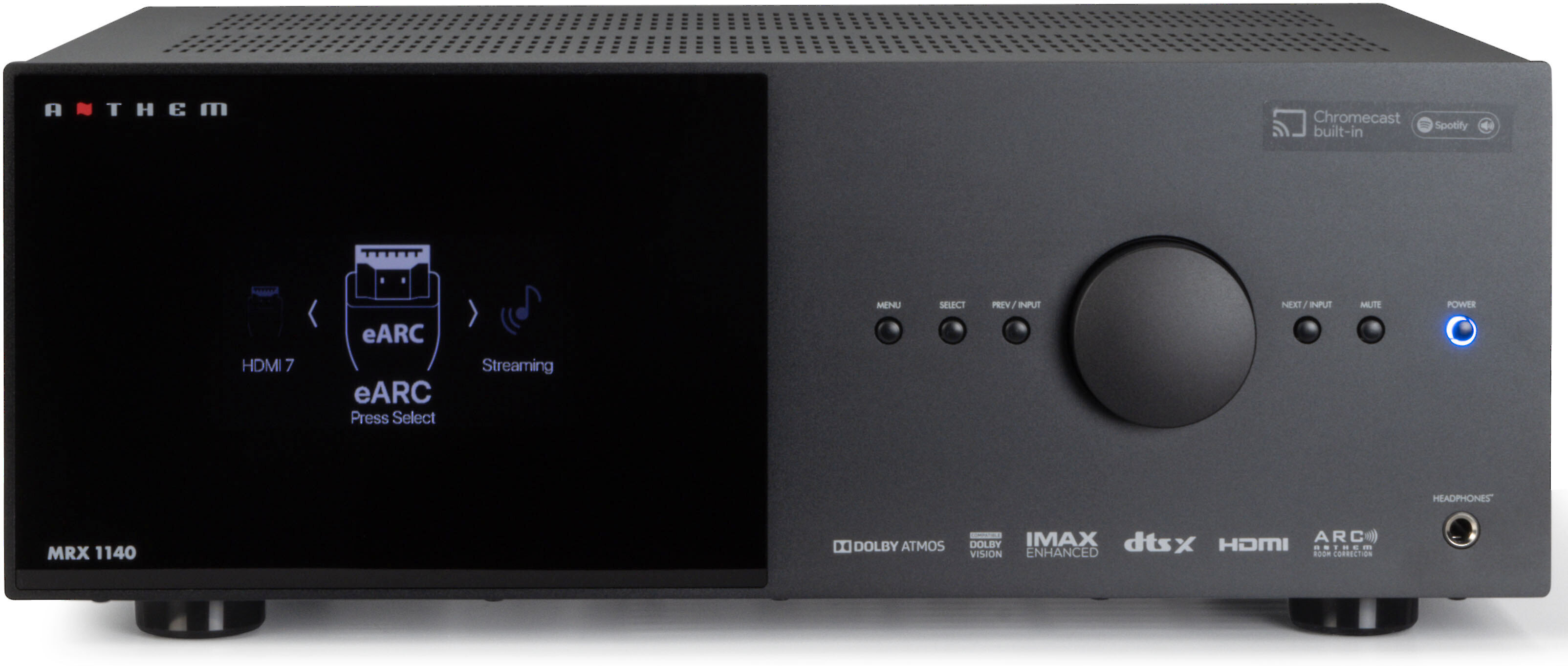
The MRX 1140 8K utilizes Anthem's exclusive Advanced Load Monitoring (ALM) technology. The ALM circuitry protects the amplifier by constantly monitoring temperature, current, and voltage to prevent damage. With loads of power from the combined Class AB/Class D amplifier and ARC Genesis room correction, movie night transforms into a memorable cinematic experience.
Details
- 11-channel amplifier
- 5 channels rated at 140 watts (Class AB); 6 channels rated at 60 watts (Class D)
- Dolby® and DTS® surround sound decoding
- ARC (Anthem Room Correction) Genesis room correction
- audiophile-grade 32-bit/768kHz DAC
- toroidal power supply ensures low-noise, high-performance picture and sound
- HDMI 2.1 audio/video switching: 7 in, 3 out
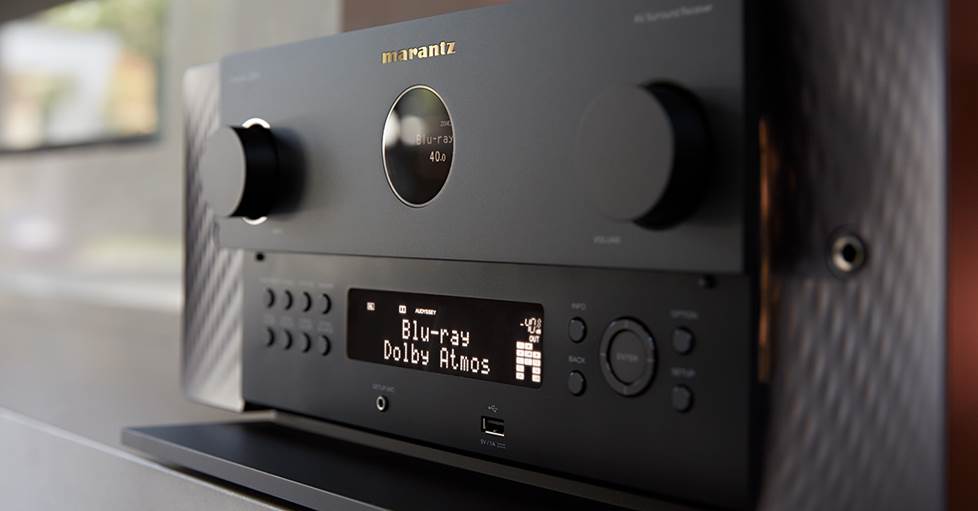
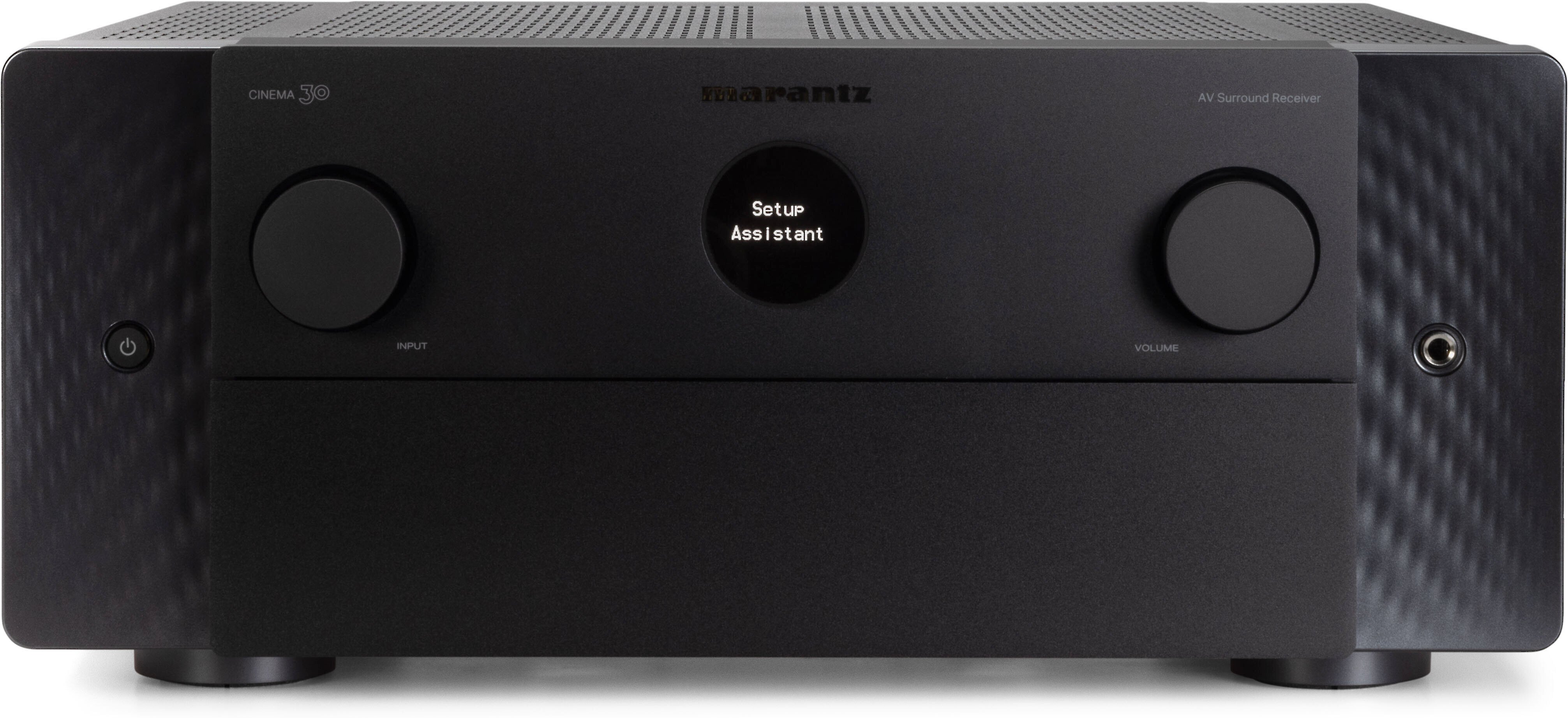
Good looks, superb sound — Marantz Cinema 30
The inclusion of the Cinema 30 on our list should come as no surprise to fans of Marantz. The smooth, warm tones of Marantz are a favorite of mine and many other Crutchfield folks. But that’s not the only reason we’ve included it here. Along with the Hyper Dynamic Amplifier Modules (HDAM) that create the signature Marantz sound, a high-end digital-to-analog converter decodes high-resolution music files with razor-sharp accuracy. The copper chassis is a nice audiophile detail that Marantz reserves for their best home theater receivers.
Marantz included Audyssey MultEQ® XT32 room-correction platform to calibrate the receiver's audio performance. You also have the option to purchase and download the Dirac Live® advanced speaker calibration program to your Mac® or PC. Purchase of the license is available through Dirac's website. Fine-tune the output of your system using Room Correction, Bass Control, and coming soon via a future firmware upgrade, Active Room Treatment (ART).
And, speaking of bass, the Cinema 30 has four discrete subwoofer outputs as an element of the 13.4-channel preamp outputs — perfect for bass lovers and action movie aficionados.
Details
- 11-channel amplifier
- 140 watts per channel into 8 ohms (20-20,000 Hz) at 0.05% THD, with 2 channels driven
- Marantz's Hyper Dynamic Amplifier Modules (HDAM) offer exquisite detail and dynamic range while reducing noise
- Dolby®, DTS®, and Auro-3D® surround sound decoding
- Audyssey room correction included
- optional Dirac Live Room Calibration, Active Room Treatment, and Bass Control
- plays high-resolution digital music files via USB storage device or a networked computer
- HDMI 2.1 audio/video switching: 7 in, 3 out
- 13.4-channel preamp outputs, including four discrete line-level subwoofer outputs
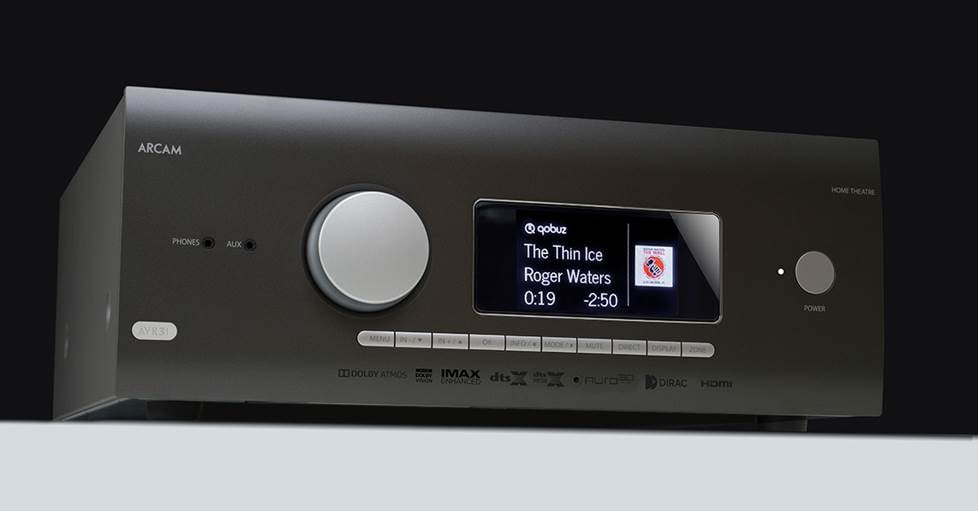
Efficient Class G design — ARCAM AVR31
The AVR31 from ARCAM boasts an efficient Class G amplifier that uses multiple power supplies. The first power supply is Class A, which results in extremely low distortion. The second power supply is only brought in if the signal is beyond the capability of the first power supply. This means lower heat, less distortion, and a dynamic, satisfying audio experience.
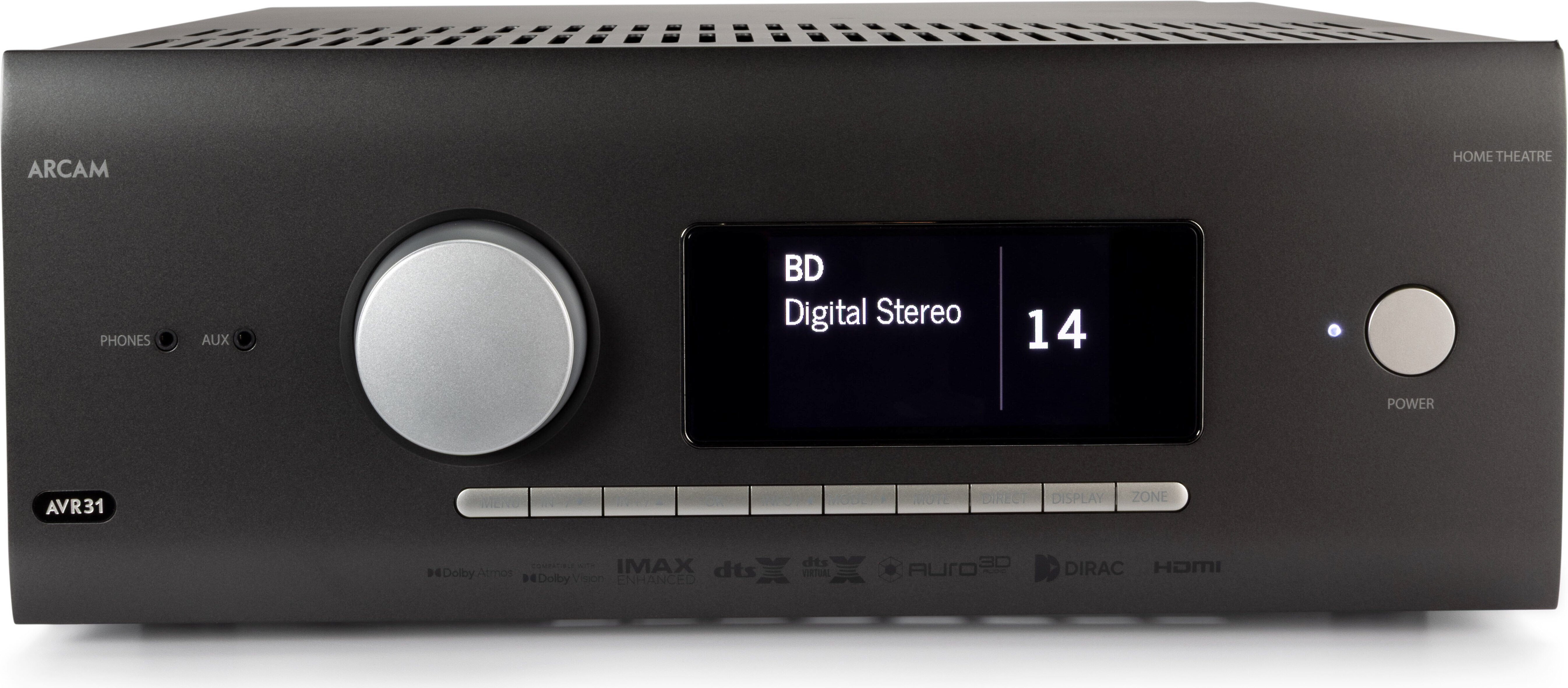
The AVR31 has all the modern conveniences of a home theater receiver, like 4K/8K video compatibility and Dolby® and DTS® surround sound decoding. But, it's also one of the few receivers that has Dirac Live® room correction included with purchase. You even get the Dirac-recommended microphone. The corrected result is a system tailored to your room, with an equalization curve that can be adjusted to your taste.
Details
- 7-channel Class G amplifier
- 120 watts per channel into 8 ohms (20-20,000 Hz) at 0.02% THD with 2 channels driven
- Dolby® and DTS® surround sound decoding
- Dirac Live® room correction (microphone included) and optional Dirac Live Bass Control for fine-tuning subwoofers
- dual ESS 9026PRO audiophile digital-to-analog converters
- HDMI 2.1 audio/video switching: 7 in, 3 out
- 15.2-channel preamp outputs
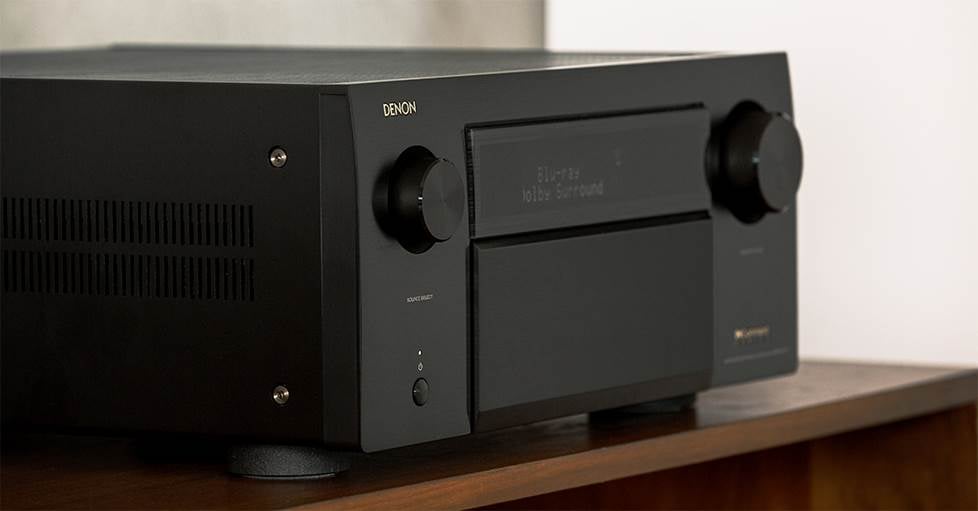
The most surround sound configurations in a single receiver — Denon AVR-A1H
The Denon AVR-A1H is the biggest, baddest home theater receiver around. It was the first receiver to boast 15 channels of robust amplification, and it has plenty of audiophile/cinephile goodness tucked under the hood. Built in Denon's premier Shirakawa factory in Japan, the 'A1H was meticulously tuned by the company's in-house sound experts to offer you a professional cinematic experience.
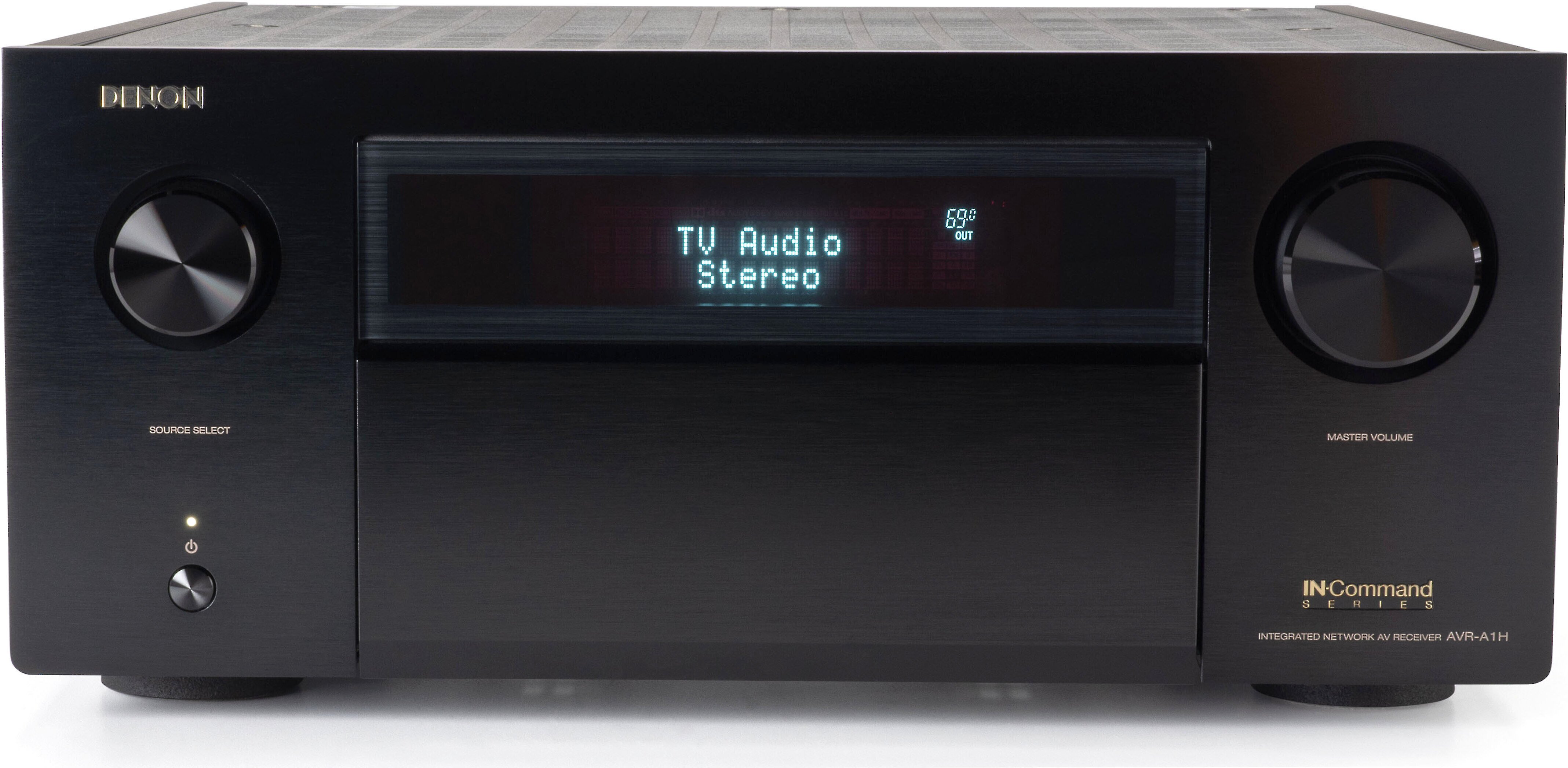
The Denon has 17.4 channel preamp outputs, giving you plenty of options to customize your home theater to your tastes. That includes four preamp outputs for powered subwoofers to shake your walls and wake your neighbors.
For room correction, you have choices. Denon includes the excellent Audyssey MultEQ® XT32, but there's also the optional Dirac Live® advanced speaker calibration program for your Mac® or PC. Purchase of the license is available through Dirac's website. Fine-tune the output of your system using Room Correction, Bass Control, and coming soon via a future firmware upgrade, Active Room Treatment (ART).
Details
- 15-channel amplifier
- 150 watts per channel into 8 ohms (20-20,000 Hz) at 0.05% THD, with 2 channels driven
- Dolby®, DTS®, and Auro-3D® surround sound decoding
- Audyssey room correction included
- optional Dirac Live Room Calibration, Active Room Treatment, and Bass Control
- HDMI 2.1 audio/video switching: 7 in, 3 out
- 17.4-channel preamp outputs, including four discrete line-level subwoofer outputs
Need more help? Contact us!
Still have questions about home theater, including speakers, cables, and audio racks? Contact us for answers.
Our expert Advisors know audio inside and out. Your Advisor can send specific Crutchfield pages to your screen, saving you a lot of browsing time. You'll get a shopping cart loaded up with everything you need.
Don't forget, free lifetime tech support is provided when you purchase any of these fine receivers from Crutchfield.
Popular questions customers ask
A home theater receiver has two main jobs: to provide sound and power to your speakers, and to send video to your TV or projector. It also lets you switch between connected sources like a Blu-ray player, cable or satellite box, or a media streamer like Roku or Apple TV 4K.
You need one channel of power for each speaker in your home theater. For example, a 5.1-channel surround sound system gets five channels of amplification from the receiver. (The ".1" is your subwoofer, which has its own amp.) It's okay to have unused channels on your receiver since they let you grow your system down the road. Some receivers even let you use extra channels to power speakers in another room.
A good rule of thumb is to stay within the power range of your speakers but look toward the upper end of that range. More power is a good thing ù it gives you stronger bass and clearer, louder sound, especially in larger rooms.
Absolutely! All home theater receivers can play music through your front left and right speakers. Some receivers even have additional modes for playing music through all the speakers in your surround sound system. Love playing vinyl? Look for a model with a dedicated phono input for connecting a turntable.
Most home theater receivers have Bluetooth for wireless music streaming from your phone or other device. Some models also have Wi-Fi, which gives you better sound and range. WiFi equipped receivers also offer built-in support for popular music services like Spotify and Qobuz, and some even let you stream music to compatible speakers or components in other rooms.



Comments (0)