Introducing JBL's MA receivers and Stage 2 speakers
Behind the scenes at JBL's home theater launch

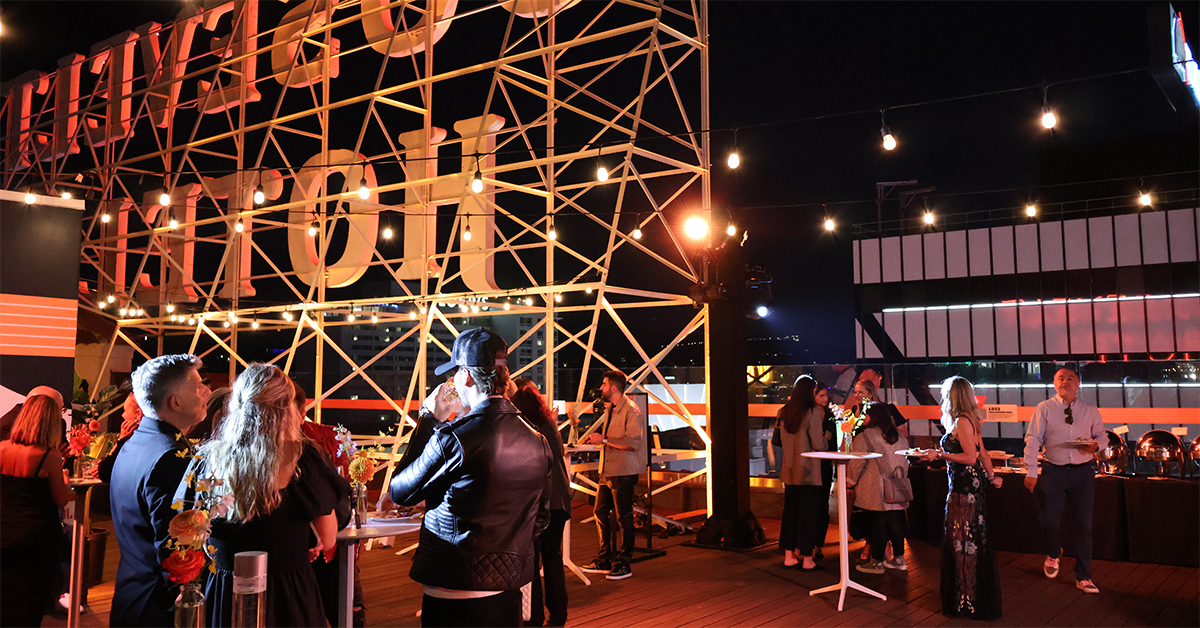
JBL's speakers are the voice of countless recording studios, live music venues, and movie theaters. That’s a big part of why they chose to launch their Stage 2 speakers and MA Series AVRs (audio-visual receivers) at Hollywood’s Roosevelt Hotel, a venerable establishment whose walls you wish could talk.
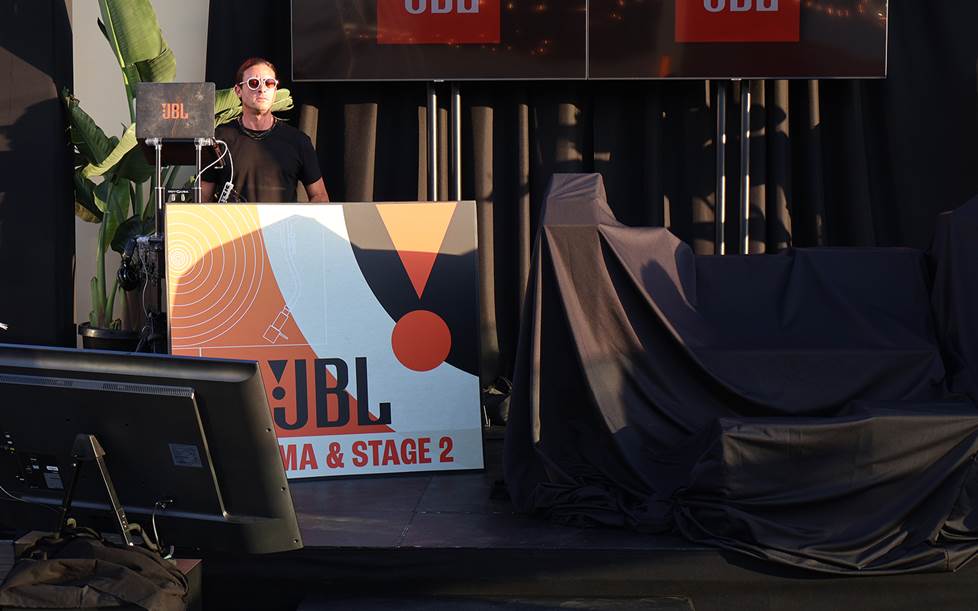
A DJ presided over the veiled mystery products at the launch party.
The launch took place on a perfect California evening in late July, lit by the hotel's large neon sign, overlooking Hollywood Boulevard’s Walk of Fame and the Chinese Theater.
A DJ spun familiar mainstream tunes through a JBL PA system. Waiters weaved through the crowd with trays of hors d’oeuvres. Bartenders served cocktails to attendees. Vloggers and other media reps snapped stills and video of the picturesque scene.
Bigger, better sound for the Bluetooth generation
After the DJ wrapped up his chill intro set, Harman's Vice President and general manager of luxury and consumer audio Dave Tovissi took the stage.
One of the first questions he addressed is one he said he's been asked many times: "Why did JBL leadership task the luxury audio team to build a product for the mass market?"
The short answer was: "We saw a product category that was in need of some real innovation."
He cited lengthy, expensive research that probed the evolving audio desires of the generations brought up on smartphones and Bluetooth streaming.
"They told us what they wanted," he said. "They wanted simplicity. They wanted modern design. They wanted scalability. And they wanted affordability without compromising quality."
JBL's first matching home theater receiver and speaker lines
After the black coverings that were draped over the mystery products came off, one of the first things that caught our collective eye was the cohesive modern industrial design. I can't think of any other consumer home theater speaker/receiver lines that are designed to match like that.
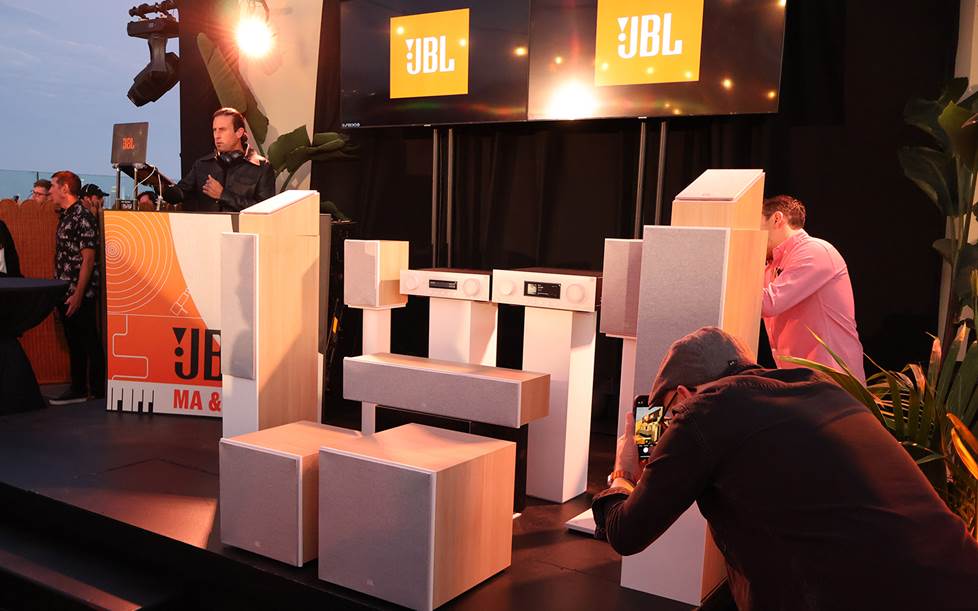
JBL's MA home theater receivers and Stage 2 speakers — unveiled and looking glamorous.
The speakers feature dark or light wood-grain side panels — espresso and latte, in a possibly late-to-the-party nod to popular coffee culture. Oversized "floating" black or white front panels cosmetically link the Stage 2 speakers to the MA receivers.
Looks might not be your first concern. But part of the formula for simplicity in this series is a simple, neutral appearance that looks good in all kinds of decor. You don't feel the need to hide these receivers in a closet — they become part of your room.
By the time Tovissi finished, I felt jazzed by the concept. As someone familiar with the high points of JBL's 75+-year history in the audio industry, I knew that they had the resources to realize that concept.
Vinyl and home theater demos in Hollywood penthouses
Marquee lights along Hollywood Boulevard came alive as twilight faded into darkness. The DJ turned up the volume and exhibited his scratching skills. Attendees wandered between the luxurious adjoining penthouses for demos of the new gear in 2-channel vinyl and 5.1 surround sound setups.
Vinyl and Bluetooth stereo music in the opulent Carole Lombard suite attracted just the type of "hi-fi curious" listeners that JBL is targeting with these products. From the expressions on their faces, they were indeed enjoying this opportunity for some intentional listening.
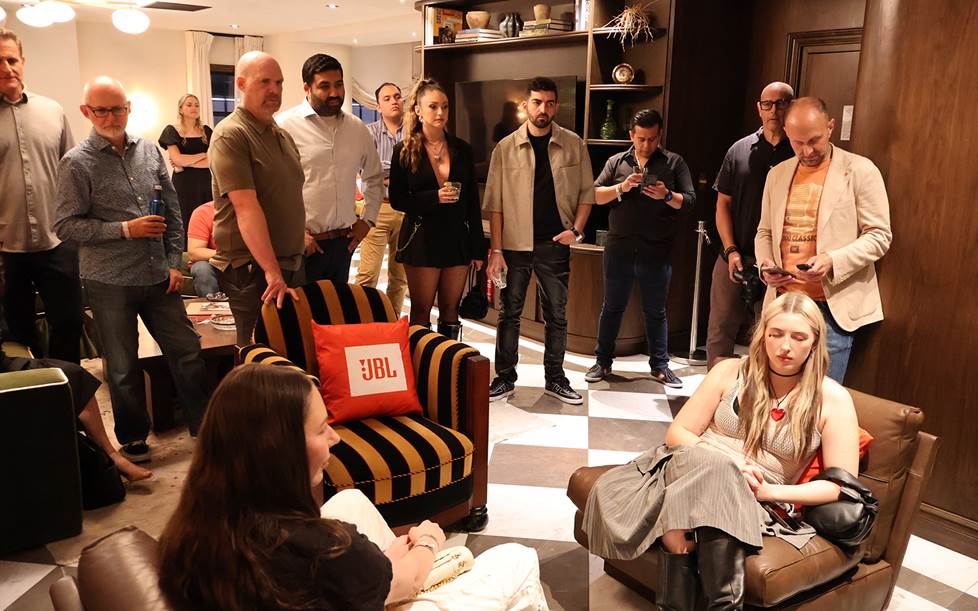
It's nice when you hear music on a hi-fi system that makes people stop talking and listen.
But this was a party, with the sounds of elbow-to-elbow attendees in conversation, ice clinking in glasses, and camera shutters clicking. You could hear plenty of potential in the system — which included the MA710 A/V receiver, Stage 250B bookshelf speakers, and a Spinner BT turntable — but it was hard to hear detail.
Upstairs in the more businesslike Johnny Grant suite, an audience filled the wraparound couch in front of a 5.1 home theater setup. The system used the MA7100HP receiver with bookshelf speaker pairs as front left/right and rear surrounds — 250Bs in front, 240Bs in back.
It also used the 245C center channel speaker and a 200P subwoofer in the front left corner — Stage 2 subwoofers use front-firing drivers, which helps them sound great when you put them alongside the frontal array.
Clips from Lady Gaga's arena power ballad performance in A Star is Born and dogfight bombast from Top Gun: Maverick clearly demonstrated the system's capability for immersive oomph. But the suite's convivial pop-up bar didn't really allow for detailed listening.
The penthouse sound systems definitely piqued my interest. The following day's demos at Harman Northridge would give everyone a much more revealing experience.
An interlude with JBL's storied past
Taking their time to leave, guests wandered around the rooftop's perimeter. A thick glass wall provided a 360° view of the neon city. Informational decals on the glass described JBL's accomplishments in Hollywood.
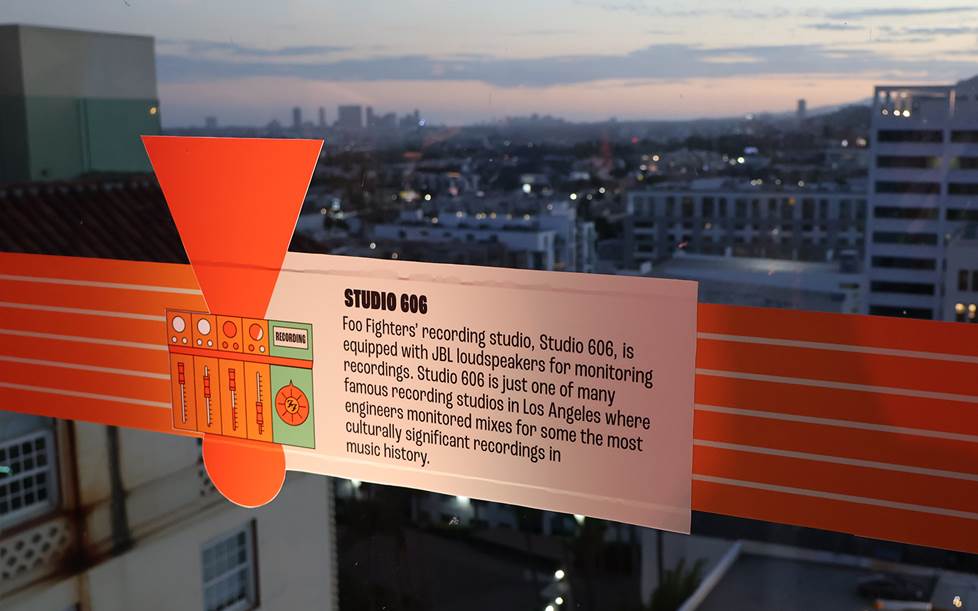
JBL's entertainment connections badged on the glass wall overlooking the actual sites.
Each decal was placed with a view toward the particular studio or other venue that it described. Taken as a whole, the decals and their accompanying views intensified the sensation of being at a spiritual and geographical nerve center of the entertainment industry.
At Harman for a closer look at the MA receivers and Stage 2 speakers
Tovissi's remarks at the rooftop unveiling provided me with an "aha" moment with regard to the MA and Stage 2 lines. But the following day's tour of Harman's acoustic design labs helped me develop a deeper understanding of why people love JBL.
It's partly because they can depend on the products to work. And because they sound so good. No one should expect a JBL Bluetooth speaker or sound bar to sound as good as a full-fledged stereo or surround sound system. But it's amazing how good JBL can make those smaller systems sound in their constrained physical forms.
A big reason JBL speakers sound so good is that extensive research and design that goes into their highest-end models directly benefits the more affordable ones.
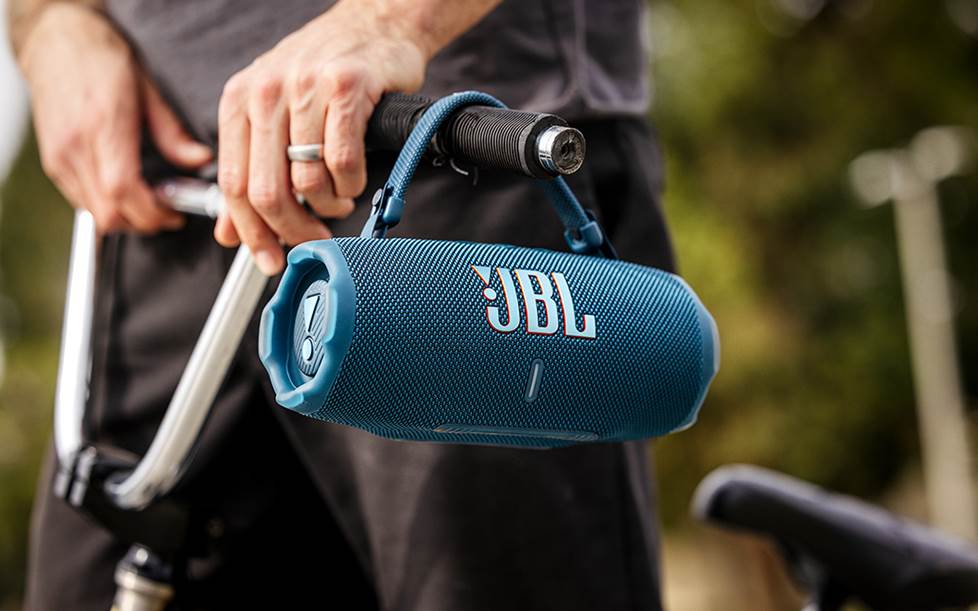
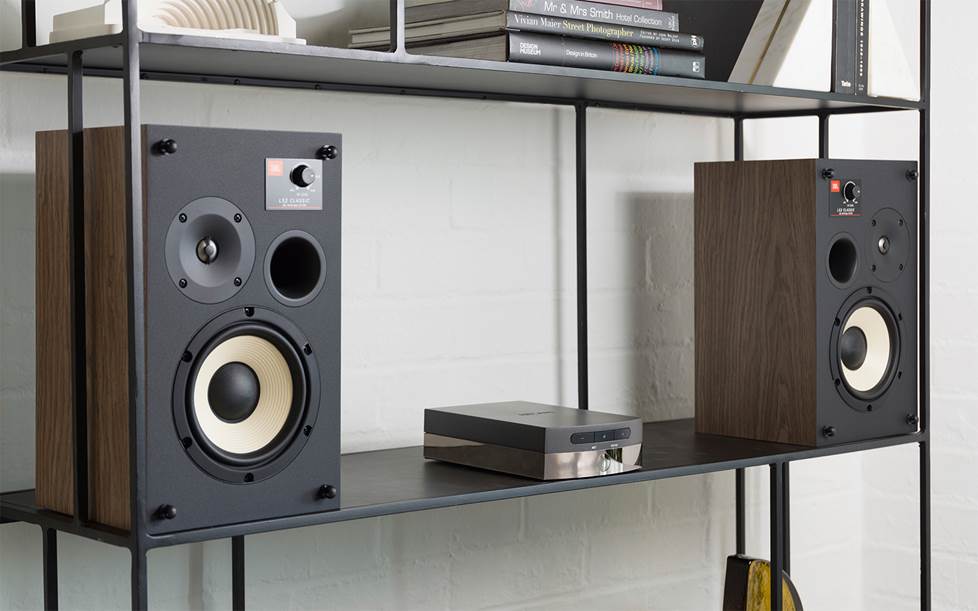
Harman's open tech policy means this JBL Charge 6 Bluetooth speaker gets to share innovations with these JBL L52 Classic bookshelf speakers.
"There's a lot of cross-pollination that happens between the professional division and what we do on the consumer side," said director of product strategy and planning for luxury audio Jim Garrett. He also points out that a lot of the research done at Harman set standards for the music industry.
Consider JBL's super-high-end Synthesis home theater systems, some of the finest, most sophisticated custom-install surround sound setups you could hope for. The next stop is, literally, an actual cinema — and you'll find JBL is a mainstay in those too.
For me, that's a big reason why the MA receivers and Stage 2 speakers deserve a closer look.
A peek behind the curtain at JBL speaker design labs
Spending time with acoustic engineer An Nguyen helps you appreciate the painstaking work that goes into designing speakers.
He guided us through a series of acoustically inert anechoic chambers, where speakers of all sorts get analyzed. Safe-like doors enclose space whose walls, ceiling, and floor are covered with a repeating pattern of angled baffles made of insulation and wire grid.
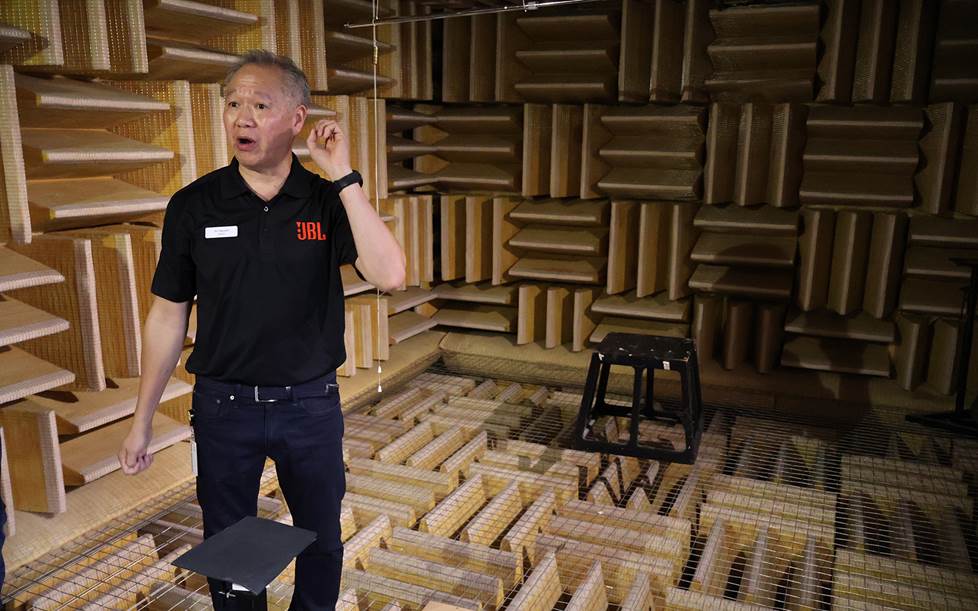
JBL/Harman acoustic engineer An Nguyen describes his work in one of the anechoic chambers.
A speaker mount in in the center of the floor of one chamber lies beneath an arcing mic stand. About a dozen identical thin microphones in regular intervals aim down toward the speaker from across the entire arc. Nguyen and other engineers gather any given speaker's frequency response behavior with the mics to analyze and tweak their designs.
Outside the door, a shelf stores dozens of baffles with speaker cutouts of all different shapes and sizes that can fit in the chamber's floor mount. Nguyen's desk is equipped with a stack of gear — a powerful JBL professional amplifier, a custom input/output bay for mics and speakers, and a distortion analyzer that measures a speaker's performance.
One of the group asked about the bookshelf speaker on a shelf above his desk. Its woofer looked like it had been given a hasty coat of thin white primer.
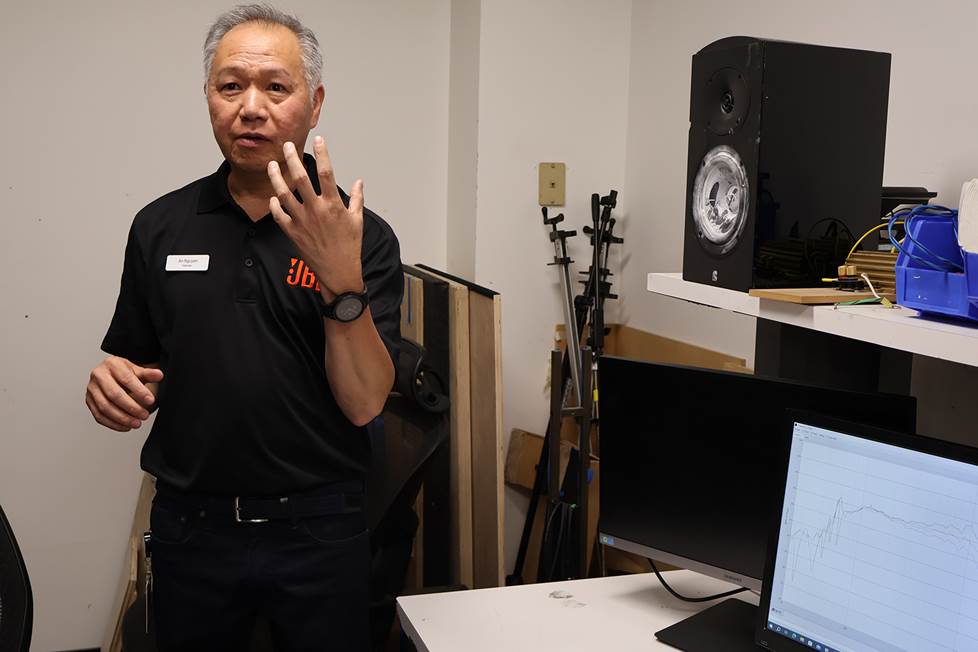
Nguyen explains how a woofer coated with lycopodium powder playing under a stroboscope yields important driver response data.
"That's Lycopodium powder," he explained. "We use it together with the Stroboscope as a quick way to take a look at how a cone behaves in various frequencies — especially high frequencies, where the cone displacement is small and it’s hard for human eyes to see."
The devil — and the secrets of great sound — are in such details.
JBL MA home theater receivers
JBL created these receivers (and the Stage 2 speakers) for people "who appreciate and aspire to premium audio, but have been put off by the dated styling, confusing setup, and complicated interfaces." That's according to Dave Tovissi during the rooftop launch.
That's an admirable goal. Home theater receivers can be daunting. A lot of buttons, a lot of settings, a lot of connections. The MA receivers just look more inviting.
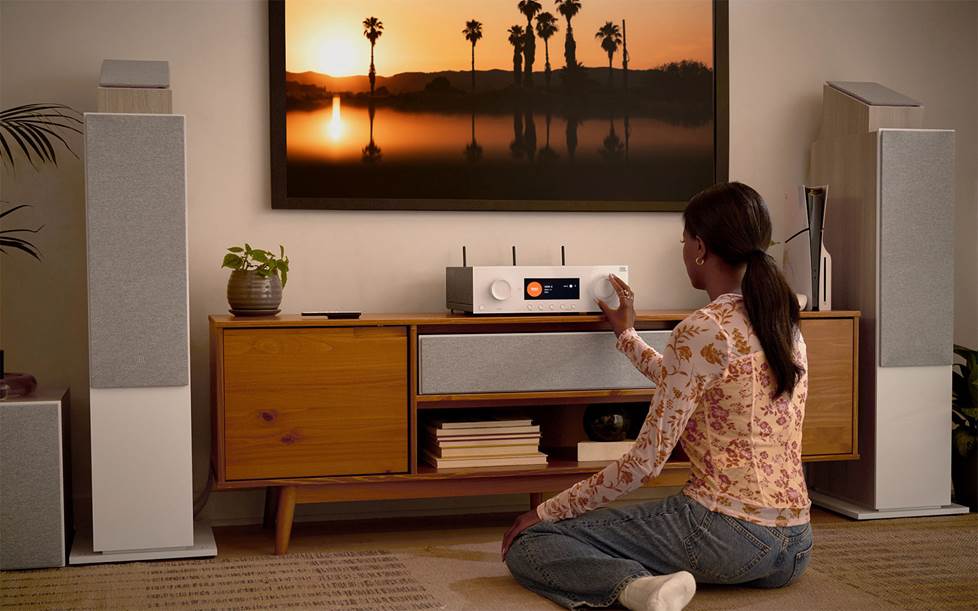
JBL's MA receivers have an appealing, user-friendly interface that invites you to get hands-on.
An old friend of mine recently sent me a picture of a complicated AVR remote he encountered at his mom's house.
"I have no idea what to do with this," he wrote. And he's a guy who can take a turntable apart and rebuild it, and for whom setting up a multi-source hi-fi systems is second nature.
If JBL had interviewed my friend, he would've been in the majority. "We found out [people] don't want complex remotes," Jim Garret said. "They don't want feature capabilities that they don't know what they are."
The compact white remote for the MA receivers has eleven buttons — if you count the round navigation ring as one. It has a menu button that lets you delve into settings, but the remote itself is refreshingly uncluttered and simple to operate.
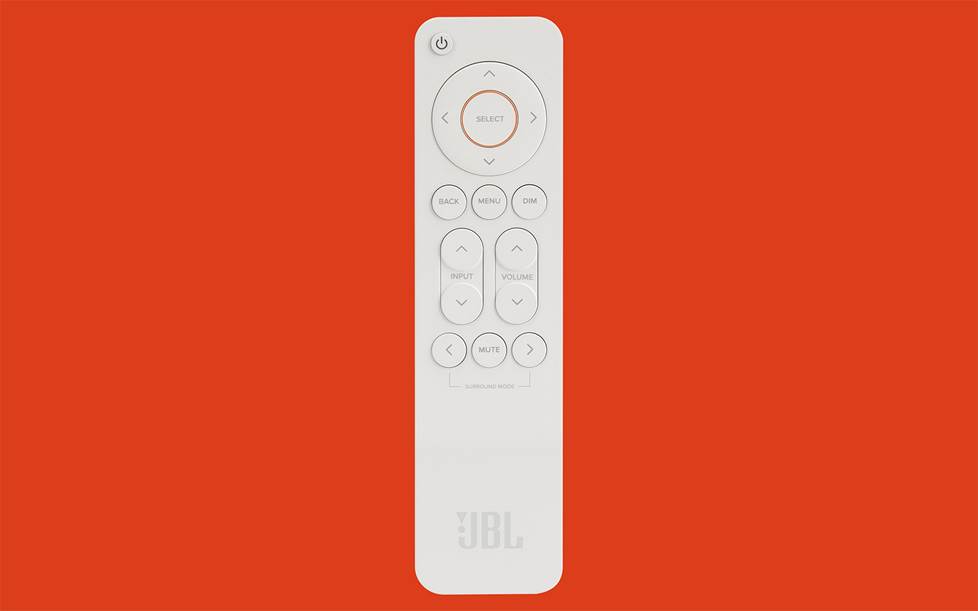
Unlike most A/V receiver remotes, the MA Series' is unusually compact and simple, but still gives you all the control you need.
"I can turn it off and on, I can change the volume, I can change the input," Garret said. "And if I need to, or want to, I can change the surround mode. But that's pretty much it. That's all anybody really wants or needs to do."
Using the MA9100HP for a 7.2.2 Dolby Atmos surround sound system
If you're looking for a "sound bar alternative," there are a few different configurations that would work and arguably sound better than what you could get at a similar cost in a sound bar.
But you can also get a lot of bang for your buck in a top-of-the line system with custom-installed Stage 2 in-wall and in-ceiling speakers.
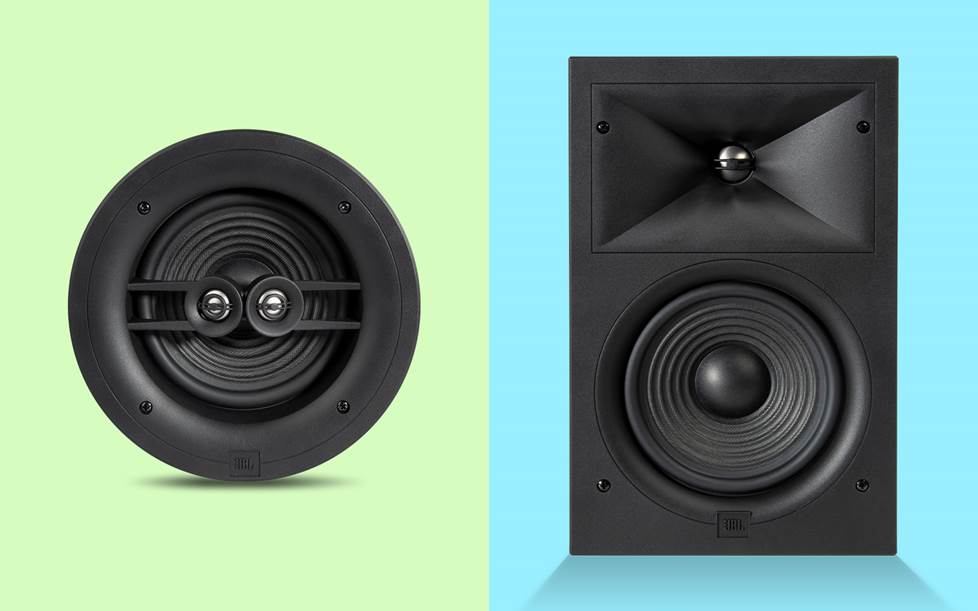
You can customize your MA-powered sound system with voice-matched Stage 2 in-wall and in-ceiling speakers.
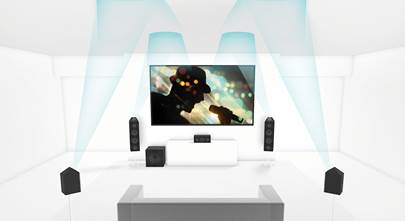
Jim Garret showed off a 7.2.2 system that used the MA9100HP receiver powering Stage 280F floor-standing speakers and 245C up front with Stage 2 in-wall and in-ceiling models for surround and height speakers. He also had two 220P subwoofers connected.
Experiencing encore screenings of the Star is Born and Top Gun: Maverick clips in this setting was super-immersive and impactful.
It got me thinking about the possibilities for putting together a hard-hitting surround system that even the most tech-challenged of my friends and family could operate.
JBL Stage 2 speakers
For me, the most illuminating demo was the 2-channel system for the "hi-fi curious" that global product line manager for the Stage 2 speakers Mike Strange had set up. He used the MA7100HP receiver with a pair of Stage 280F floor-standing speakers.
One of the challenges with product demonstrations is that in their search for the best music and movie clips for showing off speakers and amplifiers, developers tend to land on the same island. It's kind of like your desert island picks.
But instead of your own favorites, these picks cohere around material that the largest number of people will recognize, and that will help the speakers and other gear sound their best.
So it was with pleasure, relief, and hope that in the eleventh hour, the final demonstration, I heard the opening bars of Boz Scaggs' "Thanks to You" from 2001.
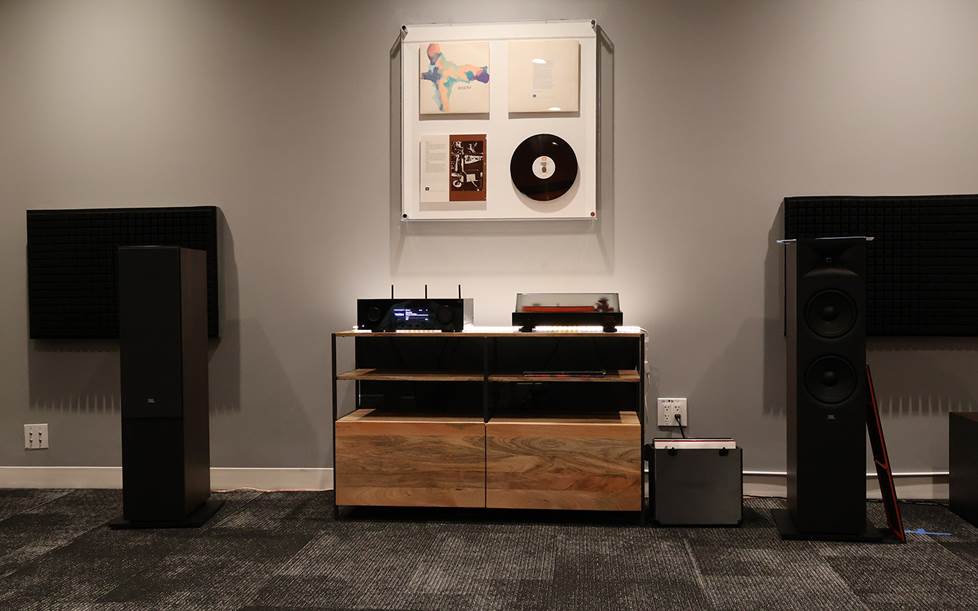
I weigh how well a system handles high-quality analog stereo recordings heavily — this one sounded great.
"A big part of what I do is listening when we voice speakers," Strange said. "I’m very old-school. I have some recordings that go way back, but I know exactly how they were recorded; how many mics, how many channels, analog or digital, how much 'processing' was done."
In the case of "Thanks to You," the processing is minimal. Its spacious, relaxed groove is great for assessing how a hi-fi system deals with nuance, like this track's shimmering electric piano, subdued horns, molasses-like bass line, and rimshot drums glistening subtly with plate reverb.
Hearing this high-quality, hi-fi stereo sound in a room custom-built for sound systems like this made me smile. And it made me want to hear more from the MA and Stage 2 lines.
I think it's great that JBL has brought forth something that sounds and looks this good, and works this well at this price. I hope they'll attract people who love music but might feel intimidated by the thought of putting together a nice sound system.
But then, I'm someone who thinks the world would be a better place if everyone cared more about how good what they're listening to sounds.
Want help figuring out the best setup for you?
Crutchfield Advisors enjoy helping people to learn how simple and affordable it can be to get high-fidelity stereo and home theater sound. Contact us today for help putting together a great-sounding, easy-to-use JBL sound system.
Your Advisor can send specific Crutchfield pages to your screen, saving you a lot of browsing time. You'll get a shopping cart loaded up with everything you need.
Free lifetime tech support is included with your Crutchfield purchase.


Comments (0)