Podcast Ep 74: New Stinger multimedia receivers
New Stinger MFDs are not just for Jeeps, plus AudioControl's new EPICENTER bass restorers and EPIC Series products

In this episode:
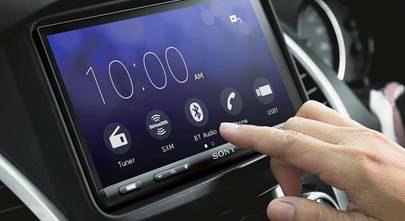
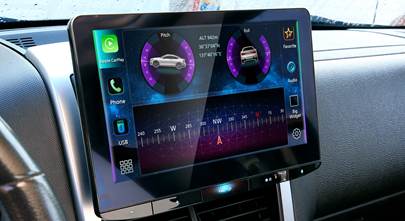
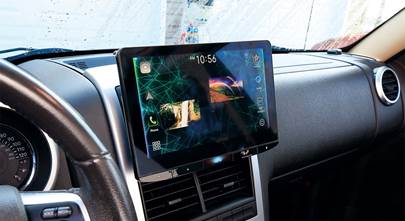
Matt Palumbo from Stinger and AudioControl returns to the studio fresh off a vendor training with Crutchfield's sales advisors — and he brought a lot of new stuff to talk about. JR and Huffy get the full update on the Stinger HORIZON12 multifunction displays (MFD), including new direct-fit kits for GM trucks (2014–2018 and 2019+) that bring the same clean, factory-look integration that made Jeep owners love these units. Matt also discusses the new EPICENTER PRO and EPICENTER Micro PRO from AudioControl— same beloved bass-restoration tech, now with user-friendly controls on top and some fun new flexibility for the more adventurous installer.
From there, the guys dig into AudioControl's brand-new EPIC Series amps, speakers, and subwoofers built to pair perfectly with the EPICENTER experience. The EPICX subwoofers in particular got a serious workout during development — including a nightly drive-home stress test the manufacturer may or may not have survived — and the results speak for themselves. Plus, the loaded EPICX V-Series enclosures feature a surprisingly clever customizable panel that Matt actually wrapped in his hotel room the night before we recorded. Enjoy the episode.
- Stinger at Crutchfield | Find the Right Gear for You
- AudioControl: Car audio equalizers, crossovers, and sound processors - Crutchfield
- Crutchfield: The Podcast
[01:00:00:00 - 01:00:13:10]
(Music)
[01:00:22:17 - 01:13:08:11]
Hello and welcome to Crutchfield the podcast. I'm your host JR joined in studio today by of course my lovely and talented co-host. Lovely now. That's right. Yeah happy to be here. And we have a special guest who is returning. We don't do special guests every month on this show. It's pretty rare actually. We had Peter Logan here recently from our merchandising department. From time to time we have vendors join us when they are here on premises to do vendor trainings and we want to talk about some of the new and innovative things they are bringing to the table. That's right. We did that last year with Matt Palumbo from Stinger and Audio Control and it was our most listened to episode in 2025. We just had so much fun. We had to invite him back. You might remember from that episode we got to talking about his tattoos and everything. Oh yeah. And right now we're talking about him as if he wasn't sitting right there. He's right. The tattoos are still there as well. Matt welcome back to the show. Thank you. You have the distinct honor of being on our most listened to episode of 2025 which is a big part of the reason we thought yes let's get this guy back in the studio when he's here to do training for our sales advisors. Yeah it was it was a lot of fun last time and actually when I when I emailed to schedule coming in to do vendor training one of my first thoughts was I wonder if I can come on the podcast and that was a lot of fun last time. And then when you told me it was the most listened to episode I was shocked and honored. Yeah well I'm not shocked at all for several reasons. It was a fun time. We had a great time and the word Jeep appeared in the title of the episode and the description of the episode and Jeep is big for search engine optimization. So we think worse Jeep owners who are always looking for cool stuff to add to their rides found the episode and listen to it. So you're right. I think it's equally that. And and we have a little bit of Jeep stuff to talk about today but we're going to expand past the world of just the Jeeps. Yep. And last year when you were here you introduced to us and our audience and our sales advisors the new Horizon 10 which is the new multifunction display in large MFD MFD. Yeah. We're calling them that now. Right. Yeah. Call them a radio. Yeah. I you know Stinger has a thing about that internally where we've really tried to stop using radio head unit source unit deck. Yeah. You know we try to call them a multifunction display because we you know a lot of people use infotainment too and we just we hate the term infotainment. You know. I think it's kind of crazy. Yeah. I don't like it. I like what you're doing there. I think I'm probably still going to call him a radio there. I mean I'll admit during my trainings today I absolutely caught myself and called myself out for saying radio. It is more multiple times. MFD is way more accurate. It is. It is. I definitely get it. Yeah. If we can only get the general public to use that and search for that and then we could just call everything an MFD that has a big old touch screen on it. Yep. But yours does some things that other ones just don't do like the integration with the audio control DSPs. Nobody else is doing that. Yeah. The way you guys are doing it. The amount of tweak ability on these new radios is impressive and so there's the Horizon 10 and the newer and bigger Horizon 12. Yeah, that's correct. So the Horizon 10 is a 10.2 inch display and the 12 is a 12.8 inch display. But the kind of party trick of the 12 is that it can be presented as either landscape or portrait. So when you install it you set it up which way you want it or which way it fits the dash and then it will configure the GUI for you to match. That reminds me of some of our advisors when they come in. These are typically really tech savvy people and we give them two monitors plus a laptop screen on their desks at work and a lot of times they'll take one of their monitors and they'll turn it vertical. Yep. And I've been doing this job for 30 years. I can't even imagine doing it with a vertical monitor but I think that's what the kids are doing these days. I think so. I mean a lot of OEMs are doing it too. Like if you look at factory dashes a lot of them have these kind of tall skinny displays and I think Tesla kind of made that popular at first with the original Model S. Well it kind of happened. Ford does it on their higher end trim. In fact it's one of the differences between their lower end trims and the higher end trims as they then get that more vertical display. I mean when I was looking at rental cars the other day I got to the airport I hopped in a new Yukon and it had this giant vertical display in the middle of the dash. So yeah there's a lot of them doing it. Very cool. Like any good lawyer I'm going to ask a question I know the answer to because I was at your training earlier but I think people are going to want to know this. If the radio could be mounted horizontally landscape or portrait mode vertical does that mean that I can take my hand on grab my screen and twist it from landscape to portrait? It most certainly does not. While I'm driving that would be amazing. But you are here to tell me no. No. Do not do that. No do not do that. The way it's mounted is it is mounted very solid with metal brackets so that that does not happen. I'm sure there are some folks that would like that idea but we don't just float the screens like most do. So most of ours are kind of embedded or you know flushed into the dash as much as they can be. Therefore it would be nearly impossible to grab it and twist it anyway. So. And because it's really a two piece system that allows you a lot more flexibility. With where the guts the brains of the unit goes. Yeah. Yeah. That's one of the coolest parts I think about it is is not only you know in all a lot of these late model vehicles there's just no room in the dash for the traditional radio chassis. See there I said radio. That traditional chassis or the guts of it. And so these horizon units the guts or the brains of it are in a single din chassis that's only about two thirds depth of a standard one. And it can be remotely mounted. For example. In a in a Jeep it goes kind of above the glove box kind of sort of in a newer Silverado it goes kind of in the passenger kick panel. And it's great for things like classic cars or custom applications where you want to screen in one spot but there's virtually no depth there. That's okay because you can put the brains elsewhere. So a lot less cutting for the install. Absolutely. Yeah. Yeah. Like all of our vehicle specific kits there's no cutting. I learned something new today too. You talked about fly flush and floating. The screens are water resistant. They are. I thought that was pretty neat. I hadn't really thought about that but obviously I don't know if you know this J.R. but they're really popular with Jeep owners. Had you heard that? Jeeps? Jeeps. Yeah. And that's those four wheel drive vehicles. Yeah. Yeah. Yeah. So kind of go anywhere. Yeah they do. Yeah. So yet again another reason I can see why they would be popular with the Jeep owners. Having that confidence to be able to leave your top off and still you know not have an issue because of that. So that's really cool. Or is it water resistant enough that I could fling mud all over the place and then when I get back home grab the hose. Yes. Maybe not the pressure washer. I wouldn't pressure wash. But the regular hose. Yeah you can rinse it off. I mean the screen itself is sealed and I would even venture to say waterproof. Whoa. To an extent. Okay. It is IP 67 off the top of my head rated. So I mean it's. I think you can say that. It's protected. Yeah. It's well protected. And then there is a single cable that goes from the display portion or the screen to the hideaway brain. The hideaway brain is not water resistant or waterproof in any way shape or form. I think he's stressing that right. Yeah. Yeah. Don't get that part wet. Put that one securely inside the dash. Kick panel or wherever it's going. You have a snorkel on your Jeep. Maybe think of a high location. There we go. Yeah. There we go. So this was a thing last year right? These things were out and with Jeep kits. Right. To make them completely integrate with all the factory stuff. The data wires in the Jeep. The physical fitment in the dash looks great. Works great. And so we leaned hard into that. And I think you talked about that they were you were working on some kits for other vehicles. Yep. What other vehicles have you guys targeted? Like what is the what rose to the top when you went out googling and said what other vehicles should we make these kits for? Yes. Stinger has a big effort this year towards trucks. We've done exceedingly well with Jeeps and we're well known in that space. But trucks are the next big market because when you look at who which vehicle owners you know spend the money to customize their vehicles or upgrade their vehicles the most. It is Silverado F 150 Ram Tundra Tacoma. Those are the people that spend the money on upgrading their vehicle. So we can certainly back that up here. That's what we find. We're talking to those customers more than others for sure. Yeah. Yeah. So we targeted GM to begin. So we have two new solutions for GM trucks. We came out with a kit for the 14 to 18 generation first. And then we just released all the info on the 19 to 23 ish platform. And both of those units have a that Horizon 12. The 14 to 18 has it landscape and the 19 plus kit has it portrait, which is really cool looking in that dash. And that tracks right the vehicles that are eight to 12 years old that those are the people that are like, all right, my radio doesn't do all the things new radios do it doesn't sound the way it should sound. It's time to do something about that. But they were also modern enough that you had a lot of integration issues. You couldn't just swap out the receiver, radio deck, head unit, right? You need a multifunction display. Yes, you do. Well, and a lot of times those owners are the ones that also want things like rock lights and underbody lighting and light bars and, you know, things like extra cameras because it's their tow vehicles. So they tow a trailer so they could use, you know, not only a backup camera, but also a trailer camera or turn signal cameras or what have you. And that's where the Horizon really comes into its own is when you expand it with all that extra functionality. So yeah, so you don't need to install a bunch of physical switches, right? You just go to touchscreen, which is what we do in vehicles for almost everything. Yeah, right. It's touchscreen heavy. Yep. And that's what I try to kind of pitch to people is like, stop thinking of this as just CarPlay, Android auto and a camera input or radio. It is your command center. Like it's the control center of the vehicle, just like when you get in a brand new truck. You know, think of what you can do from that screen. If the truck has ambient lighting inside, you can change the color of it from the screen. If it's got cameras, you can change them from there. Like you do everything from that screen. And that's how we want the Stinger system to work as well. And it works beautifully in that regard. I love being able to demo that to people and show them, you know, look, I didn't drill any holes. I don't have any extra goofy looking switches. I can just tap my screen and tap, you know, air compressor or light bar and they turn on. It's brilliant. What are you hearing from the Jeep owners? Maybe it's too soon for the GM owners. I don't know. But what are you hearing from the people that have installed these in their vehicles? Yeah, the biggest thing that we usually hear is they're super impressed with the fit and finish, first of all, like the physical before they've even powered it up. They're impressed with how well it fits, how nice it looks, how factory it appears. We're one of the few manufacturers out there that offer a MFD or infotainment style unit that has no branding on it. So when it's powered off, there's no Stinger logo. There's no badge. So when you first hop in the truck or Jeep or whatever, it looks, you know, virtually like a factory. There's plenty of people out there who I'm sure if they hopped in a vehicle equipped with one of these, they would have no idea it was not an original radio. And yeah, I mean, a lot of them, they love that fit and finish part. And then the other side of it is the user interface and how customizable it is and how fast it is. It's very fluid and quick. You know, some automotive technology can be a little bit laggy and slow and, you know, I mean, it does the job, but it can be a little bit frustrating. With these systems, we totally redesigned the GUI from the ground up a few years ago, and it's super smooth. It's very fluid and it looks great. It gives them everything they're looking for. It's pretty awesome. Faster even than the Hi-10, which was a pretty popular radio for us for all these Jeeps and stuff.
[01:13:09:17 - 01:13:53:06]
And a radio that a lot of times was the only solution to solve certain problems. Other radios just either weren't available for that vehicle or didn't do all the things like the Stinger Hi-10 did. And the Horizon 10 replaces that. You got the bigger Horizon 12. That's a lot of cool stuff. I really appreciate the update on that from it's been almost a year since you were here. So, fantastic. In addition to that, the Epicenter is a base processor icon that you guys have been making at audio control for how many years now. How old is the Epicenter? The Epicenter came out in 1987. 87. Almost 40 years old.
[01:13:54:10 - 01:15:39:14]
And what did the Epicenter do? Like it had like one job, right? Yeah. So fun fact, Epicenter was actually created as a home audio product first. Oh. It had a really goofy name. It was called the Phase Coupled Activator, Phase Linear Activator. I'll have to double check myself on that, but it had an interesting name. It was one of those home audio products that had like, you know, wood paneling down the side. And it was created for a specific... Now you're talking my language. I like that. Yeah. It was created for a specific purpose though. I mean, back then when they mastered records, albums, you know, most people had a record player in their living room that was a piece of furniture. It was the size of a desk. And it was your record player, your speakers, your radio all in one. And what everyone found was that if the song had bass, it would make the needle skip. Yeah. So they started mastering albums in the studio to have less bass. Well, if you were a Hi-Fi enthusiast and you had separate speakers in the corner of your living room and a separate rack of gear in the middle of the living room. Yeah. And then no bass is no bueno at that point. No, not at all. You've invested all this money and it doesn't sound the way you're hoping. And so they created this product to bring that bass back. And then in 87, they went, you know, this would be great in the car. And that's when it was designed for automotive use. But to answer your original question, not to sidetrack us, basically what it does is we call it a bass restoration processor. And its sole purpose in life is to basically create low frequency that was not originally there. Now, that could be because the artist didn't intend for there to be a lot of bass. They used instruments that don't have a lot of bass or the type of genre of music doesn't have a lot of bass, whatever the case may be.
[01:15:40:17 - 01:17:24:14]
You've got a track that doesn't have a lot of low bass and epicenter will actually analyze that signal, see what the lowest bass currently in the track is or in the signal is. And it will digitally artificially put bass in one octave below. So without getting super nerdy and technical, if you've got a song that has bass down to 60 Hertz, which is punch you in the chest type bass and you turn up your epicenter effect knob a little bit. You're going to get some 30 Hertz in there. Exactly. Now you've got that feel and see to your pants, shake the whole car type bass and a little goes a long way with the epicenter. You don't need much. So that's a lot more than just a traditional like bass boost, right? We're talking a lot more than just turning the bass up. It's totally pretty sophisticated. Yeah. Because to have a bass boost, you have to have bass to boost. Fair. And if you don't have any bass to begin with, then the epicenter will create something for you and it's a fun product. And this was long before bass roll off became a thing in factory radios where it's not the artist or the recording or the mastering. It's your radio in your car. Yeah. No, it knows it's got cheap, crappy speakers. And so when you turn the volume up, it turns the bass down. Correct. This wasn't ever designed to fix that. It was available before that problem surfaced. Yeah. Far, far before that. So but you use the term bass restoration processor, right? And which is kind of what we call those devices now that restore the bass that the factory radio takes out. Yeah. So recently you guys what decided it was time for a new epicenter? Yeah, it was just time to evolve it a little bit. I mean, it had been mostly unchanged. There had been a few small revisions here and there, but mostly unchanged since 87.
[01:17:26:06 - 01:18:11:15]
And so what we did is basically go through and just figured out, you know, it's time to add in a couple of key features that would make it better. And now we call it the epicenter pro. That's the new model. Same size chassis, you know, same bass restoration technology. So for anybody out there that's thinking, oh, I love the epicenter. Why did they mess with it? Why did they change it? The base restoration portion of it is exactly the same. We didn't tweak or mess with that. We left that alone. We know everybody loves that. We left it alone. But what we did was added a line driver and changed some of the features and settings portion of it just to make it more user friendly.
[01:18:12:20 - 01:19:00:01]
So and it's called the epicenter pro correct. And but it still does the same stuff in an updated sort of way with more control. Yep. Yeah. And, you know, in the past, it sounds silly now to even say it, but in the past you to change settings on an epicenter, you removed the four screws out of the top panel, took the cover off and accessed the guts of an epicenter. And, you know, you literally saw a raw PC board there with little pins on it. You moved a jumper from this pin to that pin. I mean, think about that. Yeah. What could possibly go wrong? I could tell you I could go wrong. I hear things like jumpers and dip switches. I get scared. Yeah. And I'm not alone in this. Totally. And so now all of that is on the top panel with user accessible, user friendly little switches.
[01:19:01:07 - 01:19:56:12]
There's no reason to take the top cover plate off anymore. And we also made it so that you could defeat the PFM, which is our subsonic filter. Now, in the past, every epicenter ever shipped from 87 to today has had a subsonic filter built in and, you know, it rolled off 33, 3, excuse me, 33 Hertz and below so that folks didn't damage their woofer. And you could play it louder in a traditional vented enclosure and so on and so forth, depending on your tuning frequency. And you could always change that little filter. It was a chip inside and way back when you could call up audio control in Seattle and say, hey, I don't want 33 Hertz. I want 20 or 15. And a couple of nice ladies in the back would sit there and solder up a couple of little chips for you with some resistors and ship them to you. Super efficient. Very. Yes. Very scalable.
[01:19:57:21 - 01:23:35:09]
And so as we've grown, obviously that's become not feasible. Not the best way. No. An amazing service, though. Like, wow. Yeah. Hand built. I mean, legitimately hand built in Seattle. And so, you know, for for the last few years, though, you know, you would hear occasionally guys that wanted to do these big bass systems and they wanted an epicenter, but they were a little leery of it because they're like, well, hey, I have 15 inch woofers and I can play below 33 Hertz. I don't want you rolling off my low base. So they would be a little shy of the epicenter. And so now the epicenter pro, you can just flip a switch and disable it. Now, to be clear, we don't recommend disabling the subsonic filter for about 90 percent of the public. But for those that really know what they're doing and are maybe more of an advanced user, you know, and want to do something specific with it, then they can. Whereas in the past, it was not able to be disabled. If you know what a subsonic filter is, what it does and why you might want to turn it off, go ahead. Yeah, exactly. If you're thinking to yourself, what is a subsonic filter? You should leave it alone. Yeah. Leave it on. Yep. That's how it is in the manual too. In the manual, we state like two or three different places, you should leave this on. If you're reading the section and you don't know what this is, you should leave it on. Default, it is turned on out of the box, you know, that sort of thing. So I feel like we should find the quote for that because I love talking about your manuals. I know that's a weird thing to say, but, you know, the audio control manuals are, I think, personally, the best in the industry. We had some fun quotes from the owner's manuals in our last episode, but I, oh, there we go. I just loaded the audio control micro epicenter micro pro. I have that. Oh, the micro pro. Okay. Yeah. And I was going to ask you, there's two epicenters. Yes, there is a full size epicenter pro. Yep. And then there's the micro pro. Correct. What's the difference? Yeah. So the pro is RCA or low level input and output only. So it's made for use with aftermarket radios. It is the traditional size. So it's the same chassis size as the epicenter, how it's always been. And then the micro pro as its name would insinuate is a much smaller product. Ooh, I would not have guessed that. Yeah. And the idea there is that it has basically a line output converter built into it. So it accepts high level and low level signal, high level signals up to 40 volts of input without going super deep and nerdy. Basically, it means you can use it even with premium amplified factory sound systems. And it also got a line driver added to it compared to the epicenter micro as well as some more configuration options with that subsonic filter. So on the micro pro, you have 33 Hertz. Excuse me, 24 Hertz, 15 Hertz or off. And those frequencies were chosen for fun Easter egg reasons. But yeah, it has a little more flexibility there. And I am now going to read a quote from the owner's manual about the subsonic filter and the bypass switch, which is how you turn it off. Right. It says, and I'm curious, did you write this? Maybe some of it, you had a hand in writing it. It says best be careful with that bypass switch though. Engage at the risk to your precious subs. Running full tilt on this baby can easily launch your sub right out of the basket. So the word here is careful, please.
[01:23:36:10 - 01:24:03:09]
Nice. Why aren't more owners manuals written this way? It would get people to read them. I'll tell you that. I mean, we probably have some of the most read owners manuals, I'd say. Yeah. Yeah. I do have a hand in, in writing the owners manuals. I help write a lot of them. And at the very least I proofread them and help to, I don't know how else to say it, but keep them audio control. I make sure that some of the humor is kept and that our, our, you know, our brand identity is maintained.
[01:24:04:10 - 01:28:17:09]
Well, I will let you know that it was a first for Crutchfield the podcast to be quoting an owner's manual. And now we've done it again. Yeah. We, we visited that magical mixture of stuff that you don't find on most podcasts. Yes. Yeah. Yeah. Nerd core for sure. For sure. So you could think of this as a line output converter specifically and really a good one for adding subs to a factory radio. Yeah. So it's an active line output converter with the epicenter built in. Yeah. With a line driver embedded as well. So you can line drive up that signal, keep the gain settings on your amplifier low. And, you know, as everyone, hopefully, knows or now we'll know high voltage RCA outputs are all, all good things come from high voltage RCA turn the gain down, but you get more volume, you know, less distortion, more headroom amplifier runs cooler, isn't working as hard. Like all good things come from high volt RCA output. So even if you've got a radio that has, or a, a source unit of some kind that has a really weak signal, you can still end up with a nice hot signal on the output side of this. And one of the last things I'll say about the two epicenter models is the two new models is they both come with a controller called the ACR four, which is their, you know, dash control knob that they use. Now that knob was originally introduced with the epicenter micro, but a lot of folks with the traditional concert series, the OG epicenter, wanted that controller. And now you get it. The epicenter pro and the micro pro both come with the ACR four. And what makes it different is it's a dual concentric knob. So it has an outer ring that is your epicenter effect, and then an inner knob that is your sub level. So now you just put in one knob and you're done. You don't have to put in the one that come with your amp. You don't have to mount two knobs. You don't have to drill two holes or any of that stuff. And it's a really nice high quality, like the knobs are solid milled aluminum. They're not plastic coated in aluminum. It's built really nicely. I let you guys discuss the knob there for a second because you know what I was doing. I was reading some of the first reviews on our website for the epicenter micro pro. You want to hear it? I do. There's three reviews. Okay. You're going to love the first one and we're going to see how you address the third one. Okay, fair enough. This first one is a lot of fun to read. So give it to me. You ready? Yep. Five stars out of five. Nice. Holy big bad bass Batman. Where has this been all my life? And then he says it again. Holy big bad bass Batman. Where has this been all my life? I worked in car audio for many years, but for some reason never installed one of these. If I was back in the business, one of these would be recommended for every install. I listened to a lot of seventies and eighties music and many of these recordings just do not have much bass information. This fixes that problem with base to spare. I purchased Van Halen's first album in high resolution, hoping that the remastered flak files would have the base information that has always been missing. Still no bass. The epicenter brings it all back to life. The epicenter also cleaned up the subwoofer channel by removing the infrasonics that was causing a lot of very disturbing sounds emanating from my subwoofer over extending itself. The amplifier now seems to play with so much more precision and control of the subwoofer and there is so much more bass. If you are on the fence, jump off and buy one of these now. Wow. If anyone needs me, I'll be in my truck listening to all of my favorite music like it was the first time for each album. That is courtesy of Michael from Phoenix, Arizona. Well, Michael, that is a mic drop right there. I mean, I live in the Phoenix area. I got to go pay Michael a visit and shake this guy's hand. That is one hell of a review. I got to say. Wow. Yeah. Yeah. This next one comes from a Crutchfield customer with no name, Anonymous from Hobbs, New Mexico. Love the compact size. Perfect for my Can-Am build. So putting on a Can-Am, not your typical install. Very cool.
[01:28:18:10 - 01:28:24:08]
Now, this third one, the jury's out on whether or not this one will make it into the podcast. Okay.
[01:28:25:14 - 01:32:17:19]
Two stars. Okay. That's not very many. We are uncharted territory. There are more stars. Yeah. Not as good as the original, he says. Whoa. I did not like it. Compared to the original, low frequencies were definitely missing. I hooked the original one to make sure I tuned and tweaked as much as I could. I still could not get it to like or even better at all. I'm reading that verbatim. So sound on deeper frequencies that was missing or faint. The original is way better. I think I know what I would suggest to this customer. But what is your response to that review? Well, the first thing that I think of is A, are we talking the original micro or are we talking about the original epicenter? That'd be my first question if I had this person standing next to me. The next thing that I would think of is, well, a couple of things. One, what's the signal being fed into it? Epicenters need to be able to see, quote unquote, up above subsonic frequencies. Now, in this case, he says he just swapped one for one. So maybe it's not a signal issue, but I do tend to think of some of the other portions of that product, like how is the line driver set? What is the maximum output voltage set at? Where's your subsonic set? There's a lot. There's a lot going on on that product for such a physically compact product. There's a lot of settings and things there to dial in and potentially, if not set up correctly, I could see that being the case. This is also, though, why I brought up earlier that like the epicenter effect portion of the product is the same, whether it is the epicenter from 1987, the original epicenter micro, the new micro pro, the new epicenter micro. The epicenter effect is the same. It's always been the same. We're not going to mess with something that's so beloved. Like why would we mess with that? So that leads me to believe that it is something else. And I'm not saying outside of the product, I'm saying another setting or something that he maybe didn't tweak or set up. The more switches and knobs you put on there, the more tweakability. Absolutely. The more likely it is that they didn't get something wrong. Correct. Yeah. Chances are he never cracked open the top panel of his old epicenter. Everything was probably set to default, which is fine. There's nothing wrong with that. And so, you know, maybe the output voltage on his old one was cranked up a bit. Who knows? But that would be my thought is that's the type of person that I want to reach out to and go, hey, let's walk through this for a second. Like before you go returning this and, you know, bashing it a bit, let's take a look at this. You know, I would say thank you to him for being a dedicated user of the epicenter. Right? For sure. He had one. Yeah. So he wanted another one. I'm kind of curious as to what he was looking to gain. Right. Right. He had one already, but you know, he's, he's been a fan for quite some time and good news is if you bought it from us, you know, maybe since then he's reached out to our tech support, gotten the help and use that tweakability, you know, for the positive and got where it needed to be. So. And if you do get an epicenter micro pro or anything else, and it's not working the way you expected it to, before you write the review like this, call us. Let us help you make sure it is hooked up, right? Switches are in the right positions. You're using it as it's supposed to be used. We have experts standing by in our tech support that can help you with that. And then if it's still not doing it and yeah, you can return it and you are free to write whatever review you want. You're always free to do that. But then at least you have the, you know, everybody will know that you have tried everything you could and I just didn't do what you needed it to do. That's a whole different story. Yep.
[01:32:19:10 - 01:33:55:07]
Awesome. What else is going on with the, there's a whole new line of stuff, right? Yeah. Epic. Yeah. So what we've done is, is we've looked at our brand a little bit differently in the last couple of years and we identified that there was kind of two segments of consumers that were buying audio control. There was the kind of OEM integration, DSP sound quality, you know, kind of more tweaky high end car audio side, who was buying our ampoule. Buying our amplifiers, like our premium amplifiers and DSPs and all that stuff. And then there was like the epicenter customer and, and don't get me wrong. There's some crossover there, but a vast majority of the epicenter customer base was not the guy that I just described first. And what we realized was that we almost need to treat epicenter as like a separate brand. And so we don't have a separate brand, but we do have a line of product now that we call epic series and all of it kind of centers around the epicenter and that experience of hearing music the way you want to hear it. And, you know, hearing it at most likely concert level volumes, but still having it sound good and be clear. Like we don't do just loud product. We do product that sounds really good while getting super loud, if that's what you're after. And that's where the epic series comes in. So we developed a line of amplifiers about two years ago that we call epic series and they have this cool feature called the epicenter link.
[01:33:56:12 - 01:34:59:09]
And basically it's a cable that plugs into a dedicated port on the amplifier and supplies power ground and turn on to your optional epicenter. Just streamlines the install, makes it trouble free, foolproof. It's almost impossible to mess it up at that point and just makes it a much cleaner, nicer install. And the success of that line has far exceeded anybody at audio controls expectations. It blew up. And so we've been, you know, leaning into that a little bit. And so now you have like epic speakers, epic subwoofers. Yep. So we've got the epic pro line, which is a pro audio style speakers. We also have a line called epic pro proaxles, which I love that term. It's pro audio coaxle mixed together. I love that. That is good. I know. I can't believe nobody else coined that phrase before us. We felt so lucky. And then we launched the epic X series of subwoofers, which are what we call a street based woofer.
[01:35:00:10 - 01:36:18:09]
Street based. What is it? What is I know. I know. Street based is is fun. Street based is fun base loud in your face. Nice sounding bass that you can beat on and abuse and not really have to worry about. There are sound quality subwoofers. And then there are big heavy monster Mac truck subwoofers, right? Where they're super deep, they're super heavy. They handle thousands of watts. But the downside to that is that they also take thousands of watts to make a move. Right. And so when we approach the idea of developing a epic subwoofer, we had two schools of thought. Do we develop a, you know, 16 inch deep quadruple stacked magnet monster that weighs 80 pounds? Or do we develop a, you know, kind of light lightweight materials, efficient subwoofer that kind of leans back more on that? Like, hey, if you want to, if you had to push a car, do you want to push a Honda fit or do you want to have to push a Mac truck? Right. And so we tried both actually in R&D and we decided that the epic X was the way to go. They're lightweight. They handle about 500 watts RMS.
[01:36:19:10 - 01:36:51:00]
So they're not crazy high power handling. It's a sweet spot though. But they're efficient. Yeah. It's classic. It is. It's a perfect combo. And the idea was that it matches up beautifully with the epic amps. So we make a epic 500, 1000, or excuse me, 500, 750, 1000, 1500, 2000, 4000 in the mono subwoofer amps in the epic series. So with the power handling, it's really easy. One sub epic 500, two subs, epic 1000, three subs, epic 1500, and so on and so forth. It makes perfect sense.
[01:36:52:04 - 01:38:10:09]
And part of the design criteria for that epic X subwoofer line was that they had to stand up to the regular abuse of a knob happy epicenter customer. So somebody that's going to turn the gain up higher than they should turn the epicenter level up higher than they probably need to. Correct. And they're going to love every minute of every part of their car rattling loose. Yep. Yep. Pretty much. So when we developed that woofer, you know, the back of a subwoofer, the back of the magnet, not most, but a lot of times there is a bump on the back, right? Surrounding the pole piece. And what we did when we went to develop that was our our director of audio, Gary Bell was the one that led the team that designed those woofers. And what he was doing was through the revision process and prototype process, he would take that woofer home with him every night. And for his 30, 40 minute drive home, he would beat on it in his car with an epicenter wide open with the gains on an amp jacked all the way up and just basically try to break it. Right. Yeah. And what we found is that we just we could not get to the point where this woofer would not bottom out and make that slapping mechanical noise that woofers make.
[01:38:11:10 - 01:40:37:02]
Until we found a supplier that could manufacture us a bumped back plate that was a couple millimeters deeper. Now, again, without getting into the minutia of it, the machines that normally make that bumped back plate are the size of, I don't know, maybe a small desk or something. We had to find somebody with a machine the size of a F-150. And I'm not exaggerating to make this bumped back plate for us. Like that's how big of a press it took to make this. But the end result is we now have a woofer that is in the, let's just say, you know, traditionally inexpensive category, say sub $200 for a raw woofer, that you can feed 500 watts, beat it all day long, up and down the block. And just abuse it. And it doesn't bottom out. It doesn't make mechanical slapping noises. You can drive it to the point where the voice coil is completely coming out of the gap for those that know what that means. And it doesn't make weird noises or bottom out or burn the voice coil. It's no bad smell. No bad smell. Nice. No, no weird, you know, clanking noises. It's it's a very well designed subwoofer. And at the same time, it's musical and light and it sounds good. We've had a couple of demo cars that have been built recently that use those subwoofers. And we demoed them at an event recently that had like some of the top 1% installers and fabricators in the nation at this event. And to see the looks on their faces when they would get out of this demo car and you'd tell them, hey, that's that's a pair of $150 10 inch subwoofers. And they're blown away by not only the output, but by how musical and great sounding they were, too. They're they're a very impressive sub, especially in their price category. I'm looking at our website now just to see what all is available. I see the audio control epic X series subs available as component drivers in what appears to be eight inch, 10 inch and 12 inch. Correct. Dual to own or dual for own voice coil. You got it. If you need help figuring out which impedance voice coils you should get, call us. Our advisors can help. That's an entire podcast episode right there. Yes. And that we're not going to do today.
[01:40:38:10 - 01:42:40:09]
Or you could also just get them in a audio control enclosure loaded. Right. So you can just go to eight, 10 or 12 already prewired up to one ohm, which makes them perfect matches for your epic amplifiers. And the boxes, the enclosed ones do not cost much more than the component ones. Right. Boxes are cool. Yeah, they're very cool and they're very affordable. You know, we had already done a line, two lines of prefab preloaded enclosures with our space and spike series subwoofers. And they were, I mean, masterpieces of prefabricated enclosures. They're gorgeously built and, you know, braced internally and all this really cool stuff. But that also, of course, drove up the price. So when we did these epic ex woofers, we did the epic ex V series, which is our loaded enclosures. And at audio control, we try to never do something the exact same way somebody else does it. We try to always have that little something special or extra. And there's a couple of little cool things on these enclosures. One is on the side of the enclosure. Of course, there's the terminal cup where you connect the wires. But on the opposite side of the enclosure, there's a little blank that's the same size. So if you want the wires to come out of the left side, you can. If you want them to come out of the right side, you can. It's clever. It is clever. I know it's not revolutionary, but it's one of those things where when you peek in your trunk or your hatch of your SUV or wagon, do you want to see speaker wire coming out of the box or would you rather it was tucked away on the opposite side of the enclosure and looked clean and professional? So that's why we do it. But the real kind of trick with that enclosure, my favorite part is that surrounding the woofer, there's a little inset panel that's about a quarter inch thick. And it surrounds the woofer with a gray micro suede. The majority of the enclosure is black automotive grade carpet, not the super fuzzy stuff that attracts lint, but the little bit lower pile stuff.
[01:42:41:10 - 01:42:49:01]
And so, yeah, surrounding the woofer is this gray micro suede panel. But when you remove the woofer, that panel comes out separately.
[01:42:50:09 - 01:44:43:12]
And wouldn't you know it, only the face of it is wrapped in the gray micro suede so that you can easily take that panel out, choose a fabric that matches your interior, your vibe, your style, whatever, and spray some glue on there, spray some glue on the fabric, rewrap that panel. And now you've got a customized enclosure that matches your personality or your personal touch on your vehicle, your accent colors, whatever. And you've got this very custom looking thing that took five minutes to do. That's awesome. That and the speaker terminal being able to be installed on either side. Yeah. Those are subtle touches that don't cost a lot of money. Right. That no other sub does. Right. So I love the customization. And I think there's a lot of people are going to buy these subs. Yeah. Yeah. I think, you know, in training, I took that panel out last night before I went back to the hotel. And I actually went and bought some fabric today and sprayed and wrapped that in the hotel room last night. And I wanted to show everyone in training today that, you know, hey, look, if I can do it in the hotel room, then you guys and your customers can certainly do this. And what's cool is because it's countersunk, like you don't have to be a master at wrapping. You could literally have frayed edges. And as long as you tuck them before you put it in there, nobody will ever know. And you'll look like a rockstar. Yeah. The outside edge is covered by the enclosure. The inside edge is covered by the frame of the sub. Yeah. As long as you can lay it down flat without wrinkles in it, you'll be fine. Unless wrinkles are your thing. Unless they're your thing. And that's cool too. Custom. Wrinkle all day. Custom wrinkles. Yeah. We've seen some cool stuff though. I've seen some guys like sticker bomb them. I've seen guys take plaid and make it match their like Volkswagen GTI interior. All sorts of cool, cool ideas. And like I said, it's super fast and easy to do, but it makes it stand out from every other prefab box out there.
[01:44:45:00 - 01:45:14:00]
Matt Palumbo from Audio Control Stinger, several other companies mixed in there and doing some really cool stuff here at Crutchfield headquarters today, doing vendor training with our advisors and stopped by our podcast studio to share with us what is new since he was here with us last year. Matt, thank you so much for coming over and giving us your time today. Of course. Thank you for having me on. This was fun and I look forward to coming back and doing it again sometime. Huffy, what'd you learn today, buddy?
[01:45:15:11 - 01:45:16:11]
I'm sorry, what we talking about?
[01:45:18:02 - 01:46:03:20]
Huffy, thank you for being here as always. Yeah, of course, of course. Crutchfield the podcast is recorded here at our Crutchfield headquarters building in beautiful Charlottesville, Virginia. Thank you to Abby and Alexis for helping out with any and all social media stuff. Thanks to Dom for doing the quality control on these episodes. I'm JR. I'm your host. I do the editing and all of all of the all the stuff after we record as well. If if you heard any weird noises, it's because this podcast studio is not soundproofed. It is surrounded by a video studio in a training room, both of which are occupied and busy today. And so there might just be background noises in the in the background of this episode. We try to do our best to eliminate those, but it's not always something we can avoid.
[01:46:05:18 - 01:46:11:03]
One final thought, Bill Crutchfield, thank you so much for continuing to pay us to talk about the coolest stuff on the planet.
[01:46:12:14 - 01:46:16:21]
Thanks, Bill. Thank you, Matt. Thank you, gentlemen. Appreciate it. Thanks for listening, everybody.




Comments (0)