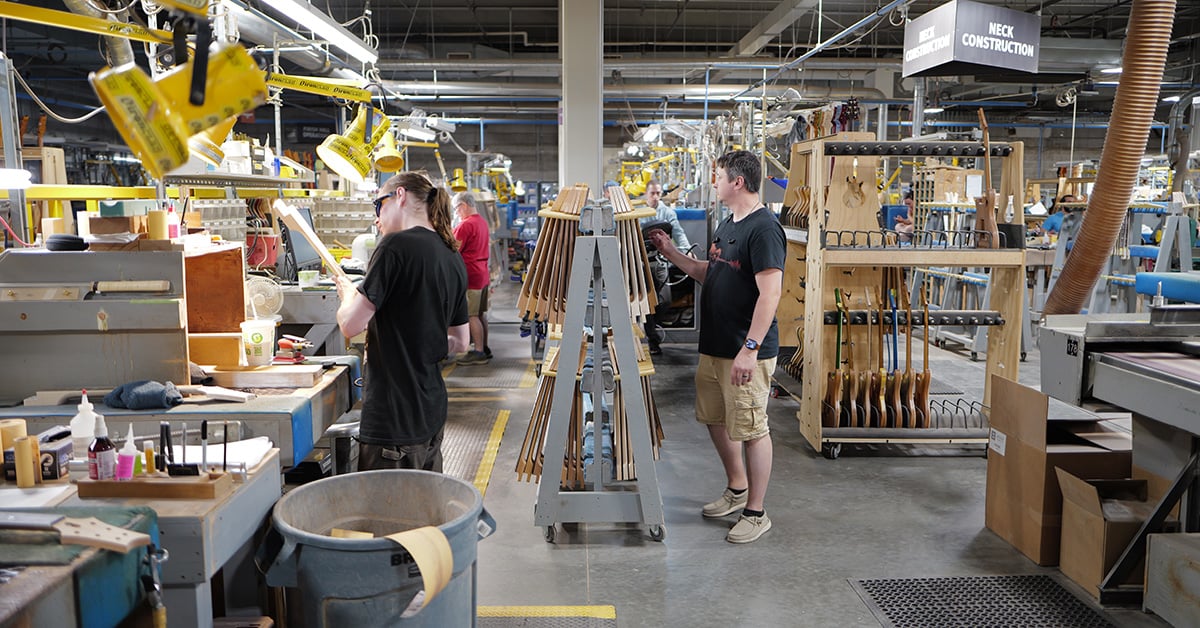
PRS Guitars factory tour
A visit to the Kent Island, Maryland plant where every instrument gets the PRS touch

Paul Reed Smith is a man with a purpose. The story of his journey from his early days handbuilding guitars to earning a significant market share of the electric guitar market has taken on an almost legendary quality.
Born and raised in Maryland not far from where the PRS factory stands now, he devoted much of his brief time at St. Mary's College to building instruments. Not long after that, he moved to Annapolis and opened a guitar repair shop.
He also continued making custom builds, including one for Peter Frampton. The instruments' fine quality and Smith's tenacious pursuit of top-tier players like Alex Lifeson and Carlos Santana paid off, and in 1985 he opened the first PRS factory in Annapolis. Ten years later, PRS moved to their current location on Kent Island, Maryland.
There was quite a buzz among Crutchfield's large number of employee guitar players when we agreed to begin carrying PRS guitars. Not long after the partnership was announced, I had a chance to learn more about how they make such great guitars.
A guitar factory by the bay
PRS's Stevensville, Maryland plant occupies several acres of an unassuming light-industrial complex at the edge of Chesapeake Bay. A solitary receptionist occupies a large desk in the high-ceilinged lobby.
A wide-open entrance across the reception hall leads into the West Street East gift shop.
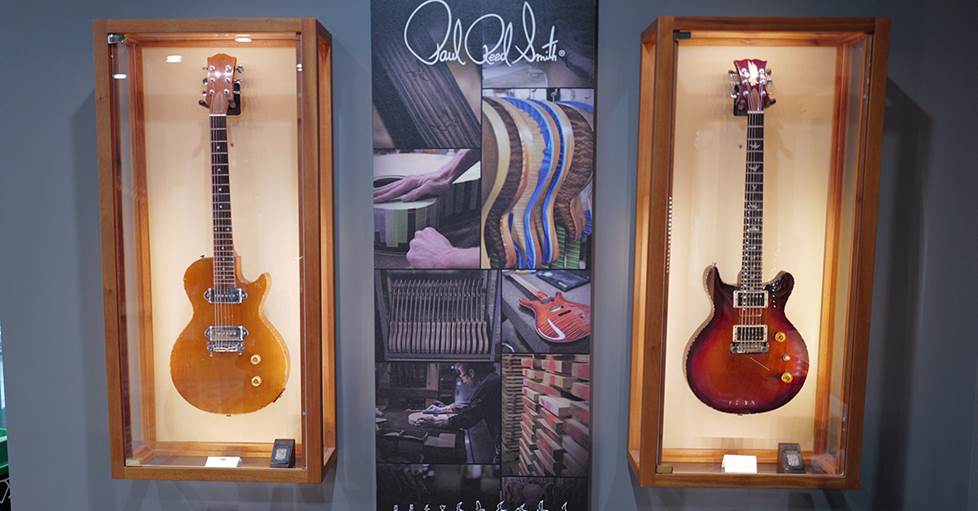
These iconic early models hang (but are not for sale) in the gift shop.
Early serial-number editions of iconic PRS guitars like the Santana model hang in shrine-like illuminated window boxes lining the walls. Current-model guitars and amps stand at the ready on a display stage at the back of the shop, but you almost don't want to break the museum-ish quiet.
From wood to singing guitar
The Stevensville plant is just steps away from the Chesapeake Bay, although since like much of the Eastern Shore it is completely flat, you can’t tell from the parking lot.
More visible here are the extensive outdoor HVAC units that help maintain indoor conditions at a constant 70 degrees/45% humidity — perfect for the wood.
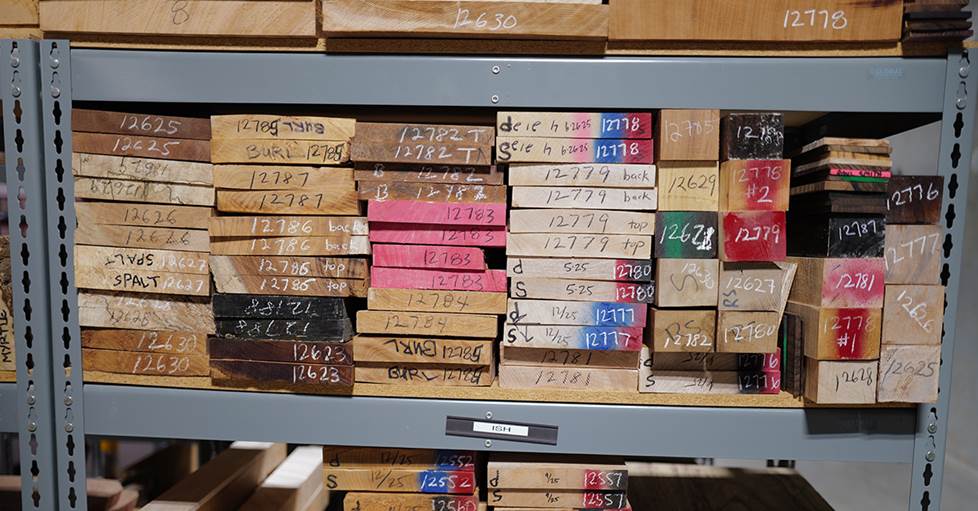
Wood is carefully dried, catalogued, and stored for weeks at 75ºF/45% humidity to acclimate before it's shaped into guitar bodies, necks, fretboards and other parts.
And it’s all about the wood. The raw material comes in large pieces that are cut into blanks for necks, bodies, tops, fretboards, and other parts. All that wood spends time in hot rooms at around 100-115ºF until it reaches the ideal moisture content level (6% or below for most material and 2% for rosewood boards) to be worked. And the wood also rests in the shop for days or weeks at a time between different stages of the shaping process to let newly exposed wood acclimate.
Some oily woods — like rosewood for fretboards — need to be roasted at a higher temperature until some of the oil gets squeezed out and the wood is ready to be worked.
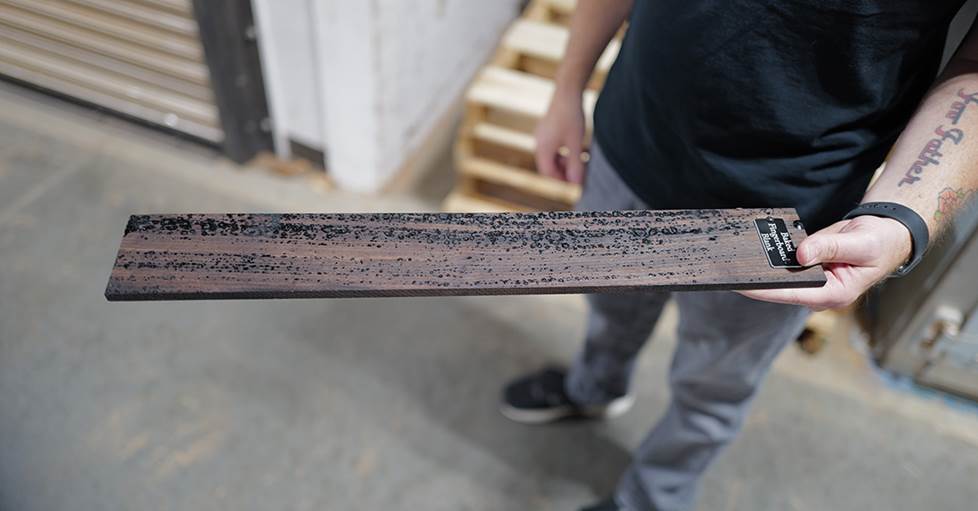
Oil on the surface of a roasted rosewood fingerboard blank will be planed or sanded off of the now extremely stable wood.
This method of seasoning the wood before and between steps of working it makes it less susceptible to warping, shrinking, or cracking — none of which you want to happen after you've built a guitar.
Dust control
One of the first things that strikes you about the workshop is the smooth station-by-station workflow and tidy organization. And its overarching HVAC and dust control systems.
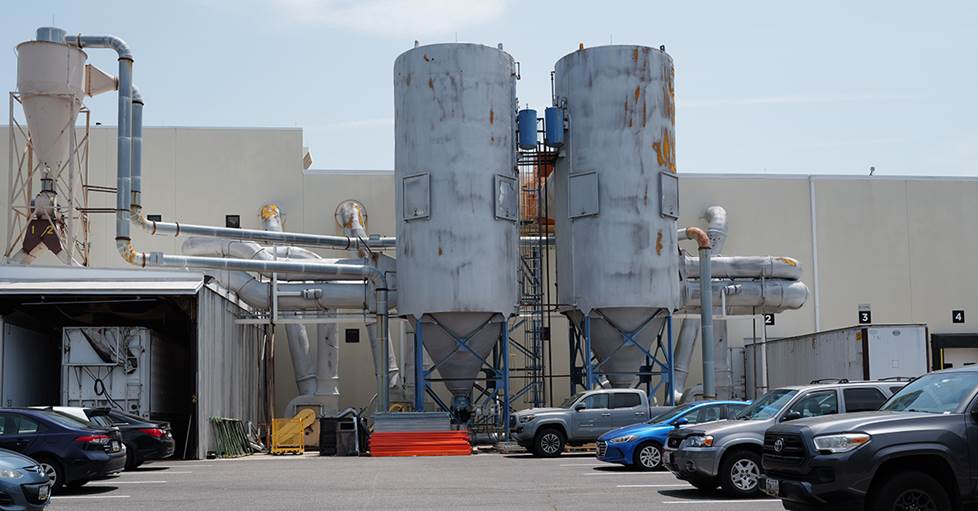
Sawdust silos outside PRS's Stevensville plant help keep the indoor working environment dust-free.
The amount of sawdust produced by all this cutting and sanding is huge. That's why every machine that makes sawdust is attached to a powerful vacuum that keeps the work environment amazingly dust-free.
CNC machines for consistent shaping
The initial shapes of the different parts of the guitar get cut by computer numerical controlled (CNC) devices. These work inside sealed compartments and use a combination of blades, routers, and jigs to make short, consistent work of cutting out bodies and body caps, necks, headstock veneers, and more.
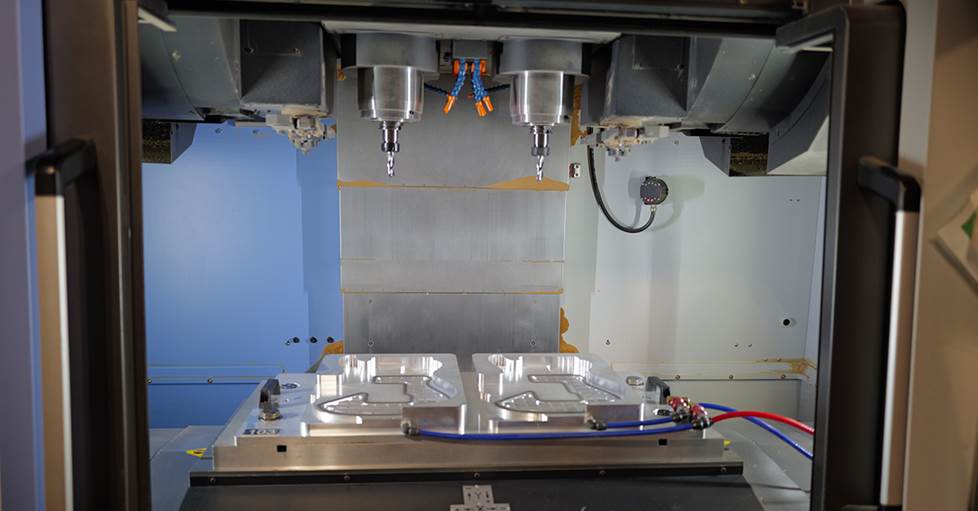
This CNC device delivers consistent results and saves a ton of labor — which is great because after initial shaping, each guitar will require hours of detail work by hand.
It also saves a lot of time, especially when you consider how long it would take to hand-cut every small piece of inlay, including the iconic PRS birds.
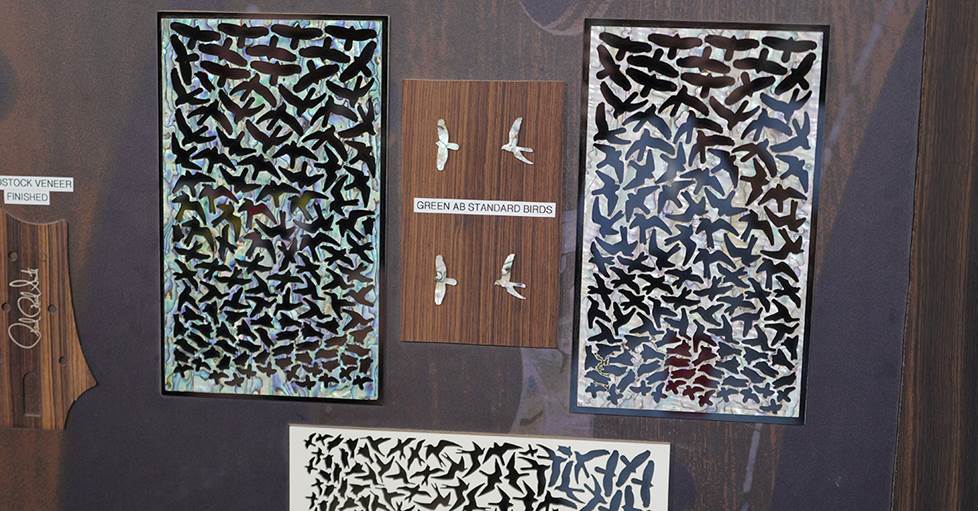
How many birds can you get from one inlay cell? A computer plots it out.
A computer program fits the maximum number of cutouts on a sheet of shell and a CNC machine performs intricate cutting. That lets PRS's craftsmen focus on other vital and time-consuming tasks — like sanding.
Neck construction
Overhead signs throughout the factory make finding your way easier. Under "Neck construction," you can see an unassuming bench-mounted, non-powered hand tool resembling a vice.
"That's the fret press that we use on every guitar we build here," says Matt King, a 20-year PRS veteran.
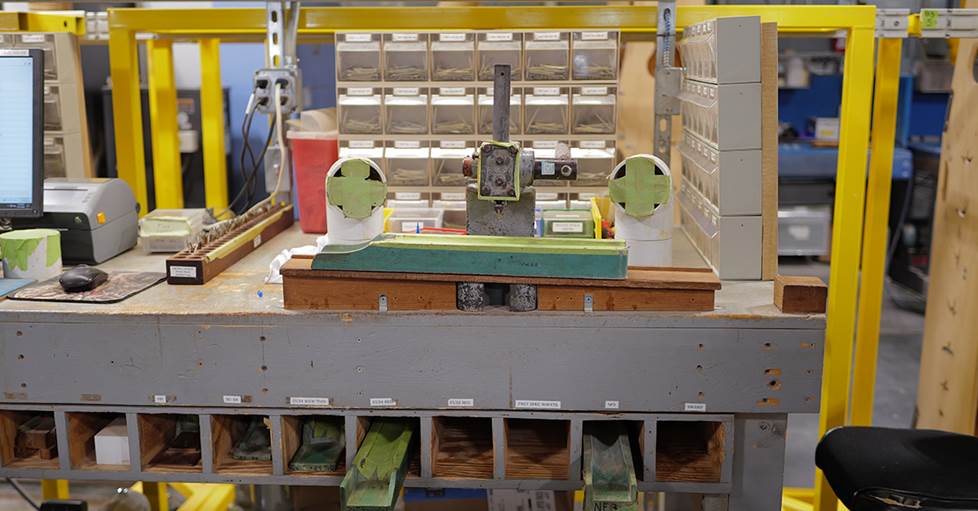
Every US-made PRS instrument gets its frets pressed into place with this humble, non-powered tool — note jigs for accommodating different necks in cubbies below.
The fret press is covered in green masking tape and ensconced in benchtop drawers holding different-sized fret wire. If you happen to see it during one of its idle moments, there's sure to be plenty of activity at other stations — like slotting fretboards and fitting them onto necks.
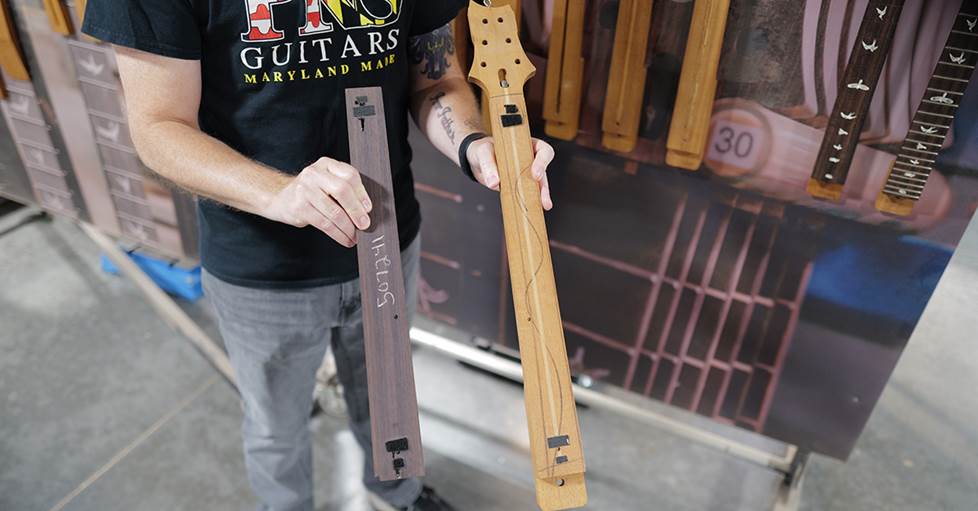
Matt King shows the simple, ingenious way PRS aligns fretboards to their necks — hint: it looks like a dot on both neck and fretboard.
PRS puts a lot of stake in their neck profiles — the shape of the back of the neck. It's important because that's where your fretting hand makes all kinds of contact.
The popular Pattern Vintage profile has a subtly asymmetrical design, with a little less wood on the bass side of the neck toward the nut end and a little less wood on the treble side of the neck from the twelfth fret to the heel.
The PRS bird inlays
Paul Reed Smith's mother loved birds, and he first used them on his original build for Peter Frampton. There's also a visual key to the nine bird species PRS uses for fretboard markers.
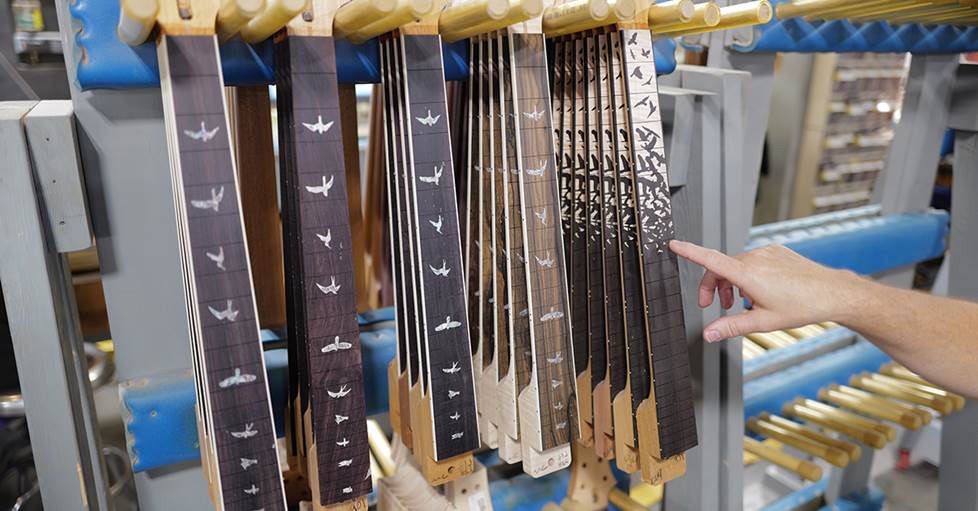
Necks featuring bird inlays and ready for frets. Matt King points out a rare "birds of a feather" design.
The inlays show a variety of birds in flight, and they've been rendered in a few different styles from the original solid birds to calligraphic "brushstroke birds" and hollow-outline "j-birds."
You'll also see the birds deployed in other ways, like in the "birds of a feather" design where a solid rosewood fretboard at the body breaks into a "flock" of birds that emerge and spread out onto the maple fretboard toward the headstock.
Wood librarians
PRS has been known to go all out when it comes to wood. Their "Wood Library" models use all sorts of interesting combinations. And their "Private Stock" models command your attention with the striking grain patterns of their premium woods and five-figure price tags.
But the time-proven standby woods — mahogany, maple, and rosewood — provide the backbone of most PRS guitars.
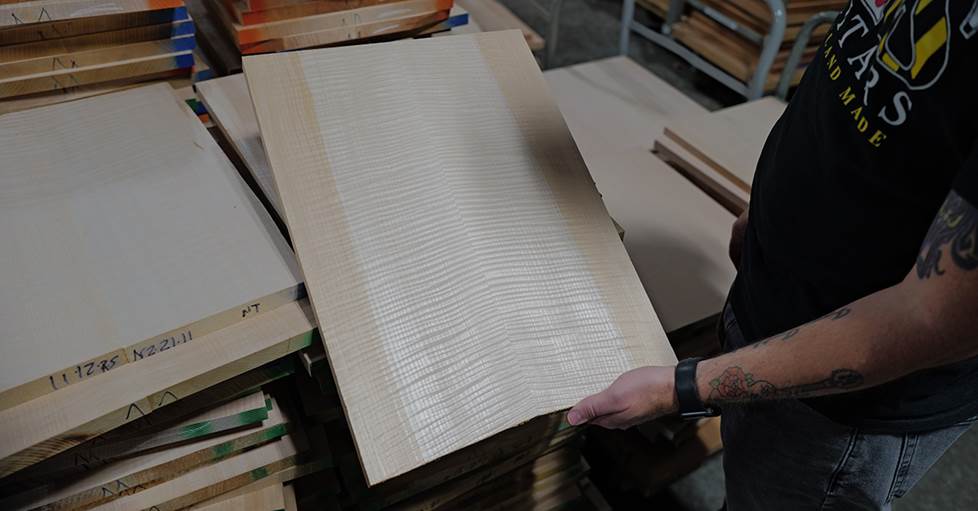
The flame maple top shown here has been “bookmatched” so the figure aligns across both pieces of wood.
Paul's choices
PRS's instrument components, including bridges, string nuts, and electronics, are all proprietary. Sometimes their designs feature surprising elements.
For example, the material PRS uses for string nuts includes brass shavings, which helps with tuning stability and subtly brightens the overall tone when compared with traditional bone string nuts.
“When Paul told me we were going to be using brass in the nuts, I was like ‘what?’” says Matt King. “But then — as with all of the more surprising choices Paul has made through the years — it didn’t take long for me to get it.”
The string nut material also includes graphite to prevent binding, and each nut is meticulously shaped (or compensated) to improve intonation — crucial for any guitar, and even more so for tremolo models where the whammy bar pushes and pulls the strings through the nut slots when you use it.
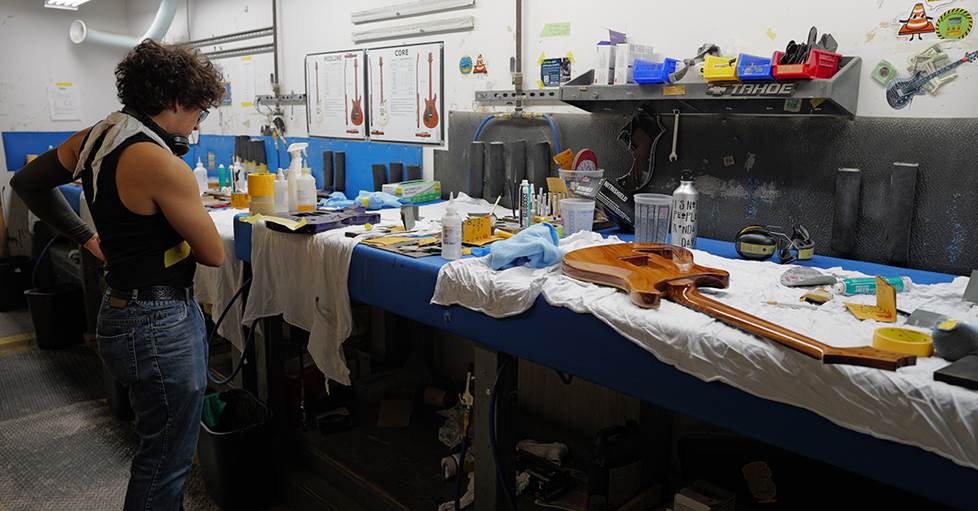
Taping off guitar bodies before installing hardware and electronics is an art in itself — here a worker reduces tape stickiness with a bit of shirt lint.
One of those choices that didn't surprise King much was the 2019 move to finish all the US models with nitrocellulose lacquer.
“We think it makes them feel and sound better," he says. "But you have to be careful with nitro — it’s not quite as durable and some stands and hangers can cause problems with the finish. But we think our customers are intelligent enough to understand that.”
The PRS SE story
PRS SE models are their most affordable instruments. They're built at PRS’s Indonesian factory, and then they come to the MD plant for their final inspection.
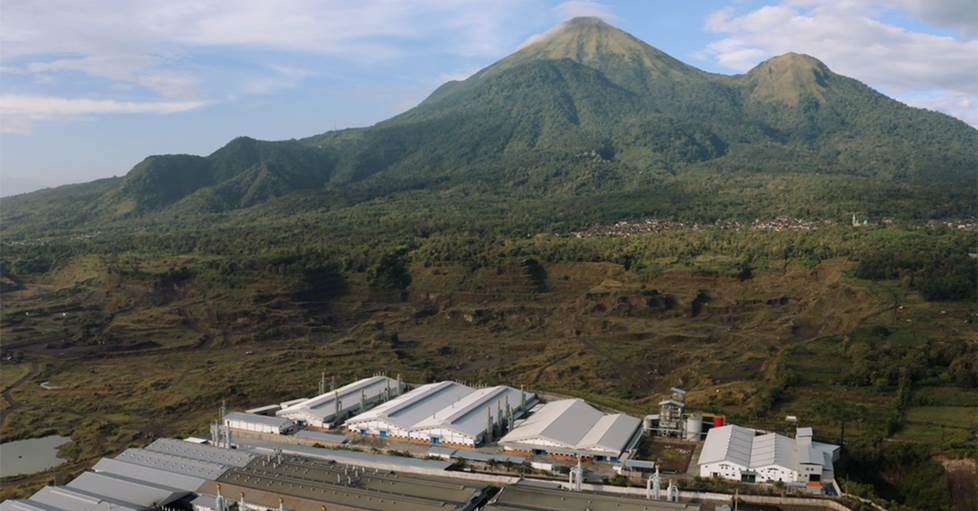
PRS's Indonesian plant employs around 400 workers in a 90,000-square-foot space devoted exclusively to building SE models.
That's one of the reasons why new SE instruments tend to have a consistently good setup and clean detailing right out of the box. Another reason is that PRS maintains tight supervision over every aspect of its Indonesian partnership, which is part of one of the largest guitar building conglomerates in the world, Cort.
A number of major guitar manufacturers outsource affordable models to Cort. But most of those are built in factories that handle multiple brands under the same roof. Since 2022, PRS's Indonesian operation exclusively builds their SE instruments.
SE quality control
"It's not the most exciting place in the factory," King says of the SE inspection station in Stevensville.
And that's true: it consists of several workbenches, away from all the woodworking machinery and sense of process. And since this important part of the SE journey involves a good deal of unboxing, it almost feels more like a shipping station than a guitar factory.
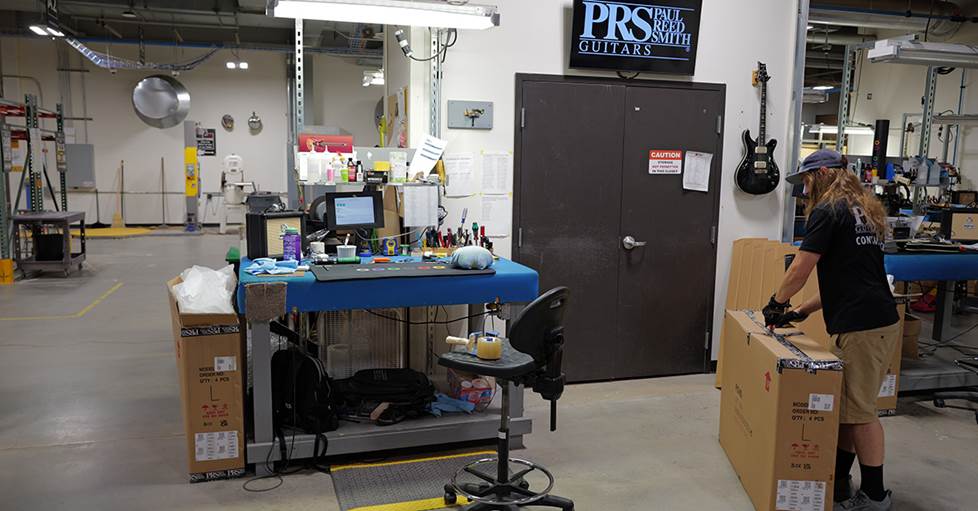
Every PRS SE model gets unboxed and adjusted for quality control at this station.
And it's hard to "see" the years of experience required for the luthiers who perform this final lookover, taking all the details of playability and finish into account.
“Every SE gets opened and checked out here," King says. "Maybe it needs a little nut-filing, maybe a truss rod adjustment. We do whatever it requires.”
The art of manufacturing guitars
Paul Reed Smith started out building single guitars by hand. His success — which I measure in player happiness — resulted from his exceptional designs. They incorporate the best of both classic and modern approaches along with a suite of innovations.
The SE story might seem like an anti-climax. But the Cort plant's processes mirror Stevensville's very closely. In both places, the instruments benefit from PRS's refined control over manufacturing.
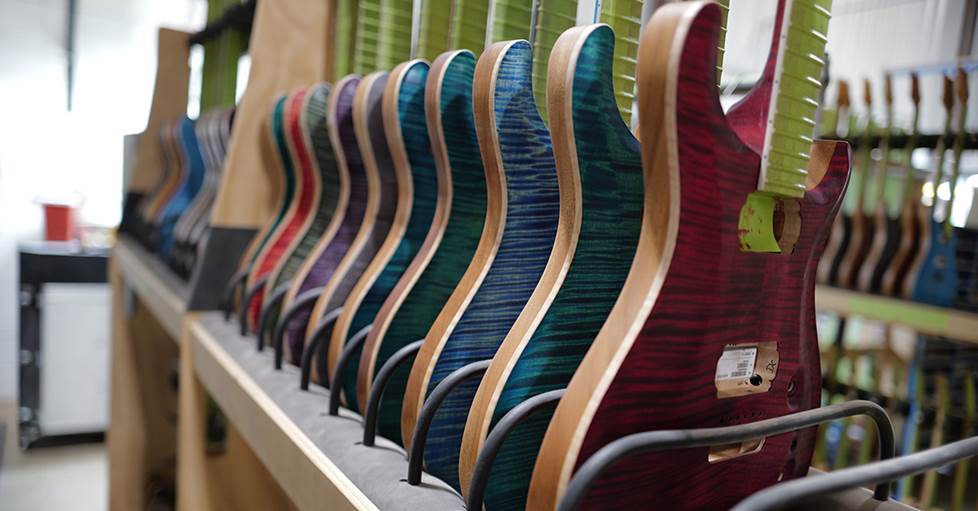
PRS's tight control over manufacturing results in consistent instruments that are a pleasure to play.
The Stevensville plant (and for that matter, their Indonesian facility) encapsulates PRS as a beautiful example of cool complementary relationships between artistic design and mass production.
Their manufacturing processes continue to evolve with and influence the details of design — all in the service of instrument playability and consistency.
A kid in a candy store
If you're interested, anyone can take an open-to-the-public tour of PRS's Stevensville plant. You just need to arrange it with them in advance.
But be careful. If you're motivated enough to make the trip, you're most likely going to see a lot of things you want.
The dream-come-true facility has been compared to Willy Wonka's factory — and it's easy to understand why. With so many tempting instruments, finding your favorite flavor is half the fun.
Want to learn more?
PRS makes a wide range of guitars as well as amps, pedals, and more. If you have questions about any of the different models we carry, give one of our guitar experts a call at 1-800-315-0443 or contact us online. Free lifetime tech support is included with your Crutchfield purchase.


Comments (0)