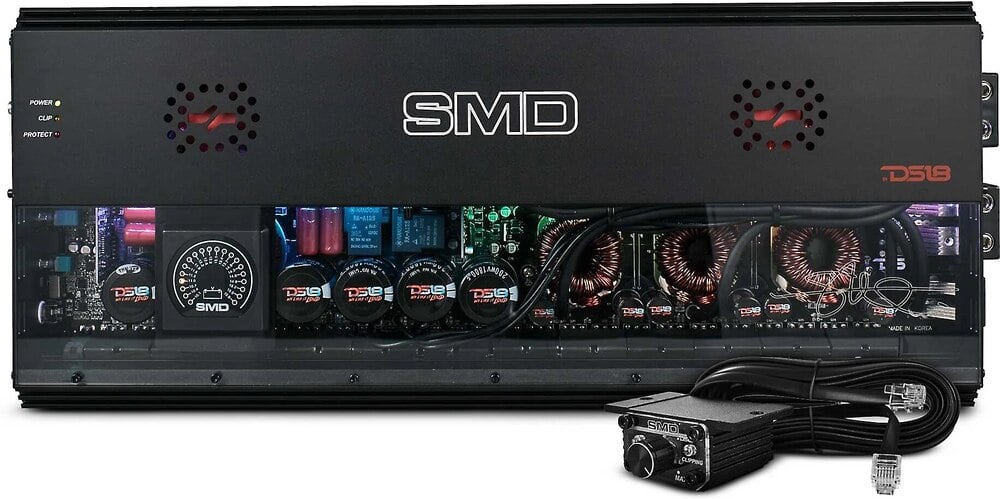
How to install high-power car audio amplifiers with 2,000+ watts RMS
Electrical upgrades and specialized gear you need for multi-kilowatt car audio systems

In this article, we'll take a look at what's involved when you install a high-power, multi-kilowatt sound system in your car. We'll show you how to ensure peak performance, maximum bass, and do it safely. You'll need to upgrade the electrical system with thick wiring, beefy hardware, and by adding a second battery and aftermarket high-output alternator to your vehicle.
You want your music to rock and bang when you slow-ride down the boulevard. That's the pleasure of high power. You especially love loud bass. And nothing makes massive bass better than massive amounts of power — high wattage. So, to get the bass you want, you'll need a big amp. This article will address the issues involved with installing a high-power, amplified audio system in your vehicle.
What do we mean by "high power"?
For the sake of practical applications, we'll define a high-power system as one that includes a subwoofer amplifier with an output of 2,000 watts RMS or more, or a system with a total current draw over 200A (amperes or “amps”). Any system this powerful will need special care and attention to detail while assembling and installing the components as well as when playing loud music.
Problems caused by high powered systems
This kind of power can take a toll on you and your car.
Hearing loss, permanent damage
This issue is entirely under the control of the system operator/listener. Don't turn up the volume so loud that your ears hurt or ring. If you're showing off your system or competing, use hearing protection like foam ear plugs or noise-canceling headphones.
Car parts rattle and buzz
These problems are harder to solve. And sometimes, they're even hard to locate. Tightening all nuts and bolts and adding sound deadening material are the ways to handle these issues. Sound damping products are used to isolate and absorb noises and can be installed onto every flimsy metal or fiberboard surface. This material, usually in the form of cuttable, adhesive-backed sheets of heavy insulation, helps prevent some noisy vibrations from developing in the first place.
See Sound deadening for more details.
Electrical current flow failures
Having too much or too little current flowing through a system's power wiring is the main concern when building a high-power system.
Too much current flow — like in the event of a short circuit or when an amplifier's gain structure makes it act like one — can cause fuses to blow and wires might melt or catch fire. Your car and all its contents could burn to the pavement and you could be injured or worse. Ensuring properly sized and matched power wire(s) and adequate fusing will prevent a catastrophic breakdown such as this.
When there's not enough current flow, problems progress from headlights dimming when music plays, to the vehicle's electronic control unit (ECU) freaking out and causing all kinds of malfunctions like steering or engine failures, all the way to, again, melted wires and vehicle damage.
It's the amps not the volts...
Electrical power is the product of current times voltage. In 12-volt systems with thousands of watts of output, you need hundreds of amperes of input. And as everyone should know, no matter what the voltage is, high-current (high amperage) electricity is more dangerous and difficult to control than low-current (low amperage) electricity. And more difficult to wire safely.
For example: an 80% efficient Class D amplifier producing 1000 watts of output power plugged into your home's 120-volt electrical outlet will draw 10.4 amperes of current. The same amplifier producing the same output would require ten times as much power supply current, 104 amperes, in a 12-volt electrical system, like that in your vehicle.
The 16-gauge "lamp cord" wires that can handle the 10.4 ampere power draw of the amplifier at home would burn up in a car application. In mobile audio, high-power amplifiers need big, fat, preferably all-copper power and ground wires to operate effectively and safely.
Planning your car audio system
We'll assume you've picked out which amplifiers you want to install, and, of course, how many watts you want or expect your system to put out. We're here to help you install and wire your high-power amplifier system successfully.
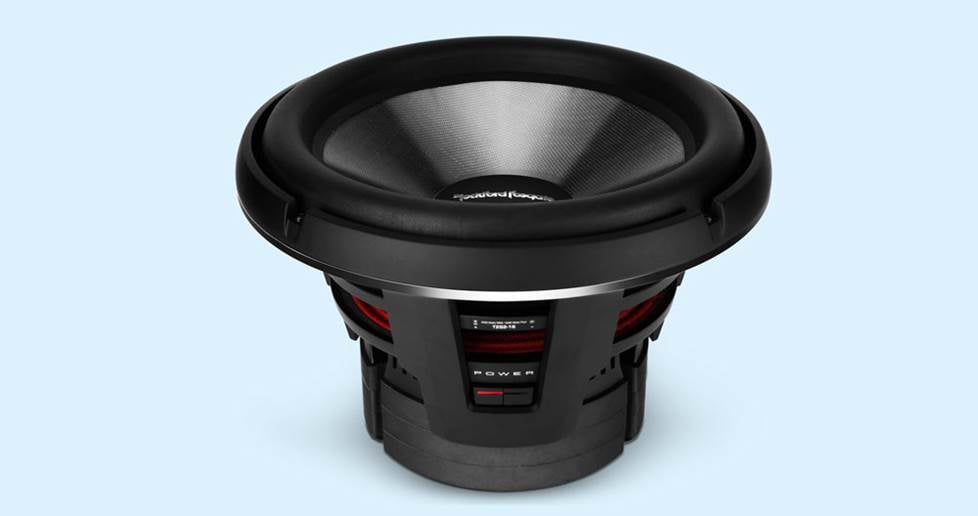
Maybe you want to power a couple of Rockford Fosgate Power Series 2500-watt 16" subs.
How much power do you need from your alternator?
Here's how to figure out how much power your alternator needs to generate. Let's say, for example, that you want to power two of those Rockford Fosgate subwoofers shown above.
We shall assume, being scientifically conservative, the system amplifiers will run at 13 volts, and 75% efficiency, and will play bass-heavy music with a duty-cycle of 1/3. (This means that that musical genre will demand full-power one-third of the time. Classical music has about a 1/4 duty-cycle. Test tones and noises run at a duty-cycle of about 1/2.)
- If you want a music system with a 5000-watt output, it'll need 171A of current from the power source. That's in addition to what the vehicle needs to operate.
- If your vehicle has a 150A factory alternator, the vehicle needs about 60% of that, 90A, for normal operation, leaving 60A for accessories.
- But you need 171A, which is 111A more than the alternator can produce.
- So you add 111 to 90 and find out you’ll need at least a 201A aftermarket alternator to run your vehicle and your high-power system.
It gets pretty complicated figuring out exactly what power source upgrades will work in any particular vehicle, so for high-power systems we recommend getting an aftermarket high-output alternator and a secondary battery.
- Get the largest amperage battery (AGM or lithium) that'll fit in your vehicle, and
- Get the highest amperage alternator that'll fit in your vehicle.
Note: Some experts recommend adding two secondary batteries and two high-output (HO) alternators in systems rated to put out over 7500 watts of power. Having more than one alternator is not practical in every vehicle. There are only limited applications that can support this today with aftermarket product availabity.
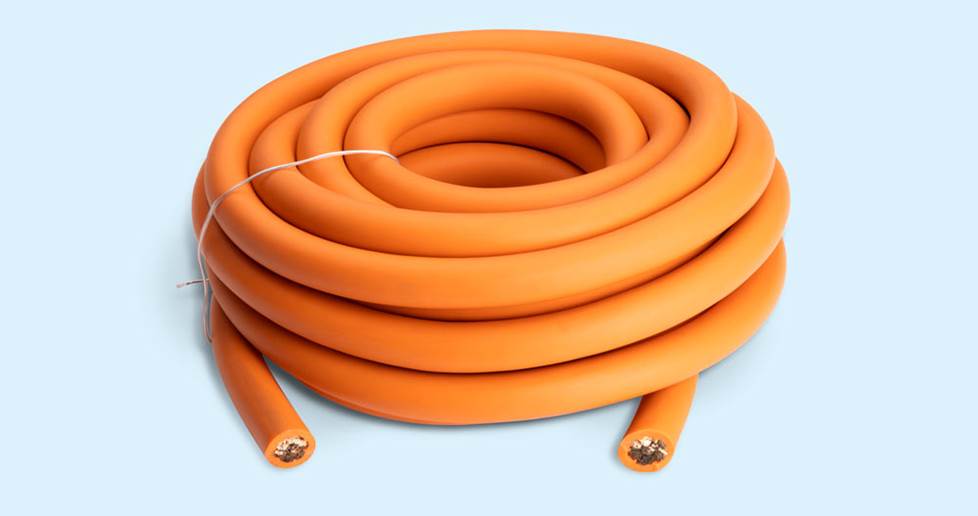
Kicker Warhorse 1/0-gauge power wire
Hardware for high-power systems
All amplifier installations need similar hardware — wiring, fuses, and more, depending on the installation. High-powered systems naturally need a bit more.
Power and ground wires
For power and ground leads, use 1/0-gauge stranded OFC (oxygen-free copper) wire. You should avoid using steel, aluminum, or copper-clad aluminum wires because they can't carry as much current as pure copper can for the same size wire and are often confusingly rated.
Amplifier wiring kits offer almost all the wiring you’ll need for an installation in one convenient package. They include power and ground cables, as well as a matching fuse, turn-on wire, and some other hardware like crimp-on connectors and a firewall bushing. Speaker wires and RCA interconnection cables are usually purchased separately because each installation features different numbers of channels and different wiring length requirements.
Check out Crutchfield’s selection of Power & ground cables and Amp wiring kits for high-power systems.
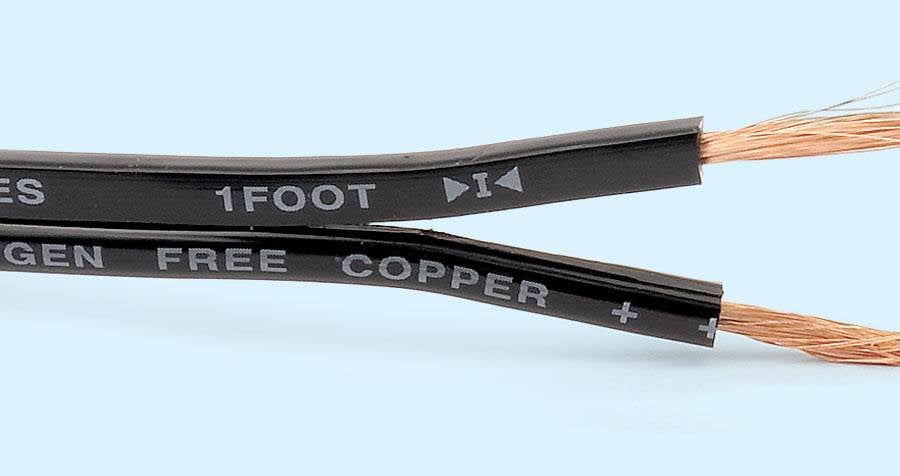
Stinger PRO Series 12-gauge speaker wire
Speaker wires
It helps to have large-gauge speaker wires for efficient sound distribution, but you don’t need 8-gauge speaker wire. 12- or 14-gauge wire will work just fine for high power speaker connections.
Speaker wires don’t have to be as massive as power wires because although they carry the same amount of power, they operate at higher voltages needing smaller amounts of current (amperage) to flow. And again, it’s high-amperage current that’s dangerous and apt to heat up wires and connections.
Check out our full selection of Speaker wire.
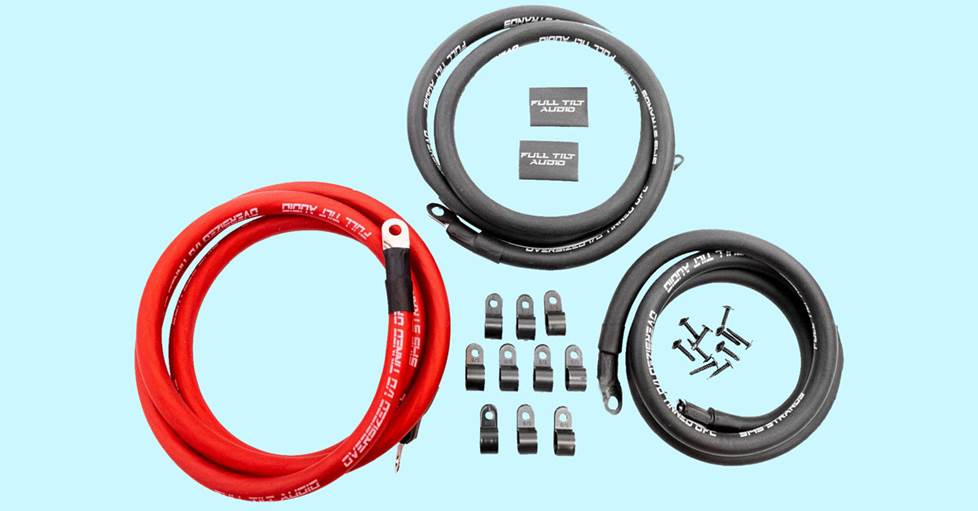
Sundown Audio Full Tilt BIG3 wiring upgrade kit
The "Big Three" wiring upgrade
If your audio system needs 1/0-gauge power wiring for adequate current flow, then your vehicle’s electrical system should also accommodate that by having 1/0-gauge ground and power connections as well.
A standard internal combustion engine vehicle uses the engine block as ground — that’s where the spark plugs, starter, gas pump, and the alternator all get their ground connections. Most vehicles usually come with wimpy (thin) wires that connect to the negative pole of the battery and the metallic frame of the car body. These two ground wires are especially important to upgrade to ensure peak performance for a high-power system.
A Big Three wiring kit upgrades those two ground connections and the battery’s main power wire. Check out a Big 3 wiring upgrade kit.
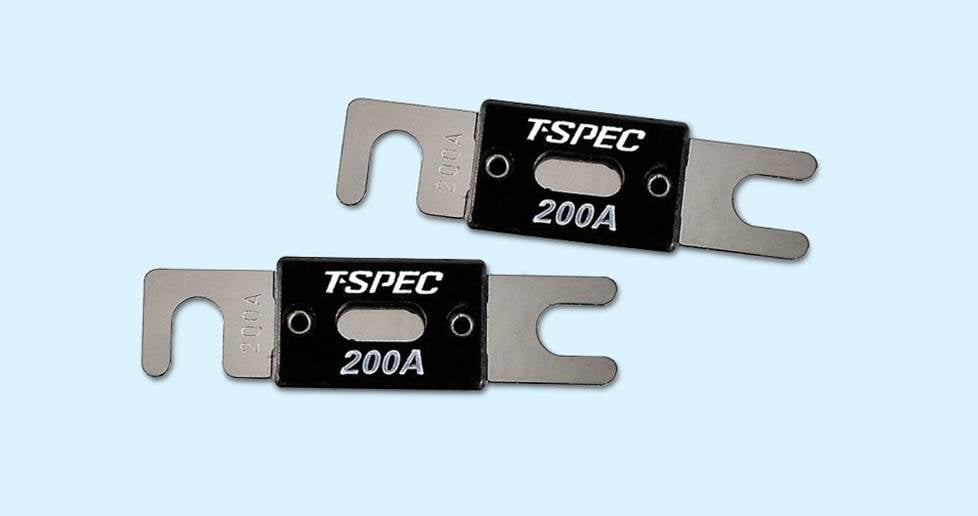
T-Spec 200A ANL fuses
Fuses
Fuses are the misunderstood step-children of electronics. These are safety devices. They do not act like resistors in circuits impeding current flow. The only effect they have is when they blow — which you'd rather have happen than a fire. Replacing a $2 fuse, after fixing whatever problem the blown fuse indicated, is a lot cheaper than replacing your wire, amplifier, or car.
Basically, the fuse directly protects the power wire, and so needs its current-rating to match the wire’s maximum current-carrying capability in order to do its job safely — protect you from a short-circuit disaster. When using an amp wiring kit, always use the fuse that comes with the kit. Each wire manufacturer has their own different current ratings and amperage specifications for safe applications.
If you have two batteries, you'll need three times the number of fuses for complete safety. You’ll need one fuse on the primary battery’s positive lead near the battery terminal, another fuse on the other end of that wire at the secondary battery’s positive terminal, and a third fuse also at the secondary battery’s terminal on the wire leading to the amplifier.
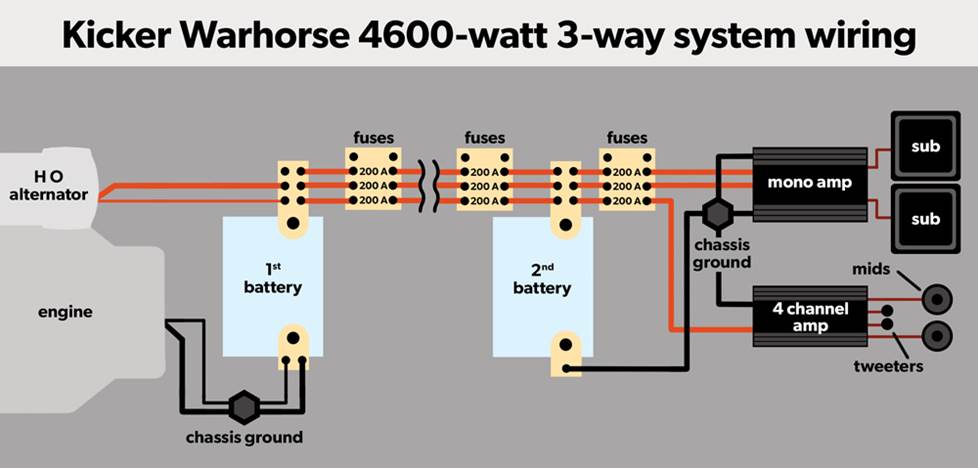
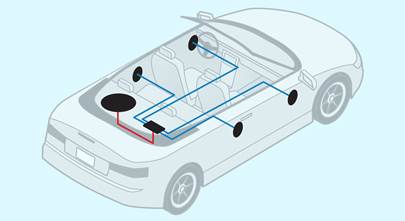
How the Kicker Warhorse 4600-watt 3-way system should be wired for safety and performance.
The way you figure it is to imagine an accident cuts the power wire and the ends touch ground. If it happens in the middle, both batteries could get shorted-out dangerously, so you need a fuse at each end of that power wire for safety in that situation. And the third fuse is for safety in case the amplifier’s lead breaks loose and touches ground.
And the amplifiers that use two wires for power and two for ground will need at least six fuses for complete safety, a set of three for each power wire.
See our full selection of fuses for available options.
Fuse holders and distribution blocks
The nuts and bolts of high-power connectivity are often referred to as "jewelry" because the shiny metallic pieces, like brass distribution blocks and nickel-plated fuse holders strung along brightly colored wire looks like something worthy of being shown off to your friends.
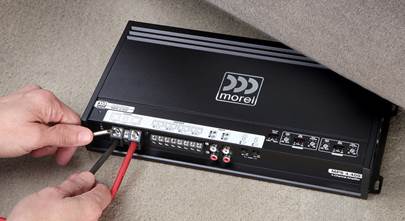
For high-power systems, not-so-pretty heavy-duty distribution blocks and fuse holders rated for 1/0-gauge wiring are the only ways to go. For wires this large, crimp-on connectors like ring terminals need hydraulic or hammer-powered crimpers to ensure secure and reliable electrical connections and current flow.
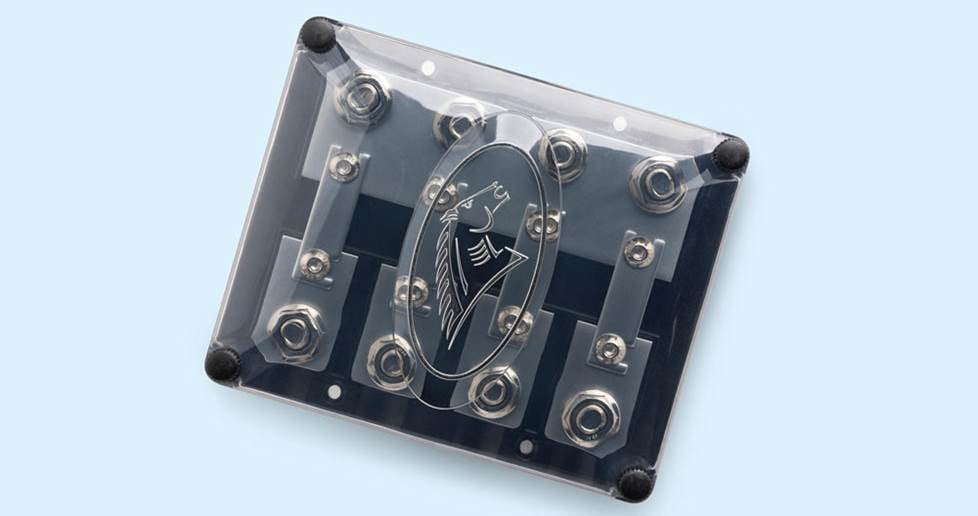
Kicker Warhorse 4-channel fused distribution block (jumpers installed)
Crutchfield offers various selections of Power distribution blocks, Fuse holders, and Battery terminals that’ll work well in most high-power systems.
Capacitors
Many OG bass bangers added capacitors to their amplifiers' power circuits to provide a blast of extra electrical current when needed from the energy stored in the caps. But in systems using this much power, a second battery is the better solution.
A second battery does the same thing as a capacitor, only better, because a battery stores a lot more energy and doesn't need to be recharged as fast or as often as a capacitor does.
Crutchfield does sell some Capacitors.
Adding a second battery
The primary battery in your car starts the engine and also provides an extra energy boost when the sound system draws more current than the alternator (the “charging system”) can provide at that time. Adding a second battery essentially doubles the headroom for power capabilities during loud bass hits.
Installing a second battery involves a few important steps to ensure proper application, performance, and safety. To start off, they must be connected together in parallel — positive pole to positive pole, negative to negative — to ensure that their combined voltage remains at 12 volts while their combined amperage capacity will increase (add together).
Voltage is the pressure-like force that drives current flow. When you connect two batteries together, their voltage equalizes, and does so very quickly. In fact, it travels so fast that big differences in the two batteries’ initial charge states could result in exploding batteries. Therefore, you need to fully charge each battery before connecting them together.
Because the two batteries will be experiencing the same stresses, demands, and wear, it really helps to use batteries that are the same age. You don’t want a fresh battery’s charging and recharging current to overwhelm and damage an old battery’s internal elements. There are battery isolation devices you can use to keep two batteries working together without hurting each other, but they’re really only necessary when you play music often with the engine off and need to charge the secondary battery with a separate charger.

XS Power D5100 deep cycle 3100-amp 12-volt battery
Crutchfield sells Replacement batteries and Powersports and secondary batteries.
Installing a high-output alternator
Upgrading your alternator is a "must do" in high-power audio systems. A high-ouptut (HO) alternator will drastically increase the available charging and operating cabability of your electrical system.
If you have an F-150 with the 240A OEM alternator — which can handle a 2800-watt system as is — upgrading to a 400A alternator (one of the largest that will fit) will then support a 7400-watt system. Even if you’re only planning a 5000-watt system, putting in that big of an alternator allows for future expansion without needing further electrical power upgrades. As noted earlier, a system larger than about 7500 watts will probably need two HO alternators in order to operate properly.
Installing an aftermarket alternator involves custom-fitting mounting brackets and serpentine belts so it’ll work correctly in your particular vehicle. Unless you’re experienced in automotive wrenching and repair, we recommend taking your vehicle to an auto repair shop to install an aftermarket alternator.
High-power amplifiers
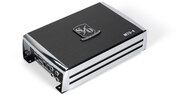
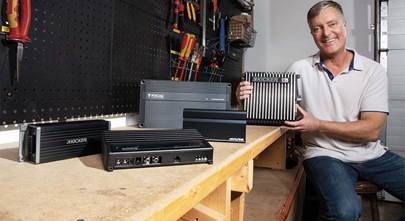
Crutchfield carries a few competition-ready high-power amplifiers that'll rock and roll your world with music, especially bass, that you'll feel in your bones.
Check out our selection of High-power amplifiers that we carry here at Crutchfield.

DS18's Steve Meade Designs SMD5000.1D 5000-watt subwoofer amp comes with remote bass control knob.
Crutchfield has a lot of the right products
The high-power products we carry all come from highly respected manufacturers and vendors of high-quality products. They will all perform up to spec to ensure maximum safety, performance, and high-powered enjoyment.
Plan your audio system carefully. When you're ready to put together your multi-killowatt system, contact our advisors. They'll help you get everything you need. And buying your gear from us means you'll have our free tech support for setup and tweaking needs for the life of the gear.


_mobile.jpg)


Comments (0)