Crutchfield: The Podcast Ep 59

In this episode:
We’ve been researching cars since the early days of Crutchfield. It’s how we know what stereos, speakers, amps, subs, and more fit your vehicle. How do we do it? Who takes apart dashes and measures speaker locations? Where do we get the cars? And maybe most importantly: How can you help? This episode is a deep dive into the world of Crutchfield Vehicle Research.
As you listen to this episode, you can play along as JR quizzes his co-host Eric about all things Vehicle Research. The answers can be found in these articles:
The history of Crutchfield's car audio DIY support
Who was the Crutchfield Installation Doctor?
The Crutchfield Vehicle Research Team
Research your car the Crutchfield way
(0:01 - 0:09)
What car are we working on here? It's a 2025 GMC Terrain. GMC Terrain. Brand new.
(0:10 - 0:23)
Yes, it's just not got the Bose system, it just has the six-speaker bass system in it. When a car has multiple options, like with Bose, without Bose, do you need to get both versions in here? Typically, we get every version that's put out there. Yeah.
(0:26 - 0:52)
Our vehicle research and the sheer amount of it we have accumulated over the years, and the team that collects all of this data, it's kind of a big deal here at Crutchfield. The info they gather about vehicles has been used by advisors and tech support, live on the phone with customers since we began collecting it in the early days of Crutchfield. Vehicle data was a big part of the Crutchfield catalog for many years, taking up five to ten pages.
(0:52 - 1:25)
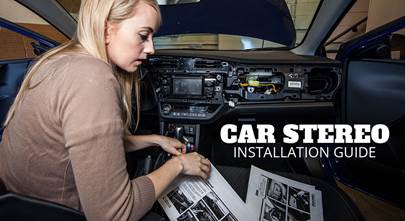
We use this research to create our vehicle disassembly instructions we include with most orders for car stereos and speakers. And of course, it's what makes it possible for crutchfield.com to tell you, a random Crutchfield customer that may or may not have any installation experience, what fits your car and what doesn't, so you can buy stuff with confidence, knowing it'll fit. I talked with our entire vehicle research team, Ben, Wayne, Carl, and their boss, Phil, about our vehicle research endeavors, past, present, and future.
(1:25 - 1:53)
That's what we're doing on this episode of Crutchfield The Podcast. Welcome back to Crutchfield The Podcast. Thank you so much for returning and being a listener of this show.
(1:53 - 2:13)
Here's what we've got on tap for today. We're going to do a deep dive into the modern-day vehicle research team here at Crutchfield. We'll introduce you to all the players, all the experts, all the experts in the field, and basically show you, as well as we can on an audio-only podcast, how our vehicle research team works.
(2:14 - 2:29)
We did ask for questions on our social medias, and we got one that we're going to try to answer this week. It's kind of an incomplete question that came in on our Facebook. We're going to try to answer it later in the show, after we're done with this whole vehicle research team.
(2:29 - 2:38)
Before we do that, though, I want to welcome back. He wasn't here in our last Crutchfield The Podcast episode, but he's back today. Welcome back, Eric.
(2:38 - 2:51)
Thank you. Happy to be back. How do you like our new digs here? This is nice.
This is a huge improvement. The view, not the best here in the basement. Wait, you're just looking at me.
(2:51 - 2:55)
Oh, well, yeah. I guess that's a good point. Jerk.
(2:55 - 3:05)
You see what I did there? Ha! But, no, the space is quite nice. It's nice and quiet back here. Certainly have a little bit more elbow room, a lot more comfortable sitting.
(3:05 - 3:16)
This is much better. So, yeah, it's quite nice. So, every episode of this podcast that has ever been recorded has been done either, well, when the pandemic started, some of it was done from my home.
(3:16 - 3:26)
But ever since we've been back, it's been done from my little teeny tiny office, which I joke about being an underground bunker. Right. But it's technically not.
(3:26 - 3:32)
It's an under accounting bunker. Like, that's what's above my office is accounting. And the video studio is right next to it.
(3:33 - 3:44)
And it had problems. It's just really small. Problems got worse, actually, in the last year because they upgraded the HVAC system and somehow it got louder in my office.
(3:45 - 3:58)
So, that's been a problem for recording. We have moved Crutchfield, the podcast studio, to a part of our headquarters building that is actually underground. Right.
(3:59 - 4:09)
Like, if we went straight up from where we're sitting right now, we would come through the front yard of Crutchfield. That's right. Yes, there's grass above us.
(4:09 - 4:12)
Yeah. It's like we're six feet under right now. It's like we're six feet under.
(4:12 - 4:16)
That's right. Six feet under studio at Crutchfield. Yeah.
(4:16 - 4:20)
We should name the studio. That'd be cool. Maybe not six feet under.
(4:20 - 4:29)
I don't know. Maybe find something else. You know, if this ever becomes like a video podcast, this room is ready to be decorated.
(4:30 - 4:31)
Yeah. Yeah. There's a lot of potential.
(4:32 - 4:39)
I have the power to turn the HVAC off in this room. That's right. Whereas in the old studio, that HVAC powered my office and the video studio.
(4:39 - 4:49)
And on the coldest day of the year, I turned it off so we could record a podcast. And I forgot to turn it back on. And now I'm not allowed to turn that one off and on anymore.
(4:50 - 4:52)
But they still use you for video shoots. Yes. Okay.
(4:53 - 4:54)
Yes. All right. It's good.
(4:54 - 4:59)
I'm glad you haven't burned that bridge. I have total control of the HVAC in this room. So we're good.
(5:00 - 5:12)
So welcome back, man. I did kind of miss you in the last episode. I kind of went on this separate journey creating something I had envisioned and there just wasn't room for yet another voice on the show.
(5:12 - 5:31)
I had all these people from tech support on the show telling me their stories interspersed with some music and stuff. And it was kind of a different sound for Crutchfield the podcast. Did you listen to the episode you were not a part of? Of course I listened to it and not at all earlier today on my way in.
(5:31 - 5:38)
Yeah, I know. Of course I listened to it. You know, in my humble, very biased opinion, it is a work of audio art.
(5:39 - 5:48)
More so than any Crutchfield podcast episode we've ever done. And you're over there listening to it at two times speed on your speaker. Well, not two times speed.
(5:49 - 6:02)
And I think you should look up the word humble because I don't think you're using it correctly. I've only ever described myself as humble. I haven't heard anybody else describe me as humble, which I think is, yeah.
(6:02 - 6:05)
Maybe that's telling. I get you. Yeah.
(6:07 - 6:27)
So yeah, I'm happy to have you back and to do a more traditional episode of Crutchfield the podcast. We've got this episode, which should be our March episode here in 2025, our April episode. I'm definitely having you back in the studio for that because we are going to invite Chris in from tech support.
(6:27 - 6:46)
A few years back, he joined Crutchfield live back when we were doing that on YouTube and Facebook and all that. To talk about electric vehicles and hybrids and what kind of limitations we have on putting stereos, amps, and subs in those vehicles. We're going to have him back in.
(6:47 - 6:56)
And I know you've got a couple electric vehicles that you're dreaming of owning, right? Sure. You want one. Yeah.
(6:56 - 6:59)
Well, I mean, they're gadgets. Yeah. I might own an EV.
(6:59 - 7:05)
So I actually, I think I already do own an EV. I do have that. Oh, that's right.
(7:06 - 7:07)
Yeah. Yeah. So yeah, I did that.
(7:07 - 7:13)
It's not your minivan. No. And it's not your thing that's kind of like a pickup truck.
(7:13 - 7:15)
A truckish. Yeah. But you do have an EV.
(7:15 - 7:17)
You even let me drive it. Yeah. There you go.
(7:18 - 7:20)
That's right. I forgot about that. Yeah.
(7:20 - 7:25)
I've got an electric lawnmower. So yeah, I love that thing. It's quick.
(7:25 - 7:32)
It's got instant torque. You know, I don't smell like fumes when I go and ride it for a little bit. Yeah.
(7:32 - 7:36)
It's awesome. It's a lot more quiet. It is considerably more quiet.
(7:37 - 7:39)
So I'm sure my neighbors appreciate that. Yeah. Yeah.
(7:40 - 7:54)
Cool. So we're going to talk with EVs with Chris from our tech department next episode. And in the meantime, if you have questions that you would like Chris to answer on that episode or in a future episode of this show, hit us up.
(7:54 - 8:09)
Send us an email, podcast at crutchfield.com. Those emails go directly to me. So you have a direct pipeline to the voices on this show. If you want your thoughts and ideas and questions to be addressed on Crutchfield the Podcast, send us an email.
(8:14 - 8:25)
All right, Eric, you ready to talk vehicle research? Let's do it. Can I give you a quiz? You ready for this? I love springing quizzes on you that you have. Sweet.
(8:25 - 8:27)
Yeah. No. So looking forward to this.
(8:27 - 8:35)
I love the idea of our listeners hearing me get questions wrong. So yeah, that's cool. All right.
(8:35 - 8:38)
Hey, play along at home. Let's see if I do better than you. Yeah, let's see how you do.
(8:38 - 8:45)
I'll give everybody time at home to think about their answer before I reveal it. Great. All right.
(8:45 - 8:58)
Here's question number one. Yes. In what year did we begin to have a formal dedicated car research team? Your four choices are 1974.
(8:58 - 9:02)
I wasn't with Crutchfield then. 1983. I wasn't with Crutchfield then.
(9:02 - 9:05)
1992. I still wasn't with Crutchfield. 1996.
(9:06 - 9:09)
Was not with Crutchfield. Okay. So it's pre me.
(9:09 - 9:19)
It's all pre you. Okay. So 1974 seems way too early.
(9:19 - 9:27)
That's when we started. That's the year Bill Crutchfield started Crutchfield. We did not have a dedicated formal car research team yet.
(9:27 - 9:34)
And I started in the early 2000s, and I knew it had been around for a while. So I wouldn't go with 96. So that feels too recent.
(9:34 - 9:40)
I actually started in 96. And we already had a vehicle research team at that point. So yeah, you can eliminate that.
(9:40 - 9:50)
So you're down to 1983 or 1992. Okay. So I know vehicle research had been going on for a while.
(9:50 - 10:07)
But I think the key there is dedicated research team. I can picture a scenario where we're kind of early in our early years, where perhaps there were folks that had multiple responsibilities. And then maybe then they said, okay, now this is the one thing you're going to do.
(10:07 - 10:13)
And that feels like maybe came a little bit later. So I'm going to go with 1992. Ding, ding, ding.
(10:13 - 10:23)
I'm going to lock in that answer. You got it, buddy. 1992 is when we had an official department of a dedicated group of people doing just that.
(10:23 - 10:28)
That is their job. It's not a thing that they do as a side project. In addition to other things.
(10:29 - 10:53)
You're absolutely right. Vehicle research was happening since almost the very beginning. As soon as Bill got some feedback from his customers, the people that had bought, people that had not yet bought, he started to hear about, okay, you realize we're going to need more information about vehicles to help customers get the job done, to feel confident that they can do it, and it's part of how we support our customers.
(10:53 - 10:59)
Sweet. Yeah, you're absolutely right. And I got a chance to talk to Carl.
(11:04 - 11:19)
So I know that in the early days, it was kind of like the Wild West to an extent. Yeah, that sounds right. You know, going out to places on site, pulling vehicles apart, you know, and sometimes that would include junkyards in the early days.
(11:19 - 11:31)
You know, you got to start somewhere. When I first started, we stayed in junkyards because research was new. So there's a lot of cars out there that we've never seen before.
(11:31 - 11:38)
So we'd go to the junkyard. They had what we needed, and we spent a lot of time. Yeah.
(11:38 - 11:43)
Yeah. I remember back when another guy was working with me. Was that Barry? Barry.
(11:44 - 11:58)
So we're in the car working, and, I mean, the grass has grown up, and it's back when we had pagers. And his pager went off, and I thought I'd gotten into a bee nest. So I take off running.
(11:59 - 12:19)
Well, next thing you know, Barry passes me, and then I realize it's my pager going off. So after that event, we carried bee spray in our toolboxes every time we went to the junkyard. That's what I would consider to be more of the analog days.
(12:19 - 12:27)
You know, Ben and Wayne have been doing this for so long. When we talk about our research crew, it's almost like they're one entity, right? Ben and Wayne. Yeah.
(12:27 - 12:39)
That's the research team. Absolutely. It's like they're two beat cops that have walked the same beat together for years, and they know instinctively what each other is going to do in a given situation.
(12:39 - 12:48)
So you take pictures as you're taking the stuff apart? Yes, correct. So camera in one hand, wrench in the other hand, trim panel tool in the other hand. Most of the time, yeah.
(12:48 - 12:58)
And then you yell out those dimensions that you measure or instructions or whatever weirdness you find to Ben. Yeah. And Ben, he watches everything that I do.
(12:59 - 13:12)
He writes it down as I do it. We've been working together so long, we don't even have to talk. Only thing I can tell him is the screw size and the measurements, and he just does everything pretty much on his own back there.
(13:12 - 13:18)
Yeah. I've been here 37 years. Doing vehicle research? Vehicle research since 97.
(13:19 - 13:25)
Yeah, 97. I started in 96, so you've been doing this almost as long as I've been. As long as you've been, yeah.
(13:25 - 13:49)
What about you, Ben? I started here in 97 in tech support, did about 7 years there, transferred over to vehicle research, and pretty much the rest is history. We've been working together for 20 years in the same location, and we've just gotten to the point where, yeah, we're like two halves of a whole when it comes to this job. He has his role, I have mine, and we make it all work.
(13:49 - 14:23)
I've got a funny story about- I'll take a funny story on a podcast, Eric. Hit me. So I remember distinctly that we had a customer come into the retail store and had questions about his hard-to-find, I think it may have been a Mercedes, I can't remember the vehicle, but it was like a limited edition, had special paint, it was a very specific vehicle, and he wanted to know whether or not we could help him replace some speakers in that car.
(14:24 - 14:39)
And I could tell he had shopped with us before because he's like, well, it's a hard-to-find car, I doubt you guys have any information on it. And usually that would be the case. We've already talked about, in former podcasts, that Maseratis, as an example, aren't a car that we normally research.
(14:40 - 14:57)
There's not enough demand for that information, so we don't go out and seek that out. We're all about the Fords and the Hondas and the Toyotas and having the mass market of vehicles covered, right? So he came in looking for this very specific one. So I kind of figured there wasn't much of a chance that I had information on it.
(14:57 - 15:33)
And he's describing the car to me, I'm putting it in, I'm actually finding some information, finding a research file, which of course has really in-depth pictures. And he's like, yeah, my car was one of two that came into the country in this blah, blah, blah. I'm like, let me guess, orange? He's like, whoa, how'd you guess? Because he had ordered it here locally, and Ben and Wayne had gotten their hands on his very limited run vehicle and did research on it before he took ownership of his vehicle.
(15:33 - 15:45)
He had no idea that Crutchfield had had their hands on his vehicle specifically. I don't know. That one always struck me as certainly the exception, but it was a pretty neat story.
(15:46 - 15:59)
Since it was all done here locally in Charlottesville, we had already seen that specific vehicle. Wayne is so good. And as Phil, our director of tech support and vehicle research, he's like the boss in charge of all of this stuff.
(15:59 - 16:35)
He has a nice story about Wayne and why dealerships are willing to give him their car for a day and let him take it apart and put it back together again. The dealers are not loaning Crutchfield their car. They're loaning Wayne their car because of the high degree of credibility he has.
(16:35 - 16:58)
Also, the fact that he's got how many years now of never failing to return a car in working order and a rare occasion when any damage occurs, own it, communicate it. Apparently, he told me two stories. He fixes anything he's broken so good that the dealer can't tell it was broken.
(16:58 - 17:10)
Yeah. Well, and he's that guy, right? Yeah. I still remember not that long ago, he calls and he said, OK, I scratched the dash.
(17:11 - 17:15)
All right. Don't know how it happened. Use towels, careful.
(17:15 - 17:20)
But I scratched the dash. So I'm going to tell him. I'm like, yeah, you got to.
(17:20 - 17:29)
We scratched the dash in one car. And I took my little plastic tools and massaged it. We take it back.
(17:29 - 17:35)
And the contact wasn't there. So I said, I called him up. Hey, look, we scratched the car here.
(17:35 - 17:39)
Here's where the scratch is. Explain it to him. He calls me back up.
(17:39 - 17:44)
He's like, man, I'm sitting in the car. I can't find a scratch. And I'm like, well, it's right there.
(17:44 - 17:50)
I'm trying to tell him exactly where it's at. I can see it from here. And he was like, I don't see a scratch in the car.
(17:50 - 17:52)
Don't worry about it. So. Yeah.
(17:53 - 18:07)
So we've been pretty lucky. And it's a great example, because at the end of that interaction, the truth is we scratched the dash. And he conducted that in such a way that he's got a stronger relationship with that guy afterward than he did before.
(18:08 - 18:23)
And that's just and that's a natural Wayne thing. That's a personality thing. Ready for another question? Sure.
(18:24 - 18:37)
We put together what we call today research notes from our vehicle research that Ben and Wayne and Carl do. And we give these out to customers that buy stuff for their car. They're just included for free.
(18:37 - 18:46)
They're attached to the email. And we call today's version research notes. Before that, we called them master sheets.
(18:46 - 19:01)
In fact, you'll still see some attached with an order that were called master sheets. Right. And I sometimes still call them that, because I think during the time when I was on the retail floor, handing them to customers, we would print them off at the store and hand them to people.
(19:02 - 19:12)
That's what we called them. They've been master sheets for most of my time at Crutchfield since 1996. They're evolving now, though, and they're more than just what our mold master sheets were.
(19:13 - 19:30)
But my question for you, Eric, that was just a little history. The question today is what were they called originally? Like the first things that we sent out to customers that were vehicle installation or disassembly instructions. Okay.
(19:30 - 19:39)
Your choices are master notes. Do we have a time frame for when this was? No. No.
Okay. All right. So just before.
(19:40 - 19:41)
Yeah. Before master sheets. Okay.
(19:42 - 19:45)
All right. So your four choices are master notes. Okay.
(19:45 - 19:48)
Research sheets. Okay. The installation doctor.
(19:48 - 19:55)
Okay. And something kind of just basic, like a note from Bill Crutchfield about your car. Okay.
(19:56 - 20:05)
That's a little long. Those are your four choices. I don't think we'd go to master sheets from master notes, that seems.
(20:06 - 20:10)
You think that's a red herring? Yeah. I feel like that's maybe a red herring. Okay.
(20:10 - 20:13)
Eliminate that one. I like research sheets. Research sheets.
(20:14 - 20:22)
I can tell you. But I don't think that's it. As a person who is a master enunciator, that one is tough.
(20:23 - 20:25)
Research sheets. Yeah. Yeah.
(20:25 - 20:30)
That would be. Does not roll off the tongue in any way, shape, or form. So you can eliminate that one.
(20:30 - 20:42)
So it's kind of the goofiest out of all of them here. But I'm going to go with the installation doctor. That seems like we should change the name to something else if we had that before.
(20:43 - 20:50)
But I kind of want to hope that it was installation doctor. And it indeed was the installation doctor. There was a guy who worked here.
(20:50 - 20:54)
His name was Dave Schaefer. Please tell me he was a doctor. He was the installation doctor.
(20:54 - 20:59)
He did a bunch of installs. He took tech support calls. He was way into it.
(20:59 - 21:10)
And he put together a bunch of information that was printed and sent out with orders to customers to help them understand how to do some of the basic things. How to take a door apart. How to get the dash apart.
(21:10 - 21:26)
In general and in some vehicle-specific instances as well. His picture was all over it in the catalog and in the actual information that we sent out. It was the first time we sort of marketed the idea that we can help you.
(21:28 - 21:31)
Installation doctor. I think it's got a better name now. I've got to be honest.
(21:33 - 21:38)
But I like that. Yeah. No, I think master sheets was an improvement.
(21:38 - 21:42)
Research notes, though. That just seems kind of perfect. Yeah.
(21:42 - 21:47)
That makes more sense. Because literally that's what you're looking at. If you get the research notes.
(21:47 - 22:07)
If you buy a stereo or speakers or whatever and we send you the email with the research notes, you're going to see pictures, a listing of wire colors, descriptions of how to get parts of your car disassembled. They're pretty awesome. Both vehicle-specific information and potentially product-specific information as well.
(22:07 - 22:12)
Yeah, like the kits and the harnesses will come with their very specific instructions. You got it. Yeah.
(22:12 - 22:14)
All right. Enough of that. We need to get back to this quiz.
(22:14 - 22:32)
This one, there's no answers written because this one is just a... Here's the deal. It's a true or false question, so it's easy. Back in the late 1990s, early 2000s, the Crutchfield catalog was often kept behind the counter of retail stores that sold car stereo gear.
(22:32 - 22:41)
Our competition. And they would use it to recommend gear that fit your car. Is this true or is this false, Eric? Wow.
(22:41 - 22:50)
I feel a little seen here, maybe a little targeted. Yeah, that's 100% true. 100% true.
(22:50 - 23:03)
100% true. You're not just thinking, yeah, our competition probably did that. I'm thinking of a specific situation where I used to work before I came to Crutchfield where that was absolutely our fit guide.
(23:03 - 23:14)
Now, we kept a... I guess I can say where it was I worked. We can say that you didn't work at a retail store named Woofer. No.
(23:14 - 23:17)
That's right. Now, I think we can say it. They're not around anymore.
(23:17 - 23:22)
I think it's okay. I think we're safe. But, yeah, I used to work for Tweeter.
(23:22 - 23:44)
Which is kind of like a Northeast regional consumer electronics chain that is no longer a thing. What we had behind the counter when I was working at Tweeter getting my start in the industry was basically a laminated copy of the fit guide from a Crutchfield catalog. And whoever laminated it was smart enough to cut the Crutchfield logo off the corner.
(23:44 - 23:53)
But I recognized it because I myself received the Crutchfield catalog. I was on the mailing list. So, I knew where they got their information from.
(23:54 - 24:00)
And it was quite handy. It helped me sell speakers to my customers then even though I didn't work for Crutchfield. Wow.
(24:01 - 24:07)
So, thank you. Thank you, Crutchfield. And it wasn't just Eric and others at Tweeter.
(24:08 - 24:19)
This was something that happened for many years at a lot of our companies. We have hired sales advisors at Crutchfield that used to work at other places. And I have heard these same stories from them.
(24:19 - 24:29)
Getting back on subject here. Oh, thank you. When you're the one bringing us back on topic, I know things have gone off the rails, Eric.
(24:29 - 24:38)
Thank you. Yeah, no problem. What were we talking about again? So, we're talking about our vehicle research and how it was used across the industry.
(24:38 - 24:49)
It was also used by some of the manufacturers of the gear itself. So, we were the only ones doing it. We're still the only ones doing it to the level that it's being done.
(24:49 - 25:00)
That information now lives out there in a lot of different ways. And we're not sad about that. We're glad that our name is on that research.
(25:00 - 25:18)
We like it when a company that makes car speakers calls us and says, Hey, can we get the measurements of speaker locations in cars so that we can make speakers that fit more cars? And we're like, Oh my gosh, I think that's good for everybody. Yeah, absolutely. So, yeah, we definitely will share it when those opportunities present themselves.
(25:18 - 25:30)
All right, quiz question number four. All right, hit me. Crowdsourcing vehicle data, the idea that we can get reliable, fit information from our customers.
(25:30 - 25:38)
Okay. When did we start doing this? So, there's a spoiler. First off, we have started doing this.
(25:38 - 25:40)
Right. It is a thing we do. Yeah.
(25:40 - 26:09)
But when did we start doing it? Did we start, like, right away? Crutchfield started in 74. By the 1980s, were we crowdsourcing vehicle information? Or did it start when the vehicle research team became an official thing in 1992? Did we start doing it last year, 2024? And your fourth option, we don't do this. Well, that seems like a terrible answer.
(26:09 - 26:18)
Yes. Whoever wrote this quiz and then ad-libbed a little bit in the introduction of this question didn't pay attention. You're right.
(26:18 - 26:25)
We can eliminate we don't do this because we definitely do this. Yeah. So, when did we start? So, one of them was the 80s.
(26:25 - 26:42)
That feels too new. I mean, back then you would have had to, like, put things in envelopes and mail them with pictures, you know, because we're talking about the 80s, right? So, that seems too early. And we've already established that we didn't even have a dedicated research team in the 80s.
(26:42 - 26:54)
So, that doesn't feel right. 92, that's when we have our dedicated vehicle team. That, again, still feels a little too early.
(26:54 - 27:04)
And then the other potential answer was 2024. Now, that honestly feels a little late. I feel like there's a big gap between 1992 and 2024.
(27:04 - 27:28)
In fact, I know there's a big gap because I've lived that big gap. But it's going to make me go with 2024 because the question was vehicle fit data. We've had customers sharing information before that, but I don't know that we relied on it as fit data, which is very specific.
(27:29 - 27:40)
So, we will reveal now to our audience that you have seen this quiz. I didn't tell you what the answers were, though. The answers were not denoted in the agenda for today's podcast recording.
(27:40 - 28:01)
So, you don't necessarily – and what you just told me is a little sus. Yeah. You went to people like Phil and others and asked them, when did we start crowdsourcing? And what was the answer you came up with after doing all of this research? So, after getting the answer to your question, we will go with last year.
(28:02 - 28:09)
Oh, interesting. And it's specifically because of the fit data. So, I'm going to go with wrong.
(28:09 - 28:17)
Okay. All right. That is not the answer that is in print on crutchfield.com. Cool.
(28:17 - 28:34)
It's in an article called The History of Crutchfield's Car Audio DIY Support. How We've Helped Customers Install Their Own Gears Since 1974. There's pictures of Wayne and the guys he used to work with originally in the vehicle research department in junkyards doing vehicle research.
(28:34 - 28:39)
Yeah. I've seen some of those pictures. There's a picture of the installation doctor, as we've mentioned, Dave Schaefer.
(28:39 - 28:57)
Yep. And they talk about in this article how very early on, once we started collecting any info, even before we had an official team doing this, they were creating a binder full of vehicle fit information. And our people would go to that binder when helping customers.
(28:57 - 29:00)
And here's a quote from the article. You ready? Yeah. Hit me.
(29:01 - 29:14)
If someone called up and they happened to have a car that was in the binder, we could give them some decent information about it. If not, we could give them some generic instructions on how to take the radio out of the dash. Then we'd have them measure the nose piece and the space between the shafts.
(29:15 - 29:24)
Right. And using those dimensions, we could tell them what fits based on what radios we had. And then we would add the information they gave us to our binder.
(29:24 - 29:34)
It was crowdsourced information early on. Quote, end quote. So you want me to tell Phil that he was wrong? Yeah.
(29:34 - 29:44)
We started crowdsourcing data that we considered reliable, at least at the time. Yeah. I mean, would they be up to our standards today for perfect measurements? Sure.
(29:45 - 29:55)
Maybe, maybe not. But we request pictures and stuff like that now. I mean, it's a much bigger sort of more official type of deal right now.
(29:55 - 30:05)
But we have been getting information from our customers since the early days. Phil would probably blame me for asking the question incorrectly. Well, before you talked to Phil, I talked to Phil.
(30:05 - 30:13)
Okay. All right. And Phil told me some stories about how they would gather information about vehicles back then.
(30:13 - 30:28)
Okay. So typically what we would do back then is, hey, can you send me that old speaker? And so we could get some rough dimensional info. The measurement data was sketch.
(30:28 - 30:42)
But if you give me the OEM speaker, I can establish a minimum cavity dimension, which isn't accurate, but it's a start. Right. It's better than zero, you know.
(30:45 - 30:59)
But a lot of that, when I started, I remember Joel pretty frequently running out to the install bay with a tape measure, you know. We need that. This is when the install bay was here at headquarters.
(31:00 - 31:10)
And he would run out from tech support and be like, oh, my gosh, the car we need is in the install bay. Let me get some measurements while it's there. And extremely often that would be wire colors.
(31:10 - 31:31)
That was like the thing that we always coveted because back then there were a lot of vehicles with no harness. Meaning we didn't have a harness for them, so we needed to know what was positive, what was negative, so that we could guide customers to connect the right connections to the right sides of the speaker. And even amp installs and stuff like that.
(31:31 - 31:34)
Yeah. Well, there you have it. Well, that adds clarity.
(31:35 - 31:37)
Beautiful. All right. I've got two more questions, and they're related.
(31:38 - 31:40)
Cool. All right. Bring it.
(31:40 - 32:19)
Now that we do officially offer customers the opportunity to do their own vehicle research and send us the information, we have an official crowdsourcing vehicle research program. How much do we pay? How much could a person make for full vehicle research? $50? $150? $250? $350? $5,000? Wow. So as we've already discussed, I did do a little bit of research going into this.
(32:19 - 32:32)
This one's not hard to find. So if you don't have this one right... Well, now I'm not... I don't know if I should trust my sources, though. Did you find a web page on crutchfield.com that told you these exact answers? No.
(32:32 - 32:35)
I just talked to people. Oh, okay. So let's see if they've got it right.
(32:35 - 32:39)
Yeah. So I'll throw them under the bus if they're wrong. So we're going to go with $350.
(32:40 - 32:46)
Hey, they got it right. Excellent. Yeah, that's the amount you get if you provide us full research.
(32:47 - 32:55)
Now, follow-up question. Yes. How do we pay the customers $350? Yeah, I didn't even need them for this one.
(32:55 - 33:00)
Oh, you knew already. I just assumed that... Well, I'll throw the four answers that I came up with. Only one of these is right.
(33:00 - 33:05)
Yeah, yeah, yeah. We send you cash in unmarked bills through the mail. No.
(33:05 - 33:14)
We Venmo you. What's that? We mail you a check. We send you a Crutchfield gift card.
(33:14 - 33:42)
So I've got a little experience with this because over at the retail store from time to time, we would take a customer's car in, and yeah, they would take a look at a car, and we would credit their install in the form of a gift card. And I would assume it would be the same here. Yeah, this is a win-win for everybody, right? I mean, $350 worth of Crutchfield gift card money is... That's folding money right there.
(33:42 - 34:09)
I want to talk to Carl about this because he is the guy sort of interfacing with customers, with people that do want to do this. And there's a whole webpage that describes our do-it-yourself crowdsourcing vehicle research effort, and there will be a link to that in the show notes on the page. If you go to crutchfield.com slash podcast, you'll find this episode, all of our previous episodes, all the show notes and links to stuff that we talked about in each episode.
(34:09 - 34:18)
This is an example of that. Go check it out. But for now, here's Carl and me talking about crowdsourcing data and how that works.
(34:26 - 34:43)
This new thing is a more official, like, hey, here's how you can help us get vehicle research done, and we'll pay you. So instead of paying a dealer, we're willing to pay individuals for the information they can send us. Is that right? Exactly.
(34:44 - 35:04)
And, you know, we keep track of which vehicles need that information. So if you're thinking to yourself, hey, maybe I've got a vehicle that Crutchfield might need, well, you can pop on our website, and if it doesn't come in in the vehicle finder, well, chances are you might want to reach out to DIY. But yeah, absolutely.
(35:04 - 35:18)
Do you have a list? Do you know off the top of your heads, like, what are our most sought-after vehicles that we have not yet gotten researched? Oh. Even if it's just generally speaking. I don't have my laptop with me, but I do keep tabs on that.
(35:19 - 35:40)
I will say that a lot of the 2025 models, again, you know, the higher end, so BMW, Audi. I'll just go ahead and say European imports to generalize on that one. Generally speaking, if it's manufactured within the last year, it's a European import.
(35:40 - 35:50)
It's worth double checking. We can sometimes get access to them. Sometimes we have to wait a little bit, and that's just, you know, part of the research game.
(35:51 - 36:13)
What about older cars, right? Like, I know that there's plenty of, like, older classic cars that we have very little information about. It's kind of like the opposite problem, right, of the newer, higher-end European imports versus what about just like a 57 Chevy or something, right? Still eligible if it's not in the database. Yeah.
(36:13 - 36:29)
So, Carl, tell me a little bit about the type of photos you're trying to get from our DIY vehicle researchers. Basic photos. So we're looking for a three-quarter shot of the exterior from the front driver's side.
(36:30 - 36:35)
Glamour shot, if you will. Nice pretty shot of the car. You don't have to pull any panels apart.
(36:35 - 36:42)
Very easy. Do they have to put it in a field with a sunset behind it, or is that optional? That's optional. We like that.
(36:43 - 36:48)
You know, sometimes you're in the city. You got to do what you got to do. Do what you got to do.
(36:48 - 36:53)
But your photos might end up on our website, right? Yeah. For everybody to see. Exactly.
(36:53 - 37:06)
I noticed that we stipulate that they need to be in focus and well-lit photos. I'm guessing we're putting that language in there because we've received some dark, blurry photos. That does happen from time to time.
(37:07 - 37:23)
So we do need to stipulate that. So there's several different levels or tiers, you know, based on how much research you do and documentation you provide us. We will compensate you up to $350 worth of Crutchfield gift cards.
(37:23 - 37:39)
It's a hella good deal. And if you're willing to take us up on it or if you want to take advantage of it, there is a full page with every detail you could possibly need for this on our website. We will put a link to that in the show notes.
(37:39 - 37:57)
And if you reach out to us in advance, you'll talk to me. If you need some information to kind of get you pointed in the right direction, we can help that. So how many people have taken advantage of this so far? Is it a bunch? We're under 100, but we might be over 50 at this point.
(37:57 - 38:22)
We've only been doing it a few years, and somewhere between 50 and 100 people have submitted some level of that stuff. Do you have any people that are like really into it and like the same person? Maybe they work at a car dealership or something, and they're like, Oh, I can make some money doing this, right? I've gotten really familiar with this gentleman named Charles in Florida. He's done quite a few of them.
(38:23 - 38:28)
Cool. And he does great work. He does really good work, great photos, excellent information.
(38:29 - 38:45)
He's been excellent to work with. I don't know him personally, but he almost feels like a friend at this point, considering how much him and I have had a back and forth. This could almost be a side job for somebody, as long as they are cool with just getting paid in Crutchfield gift cards.
(38:45 - 39:01)
Yeah. We also compensate people with Crutchfield gift cards for research on other types of vehicles, right? Like the fun ones, like motorcycles and side-by-sides and four-wheelers and stuff, right? Yeah. Things really popular, the Polaris Slingshot.
(39:01 - 39:09)
Oh, yeah. Those are super fun to ride around in and even more fun when you've got a good audio system. So those are eligible.
(39:09 - 39:40)
A lot of the motorcycles on the market are eligible. If you can put a radio in it and we don't have research on it, or if you can get speakers in it and we don't have research on it, there's a pretty good chance that it's eligible for our DIY research project. What level are DIYers typically coming in at? Have we given away the full boat $350 yet, or are most people somewhere in the middle of that? We've done quite a few full gift cards.
(39:40 - 39:53)
Nice. Now, that does kind of vary based on people's experience level. There are some folks that have provided some good research, but they're not super familiar with the process of doing anything involving car audio.
(39:53 - 40:18)
They just happen to have a vehicle that was in need of research. In those situations, we're here to help. If you have any issues with the research process, if you're a little unfamiliar about disassembly in order to get the specific speaker, amplifier, radio, we can guide you in that direction by providing some disassembly information.
(40:19 - 40:41)
And usually a previous model year is a good place to start. Our DIYers, are they mostly calling in wanting to provide research on older cars or newer cars, or is it a little bit of a mixed bag? Mostly newer. Generally, people will go out, they'll purchase a new vehicle, they're all excited, they go on crutchfield.com, and it's not there.
(40:42 - 41:00)
That generally seems to be the mean avenue into research, because having a good audio system is like Pandora's box. Once you open it up, you can't go back. So they know what it's like to have a good audio system, and nothing against those newer vehicles, those audio systems, they don't cut it like an aftermarket system.
(41:01 - 41:11)
So they're very motivated to provide that information to be able to get the result that they want at the end of the day. Yeah. So newer cars generating most of the interest on this stuff.
(41:11 - 41:24)
Correct. But again, if you've got an older vehicle that you inherited or traded in, what have you, if it's not researched, it's still eligible. We've had quite a few of those as well.
(41:25 - 41:41)
Usually with those, they're in need of more partial research. So we'll have some information, like the radio might be done, but we might be missing a couple of speaker details. The one we researched may have not had an amplifier.
(41:42 - 42:18)
And those pieces of information, little nooks and crannies that we can fill in, still eligible. Eric, you ever do any installs yourself? Have you ever personally pulled a door panel off of a door in a car to get to the speakers or whatever? Yes, I have. So you know that sound of pulling the door panel off, like yanking it hard enough to get the retaining clips to release, right? Yeah, and you're always worried.
(42:18 - 42:28)
You're like, oh, am I going to break something? You can't not think about that. Or you're pulling on it and something gives, and you're like, yay. But then you realize there was some phantom screw somewhere holding.
(42:29 - 42:47)
It's still hanging on by something. And you realize that perhaps you forgot to unscrew that screw in the door handle or something. You'll notice in a lot of our MasterSheets research notes that we'll even tell you exactly where to apply pressure, where to pull so as to not break retaining clips and your trim and all of that.
(42:47 - 43:03)
That information comes from Ben and Wayne. And one of the things I asked for, I said, before I come over there, I told him, I want to talk to you guys about what you've been doing for the last many, many, many years. And also, I want to get some audio.
(43:03 - 43:16)
I want to hear that sound of a professional like you, Wayne, taking a door panel apart, making that sound that for me and for many people that have never done this before, it's kind of nerve wracking. Yeah, yeah, that's interesting. Cool.
(43:17 - 43:19)
I've got that sound. Nice. You want to hear it? Yeah, I do.
(43:20 - 43:35)
Yeah. That's the sound I wanted. Is that what you wanted? Literally.
(43:35 - 43:45)
When you mentioned the sound of them popping, I was told, man, we'll wait for it. Sweet. I think that sound is nerve wracking for people the first time they do it.
(43:45 - 44:09)
Oh, yeah, absolutely. So the pictures that Wayne was taking as he dismantled the door in this GMC terrain are already, I mean, I just talked to him while he was taking these pictures a week ago. Right.
(44:09 - 44:30)
And these pictures are in our research file available to our advisors, to our tech support. At some point, they'll be on the website for customers to see select photos from this research file. If you look carefully at just the right photos, you will see the lower half of my legs, my pants, my shoes, et cetera, because I'm standing on the other side of the door as Wayne is taking these photos.
(44:31 - 44:35)
Good. That's what we need is more pictures of you. Yes.
(44:35 - 45:00)
I'm so excited. So if it wasn't already clear before you listened to this podcast, we're pretty proud of the work that our vehicle research team has been doing since almost day one. And it is a big part of why our advisors can help you get the stuff that fits your car and avoid buying the stuff that doesn't fit your car.
(45:01 - 45:25)
And it's why our tech support can help you with the actual installations like this vehicle research team. Ben, Wayne, Carl, Phil, and a few others over the years are a big part of what makes it kind of special at Crutchfield. So I'm so happy to them that they were able to take some time to talk to me to explain what they do for this podcast.
(45:25 - 45:37)
They've done it before for articles on the website, et cetera, et cetera. So this is just us, Crutchfield the Podcast, celebrating Crutchfield's vehicle research. Thanks, guys.
(45:37 - 45:47)
We do have a question. It came in over, I'm not sure if it was Facebook or Instagram. We posted a post about 4K TVs and things like that.
(45:47 - 45:51)
And somebody, somebody. Somebody. Somebody.
(45:51 - 45:54)
Specifically. Specifically. Somebody.
(45:54 - 45:59)
His name is kind of generic. Okay. It's not quite somebody, but it's close.
(45:59 - 46:07)
It's whatever underscore 0070 or whatever 0070. Oh, okay. Yeah.
(46:07 - 46:13)
So this person. They asked such a question that it's going to be tough. So here's the question.
(46:13 - 46:33)
How do I get sound from my rear speakers in a 7.1 system? That's it. That's the whole question. How do I get sound from my 7.1 speakers? How do I get sound from my rear speakers in a 7.1 system? Oh, I like this question.
(46:34 - 46:39)
As often with these types of questions, I have questions for the customer. Oh, my gosh. So many questions.
(46:39 - 46:43)
That could help me maybe. Help us. Help you.
(46:43 - 47:03)
Give me more so that I can really answer your question. But the information I would want any customer that is struggling with this to know, the information would be that, hey, those speakers aren't full-time, always active speakers. I know, Jerry, you've heard me say in the past that surround sound.
(47:04 - 47:11)
And I know you say that the two most important speakers are. I'll let you tell me. The center channel and the subwoofer.
(47:11 - 47:35)
Now, if you're not getting sound out of the center channel, then we definitely want to talk to you about that. But when watching a movie, watching a TV show, those two speakers are going to be the most active. And all those other speakers, whether or not it's a five-channel surround sound system or a seven-channel surround sound, potentially with Dolby Atmos, all those other speakers, those are kind of the exciting and fun speakers, but they're not doing the heavy lifting.
(47:35 - 47:43)
They are only giving you those effects. And, man, they're important, but they're not the most important. Yeah.
(47:43 - 48:09)
Your home theater receiver, it's doing a bunch of different things, right? It is the major brain behind your home theater surround sound system. And you described a 7.1 system with the back speakers that aren't doing much, if anything. And Eric and I did not plan our answers ahead of time, but we both came to the same conclusion, right? So I'm just going to say what Eric said slightly differently, just using my words.
(48:09 - 48:12)
He means better. Go ahead. In his head.
(48:13 - 48:19)
You know, maybe you heard what Eric said and you're like, I get it. I'm down with that. Or maybe you need it simplified even more.
(48:20 - 48:28)
And that's what I'm going to attempt to do. Go ahead. So most home theater receivers have a mode called direct or something like it.
(48:28 - 48:58)
And typically what that means is it is going to give you surround sound on as many speakers as there are channels of sound coming from your source. So if you're watching, like, say, a movie streaming from Netflix or Disney or Max or whatever, or a Blu-ray disc in a machine, right, there are probably 7.1 channels of audio or more. And that means that each of your 7.1 speakers has audio to play.
(49:00 - 49:34)
And if that's how yours is set up, whatever, 0070, then you need to just watch better stuff because your speakers should be active when stuff is happening, right? And if you are just watching Jeopardy!, that's why they're not making sound. However, the problem is you also may be watching stuff that does not have surround sound, like a two-channel audio mix, an older TV show, just playing music, for example. Your system is recognizing that there's only two channels of audio coming in, and it's going to give you two channels of audio coming out.
(49:34 - 49:46)
That's what direct mode does. And like Eric said, if you want all of your speakers to play, choose a different mode other than that direct mode, like all-channel stereo. Sometimes you can make it sound like a concert hall or whatever.
(49:46 - 49:58)
And that's a way to make all of your speakers play for whatever the source. Even if it's a mono movie, you can make it happen on all of the speakers. And so play around with your settings on your home theater receiver.
(49:59 - 50:17)
And if this is one you bought from Crutchfield, maybe give Tech Support a call, and they can help you get sound out of those rear speakers. I'm assuming that you've got everything connected, right? Like you've plugged all your wires in correctly and installed it, and you've done room correction. You've made sure that those back speakers function.
(50:17 - 50:24)
You're just wondering why you don't hear much from them, if anything, from some things that you watch or listen to. That's mainly why. Yeah.
(50:25 - 50:33)
No, I get it. If you have money invested in rear speakers, you want to hear them. And there's all kinds of options.
(50:33 - 50:36)
We can get you there. Give us a call. They'll have questions.
(50:36 - 50:48)
Then we'll have answers. All right. To close out this episode of Crutchfield, the podcast, if you listened to last month's episode, you know that I've talked with a bunch of our Tech Support folks, and I've gotten some stories.
(50:48 - 51:00)
Well, I had so many stories that I could not fit them all into that episode. And when I had Carl in the studio talking to me about vehicle research, he does Tech Support. He still takes calls.
(51:00 - 51:10)
And he's like, hey, I've got a story too. And I'm like, oh my gosh, this is amazing. I want to have a story from Tech Support on every episode of Crutchfield, the podcast.
(51:10 - 51:27)
And that is going to be my goal is to have Tech Support just funneling me fun stories about them helping our customers. So this episode's story from Tech Support comes from Carl. We had a gentleman up in New York.
(51:27 - 51:39)
He was working on an installation for his daughter's Jeep. And it became apparent after the fact that they didn't have a way to retain the factory backup camera. So we were able to isolate that.
(51:39 - 51:47)
Find the right adapter. Get it out to them. We even used some tools that we were able to look through their phone to help guide them through the installation.
(51:48 - 52:01)
Made sure everything was able to work 100 percent before we buttoned it up. And he was so happy that his daughter was able to go back to college with everything operational, 2018 Jeep. She was pretty happy as well.
(52:01 - 52:33)
Wait, you were able to see the stuff through his phone? How did you do that? So we have some of our agents primarily for network support have the ability to do remote access for video specifically. And we can do that mainly for networking calls, but in instances where you escalate with the right technician in Tech Support. If we use that application on their phone, all they have to do is open up the camera on the phone.
(52:33 - 52:44)
We'll be able to work with them in real time. Now, not every agent has that capability. But if you're in a situation where you're stuck, you're spinning your wheels, it's something that we can break out with the right folks.
(52:45 - 52:57)
So we use that app that allows you to see through your customer's camera mostly on networking. But every now and then you'll break it out on like in somebody's got in the dash and they're trying to figure out some wiring stuff. Absolutely.
(52:57 - 53:12)
Yeah, if there is a situation where a visual is absolutely necessary. Certain agents that have that capability can get on the line with you. They can look at it in real time to break down what needs to go where or if we're just kind of unable to find a specific connection.
(53:13 - 53:22)
Sometimes we have to find a parking brake or a reverse wire. If you're working with a manual transmission, that's a very common occurrence. That happened to be the case with that Jeep.
(53:23 - 53:40)
Any other stories before we finish up this part of it, Carl? Not so much of a story, but I do want to give a shout out to Tony who has been working with us as long as I've been here. I hear from him probably once a year in New Jersey. So if Tony's listening, Tony, hopefully you're doing well.
(53:40 - 53:55)
Shout out to a customer named Tony. Eric, you know how a lot of podcasts have like commercial breaks? Yeah. Have you ever noticed that Crutchfield the podcast does not have any commercial breaks? Ooh, Crutchfield the podcast brought to you by ***.
(53:56 - 53:57)
No. No. No.
(53:57 - 53:58)
No. Okay. No, that would be.
(53:59 - 54:06)
I'm going to bleep that out. Okay. You know why? Why don't you tell me? We have a sponsor.
(54:06 - 54:09)
We have a sponsor? We do have a sponsor. Nice. His name is Bill Crutchfield.
(54:09 - 54:11)
Oh, yeah. Well, yeah. Yeah.
(54:11 - 54:13)
Yeah. He's a really good guy. Yeah.
(54:13 - 54:21)
We are our own sponsor. Yep. So we got that email from merchandising about the special deal we got on a Sanus surge protector.
(54:22 - 54:39)
And I looked into it, and it's fantastic. And then I looked at our employee discount on it, and yeah, I was very excited about it. And I thought I'd tell you about it, Eric, here on the show, as well as share it with our podcast audience because it's too good of a deal to pass up.
(54:39 - 54:54)
Our employee price on it's good. The customer price on it is a discount, and it's pretty good. And so I went ahead and wrote up my own version of sales copy on it, and we're pretending this is a commercial because remember, this is the not a sponsor break.
(54:54 - 54:57)
Okay. I like it. What do you think? Cool.
(54:57 - 55:26)
This episode's not a sponsor is the Sanus SAPS80. Sanus, the TV mount and audio cabinet company, also makes it easy to clean up all those power cables behind your stereo or home theater system with their wall-mountable eight outlet surge protector. Six of the outlets swivel, and the remaining two are on opposite sides, so you can legit use all eight outlets, even with those annoying wall wart power transformers and phone chargers taking up more than their fair share of outlet space.
(55:26 - 55:46)
You can rest easy knowing your stuff is protected from lightning with 2,160-joule protection, plus EMI and RFI filtering to ensure those microprocessors in your TV are getting clean power from the wall. The Sanus SAPS80 has an eight-foot cord and is wall-mountable. It's black, so it blends in behind your rack of gear.
(55:47 - 56:02)
There's a special price available on the SAPS80 while supplies last, and I just bought four of them myself, so act quick. If you miss it, don't worry. There's plenty of other great surge protectors and line conditioners available at crutchfield.com. I'm buying one right now.
(56:02 - 56:12)
What do you think, Eric? I think I'm buying one. You're not even kidding right now. You are placing an employee purchase during the recording of this podcast.
(56:12 - 56:23)
It's called multitasking. Heck yeah. And I wouldn't have put this on this episode if we didn't have, at the time of this recording, several thousand of them in stock.
(56:23 - 56:27)
There you go. So it's a special purchase. It's a heck of a deal.
(56:27 - 56:39)
I legit bought four of them as soon as I found out what our price was on them. I like the swivel. I mean, there's so often where you go plug it in, right? You don't have enough room, right? Yeah.
(56:40 - 56:46)
The wall warts, right? I've got so many things with wall warts. No, that's a nice design. I dig it.
(56:46 - 56:49)
They're awesome. Cool. Not a sponsor.
(56:49 - 56:59)
Not a sponsor. This episode's not a sponsor. And if I get told we can't do this on Crutchfield, the podcast, I'm just going to do it on my personal podcast.
(56:59 - 57:07)
But I'm giving this idea to Crutchfield first. The podcast, the one and only podcast I do where I get paid to do it. There you go.
(57:07 - 57:37)
That's right. This episode of Crutchfield, the podcast, was hosted by us, Eric and JR, partially recorded in our new underground bunker studio, as well as parts of it in the old noisy studio over the internet and in the vehicle research bay, all of which are here in beautiful Charlottesville, Virginia. Yes, in the studio that is yet to be named.
(57:38 - 57:52)
Yes, please send us your names. Podcast at crutchfield.com. Big thanks to all of our guests this week. Carl from vehicle research and tech support, the legendary Ben and Wayne, and of course, Ben and Wayne and Carl's boss, Phil.
(57:54 - 58:07)
Also, thanks to Abby and Alexis for sending over the one comment from the world of social media. I hope we gave whatever underscore 0070 enough info to help him. Please keep those questions coming.
(58:07 - 58:30)
We would love to solve your consumer electronics mysteries on this show. Want to know what kind of stereo we'd recommend for you, your house, your car, your truck, your whatever? Send us an email, podcast at crutchfield.com. And lastly, thank you to Bill Crutchfield for paying us to talk about the coolest tech on the planet. Thanks, Bill.
(58:31 - 58:34)
Thanks, Eric. I'll catch you next month. Sounds good.
(58:56 - 59:05)
That's a much more pleasant sound, the sound that goes all those retaining clips going back in. And just like that, it's back together. It's back together.
(59:07 - 59:08)
No one will ever know.

Comments (0)