Podcast Ep 75: A first look at Sony's new True RGB TVs
Sony's new True RGB TVs are here — and they're a big deal

In this episode:
We are so excited to finally be able to talk about Sony's new True RGB TVs, the Bravia 7 Mark II and Bravia 9 Mark II. JR and Huffy have had both TVs set up in the studio, and they've been sitting on their reactions ever since. The big news: Sony's True RGB backlight technology puts individual red, green, and blue diodes inside each LED. The difference in color accuracy, contrast, and light control compared to traditional LCD TVs is genuinely hard to overstate. JR and Huffy put these TVs through a gauntlet: live sports, Top Gun Maverick on 4K Blu-ray, Encanto, Game of Thrones, YouTube torture tests, and Tiny World on Apple TV+ — and came away impressed across the board.
JR and Huffy also break down the key differences between the two models (spoiler: more backlights, anti-glare screen, up to 115 inches) and share thoughts on the pedestal design, the surprisingly capable built-in speakers, and why Sony's processor is still the thing that quietly makes everything work. If you've been waiting to upgrade your TV — especially if your room gets a lot of natural light — this episode is worth a listen before you buy. Everything discussed, including links and photos, lives at crutchfield.com/podcast.
[00:00:00:00 - 00:00:04:05]
(Music)
[00:00:10:11 - 00:01:50:18]
Hello and welcome to a special episode, a bonus episode of Crutchfield the podcast. I'm JR, your host along with Puffy here in the studio. How you doing, buddy? I'm doing great, so excited to be here. Yeah, so if you're listening to this, you may have noticed we're dropping two episodes this month. It is May 27th as this episode comes out at noon on May 27th. Specifically, that time and date is when we are allowed to start revealing details about the new Sony true RGB televisions that we have had access to here at Crutchfield already. Yeah, this is a little therapeutic for me because you and I have known about this thing. And right now we get to say the words out loud about the thing we're excited about. Yes. And the world won't hear it for a month, but that's okay. We get to say it out loud. And for me, that's great because it's really hard sometimes to hold on to secrets you're excited about. Yeah, so now that you won't be building up the pressure internally anymore, you will have to let it out. Yes. And then the world gets to hear it on May 27th. There we go. We've been excited about this for longer than just in these last few weeks since we've had access to these TVs. You and I spoke about the new backlight technology that is sort of coming from a lot of TV manufacturers in 2026 because it was a big deal at CES. We talked about it in our January episode. Yeah, we talk about kind of the progression of LCD technology in particular. Wait, am I putting the cart before the horse here? Do you want to get in? No, you're good. You're good. Okay, cool.
[00:01:51:23 - 00:02:13:10]
The progression of LCD technology and how it's gotten more refined really over the last 20 years, like this thing has been just improving and improving from a big fluorescent backlight, LCD TVs to LEDs to many LEDs and full array LEDs.
[00:02:15:12 - 00:02:35:16]
So more and more of those LED lights to the ability to dim and dim in different zones to now what we're here to talk about, which... Don't go there quite yet. Okay, okay, okay. Because I do want to address the whole... Is it a war between OLEDs and LCD TVs?
[00:02:36:16 - 00:06:03:10]
And it's easy to think of it as a war. Oh, the OLEDs win or the LCDs win in given situations, but it's not a battle. No, it's really not. And I mean, you can simply look at it this way. The best manufacturers that are out there make both. They do make both. So they recognize it's not really a war. Otherwise they'd be in one camp and not the other. They're not just hedging their bets. They're making different TVs with different technologies for different reasons. And I'd say it's still true that OLEDs are probably the best TVs for contrast, for colors, for the most cinematic movie experience, especially if you have a light controlled room, right? Like, yeah, most people would agree that's where you use an OLED. It's the standard, certainly for dark rooms, you know, it's just hard to beat pixels that turn off all the way. That inky black level that you get from an OLED really makes the colors pop because of that contrast, right? And it's tough to beat that level of black, of dark. Yeah, true dark. Yeah, true dark. Yeah. So to me, I have an OLED as my primary TV and it just pulls me into movies in a different way. And most would agree that an LCD TV with an LED backlight and good light control inside the TV is probably the better choice for a brighter room, right? Where you have windows and you're going to be using it during the daytime. It's not, you don't have always have the ability to light control to get that room completely dark. So you need a brighter TV to deal with the light in the room and to still have a vibrant, colorful, beautiful picture. And OLEDs are just not as good at that. Yeah. And I would don't come at us in the comments section. These are generalities. These are generalities. We know there are, you know, extremely exceptions to the rules, you know, with some super high end OLEDs being more vibrant, more bright and, you know, super high end LCDs being able to have better contrast as well. So both have gotten better over the years at doing the thing that they weren't known for. But inherently OLED has its advantages and LCD has its advantages. But that space between the LCDs and the OLEDs is getting smaller and smaller every year. Right. As we've seen TV manufacturers add more lights, make them smaller to the back panels of LCD TVs, mini LEDs. You mentioned the full array local dimming so that the control of that light has gotten better and better, giving them better contrast while still being bright TVs. And today we are here to talk about the latest evolution of that technology, which makes that gap between OLEDs and LCDs even smaller than it's ever been. That's right. And specifically, we're talking about Sony's true RGB TVs, specifically, more specifically, the Sony Bravia 7 Mark II and the Bravia 9 Mark II. These are their 2026 model TVs available for pre-order now. As you if you can hear this, they are available for pre-order. Unless we've messed up. I got to be very careful when I'm uploading these episodes.
[00:06:05:04 - 00:06:44:06]
So we want to talk about them now because Sony has been generous enough to send us a couple. That's right. We got our hands on it. Yeah. And more importantly, our eyes on it. Yeah. So we have unboxed, set up and have viewed content on a 65 inch Bravia 7 Mark II and a 65 inch Bravia 9 Mark II. We've got them over there in the video studio. We've had people coming in from creative. We've had website design people, graphic designers, copywriters, salespeople with us, video team, photography, everybody's wanting to take a look at these new TVs.
[00:06:45:11 - 00:06:49:00]
About your thoughts on it all? Oh gosh, without even like thinking. Yes.
[00:06:50:03 - 00:06:57:22]
Oh wow. That looks great. Kind of. Yeah. It looks insane. These are the scenes that it's like a torture test for like light banding, right?
[00:06:59:02 - 00:07:02:00]
And I'm not seeing the banding that's doing a really good job.
[00:07:03:10 - 00:08:52:14]
Color separation was pretty amazing. Alright, Emily, you write for our TVs. What do you, uh, what do you think of these new Sonys? They're fantastic. It's just so, so, so bright. Contrast for a non OLED TV. Um, I have a Sony flagship OLED and it's got a great picture, but this is just so much brighter and has an impressively deep black levels, which, um, is not something you see in an LED TV. Very vibrant. I feel like I'm going to say that word a lot. And I haven't seen any evidence of color halos around those bright objects, no matter what, if it's bright or dark on the screen. Like I looked for it. That looks pretty fricking phenomenal. Yeah. The texture on that blue is unlike everything that textures. Yeah. There's no white bloom. There's, there's no extra halo at all. Yeah. So that gives bright right up against dark. So yeah, that, that looked really, really good. I came in here from, uh, looking at my screen for a really long time upstairs and I was like, wow, this is so like vivid and bright. And, um, there's like so much detail. It almost feels like my, you know, professional monitors upstairs, uh, that I use for retouching and reviewing our own imagery. Um, and so it's just, it's really neat to see how incredibly detailed and colorful and, uh, photo accurate these are. So, but let's talk about it. Here's a, let's talk about the baseline. Like what's different, what is the major improvement that's got everybody so excited for TVs in 2026.
[00:08:53:16 - 00:10:56:21]
Specifically on LCD TVs, they are backlit, right? By a panel of lights and those lights have gotten smaller. And they're not just white or blue backlights, mini LEDs diodes. Each led has a red, a green, and a blue diode. And I'm specifically talking about Sony's true RGB technology here. I'm not talking about any other brands, TVs. We haven't seen those as of this recording. We've only seen the Sony's and we know for a fact that the Sony has separate R G and B diodes in each. Little led. And that is a game changing technology for color vibrancy contrast, uh, significantly less light leakage or haloing around things. Uh, it truly is the best LCD TV I have seen yet. So I'm not burying the lead there. That's my take on it. We'll get into more specifics here in a moment. What about you, Huffy? I will say that this is, these TVs were the, by far the most accurate as far as colors go, the most accurate, uh, LCD TVs I've ever seen. So, uh, I think that's pretty hyper-asial. We've seen quite a few, seen quite a few over the years. And, uh, it's obvious that this is a natural progression of a very good technology. So yeah, let's get into it. Yeah, let's definitely get into it. So, um, here's what, here's what we had access to and what we chose to watch on these TVs. I'll just sort of go through that first. Yes. Sony sent us a USB memory stick with some really beautiful 4k demo footage. I recognize that content from some of the videos. It's the same footage that those YouTubers got to play and see on their Sony TVs. And it pops. It really does. Completely black backgrounds with vibrant colored, uh, or origami. Birds, right. Honey dripping. You know, I really liked the honey scene. That was, that was, that was sweet.
[00:10:58:13 - 00:13:00:22]
Well played sir. I wasn't prepared for that one. They had a scene with like fire with black background behind it. Uh, where the fire really popped off the screen without actually adding halos and light leakage and stuff around the fire, which is not easy to do. The wind surfer, you know, through the ball pit, you know, just take our work. So it was awesome. So, so shocker, the Sony demo material looked amazing. Uh, yes, that's not the news. We have the first time they've put together demo material for one of their TVs to make it look as good as it can. And boy, oh boy, it did not disappoint. In addition to the simple USB memory stick with the footage on it, they also had some built-in demo modes, which are like the retail store demo modes. And they gave us like a special remote and told us which buttons to hit so that we could have the TV do a simulation of what's going on with the backlight. Specifically, you could see a digital recreation of the, the RGB backlights compared to a traditional white backlight. And you could hit buttons and go back and forth. You could split the screen and see the full picture versus just what the backlights are doing. Uh, and this is basically to recreate those demos that we were able to see on Caleb rated and other YouTube channels where they actually got to see the actual TVs compared to their, uh, one's model, the same model TVs with the panels, the front panels off so that you could literally physically see the backlights. So what we are seeing is a demo of that. Yes. Uh, so we got to see that too. All right. That's the Sony demo material. Of course it showed it off and made it look as good as possible. Thank you, Sony, for getting that to us. We appreciate it. But what we did was hook up an Apple TV 4k to it and, uh, in which we have access to all the things like, you know, like most customers would. Yeah. So here's what we watched. I'll list them first and then we'll sort of talk about what we saw on each one. We watched, uh, live sports. Yes. We watched, uh, disc golf.
[00:13:02:02 - 00:14:55:14]
We watched football, American football. Yeah. Live sports. Yeah. Soccer. Uh, we watched several different types of sports, which can be very challenging for any TV to deal with. It was a real world example of how, you know, our customers, uh, you and I, and, and, you know, hopefully the customers out there would be using the TV. Exactly. Yep. Uh, so once we finished with some sports, uh, we loaded up some YouTube videos, just some, some stuff that we would normally watch on YouTube. In addition, you went and found some sort of tests for like led, led TVs. Yeah. Right. Yeah. It was a bit of a torture test, you know, think, uh, solid black background with, you know, white, fast moving single, you know, a white ball. So picture like, you know, a super bright white dot in the middle of a black screen. And as simple as that sounds for LCD technology in the past, that would have been very hard, uh, to pull off because of that back. Yeah. The edge of the white circle moving around the screen, uh, on an older TV is going to be, is going to have a glow around it. Yeah. Maybe even with full array local dimming. Halo. Yeah. In fact, yep. Could, uh, bloom is another term that they would call it. Typically you'd see a bloom after that. We watched several movies. Uh, we, we put on, uh, and by the way, Huffy was able to bring in his 4k blue rays. So thank you for doing that. Yes. I'm one of the few people that still do that. Yeah. Most of us just stream everything, but we wanted to see the best content. We could give this TV and give it its best advantage at looking its best. So, uh, 4k blue rays. Here's the movies we watched. We watched a little bit of incanto. Uh, yes. I love that movie and Top Gun Maverick. Yes. Yes. And we also went to HBO max and streamed game of Thrones, just a little few of the darker scenes in the last season there, everybody, you know why we did that. Yes.
[00:14:56:21 - 00:16:59:08]
Uh, I watched, I don't know if you were in the room with me, but I watched some tiny world, uh, which is narrated by Paul road, available on Apple TV plus it's, uh, you know, up close and personal video with the smallest little animals and insects on our planet. It looked so good. It was great. Uh, so that's what we watched. Um, so let's go through it and talk about what we thought as we watched these things. Uh, and we can start with sports. Yeah. Um, I will say, uh, in addition to just being, we, for the most part, we left the TV and its factory settings. We didn't go in real deep and like change a bunch of things. No. We did change the picture mode and go through those though. And there's several picture modes to choose from there's standard, there's vivid, there's IMAX enhanced, uh, things like that. What we didn't do is go into like a professional mode or an advanced mode. And because the basic out of the box settings were, uh, uh, pretty good. And we were looking for the more, you know, what's a normal person going to do? Yeah. And they, they're going to get this TV. They're going to turn it on and watch TV. And if it looks great, they're not going to change anything. That's right. And we didn't have to change much at all. We did go through the picture modes and I will say vivid was a bit too much on the sports. I felt like I needed to wear sunglasses in that dark room. Soccer pitch was very green. Yeah. Imagine Willy Wonka, you know, uh, designed that soccer pitch. It was about that shade of green. And that's so typical though. That's what the manufacturers are trying to do. Uh, what I, what I liked best as far as picture modes was IMAX enhanced. I, I would absolutely agree with that. And I specifically liked it on game of thrones. Right. Uh, because in some of the scenes where there's white snow on the ground, right? Look like white snow and black figures walking around in the white snow, uh, in IMAX enhanced mode, you could see the detail in the dark, in the dark scenes, the dark costumes on the actors, things like that. And the snow looked true white.
[00:17:00:11 - 00:23:53:16]
Whereas in vivid, it was, uh, the snow turned blue for some reason. A huge, very blue. Yeah. And vivid, you, you can maybe speak to this with your time on the retail sales floor. Vivid mode is for retail sales, right? Like that's when you, that's when you use that. If you've ever gone into a showroom and seen a bunch of TVs on the wall, uh, we're, we can't help it. We're kind of drawn to the brightest TV. So the TV is out of the box or set to that bright setting. And really if you had a wall of TVs, all showing that soccer game that we were talking about earlier, uh, and looking at that pitch, that brilliant vibrant green on that wall, our eyes are going to be drawn to it. And usually the manufacturers know usually the one that draws our eyes is the one that gets the money. Yeah. We didn't always use IMAX enhanced mode on sports. You didn't need to go there. Uh, standard settings were just fine for sports. Uh, so yeah, things, things look great. Yeah. Uh, the detail was there. Uh, I just want to talk about those YouTube videos we mentioned earlier with the, with the white ball floating around, that was the most revealing to me. Uh, and we, we watched them on both the seven Mark two and the nine Mark two. Uh, and on the seven Mark two, I'd say it's fair to say. There's a little bit of blooming a tiny little bit, uh, because one of the differences between the seven and the nine is more backlights on the nine. So there's more, uh, granular local dimming on the nine than there is on the seven. We don't know exactly how many they didn't tell us. We just know there's more and it's evident. Cause we had the two in the same room and we could do the same footage on the same TVs. Right. Uh, the nine I was not able to detect any blooming on things like that at all. I couldn't, uh, if I was dead on on it, not at all. Right. True. Right. So if you're sitting there, you know, in the spot that you would sit, if you're buying the television, you know, the sweet spot, um, incredibly accurate, no blooming whatsoever, which is, has been hard for LCD TVs. And to be fair, this test, this wasn't like normal TV watching, right? This was an absolute torture test. I don't know that, uh, under normal situations, people would notice any blooming even off access, um, but in this very hard torture test, you know, it was slightly more, if you were sitting in a recliner, 10 feet away and you were off to the side, you're still not going to notice the blooming, but we were noticing it as we were standing two feet from the TV off to the side. Watching a torture test. Yes. The actual viewing angles are significantly better on these TVs than any other LCD TVs that's typically not their strength, right? LCD TVs, because the light has to transmit from the bulbs in the back through each little LCD pixel, that limits a little bit how good things look when you are far off axis and you can get way further off axis with these TVs. Then you came with other LCD. And that's because you have color backlighting those TVs. So in the past, when you start getting off access with the white backlight, everything's going to start getting kind of washed out because it's that backlight that is, uh, coming through at an increased rate, if that makes any sense. So basically you're whitewashing that, that, you know, the, the image, when you start getting off to those extreme angles, and that doesn't happen when you have, you know, color backlight. Right. Yeah. The, the colors actually coming from behind the LCDs, uh, which gives it more natural color. Uh, this was evident on everything we watched the sports, the top gun, the encanto, the YouTube videos, the tiny world, the Sony stuff, colors always looked so good. And to be fair, the industry standard for colors is basically based off of a Sony professional monitor, right? Like that's, it's a Sony professional monitor that's used in the studios when they're going through and they're, they're, they're filming and they're, they're, they're doing the editing. So kind of have a home court advantage when it comes to color accuracy. I mean, it's Sony, they are responsible for literally the entire process of creating the video through their cameras. I mean, heck they, Sony pictures makes the movies half the movies we watch are because of Sony, right? Uh, and they film the stuff, the cameras at sporting events are usually Sony's, uh, all the monitors that these things are mixed and mastered on in the studios are Sony's and what we are watching them on in movie theaters are probably in a lot of theaters, Sony projectors. And when we watch them at home, Kind of makes sense to watch them on a Sony TV. Uh, and it's true. Uh, all right. Let's talk about in canto. Yes. That's the, you insisted on us doing this particular demo. There's an opening about it. Yeah. Right. So kind of going back to that idea of that torture test where there's that white dot in the middle of a black screen, there's a scene, actually it's the first scene of the movie, uh, where there's a candle, um, that is moving across a really dark screen and it is, it's a powerful scene, great movie if you haven't seen it, um, but you know, we've noticed and we've played this on other TVs. Um, you know, what I was looking for and why I wanted to see that scene specifically is we've noticed banding in the past, right? Where you're looking at this single candle and it's almost like you could draw a line where there's bands of in continuous brightness, if that makes it from the candlelight gets dimmer towards the edge of the screen. You can see these different, yeah, that's like rings of brightness. Right. It's like, like your picture of a tree and you're counting the rings. See how old it is. You can almost see that kind of effect. And we've seen that on some really good TVs that are out there. And I fully expected to see some of that because again, this is a little bit of a torture test for most TVs and I did not notice it at all, which really speaks, you know, to Sony, you know, really fine tuning that color accuracy and that brightness and, you know, doing it with backlight, it's, it's incredible really, uh, what they were able to do with an LCD. Uh, and that scene showed it off. Uh, then we threw on some Top Gun Maverick, uh, and we specifically watched the early scene where he's, uh, you know, leaving going rogue on the bomber airplane, uh, when he's not supposed to, and we're seeing him hit Mach 10 and you're seeing the little red lights on the, on the plane's dashboard.
[00:23:55:05 - 00:26:15:03]
That's not what they call that. No, no, you know, if there's any military folks listening to this, they're cringing as you're describing all this, but that's okay. Uh, we were looking for colors, right? And, um, again, uh, Sony handled that incredibly well. Um, I, I love that movie, right? And I think we've seen bits of that movie over the last four or five years now, uh, on a lot of different TVs because of it looks good and it sounds great. So just as Tom Cruise intended for it to, exactly, exactly. So yeah, it held up really well there. Um, you know, if you had two TVs side by side, I, it would different technologies, sometimes, you know, a scene that's supposed to have a blue backlight, sometimes it hues a little bit unnaturally green. I've seen that before in that opening scene with the blue backlight, uh, for that movie, not the opening scene, but like seeing, what's it, maybe three or four. Um, it, it looks like it's supposed to, it looks great. Yeah. Uh, so in Kanto top gun, game of thrones, soccer, American football, disc golf, YouTube test videos and tiny world. Uh, that's what we put these Sony TVs through. And, uh, I'm here to say, I think these TVs are perfect for the situation I described earlier. You have a room with light in it and you don't want to turn the light off or you can't because there's big windows and you're letting in a lot of sun and you want to enjoy live sports during the middle of the day or watch anything during the middle of the day. Uh, you mean when stuff's on TV? Exactly. Uh, you're going to probably want the nine, the Sony Bravia nine Mark two, specifically that one, it is better than the seven. Not only is it brighter with better local dimming, but it has an anti-glare cover or screen on it. It's kind of a matte finish, uh, next to the seven, it looks matte. The seven looks glossy. Uh, and you're going to get some reflections in the seven. If you have a more light controlled situation, you might be fine. Get away with the seven and you're great. Uh, but if you got that light to deal with, then I think the nine is the answer to that. You know, when you're sitting there looking at your TV off, yeah, that's, that's what, that's when you notice it. That's when you notice it the most. Yeah.
[00:26:16:09 - 00:27:42:22]
Phone is glossy. Other TVs are glossy. Uh, it's actually an upgrade. It is as soon as the TV is on and you're watching things, you don't know it's not glossy, you just know you're not seeing the reflection of your picture window from behind your couch, which is what I deal with on a daily basis at my house. And I think, uh, in the past where the, where the concern was, and for some folks, you know, the, uh, the glossy screen seemed to help colors pop a little bit. So there was a little bit of a disconnect when some manufacturers went flat. And then that flat finish, there was the perception of the colors not popping. I promise you the RGB backlight more than compensates for any perceived lack of pop in the color because so many, well, it's different now. I had the chance to observe a lot of people watching content on these TVs, not just you and me. And nobody said, Oh, I don't like that matte screen. Everybody thought colors were popping. It was vibrant. It was beautiful. It was alive. Uh, and so that was the reaction. Uh, my point is that if you have more control of your light, uh, and you want to spend a little less, the seven is going to look fantastic. When you have no control of the light and you need to be able to see it in a bright room, you might want to go with the nine. I agree.
[00:27:44:16 - 00:27:56:21]
One thing we haven't talked about, which is one of the reasons Sony's TVs perform as good as they do across the board, whether we're talking OLED or LCD, it's their processor.
[00:27:58:00 - 00:28:54:01]
There's more to process now, right? Like an LCD TV with a lot of backlights and then each backlight has three diodes, red, green, and blue. That's more to process. And Sony's processors are amazing, uh, and able to deal with that and, uh, truly take full advantage of the true RGB technology. Yeah. I mean, we have to go back to that idea that Sony has, uh, uh, yeah, has a role to play in every bit of movie production. And, you know, that processor, uh, it's always kind of been the thing that separates Sony, right? Yeah. We, we've, we talk about that here often when we're training, uh, new advisors, uh, is that, you know, the distinguishing thing for Sony is the processor, you know, literally the engine that makes the images move. It's also responsible for color accuracy and they've knocked it out of the park here.
[00:28:55:07 - 00:34:33:18]
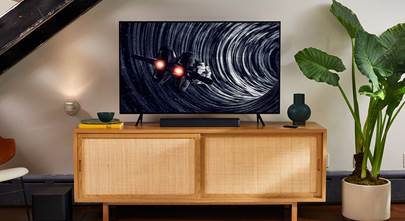
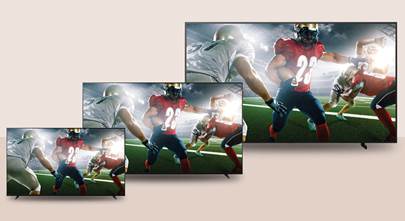
All right. So let's talk about some fit and finish stuff. Uh, before we wrap this special episode up. Yes. Uh, did you notice the pedestal bases on the seven Mark two and the nine Mark two that we had in the studio? Uh, yes. Uh, I thought it looked substantial isn't the word I'm going for. It was very well thought out. Um, I liked that the base itself was super thin where it hit the platform itself was super thin yet it looked very sturdy. Yeah. And it was a very heavy, dense piece of metal flat metal, uh, two legs attached that to the TV behind the TV. So nothing sticks out in front of the TV, except for that flat piece of metal, which your soundbar or your center channel will sit over top of without a problem, won't teeter totter on it or anything. Uh, and the TV sits up high enough that most soundbars are not going to be so tall that they block the screen at all. You might block it with some center channels, in which case you'll have to figure something out. Uh, but I love the pedestal base, uh, simple, elegant, and effective for putting that speaker in front of the TV. I totally agree. Uh, it is definitely well thought out. I think over the last couple of years, there's been a tendency that, you know, I've seen manufacturers out there kind of cut corners on that piece, you know, as they're trying to get to lower price points and, uh, it's substantial enough, yet looks like it can get out of the way all at the same time. So incredibly well-designed. Um, and we do advocate for adding some sort of sound solution, right? A sound bar, a home theater system, something that will sound better than the TV speakers. But I do want to talk about those TV speakers. As far as TV speakers go, they're not bad. I mean, they're good as far as TV speakers go. So that's the qualifier. Right. So that right up at the beginning here. Uh, but what I did was I watched it at several different volumes, uh, and at a sort of a low mid volume, impressive base, uh, strong base, like noticeable, like, wow, the TV actually sounds kind of full. To the point where folks in the next room told us they could hear. As I, as I am known to do, I didn't stop at that mid volume. Right. I cranked it up to 50% to 75% all the way to a hundred because that's what I do. And here's what didn't happen. There was no distortion as we got up into these higher volumes. Not once did it sound like it was cracking up or bad. Uh, they, I did notice that they do what cars do these days, right? When you crank the volume all the way up, they drop the base a little bit. Right. Roll that base off smaller drivers might distort when you start turning them up. And so they control that a little bit more for the processor to do. And Sony's processor can do it. Uh, so if you have to deal with just the Sony TV speakers until you get your sound bar or your home theater system, you're going to be okay. You will enjoy some movies in the meantime. Uh, but if you can get a, get a better sound system. So is your consumer advice, get a 12 inch sub or two to, to some, two subs, 11 speakers, uh, all around your room. That's my, yeah. Of course. Yeah. That being said, I have a 55 inch Sony LCD TV with a sound bar at my house. Uh, and I'm pretty happy with it. Uh, so there you go. Yeah. Bless your heart. So let's talk sizes. These two TVs are available in a bunch of different sizes. The seven Mark two, it will be available as a 50, a 55, a 65, a 75 and 85 and a 98 inch TV. That's the Bravia seven Mark two. There's a different set of sizes for the Bravia nine Mark two. That one starts at 65 inch. We got a 75 and 85 and I'm really excited about this one. 115 inch screen on the Sony Bravia nine Mark two. 115 inches. I think I have the right amount of space for that. You think you can make that work? You know, windows are overrated. Whatever. Yeah. Uh, you know, is that, is that the largest TV we will have ever carried? Yes. Yeah. Yeah. That's fantastic. Yes. I'm pretty excited for our customers to be able to buy that from us. Yes. Uh, so the excitement is real on these TVs. Uh, these are our genuine reactions, uh, to the Bravia seven M two and the Bravia nine M two, uh, which we had the, uh, the pleasure, the privilege of getting to see here at Crutchfield ahead of their launch. And we are even more excited now that it's made 27th and you are hearing what we are saying. I couldn't keep it in any longer. There you go. Because the fact that you can listen to this means these TVs can be seen on our website. You can find out more about them. There will be more information about them available by the time this podcast comes out, then we even know about them now. Uh, so keep an eye on crutchfield.com. Go check them out there. Uh, we'll have videos about them. Beautiful photography. You can see that pedestal. You don't have to take our word for it. It looks awesome. Yeah. Yeah. Uh, and there'll be of course links to that on the podcast notes for this episode at crutchfield.com slash podcast. Uh, and there should be links in the descriptions on whatever podcast player you're watching this on or listening to this on right now. Let me sum up the differences between the Bravia seven M two and the nine M two. There's more backlights and an anti glare screen. Right. And it's two better. That's two things. That's the two things that maybe there, there you go. Well, the difference between seven and nevermind. Don't make me do math.
[00:34:34:21 - 00:35:39:08]
In addition to those models, there are also what they call pro models available for the seven and the nine. And when you upgrade to the pro model, you get a backlit remote. You get a three year enhanced warranty voice zoom three enhancer for clearer dialogue and you get more credits for the Sony pictures core store, which you can use to like buy and download movies directly from Sony. That's cool. So there's a couple of reasons to upgrade to the pro models, but it doesn't really change how everything we just said about the picture and TV is still the TV. Exactly. So just a couple extra benefits for the pro. Very cool. All right, Huffy, I think we've done it. We have successfully given our thoughts on the new Sony true RGB TVs available now. And this is not a regularly scheduled episode of Crutchfield, the podcast. It's a bonus that we will be back in June with another regularly scheduled episode.
[00:35:40:10 - 00:36:19:23]
And if you have any questions for us or things you'd like us to talk about on our next episode of Crutchfield, the podcast, email us podcast at Crutchfield.com is where you can do that. For more information on everything we've talked about a transcript of the show. It's all there at Crutchfield.com slash podcast. Big thanks to Sony for letting us see these TVs early to all the people here at Crutchfield who worked to make that happen. And of course, thank you to Bill Crutchfield for continuing to pay us to talk about the coolest stuff on the planet. We did show him the TV and he said he wants one. That's right. I got Bill's reaction. He loved it. He says he'd take one. So thanks, Bill. Thanks, Bill.
[00:36:23:02 - 00:36:39:10]
All right, Bill, your thoughts on the TV summed up. Spectacular. Just very impressive. Makes me want to buy a new one. I just want to sit here and watch it all afternoon.


Comments (0)