Podcast: Ep. 53 Soundbars, the easy way to make TV's sound great.

In this episode:
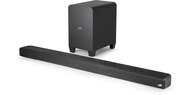
J.R. and Eric dive into the world of TV sound. In this first episode of a four-part series, the guys focus on the easiest and most popular way of making your TV sound awesome, sound bars. They talk about the various types of sound bars, how to hook them up properly, and help you determine which soundbar is right for you.
In addition to this podcast, we have several helpful articles to make picking out a sound bar as easy as you pleasey. Check out our sound bar buying guide, And if you are looking to do surround sound from just a sound bar, our best Dolby Atmos sound bars article is a good read, and lastly, if you want to know more about how to connect and set up your sound bar, we’ve got you covered.
Eric:
All right, welcome to another ep. No, I'm just kidding. I'm not doing that.
You're not gonna start the podcast I'd get about four words in I'd already run out of things to say All right, here we go.
JR:
I've never heard you run out of things to say so Nope Hello and welcome to crutchfield the podcast We are back In the studio and we've got things to say i've got stuff to say eric Do you have stuff to say you always have things to say? Um, yeah, I have things to say this time, too Cool. Yeah, we've got a whole bunch of notes.
We did a whole bunch of research Yeah, we are ready to talk about how to get your tv to sound awesome. That's right Everybody's got a tv. Well, most people have a tv If you're listening to this podcast chances are chances are you have a tv you have a tv You saw the title of this podcast and you're listening to it.
I think we're probably at 100 Of the listeners of this show sure this episode of this show If you listen to this all the way to the end and you do not have a tv go ahead and comment. Let us know I'd like to hear from you and Again based on the title of this episode. You might have a tv with uh without any kind of Emphasis on sound right?
You know, you might just be listening to the tv speakers that came with your tv.
Eric:
Yeah Is that true?
JR:
Is that true listener?
Eric:
Listeners, let's listen. Let's give ourselves some credit.
JR:
I like how optimistic you are I think we can all agree tvs, uh the speakers that they come with Their weak sauce they are not made to be The thing you listen to when you watch movies and tv shows they are there I like to think of them as an emergency only sound solution.
Eric:
Yeah Yeah, I think that's a good way to look at it. Um, you know these days with the modern tv design. There's just no real estate uh for You know medium decent what however you want to put it, you know size speakers and the amplifier required to put to push them That's just not in today's tvs that we want these tvs to have no frame and look Really really clean and be as skinny as possible and that just doesn't leave that space Uh for for you know, something that makes good sound so You know, I think the industry's kind of created this problem Because of the way we want our tvs to look and unfortunately, uh, you know as a side result of that Many tvs today. Well, they just don't even sound mediocre.
JR:
They just Honestly some tvs sound bad i'll say it some t we sell tvs and i'm saying some tvs sound bad Yeah, I mean they've gotten so thin How could you possibly put a speaker in a tv that small that sounds great?
Eric:
Yeah, and the tvs are not getting smaller. They're just getting thinner and there's less real estate for the speakers I mean average size tv we sell these days is probably north of 65 inches Uh, you know here at crutchfield and that's a big tv Still tiny speakers and they put these speakers in these little tiny enclosures and they're facing down or out the side, right?
JR:
They're not even facing you. Yeah, and I don't know if you guys understand how sound works if you're listening to this You probably have a general idea. Yeah, generally speaking.
You want it coming at you not facing the floor, right?
Eric:
That's not the ideal, uh viewing position. It's right underneath your tv Uh staring up at it now that would not be the best place to view your tv Although it might be the best place to hear your tv
JR:
So if you're one of those people that uh, maybe you choose to go to other people's houses for big viewing events, you know big movie Uh the the latest episode of that show that just came out and you're gonna have a viewing party You don't want to do that at your house You go to somebody else's house because they've got a better tv a bigger sound system It sounds good and it looks good, right? Maybe you're one of those people Uh, maybe you've thought to yourself while you're there gosh, you know, I think I think I want my tv to sound like that, yeah, uh and Because when you go home after watching a movie or tv show at your friend's house where they've got Some awesome sound system.
Yeah, you get home and you realize just how horrible yours is.
Eric:
Yeah, and for a second Let's talk about uh, you know What bad speakers equal for the listener like some people don't even care about home theater or really cool effects They just want to be able to understand the words coming out of their tv and sometimes that can even be difficult Small speakers they kind of compress those frequency ranges Uh that are that normally, you know, we we hear in and as a result, you know, you might not understand You know the words coming out of muffled dialogue. Yeah. Yeah awful.
So So for some folks, you know Maybe they want to improve the sound because they want that You know some cool effects or something maybe even a little impactful and then for other folks They just want to be able to understand what the people are talking about on the screen while they're watching it
JR:
And then then you go to turn your factory tv speakers up Uh, and the volume you you can see the numbers going up on your screen You get all the way up to a hundred and you're like this is this is the max.
Eric:
Yeah This is as loud as it goes. Yeah, these big tvs. We sell often go in large rooms and uh, you know trying to fill a large room with uh insufficient sound is Not the best and then you crank it up to the max and you get these weird Vibrations out of these tiny little speakers that are not supposed to be there.
JR:
Yeah, right It's just there's nothing great about uh, the speakers now There are a few exceptions to this rule Yeah, there there are some tvs that are doing some, you know tv manufacturers know that this is an issue, right?
Eric:
That's why most of them make sound bars, but we'll get into that here later on. Yeah um, but uh, some of the tv manufacturers have come up with some pretty neat technologies to try to give you uh, you know to do the best that they can with the real estate that they they have and that real estate ends up actually being
JR:
The the screen itself the screen itself sony's acoustic surface Is a pretty cool technology and if you're comparing it to other tvs sounds remarkably better, right? It is fuller the dialogue is clearer And it sounds like the dialogue is coming right out of the actor's mouth as they're on the screen and that's because it is It's actually physically coming from a vibrating screen Uh surprisingly, yeah sounds pretty good.
Yeah, it's pretty neat technology doesn't have a ton of bass Still not home theater or surround sound or anything like that, right? It can be integrated into a home theater system, but it's uh by its by and large It's one of the best sounding tvs technologies you can get and it's still not good enough for me I don't know, but it's good enough for you.
Eric:
Um, I I you know the answer there I think I think everybody knows the answer there but uh Yeah, and and sony is one of those companies that also makes all those other solutions that we're going to talk about as well So, you know even there, you know, they they'd like you to probably upgrade your sound from that So, how do we fix this?
JR:
Uh, well, we've got a four episode series of this podcast in which we are going to discuss Some major ways some of the most common ways the easiest ways the better the biggest baddest sounding ways Uh that you can to fix the sound of your tv Uh, we are going to talk about uh using headphones with your tv That's the fourth episode in this four episode series. We're starting with four and working back now.
Eric:
I'm working back. Okay. Okay.
JR:
All right All right, we're gonna we're gonna explain how to get a full-on surround sound home theater system Uh, we're also going to talk about a simple two-channel system. Maybe you don't need surround sound just a pair of speakers Yeah, all that's coming up in the upcoming episodes of this show today We are going to focus on sound bars. Yeah, huge huge product category for us Well, it is by far the most popular way of enhancing your tv sound in today's world and that's for a lot of reasons right people kind of want Big sound but they don't want Massive speakers or speakers all over their room and speaker wires running to all of those speakers speak for yourself Some of us like that look I do too.
You and me are in that boat You know, but where I live currently that's not a thing.
Eric:
Yeah, that's a great point I have a sound bar right now and you know, depending on your room layout You just might not have that option to have speakers all around you. You might not be interested in it We alluded earlier, you know, some folks just need better Uh the the ability to to hear the speech better, right?
JR:
Yes So, you know for a lot of folks these sound bars can be great solutions Yeah, the most of them have a dialogue enhancer that is really good at that Maybe you just want your system to be louder.
Eric:
Maybe you just want to increase that max volume right large room impact Yeah large room and maybe have a great room and uh on the other side of the room You just can't understand what's going on at all And uh You know just because you just don't have enough amplitude You can't turn it up enough and in that same vein bass, right?
JR:
Most tvs again can't really do bass and uh a sound bar some of them in the bar itself They do pretty decent bass but most of them you have the option to go with a subwoofer and really increase the low-end support so that You know movies sound the way movies are supposed to sound so yes, uh, long story short There's a sound bar for everybody. I mean we've got like if you look at crutchfield.com There's somewhere in the neighborhood of 150 sound bars to choose from Now some of those are color options of the same sound bar and stuff like that, but still there's quite a bit So you might be curious you might be wondering you might have questions about how to choose the right sound bar for you and I would say that there's a different sound bar for Each case right, uh your your tv in your living room You might need a different sound bar than the tv in your dining room or your bedroom or your your florida room or wherever, right? Different tvs in different parts of the house might need different sound solutions You need a different sound solution than your neighbor then then eric then I you know that kind of thing So yeah, we're going to try to figure out which sound bar is right for you One of the first things to consider when looking at the right sound bar is the size of the sound bar Especially as it relates to the size of your tv and the size of the piece of furniture It might be sitting on the size of your room. There's a whole bunch of size considerations to go with here First off will it fit right?
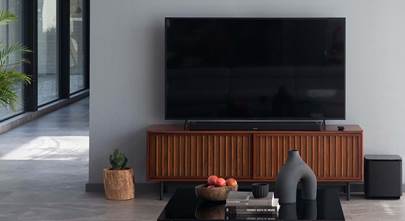
Where are you going to put it? Sometimes sound bars will go into a piece of furniture Maybe there's even a space for a sound bar or like a center channel for a home theater system Obviously, we'll need to measure that space to make sure it's going to fit there
Eric:
Yeah, and we want to kind of consider that space too, you know If you're trying to maybe have a credenza or a piece of furniture you want to put it in Um, you know making sure that of course it fits in there, but kind of just have a general idea of understanding How the speakers are lined up?
JR:
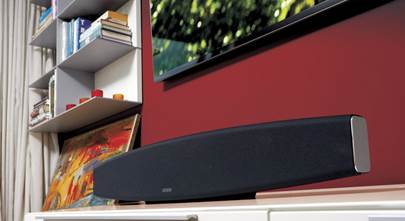
Maybe we don't want to put those speakers Speakers in the sound bar fire straight up And you're putting it into a crevice in your furniture. That might not be a recipe for great sound exactly Yeah, exactly if you're going to put it right there on the furniture on the same plane as the tv You want to make sure the sound bar doesn't sit taller than the bottom edge of the bezel of your tv Yeah, you don't want it to block part of the screen. You don't want it to block the infrared eye for your remote control So we got to consider that sometimes TVs have those pedestal legs on the far left and the far right rather than a center base pedestal Yeah, and you want to make sure your sound bar will fit in relation to whatever's holding the tv up It shouldn't interfere with that.
Eric:
This is one of those measure twice situations.
JR:
Yes.
Eric:
Yeah There's no cutting involved hopefully, but yeah, I definitely want to measure still measure twice Exactly.
JR:
You should also be thinking about the size of your room if you've got a bigger room Theoretically, you realize you probably also need a bigger tv. That's probably right Uh, and so it would stand to reason that you would want a bigger sound bar just to fill that physical space with more sound Otherwise, even the sound bar might sound small in a big room. That's right Is your tv wall mounted if it is you might want to also wall mount your sound bar Uh, so you want to make sure it can be wall mounted You might even want to buy a wall mount that can accommodate mounting the sound bar right below the tv So if your tv needs to maybe fully articulate on that wall mount your sound bar fully articulates with it
Eric:
we've got accessories for that so We can definitely make that happen.
JR:
So once you've determined what size sound bar is right for this particular tv Now it's time to consider not just what you're watching on tv But anything else you might want to listen to on your sound bar, for example music Yeah, for a lot of folks the sound bar ends up being their complete sound system, right?
Eric:
so if they're listening to music or or uh, you know, whatever their favorite podcast is maybe the background they That's their crutch field the pod. Yeah, like when you listen to this Yeah, like maybe you're hearing our voices right now on a sound bar. It could happen.
JR:
Yes Maybe your sound bar has bass. And so when I do this your sound bar rumbles a little bit and it's awesome Yeah, maybe maybe maybe that All sound bars can play music right? It's pretty easy to get some music playing on your sound bar From your phone from over wi-fi many of them have airplay, right?
It's pretty easy to get music playing on your sound bar And if it's going to be the primary music system in the room in addition to listening to tv sound movies and tv shows There's some there's a few things to consider How how are you going to get music into it?
Eric:
Right? Yeah, you know bluetooth is awesome We're really comfortable using that I think everybody is familiar with that at this point But it does have its limitations and sometimes in the home environment. We might have a better solution
JR:
Yeah, and if you're just in like a small apartment, maybe bluetooth is all you need But if you have a larger home where you might want to venture out of the room where your tv and sound bar is You might want to make sure your sound bar has wi-fi so that you can get music playing on it from your phone Using airplay or chromecast and then you don't have to stay in the room to keep that music playing
Eric:
Yeah, especially if you have multiple users in the house Uh, you don't want to have to have your phone, you know for lack of another term tethered to your tv in that room.
JR:
Yeah Will the sound bar and the tv be a part of a multi-room wireless music system? Right. There's a whole we sell a lot of this stuff people really are into Having speakers in different rooms all controlled from an app on your phone You can play music from whatever your favorite streaming service is and all the other streaming services, right?
Sonos hios, uh yamaha music cast blue sound There's a bunch of wireless whole home music systems and if that is the case, uh You you might want to think about that when you buy the sound bar because it could become another zone Of your wireless music system.
Eric:
Yeah, and I think you really hit on something there, you know with the multi room Audio system whole home audio system, you know It that might not just be for music and I think you know a lot of folks don't realize kind of the power Of uh, you know a system. Well use sonos as an example here. It's certainly a popular one Um, you know having better sound on your tv as a result of a sonos sound bar, but then having that area Be able to be brought into other zones of the house So what I mean by that is so say you're watching, uh, the big game I'll call it that because I think there's well you guys know what i'm talking about because our lawyers said to yeah Yeah, big game.
Yeah the big game. Um, And uh, you've got an additional zone in a kitchen Maybe just a single speaker in a kitchen now the audio from that big game can go into those other zones and be synchronized and you know without delay and And then you know the whole home it becomes part of that event, right? Yeah, so not only can that sound bar do music at times and have music throughout the house, which is super cool But even when you're watching tv You can have that audio go into the other areas that way you can make sure you're back in the room You know you go grab something out of the fridge and you want to make sure you don't miss the commercials for the big game Right.
JR:
Yep and the way that happens is with a sonos soundbar and sonos isn't the only one that does this is you get The sound from your tv into your soundbar via an hdmi cable using a feature that your tv has that your soundbar has called Audio return channel and audio return channel has been upgraded here in the last couple years to an enhanced or e Arc enhanced audio return channel. We call it arc or e arc. Yep Uh, which is not confusing at all.
Yeah when sonos puts out their soundbar amazing soundbar called the arc, right? Arc and if you want to enhance your sonos arc, you can add more sonos speakers to it and make your sonos Enhanced arc sound better using e arc from your tv Yes, you can and then that brings in maybe some sound field options, right? So now all of a sudden, you know, you could get uh, uh extra Speakers and yeah wirelessly hook up a sonos sub sonos surround speakers and make a complete surround sound system out of this Using sonos's arc connected to your tv with e arc.
Yes, you can enhance the arc with e arc
Eric:
Well, so let's let's talk about uh, you know A product like that soundbar and how it handles surround sound information and it does a pretty good job all on its own right and this isn't just to say This is unique to sonos because we have other products that do this But we've got soundbars to kind of do the surround sound thing a little bit right without adding additional speakers They they can simulate surround sound so so you're sitting there You're watching a movie or you got the big game on and you know, you've got those effects where things are moving Uh, you know outside the range of the screen and the speakers sound way bigger than they are and it can do that on Its own but then If you want to you can come back and add actual speakers And you know behind you actual speakers behind you And connect them all wirelessly You still got to plug them into the wall, but you can connect those speakers all wirelessly And that's pretty cool and you can build over time, you know, you're not putting a lot of infrastructure in the wall You're not putting the money in the wall.
I'd like to I like to say it that way You're putting it into the speakers themselves. You've got a lot of flexibility with those types of setups, man
JR:
We went off on a pretty deep tangent there all because we were trying to figure out what is a good way to make it So your sound bar is good for music in addition to what's on your tv That's right And then it blossoms out into that whole home music system and the world is your oyster at that point Uh and sonos and heos and musicast and bluesound they all make that very easy to do Yeah, the sonos arc is uh, probably one of the the biggest and best solutions for that one of our most popular selling ones Yeah Uh, what about a subwoofer if you're listening to music with this system, uh, and of course you want it to be your tv sound solution um, do I need a subwoofer or will the sound bar be enough so my my
Eric:
the answer Well, it depends right? Like that's your answer to everything.
JR:
I know it depends.
Eric:
Yeah So what does it depend on eric? Well, it depends on a lot of things So if your music that you listen to has bass, by the way, just about all music out there has bass, uh, Then it's going to improve the sound it's going to add that impact Um, so most sound bars that can be hooked up with the subwoofer Now this is a hot take but they're designed to work with a subwoofer, which means they're designed to sound better Yeah, and by better I mean fuller and in some cases It's not just about that rumble that that bass gives you but it's about that warmth That that bass can give you as well. So the full range the all the frequency range that we can hear in Um, if you want to experience everything that that sound engineer intended to be there, you know, quite often you need a subwoofer
JR:
And when the bottom falls out, meaning there is no sub to bring in that low-end support, yeah, it just feels a little empty. Yep, absolutely. So let's talk about how much of an improvement you seek, right?
Because that will directly impact which sound bar is right for you. Right. For example, do you actually want home theater sound?
You just don't want all the speakers. And so, yeah, you can actually do that with a sound bar now.
Eric:
Yeah.
JR:
That's entirely possible. Yeah. And we just talked about one Sonos way to do that with the Sonos Arc.
You can add Sonos rear surround speakers and a subwoofer if you want. But the Sonos Arc has like a whole bunch of speakers in it facing all different directions so that it can throw sound around your room all by itself.
Eric:
That's right. And often we'll refer to that as simulated surround sound, right? And I've got an analogy for this one.
I kind of compare it to riding a roller coaster. Oh, yeah. This one might be new to me.
Okay. So have you ever... So you've ridden a roller coaster before, right?
I love roller coasters. Have you ever ridden a roller coaster that's like a simulated roller coaster?
JR:
Yes, I have. Yeah. Bush Gardens, they've had something like that.
I've ridden the Days of Thunder ride back when they used to have it at Kings Dominion. Not exactly simulating a roller coaster, but it's a chair that moves and the sound and the 3D and the big huge screen.
Eric:
It's basically a movie theater with an enhanced chair. And that stuff is super, super cool. And we'd be way better than not having all those experiences, right?
If you just watched it on the screen, that wouldn't be nearly as impactful as all of the other things that's contributing to that experience. But is it the same as an actual roller coaster? No.
You know what's missing? The fear.
JR:
There's no fear when I'm sitting in a movie theater with a seatbelt on and a chair.
Eric:
Fair. Okay. So my analogy might be going off the tracks here.
JR:
No. In this analogy, fear is a good thing. It's what you want when you ride a roller coaster.
Eric:
Fair enough. Okay.
JR:
Just a little bit of fear, like, uh...
Eric:
Well, hopefully, putting speakers behind you in a room does not lead to fear. But that's what we're talking about. The difference between...
It's more... It's real. Virtual roller coaster and an actual roller coaster, there is a difference there, right?
For sure. And a virtual roller coaster can be super, super cool, but it's not quite the same as, you know, being strapped into a real roller coaster and the thrill that you get from that.
JR:
So that's what we're talking about here. And so, how this relates to soundbars. There are plenty of soundbars with a bunch of speakers angled at different directions.
They come with a room calibration mic so that they can try to make those sounds from those different speakers. Sounds like they're surrounding you, even though they're all coming from one place, that bar by your TV. There's also some other options.
For example, the Sonos system we just talked about. JBL has a soundbar with detachable surround sounds. And I have listened to this.
I've had it in my house. I've listened to it in some of our training rooms here. I love this solution.
I first heard that demoed outdoors.
Eric:
Yeah. And it's... I didn't think that was going to work, or the darn I was wrong.
JR:
It worked amazingly. So these detachable surround speakers, they just sort of magnet mount into the left and the right end of your soundbar up by your TV. When it's time to watch a movie, you remove them from the soundbar, put them back near your couch, somewhere right behind your listening position, and they are battery powered.
You don't need to plug them into the wall, which is a very unique thing, right? And now you have real surround speakers. So you've gone from that virtual roller coaster to the real roller coaster, and it was extremely easy to do.
And those things will last you several movies before you have to recharge them. Just when you're done watching a movie, just throw them back on the bar. I mean, that's what I did when I had this in my house.
It's pretty great. So there are soundbars that really give you the full movie theater experience, actual surround sound. There are ones that try to do a really nice job of that with just the bar itself, and they do a really nice job.
But, you know, one thing that they are doing now with some of these bars is they are not only throwing sounds around you, but they have speakers that fire up to give you those height effects, something you're going to hear referred to as Dolby Atmos.
Eric:
Yeah, that's one of the sound fields. It's also DTS-X, but yeah, Dolby Atmos is the most popular one, and that gives you more of a three-dimensional sound field. So now, you know, with height being added into the equation, you know, it really allows that sound to be localized to move not only around behind you, which is kind of how we would have thought of surround sound in the past, a sound that surrounds you, or behind you, right?
JR:
It's right there in the name.
Eric:
And now we've added height speakers. So as it's moving around, it can be above you as well, and it really just, it does change it. It is, you know, we did a recent kind of setup here in our training area, and a system that we had only had normal surround sound or Dolby Digital surround sound in the past.
We added those Atmos height channels to that setup, and man, I didn't need to be resold on the idea, but I was resold on the idea.
JR:
It was amazing. Being more surrounded by your surround sound system is pretty awesome. So if you are looking for surround sound without having to wire up and install a massive home theater system, there are definitely some sound bars that can get you pretty darn close.
Eric:
Yeah.
JR:
Maybe all you're looking for is an enhanced dialogue situation, right? You're not trying to do movies and make it sound big and bombastic. You just want to understand what those people on the screen are saying, and for whatever reason that's challenging for you, maybe you're losing your hearing, maybe it's just not loud enough.
It could be a number of things, so you need that sound bar to do what the TV speakers can't, and that's a pretty easy thing to find. If you go to crutchfield.com and you're looking at our sound bars, over there on the left, there's what we call filters, and one of them is maybe, I don't know if you're looking at the list right now, but there's a filter for dialogue enhancement, and almost every sound bar we sell has this, right? So a dialogue enhancement setting where that's what it does, it's built into most of these.
So it's going to be hard-pressed to find a sound bar that doesn't do that, so if you're looking to get a sound bar for a friend or a relative, a mom or dad or anybody that you know needs that, just make sure it has that, and rest assured it's pretty easy to do.
Eric:
Yeah, we put it under our audio enhancements filter, and right there, dialogue enhancement's one of those. Yeah, pretty important for most people.
JR:
So lastly, as we consider what level of sound improvement you seek, maybe you don't need full-on surround sound, maybe your dialogue enhancement isn't necessarily a pressing issue for you, maybe you just want it to sound bigger and louder and better, right? But it doesn't necessarily need to be the best it could possibly be. What do you think people need for that?
Eric:
Yeah, so for that kind of scenario, you know, just a basic sound bar, perhaps one that doesn't have a subwoofer, you know, and subwoofer kind of goes back to whether or not you can use it for music and whether or not you want it to be more impactful, but we have a number of solutions that, you know, aesthetically are nice and clean and don't have that wireless subwoofer as part of it, and if really you're just trying to get that dialogue enhancement and clearer sound with more volume, yeah, you're probably fine with one of those solutions.
JR:
And this is not going to cost you very much money, right? It's pretty easy to find a sound bar that will do the basic job of a sound bar, be louder, sound better than your TV, and how much bigger and louder depends, and if you add that sub, it only gets bigger and louder, right?
Eric:
So 20 years ago, this wasn't really even a product category for us because 20 years ago, these speakers were built in the television, right? We've got really some nice basic sound bars that will get that sound to sound like a really, really good TV, which would be a improvement over the way TVs sound today.
JR:
All right, we've got a couple more things to get to here before we wrap this up. One of them is one, you're going to see this, right? If you're shopping for sound bars, you might come across the concept that some are powered and some are passive, and I want to just make this super simple.
Powered sound bars is where it's at. Most of you need a powered sound bar, one that plugs into the wall, has a connection to your TV with HDMI, and it has its own built-in amplifiers and speakers, and takes care of all of the sound processing, and it's just a nice, easy-to-go, one-stop-shopping sort of a package. Passive sound bars are something completely different.
Eric:
Yeah, the passive ones are meant to be part of more of a home theater. It's a style choice on a traditional home theater build, and up to this point, everything we've really been referring to and talking about have been those powered subs. I'm sorry, the powered sound bars.
JR:
Yeah. Now, if you like the idea of using a home theater receiver with all of its complexities, inputs and outputs, and menus and settings, and if that's your thing- Flexibility, there's some positives there.
Eric:
Yeah, no, I'm not trying to paint.
JR:
I'm this person, right? I enjoy my home theater receiver, but it is not the easier way to set up a good sound system, right? There's easier ways, like a powered sound bar.
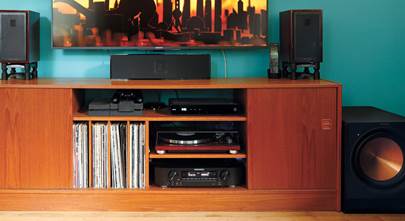
But if you want your home theater receiver for all of its flexibility, and you don't want three big speakers up in the front part of your room, you can get by with a passive sound bar. These are three-channel systems. They would replace your front, left, right, and center channel speaker.
So you don't need those three speakers. It's all in one. That's it.
That's all they do. There's not a ton of these to choose from. I don't want you to get distracted by them or accidentally buy a passive sound bar when you were trying to buy a powered sound bar.
And if those are for you, awesome. There's some really nice sounding passive sound bars, but I think most people will be better served by a powered sound bar.
Eric:
Yeah. I think that those are pretty neat for the customer who, aesthetically, is trying to get that clean look, but maybe they already have some speakers wired in the room, and they want to integrate those speakers that were already there. Now, you can have that look of a sound bar, you get a surround sound receiver, you're going to have to have that part of it, but then you could integrate with those speakers that were already in those locations.
So yeah, there's a time and place for those, but that's not the normal conversation we're having these days.
JR:
Nope. And those just hook up with speaker wire and get powered by your home theater receiver. So they're simple, they're easy if that's what you need, and it's probably not.
But most of you need. Let's finish this up by demystifying a little bit how to get your sound bar connected and just how easy that is. HDMI is the connection style, right?
Most of you are familiar with this. It's how your game console hooks up to your TV. It's how your cable box or satellite receiver box, your Blu-ray player, your Apple TV, your Roku, all of those things connect to your TV with an HDMI connection, and your sound bar does too.
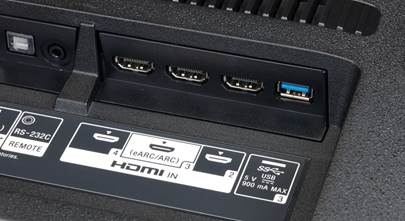
The sound bar connects to the specific HDMI input on your TV that has audio return channel or enhanced audio return channel. Also, something you may not be thinking about, CEC, which stands for Consumer Electronics Control. HDMI is not only a great connection for the audio and video, which looks amazing, it can carry 4K, et cetera, et cetera, but it also makes a bunch of other things just happen seemingly by magic.
Right. Yeah, you've just dropped a lot of alphabet soup on the listeners. I did.
Yeah.
Eric:
But the good news here is that that HDMI connection, these days it's like a two-way connection, right? And you can get audio into that sound bar from your TV, which is the way most folks are going to do it. So whether or not you've got external sources or maybe you're just using that TV as your source and you're doing the YouTube, the Netflix, or whatever your streaming service of choice is, it's going to send that audio as long as you've got that ARC HDMI connection and old TVs might not have that.
JR:
No, this used to be all over the place, right? When sound bars were really starting to come out as a pretty neat solution, they were hooking up through analog audio outputs on the back of your TV. Most don't have that anymore.
Now optical is the next best way to connect them. Most TVs do still have an optical digital output and most sound bars have an optical digital input. So that's a viable option.
It's just not the best way to do it.
Eric:
You won't get that Dolby Atmos if you do optical. Not everybody realizes that.
JR:
So yeah, that's not the best way anymore. HDMI, one simple cable. You can use an HDMI cable to carry audio and video from a source to your TV.
It can also be used to carry sound from your TV to your sound bar. The same cable does two different things. That's the two-way street Eric was talking about.
And what I love about this is how easy it makes control. I recently got a sound bar for my elderly aunt who lives out in the middle of Iowa. She has a Samsung TV and she wanted it to sound better.
And so I got her a Samsung sound bar with the HDMI arc and CEC, all of that stuff built in. I'm assuming dialogue enhancement was a feature that...
Eric:
Big-time importance.
JR:
She also wanted it to sound big and loud because her upstairs neighbors have like a two-year-old who stomps all around making noise and she wants to be able to hear her TV shows despite the two-year-old upstairs. So we got her that. We solved that problem, believe me.
And the best part of it is she did not have to learn a new remote control. She did not have to learn a new piece of equipment. You didn't have to sit there and put in codes to the remote control.
Yeah, that used to be a thing, right? What happens is she grabs the same TV remote she's been using, turns the TV on, it turns on, the sound bar turns on, the subwoofer that's connected to it turns on and it just starts playing. When she hits the volume button she's been hitting for years, it just works.
And that's partly because it's a Samsung sound bar with a Samsung TV, but that works with other brands as well. Even if you mix and match brands, this can still happen.
Eric:
Yeah, it's a little bit more seamless sometimes when you are matching brands, so that's always nice. But yeah, being able to grab the volume control on your TV and know that it's going to work and control the sound bar, not the TV, that's the main thing. That's the main benefit we're looking for here.
And that's what CEC gives us. And you don't have to get into that book of codes and you don't have to program three or four different remotes. They just work together like you would want them to.
JR:
And as much as I enjoy talking to my Auntie Lane, she has not yet once called me for any kind of follow-up tech support problems with her new sound bar working with her new TV, which I wouldn't be surprised if she had some kind of an issue, but it's been a couple months now, nothing. It must be just working perfectly exactly as I'd hoped it would.
Eric:
There you go. You should still call and check in from time to time.
JR:
Yeah, I do. Okay, good. When I have time.
Good. I miss my Auntie Lane. She's always really good for dirty jokes.
She tells the best dirty jokes. Cool. You want to tell one now?
Eric:
No, no.
JR:
That's between me and my Auntie Lane.
Eric:
Okay, okay.
JR:
Yeah. When you hook up your sound bar using these HDMI cables, the general way of doing this is you're going to plug all your sources into your TV. So whatever TV sources you have, cable, satellite, TV, Apple TV, gaming consoles, just plug it into your TV and make sure to connect the sound bar to the HDMI connection with ARC or eARC on the TV, then you can't go wrong.
Eric:
Yeah, that's definitely the way I would recommend it to do your hookups. We do have a few sound bars that have HDMI switching capabilities of their own where they might have a number of HDMI inputs and you can run everything through there. But today with eARC and ARC, I think that adds extra complexity that you just don't need.
I would just do it right on the TV.
JR:
And the only reason to do that would be if your TV doesn't have enough HDMI connections. Yeah, that's true. Yeah.
So there you go. I think that's most of the things you really need to think about when you're trying to make your TV sound awesome and you want to do it in the simplest and easiest way possible. Sound bars.
There's a sound bar for every TV in your house in every different situation. And now you're armed with what you need to go find the right sound bar for you. And in the next few episodes, we're going to talk about some other ways to enhance the sound of your TV.
Next episode will be all about a pair of stereo speakers.
Eric:
Yeah.
JR:
Just a left speaker and a right speaker. Not surround sound, nothing super fancy like that. Maybe music is more important than whatever you're watching on TV, but you want TV to sound good, too.
How can we integrate a two channel system? Don't give them too much into it now.
Eric:
Oh, God. I'm getting so excited about it.
JR:
We'll save it for the episode. That's for the next episode. We're also going to talk about a full on home theater.
We got a whole episode devoted to that. And we're going to get into and sort of finish this series up by talking about headphones and making your headphones work with your TV. That's important, too.
We'll save that for that episode. Any parting thoughts on this one here before we go, Eric? Give us a call.
Eric:
You know, we've got lots of folks here that have listened to many of these sound bars and we've got some great solutions, like you said, one for everyone.
JR:
Yep. If you are looking at the website and you're not sure which one is right for you, there are trained advisors, really, really well trained advisors. I know because I trained them.
Eric even did some of the training. Some every now and then. We let him do it occasionally.
Every once in a while. Yeah. So yeah, we can help you.
You can get personalized recommendations that are simply there to help you get the right thing for you. All right. I think that's it.
I think we're at the end here. Thank you for listening to Crutchfield, the podcast, helping us celebrate 50 years of Crutchfield here in our fourth season of Crutchfield, the podcast. And it's also celebrating 50 years of Eric and JR dealing with consumer electronics.
Combined, not each, but yeah. Yep. Also, I turned 50 this year.
Eric:
Yeah, you're old.
JR:
It's a big deal. This is a big deal. And the fact that you're still listening to this episode, we thank you so much.
We'll be back with our next episode on 2Channel Stereo Systems for your TV. We'll see you then.
Eric:
See ya.