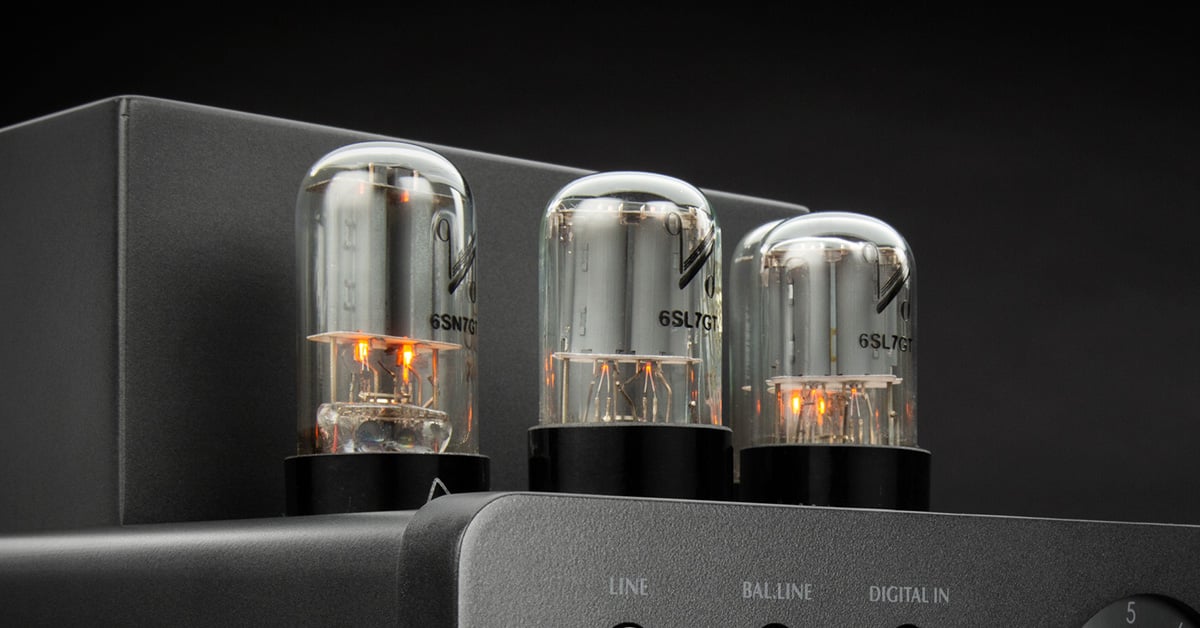
A beginner's guide to vacuum tube audio gear
Understanding tube gear, one glow at a time

In this article: We’ll explore the origins of vacuum tubes, explain how tubes impact sound and break down the most popular types of tube-driven components — including:
Vacuum tube audio gear — often simply called tube gear — has been captivating audiophiles, musicians, and recording engineers for generations. Even in a world dominated by compact solid-state electronics and digital streaming, tube equipment remains prized for one reason: the way it makes music feel.
Tube audio gear is celebrated for its rich tonal character, dimensional soundstage, and inviting warmth — qualities that draw listeners closer to the performance, not just the recording.

From jazz clubs and recording studios to living rooms and concert stages, vacuum tubes helped define the sound of music throughout the 20th century — and continue to shape it today.
"Tube be or not tube be..."
Long before transistors and streaming apps, vacuum tubes powered both home hi-fi systems and the amplifiers that brought rock ’n’ roll to life. Early enthusiasts built listening rooms around softly glowing tube components, while musicians and engineers relied on tubes to capture grit, warmth, and energy in studios and on stage.
As new technologies promised cleaner specs and smaller boxes, tube gear refused to fade into history. Instead, it endured as both a hi-fi tradition and a rock ’n’ roll icon — beloved not for perfection, but for personality. Today, tube equipment bridges the gap between careful listening and loud rebellion.
In this guide, we’ll explore the history of tube gear, uncover what gives tubes their magical warmth, and look at why they still make music feel alive — along with a few standout product recommendations.
The origins of vaccum tube technology
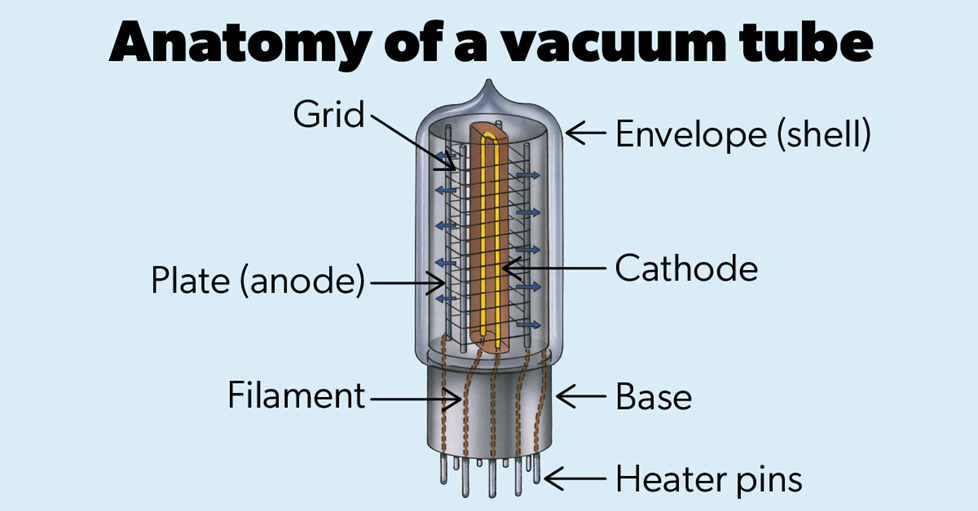
Vacuum tubes emerged in the early 1900s when engineers discovered that electrical current could be controlled inside a sealed glass envelope. By heating a cathode and directing electron flow through a vacuum, early tubes could amplify weak signals. The breakthrough came with the addition of a control grid, allowing a small input signal to regulate a much larger output — the foundation of audio amplification.
As radios, phonographs, and early hi-fi systems spread through homes, from the 1920s to the 1950s, tubes became the beating heart of recorded sound. They amplified delicate signals with a smoothness that felt natural. During hi-fi’s golden age, glowing tubes weren’t hidden within the component — they were displayed proudly. And while this design helped manage the heat they produced, it also served as a visible sign that something special was happening inside.

Tube-based amps, like the vintage model shown here, kept sound warm and nuanced while looking stylish.
How tubes shaped modern music
When rock ’n’ roll burst through the door, tubes helped define its sound. Tube-based guitar amps revealed that when you pushed them hard and they didn’t fail. Instead of collapsing, they compressed, bloomed, and broke up, adding warmth, sustain, and attitude. That sound became the voice of electric guitar and remains key to blues, rock, punk, and beyond.
And even after solid-state electronics took over (thanks to their efficiency and precision), tube gear refused to fade. Audiophiles, musicians, and engineers kept returning to tubes for their subtle harmonics, soft edges, and human feel.
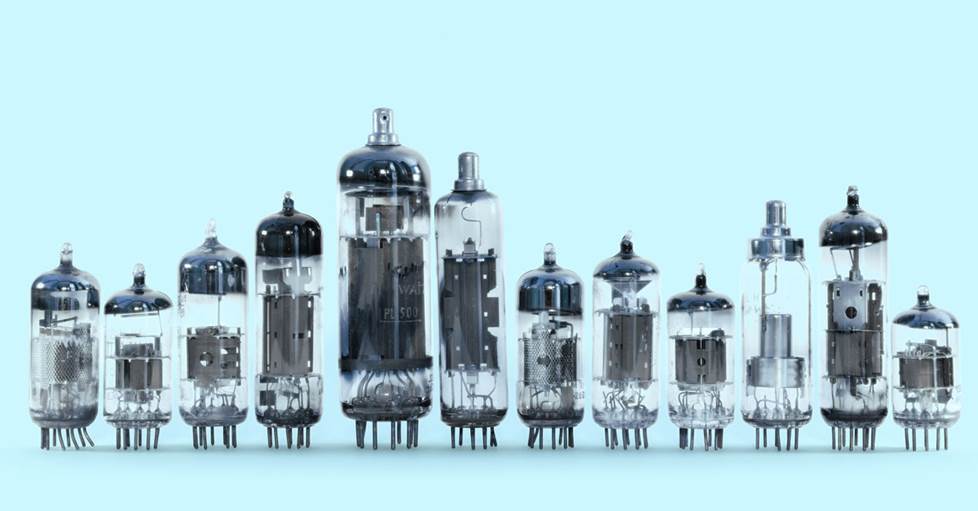
Vacuum tubes come in a variety of shapes and designs, each subtly influencing the character, texture, and nuance of the sound.
Today’s tube equipment carries that legacy forward, blending decades-old ideas with modern craftsmanship, proving that sometimes the oldest technology still makes music feel the most alive.
As a fun little aside, here is a Walt Disney created film from 1943 explaining the basics of vacuum tubes.
The sonic signatures of tubes
Tubes are prized for their warm, rich sound. They naturally produce second-order harmonics — extra tones that sit one octave above the original note — and because octaves feel natural to our ears, these harmonics add a fullness and depth that solid-state circuits often miss.
The result is a subtle harmonic layering that helps music feel fuller, smoother, and more immersive — especially with vocals, acoustic instruments, and vinyl playback.

Tubes shape the sound, adding warmth and a natural, musical feel.
Tube compression and soft clipping
Tubes also react to peaks in a smooth, organic way, making music more expressive. When pushed hard, they exhibit soft clipping— rounding off signal peaks instead of cutting them sharply. This creates gentle compression, enhanced sustain, and gives the music a sense of flow.
This behavior explains why tube guitar amps and tube preamps are so beloved — and why tube gear as a whole feels expressive rather than clinical.
Handle with care
Like incandescent light bulbs, tubes get hot when they’re running. They’re also sensitive to finger oils, so be careful if you need to handle one. And like all components, they have a lifespan — they can last for years, but preamp tubes in particular may eventually need replacing.
Types of vacuum tube audio gear
Among enthusiasts, a few key components form the backbone of a classic tube-driven system. Here are the most common applications and what tubes bring to each.
Tube amps and preamps
Vacuum tube amps and preamps sit at the heart of a many classic hi-fi setups. Gear like the preamp/amp hybrid McIntosh MA252 uses tubes not for brute force, but for finesse — adding harmonic richness, dimensionality, and a sense of space that makes recordings feel less like files and more like performances.

The McIntosh MA252 is revered by audiophiles for its sonic textures and three-dimensional soundscape.
The tube's unique sonic qualities allow for voices to gain body, instruments to bloom naturally, and for the soundstage to open up with a depth that invites long listening sessions.

The McIntosh MHA200 headphone amplifier shapes the music with added dynamics and nuance, delivering that unmistakable sense that the system is breathing along with the performance.
Phono stages
Few components showcase the strengths of tubes like a phono preamp. Turntable cartridges produce extremely delicate signals, and tube phono stages excel at amplifying them without stripping away texture or emotion. Tube-based designs like the Pro-Ject Tube Box S2 (above) and Tube Box DS3 B use vacuum tubes to enhance midrange richness, smooth high frequencies, and bring a sense of ease to vinyl playback that solid-state stages often struggle to match.

The Pro-Ject Tube Box S2 brings natural warmth and musical clarity to your system.
For vinyl lovers, a tube phono stage is often the final piece that transforms a good system into a truly addictive one.
CD players and Bluetooth devices
Even with digital sources, tubes can impart a sense of humanity to the signal. Tube-equipped CD players — like the Advance Paris ACD APEX — use tube output stages to soften digital edges, improve tonal density, and create a more relaxed, analog-like presentation.

The Advance Paris X-CD9 tube-based design delivers clarity, depth, and musical precision.
That same approach applies to modern wireless listening. Tube-based Bluetooth receivers — like Advance Paris' WTX-TUBES — allow digital sources to benefit from tube warmth before reaching your amplifier or powered speakers — bridging convenience and character.

The WTX-TUBES elevates both your sound and your system’s style.
Guitar gear
Long before tubes became an audiophile obsession, they were already rewriting music history on stage. Tube guitar amps remain legendary because they respond dynamically to the player. Crank a tube amp like a Fender '65 Deluxe Reverb® and the sound doesn’t just get louder — it compresses, blooms, and breaks up in a way that responds directly to your hands.

The use of tubes in Fender amplifiers makes every note come alive with a warm and responsive tone.
That touch sensitivity is pure tube behavior. Pick softly and the tone stays clean and expressive; dig in and the amp growls back. Tube saturation creates harmonics, sustain, and grit that defined blues, rock, punk, and everything that followed. It’s not about nostalgia — it’s about interaction. Tube guitar gear doesn’t just amplify sound; it becomes part of the instrument itself.
Need more info?
Still have questions, or need some specific recommendations for building your own tube-based system? Contact one of our expert Advisors today. They're knowledgable, friendly, and eager to help. And remember, free lifetime tech support is included with all Crutchfield purchases.







Frank from NORTH ADAMS
Posted on 2/18/2026
This is a great article for us old folks that grew up with tubes