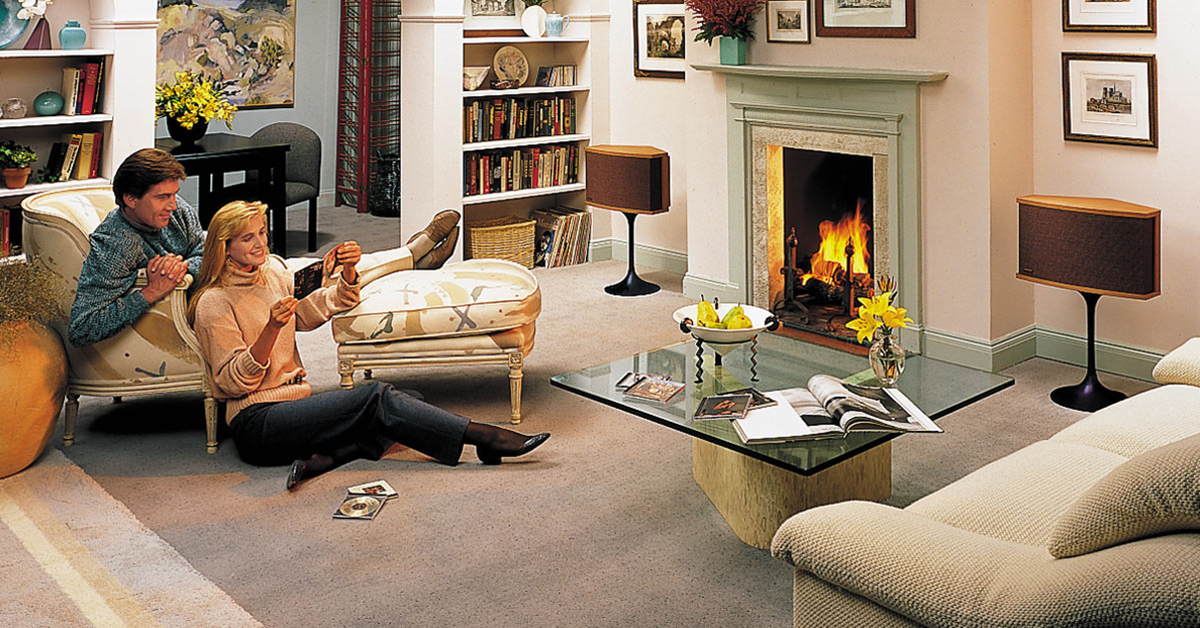
How to connect the Bose 901 equalizer
Find the right gear to integrate the legendary Bose 901s into your home audio system

In this article: We'll explain what you need to make the Bose 901 speaker system work with today's receivers, integrated amps, and separate components.
B
ose introduced their 901 loudspeaker system in 1968. And they remained in continuous production, with a few updates along the way, until 2017. Bose may have stopped making this speaker years ago, but the calls from enthusiastic owners haven't stopped.
At Crutchfield we receive calls on a regular basis from people who own Bose 901 speakers and need electronics that are compatible with their unique connection requirements.
What makes the Bose 901 speaker system different?
As you’ll notice from the picture below, the 901s weren’t shaped like most other speakers. The design was intended to use reflections as part of its recipe for sound. Most of the four-inch full-range drivers fired out of the rear of the cabinet, and guidance was provided for placing them near your walls. The effect was intended to emulate the sound of concert halls, where you are overwhelmed with sound from all directions, rather than having a defined left and right stereo sound.
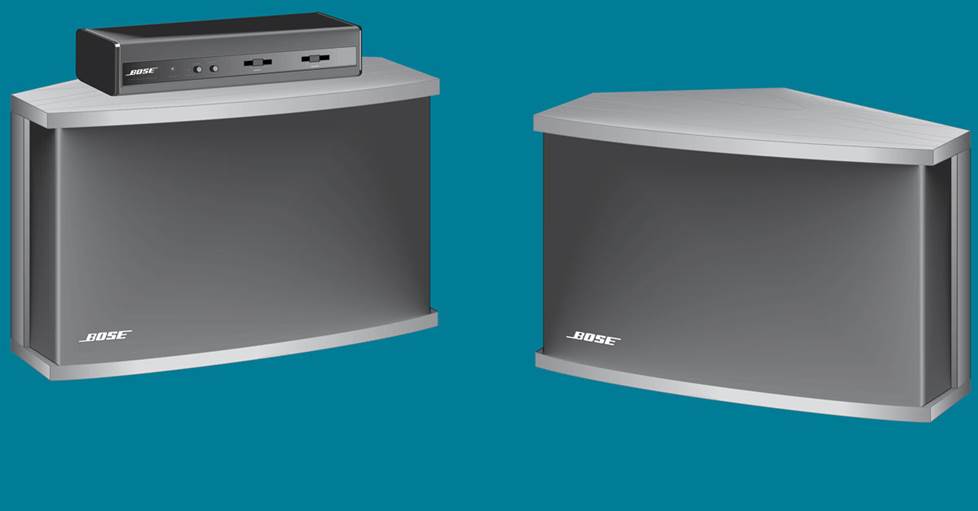
The Bose 901s look different from most speakers. And they work differently, too.
Most speakers are designed to connect directly to an amplifier and rely on the sound-shaping controls of your electronics. But the Bose 901s have special requirements.
No two listening rooms are the same, and to make sure the 901s delivered the same experience to each listener, Bose included a separate equalizer with multiple specific controls for boundary compensation.
The Bose 901 equalizer worked its magic at the preamp level rather than at speaker level. It could not simply be run in-line with the speaker wire. It had to be connected between a preamp and an amplifier so it could alter the sound before it was amplified. This was, and still is not, a normal thing for speakers.
Because of these unique requirements, careful consideration must be taken when choosing the electronics that will power the Bose 901s. This remains true today for all of the Bose 901s that are still out there in the world.
Three ways to connect the Bose 901 EQ to your stereo system
It’s a good time to be a Bose 901 owner, as there are many solid choices for amplification that make it easy to integrate the 901’s equalizer. This wasn’t the case just a few years ago, when it seemed like no home electronics had the capability to integrate with the Bose 901 system, unless you went with a separate preamp and amplifier combination. They were practically unusable with most integrated amps, stereo receivers, and of course, home theater receivers.
So, you have a pair of Bose 901 speakers, and you have the equalizer they came with. Here’s what you need to use them:
The Bose equalizer has a pair of analog RCA inputs, and a matching pair of outputs. You need to connect a pre-amplified signal to the inputs, the Bose EQ does its thing, then the outputs go to your amplifier. Once amplified, your music is sent to the speakers through speaker wires.
Connect to a separate preamp and amplifier
The most straightforward way to make the connections described above is to use separate components. You’ll need a stereo preamp and a stereo amplifier, two sets of RCA cables and some speaker wire. You can see how this works in the diagram below.
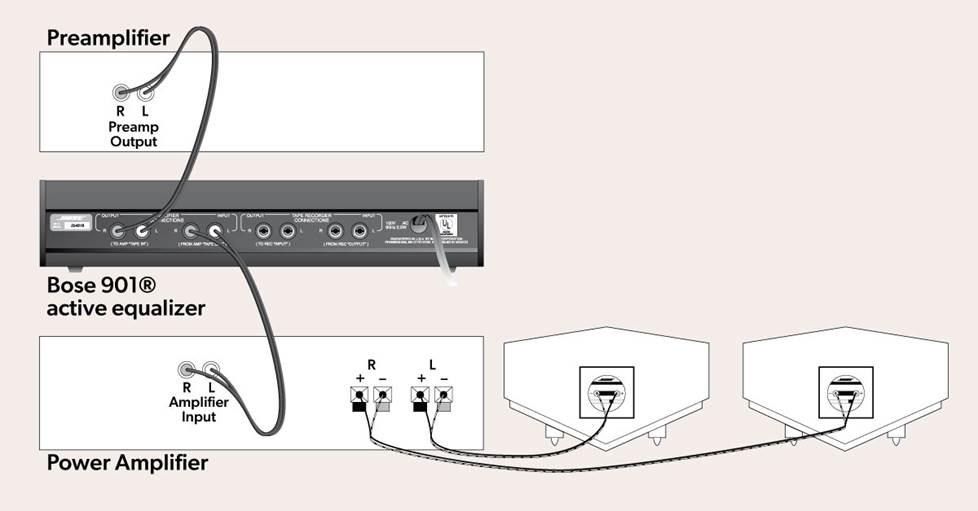
Connecting the Bose 901 EQ to a separate amp and preamp lets you customize your sound system. But it also means you need space for three different components.
One benefit of using separate components is that you can mix and match different amps and preamps to achieve the sound you want. And you can also replace one or the other if you want to upgrade, or if one of them goes bad.
Connect to a single stereo component
Using separates isn't super common these days as many people prefer a more integrated system. This can come in the form of an integrated amp or a stereo receiver. Both of these options include the preamp section and the amplifier in one component. Using an integrated amp or stereo receiver built to a high standard is a great way to condense your stereo system without sacrificing sound quality.
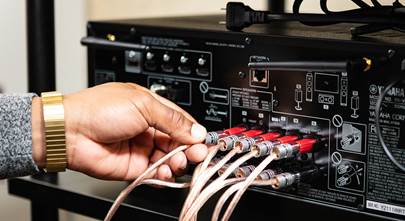
If you were using an average set of speakers (not the Bose 901s), you'd simply connect them to the amplified, speaker-level outputs of your integrated amp or stereo receiver. However, if you want to use the Bose 901 speakers and equalizer, you’ll need an integrated amp or stereo receiver with a special set of variable analog RCA preamp outputs AND a set of analog RCA inputs that go straight to the amplifier. These connections let you hook the Bose 901 EQ up in-line between the preamp and amp, even though the preamp and amp are in the same box.
There are two connection combos that make it possible to use the Bose 901 EQ with a single stereo component: a tape monitor loop, or a pre-out/main-in loop. Many of today’s integrated amps have the pre-out/main-in loop. The tape monitor loop is no longer very common, because, you know…tapes. I'll explain both below.
Pre-out/Main-in loop connections
Some components have pre-out/main-in loop connections specifically for hooking up a separate EQ. Back in the '70s, equalizers were commonly used in higher end home audio systems. An EQ could make analog sources (like tapes and vinyl) sound better. And it could also fix problems with the sound of the room that the system was in. Today we no longer use separate EQs, thanks to most sources being digital, sophisticated signal processing, and room correction software.
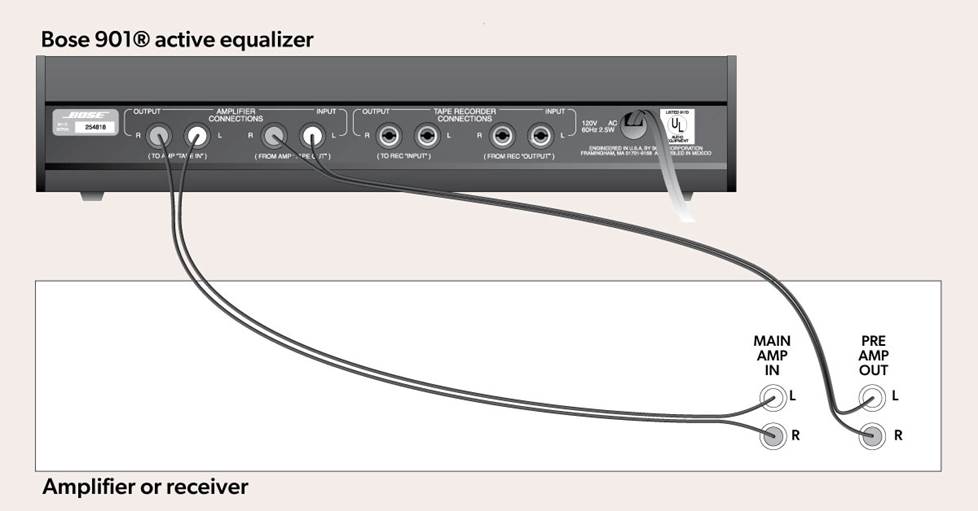
It's possible to connect the Bose 901 EQ to a single stereo component with pre-out/main-in loop connections.
The pre-out sends whatever source is being played to an outboard EQ, like the one included with the Bose 901s, using stereo RCA cables.
The main-in part of the loop receives the music as it comes back from the EQ and sends it on to the amplifier section of the component.
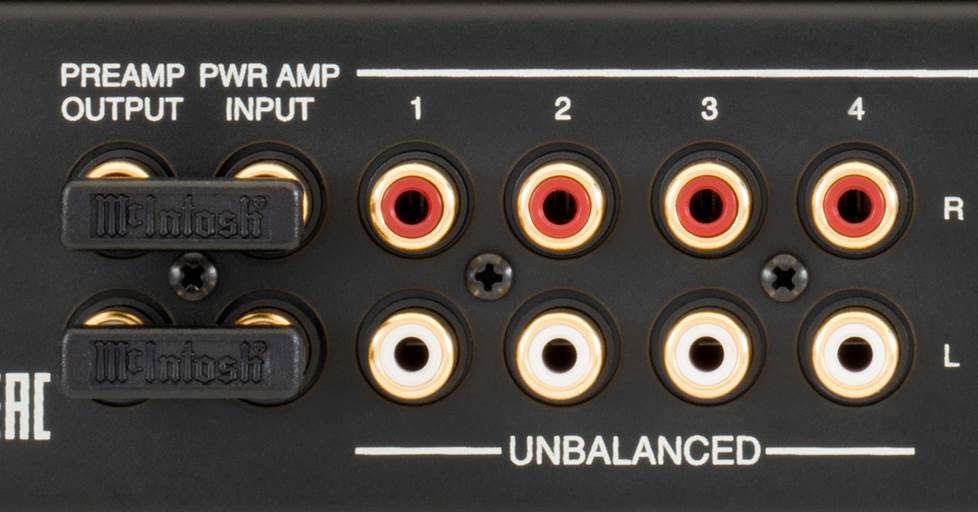
Stereo components with pre-out/main-in loop connections often come with jumpers that connect the pre-out to the main-in when no EQ is going to be used. These jumpers are removed if an EQ is used.
Tape monitor loop connections
A tape monitor loop works in a similar way. In fact, the connection requirements are identical. However, a tape monitor loop functions slightly differently than a pre-out/main-in loop. A tape monitor loop, as the name implies, allows you to monitor a recording, live, in real time.
Say, for example, you were recording a record from your turntable to a cassette so you could play the cassette in your car. The tape monitor loop would allow you to listen to the tape as it’s being recorded onto rather than listening to the record as it’s being played.
This is simply not needed with today’s digital solutions for recording vinyl onto a more portable digital medium. However, if you have an older integrated amp or stereo receiver with a tape monitor loop, your connections for the Bose 901 speakers and EQ would look like this:
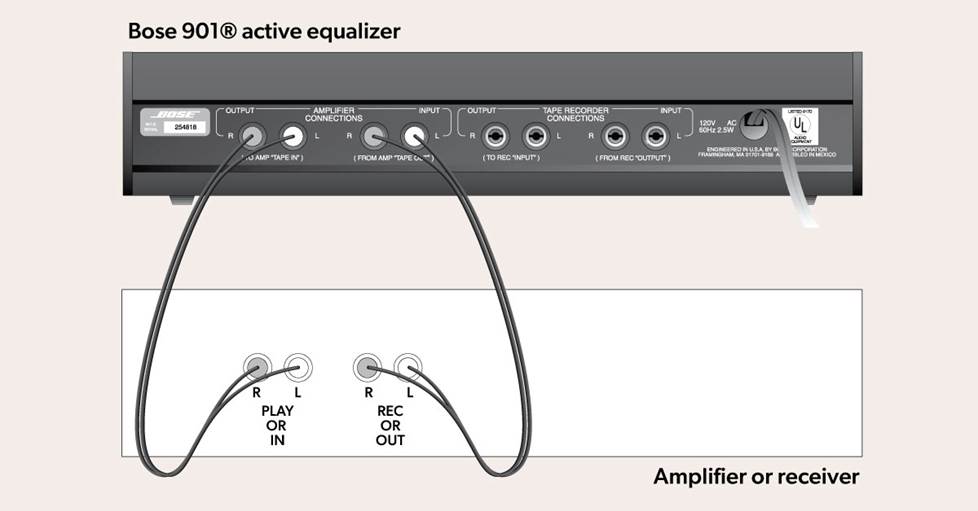
You can connect the Bose 901 EQ to an older stereo component with tape monitor loop connections.
When Bose stopped manufacturing the 901 speaker system, the number of integrated amps and stereo receivers with compatible connections dwindled down to almost nothing. But many manufacturers have begun to add those pre-out/main-in loops back onto their integrated amps. Stereo receivers, not so much.
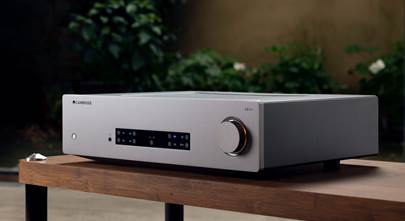
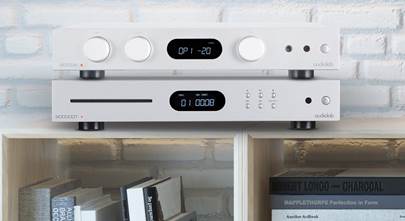
So, if you are looking to use a Bose 901 speaker system with modern electronics, you’ll want to look for a separate stereo preamp and amplifier combination that suits all your other audio needs, OR an integrated amp with a pre-out/main-in loop that does not exceed the maximum RMS power handling for your series of Bose 901 speakers.
Still have questions?
There's a lot to consider when choosing the right audio equipment for your specific setup. If there's anything you're not sure about, feel free to get in touch with one of our Advisors for some personalized shopping help. And don't forget, free lifetime tech support is included with every Crutchfield purchase.


Scott from Overland Park, KS
Posted on 5/4/2026
I have a Marantz NR1510 that I'm trying to connect the 901 amp to. Without tape, and not being a "separates" component I'm not sure how this will work, if at all.
J.R. Stoffel from Crutchfield
on 5/5/2026
David from N. Virginia
Posted on 3/7/2026
Can you recommend a receiver to use with the Bose 901 system? I'm trying to replace a Pioneer VSX 9500S, yes very old school. Would like to have a separate second speaker set if possible. Thanks
J.R. Stoffel from Crutchfield
on 3/11/2026
Frank
Posted on 1/13/2026
If receiver does not have pre out or tape loop monitor can you use a preamp to solve the issue
J.R. Stoffel from Crutchfield
on 1/14/2026
Rob from Defiance
Posted on 10/14/2024
Excellent article on hooking equalizer to stereo receiver. Helped very much. Thanks
J.R. Stoffel from Crutchfield
on 10/15/2024
Paul Skinner from Perth wa
Posted on 9/9/2024
Hi i have a Cambridge axr100 am how do i connect my bose 901 mk6 equalizer to it or cant i ? Please help
J.R. Stoffel from Crutchfield
on 10/15/2024
Randy from Pueblo
Posted on 7/10/2024
Thank you!
J.R. Stoffel from Crutchfield
on 7/11/2024
B
Posted on 4/29/2024
Are replacement drivers available?
J.R. Stoffel from Crutchfield
on 7/11/2024
RAUL
Posted on 12/6/2023
What would be the connection if you have an equalizer? and I'm not talking about the EQ from the 901 speakers. thank you.
J.R. Stoffel from Crutchfield
on 12/7/2023