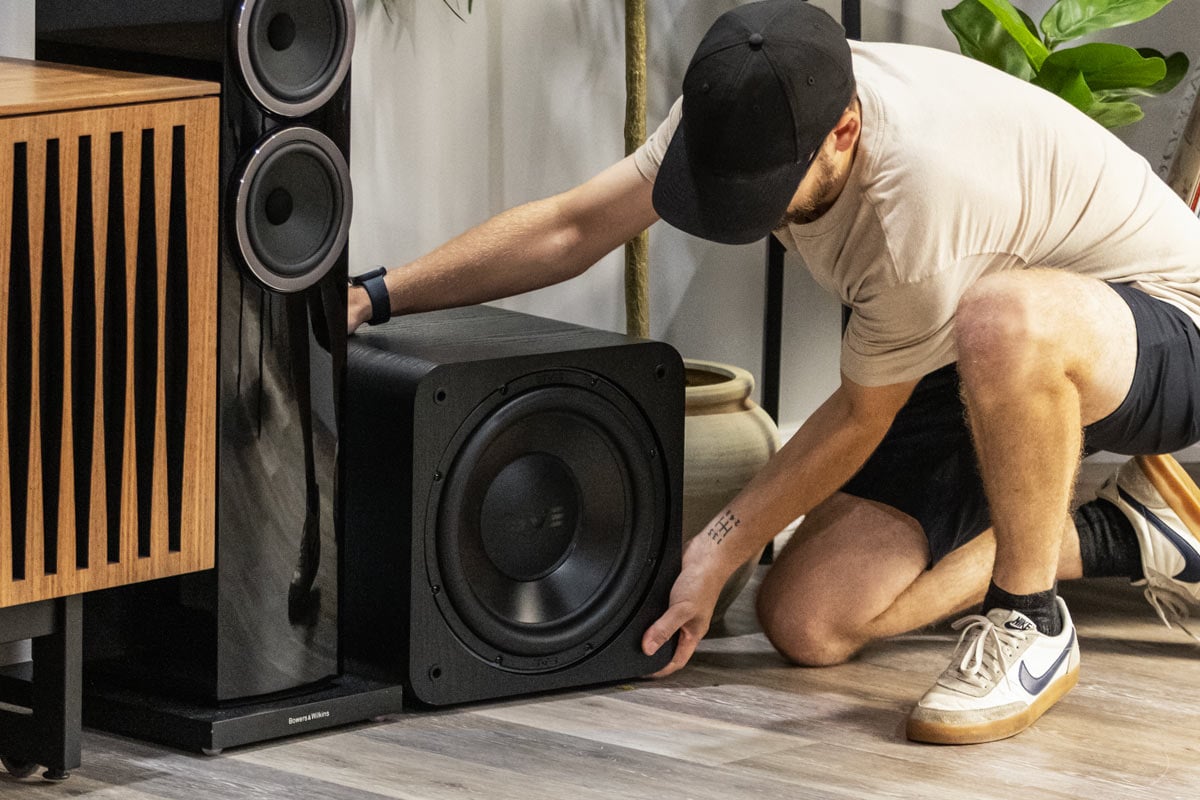
Home theater subwoofers buying guide
How to choose the best one for your surround sound system

In this article: Everything you need to know to find the right subwoofer for your home theater, including...
...we'll also run through a few ways to connect your sub to the rest of your system.
Need a little more "oomph" when you're watching a movie or jamming to tunes in your living room? A powered subwoofer is a sure-fire way to add a little (or a lot) of impact. We firmly believe that a subwoofer is an essential ingredient in virtually any home theater system.
There are a ton of subs out there, so which one should you get? The best subwoofer for you is one that's appropriately sized for your room and integrates well with the rest of your system. Ask yourself each of the following questions and we'll help you find the right one for you.
How much bass do you want?
A good sub fills out your lower frequencies for richer, deeper sound that helps you feel the action on the screen. But how much bass is too much? Ultimately, that's going to be a matter of personal taste and what works for your space.
What you plan on watching will make a difference. If you really dig action or adventure movies with special effects and explosions galore, then a more powerful low-end will help sell those moments with hard-hitting bass. If you tend to watch dramas or comedies, you might not need quite so much impact.
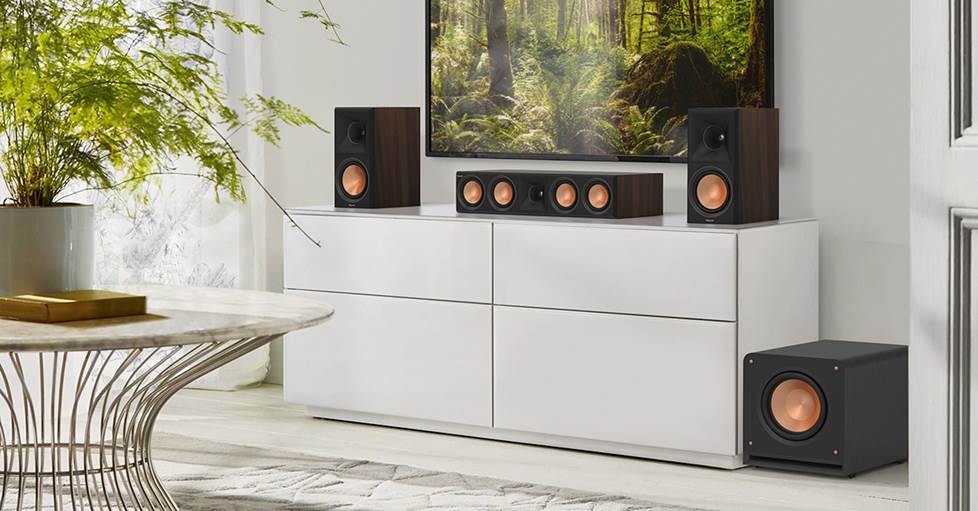
Is a great home theater sound system truly complete without a solid subwoofer backing it up? We don't think so.
Consider your room size. Big bass can sometimes overwhelm a small room. You also need to think about the rest of the components in your system. If you have large floor-standing speakers and a big center channel speaker, you'll want to match those with a more powerful subwoofer.
The two biggest contributors to overall bass output are the size of the sub and how much power is driving it. The bigger the sub and the more power that's driving it, the bigger your bass will be. There are additional factors, of course, but let's start there.
What size should you get?
Subs are categorized by their size in inches. What we mean by "size" is specifically the surface area of a sub's cone. That's the "woofer" in "subwoofer." So, a 12" sub is one with a woofer that's 12" in diameter.
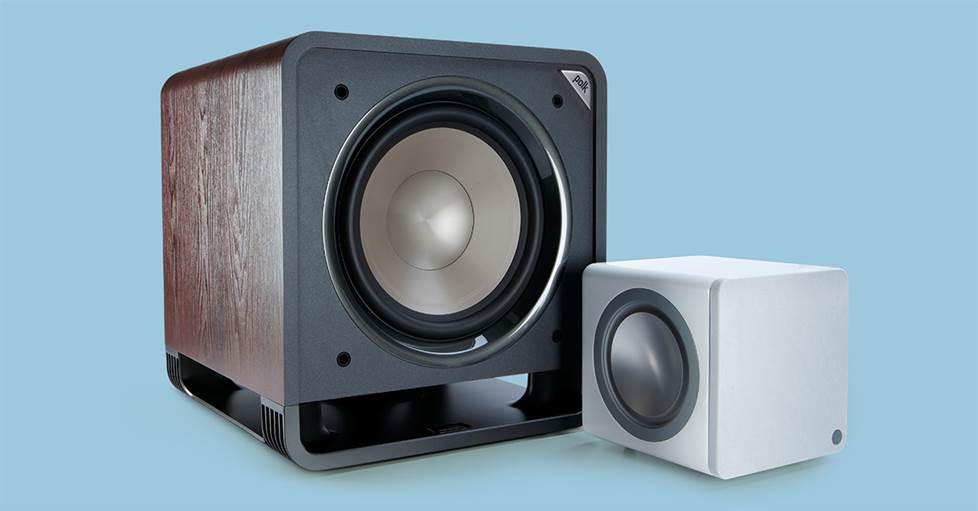
The bigger your sub, the bigger your bass, but also the more room you'll need. (Check out this 12" sub compared with a more compact 6" model.)
A larger woofer cone can physically move more air than a smaller one. This means that bigger subs have higher output and can reach lower frequencies for deeper bass. However, smaller cones are lighter, which lets them stop and start faster for tighter bass.
The bigger your sub's woofer, the bigger the cabinet it'll need to hold that woofer. Floorspace is one of the first things you need to consider when deciding how big to go when you buy a sub. With a smaller room, you may not have the space for a massive 12" sub, but might comfortably fit a more compact 8" sub.
How much power do you need?
Almost all home theater subs are powered, which means they have built-in amplification. The spec you'll want to look for is the RMS output of the sub's built-in amplifier, which measures its continuous power. This is a much better representation of a sub's real-life performance than the impressive-sounding "peak power" rating you may also see.
Not all types of amplification are the same, but in general, the higher the RMS, the more powerful the sub. Higher power nets you greater output, but it also means your sub doesn't have to work as hard to move its cone. That extra headroom gives your sub more control for cleaner bass, which is especially important at higher volumes.
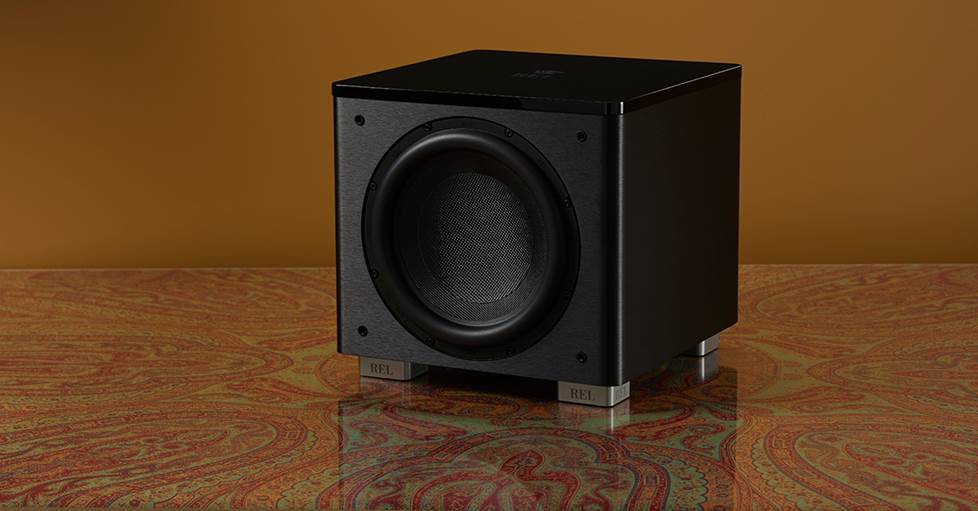
Higher amplification (read: more power) helps a subwoofer deliver greater output and cleaner bass.
Sealed vs. ported?
The style of a sub's enclosure can affect its performance, even if other factors like size and power are otherwise the same. But it's not as simple as better or worse. The two most common types of sub enclosures are sealed and ported.
Sealed or ported?
Sealed, or "acoustic suspension," enclosures work like the name implies. These cabinets are fully closed off and don't let air move freely in our out. Ported, or "bass reflex," enclosures aren't closed like this. Instead, they have air vents, called ports, that let air move in and out of the sub.
Sealed enclosures tend to be more responsive for tighter and more accurate bass. While ported subs can produce greater bass output without as much power. They also tend to be much larger than a sealed sub.
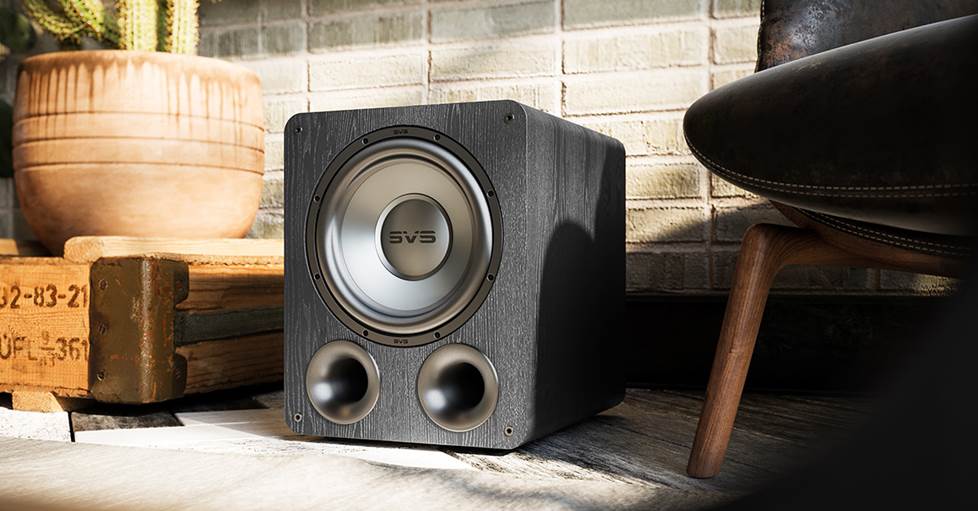
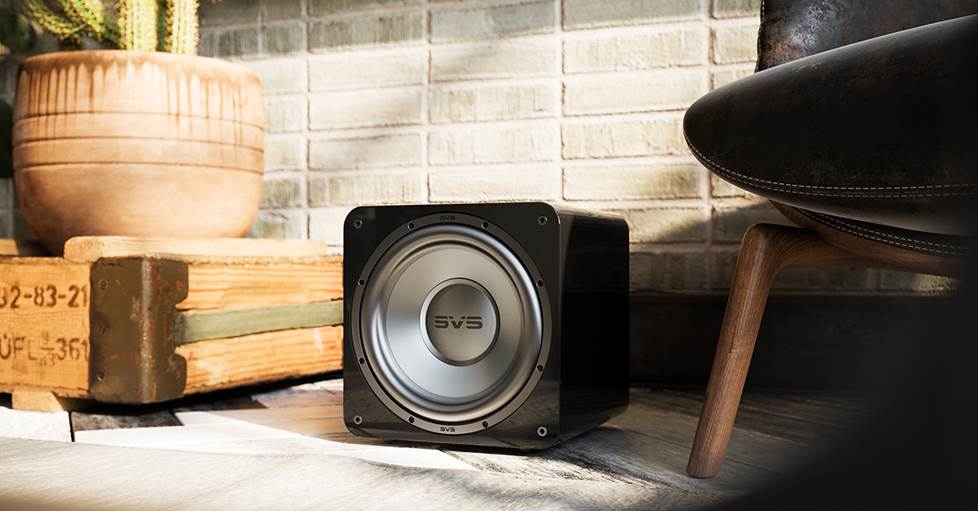
Ported subs (left) tend to be bigger and produce greater output, while sealed subs (right) are compact with tighter, more accurate bass.
Both sealed and ported subs can deliver solid bass. If your priority is maximum impact for movies or bass-heavy music, a ported sub is often the better choice. If you're after the tightest, most controlled bass for music listening, you may prefer a sealed design.
What's a passive radiator?
Subs with a passive radiator aren't fully sealed, but they also don't use a port. Instead, they have an additional cone. A regular cone in a sub is active; it's being driven directly by the sub's amplifier. By comparison, a passive cone isn't connected to the amp. Instead, the air pressure being generated in the cabinet causes it to move in tandem with the active cone.
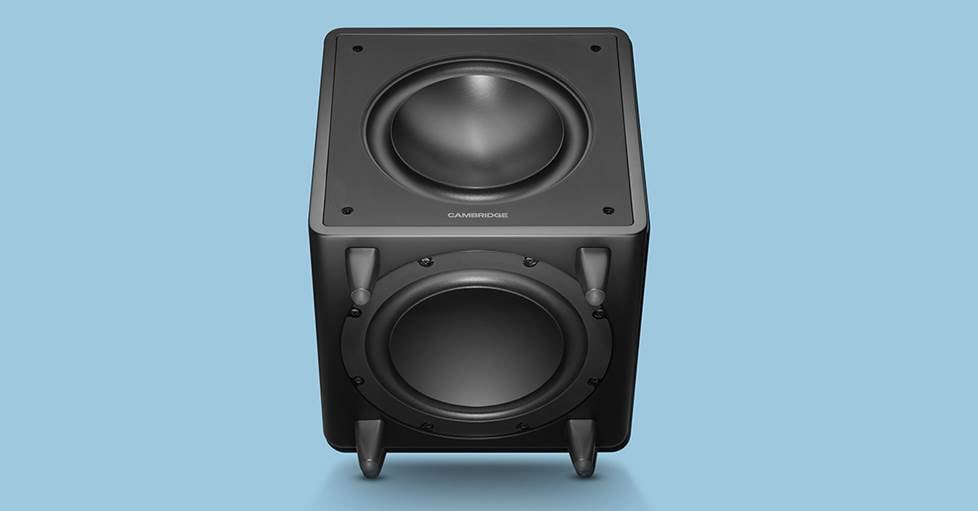
A passive radiator helps a sub deliver more output while maintaining a modest footprint.
Essentially, the active driver moves air in the cabinet, which then radiates out to this extra cone. This can allow a sub to deliver greater bass output without increasing its size. This means you can fit a sub with a passive radiator in a tighter spot, while still getting output close to a ported sub.
Where do you put your sub?
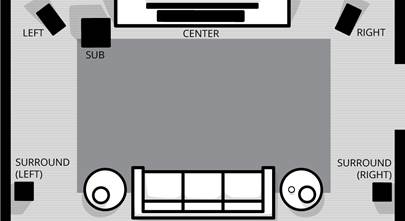
For the most part, bass is omnidirectional, meaning sound radiates outward in all directions from your sub. So you don't need to place your sub where it's pointing at you or sitting directly next to or under your TV. My own sub is tucked out of sight to the side of my couch and that works out just fine.
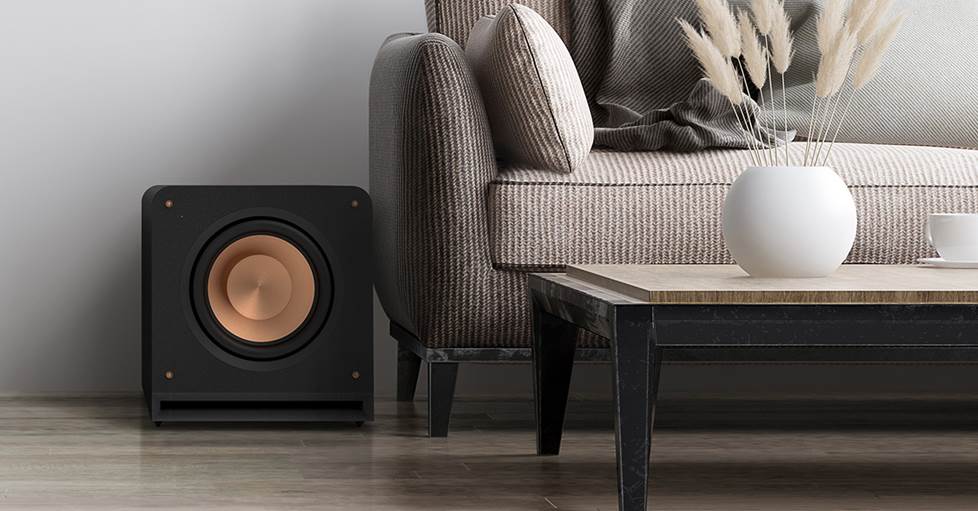
There's some of flexibility in where you can place a subwoofer because bass frequencies radiate in all directions.
For lots of spaces, you just need to do some quick measurements. Pick a spot, whip out a tape measure, then compare that to the sub's footprint to see if it will fit. Fortunately, we measure our subs and other gear in-house and include those details on our website for easy reference.
However, bass is impacted by the shape of your room and its materials. Sound waves can end up reflecting off surfaces and causing interference. This can make your bass sound different depending on where your sub is positioned (or where you're sitting). Put your sub in the wrong spot and it might muddy your bass or make it overpowering.
There are some solutions to this problem we'll discuss below, but the most basic way to ensure you're getting the best sound is a good old "sub crawl." Play some music with solid bass, then slowly scoot the sub into new positions to feel it out.
Check out our subwoofer connection guide for more placement tips. We also have a home theater speaker placement guide to arranging your full system, sub included.
Room correction
You can take some of the fuss out of placing your sub with the help of room correction technology. Basically, it lets you tweak your sub's sound to accommodate the room's acoustics. This can give you a little more leeway in your positioning.
A home theater receiver with room correction can adjust your sub's EQ along with the rest of your system. Some subs have digital signal processing (DSP) and include a microphone for room correction. While plenty of others can take advantage of an app and your smartphone's mic.
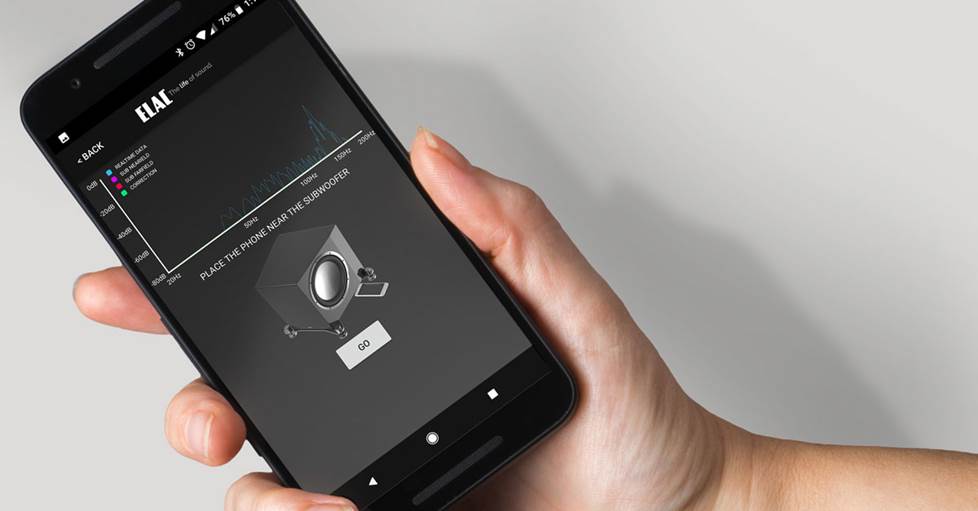
App-based room correction uses your smartphone's microphone to optimize your bass.
A sub's built-in DSP is made specifically for bass. This can give you a greater degree of control over your low frequencies than calibrating your sub along with everything else via a receiver. If you're pushing your sub pretty hard, you can also end up with a type of distortion called "clipping." Fine-tuning your sub separately can help you get heavier bass while avoiding that safely.
Multiple subs
What's better than strong bass? Even more bass! In all seriousness, you're not limited to just one subwoofer in many systems. That ".1" can easily become a ".2" if you have more space or and/or want a bigger system. To get started, you just need a home theater receiver with multiple sub outputs.
Using a pair of subs helps to more evenly distribute bass throughout your room. This means smoother bass in more listening positions. You can also get bigger bass from multiple smaller subs than a single massive sub. There are different configurations for the subs, too, from both front corners to diagonal front/back corners.
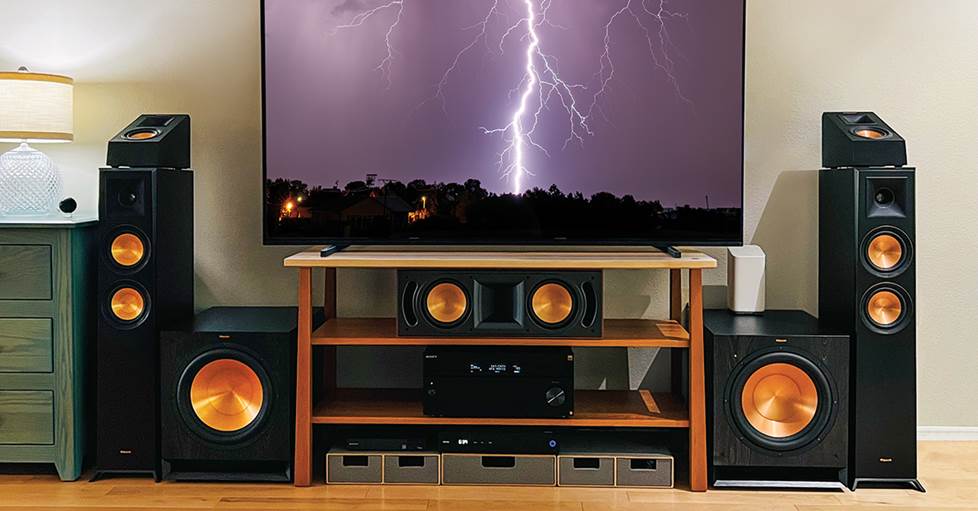
Doubling up on your subs can net you bigger, more evenly distributed bass. Photo provided by our customer Mark from Sarasota, FL.
If you really crave bass, there are receivers with four sub outputs. And even with fewer ports, there are clever ways to add up to four subs for some systems, like daisy-chaining your audio to an additional component. That can get wiggly, so feel free to reach out to our team for advice before picking up several subs.
Get rid of the rattle with acoustic isolation
If you have furniture or appliances near a powerful subwoofer, it can sometimes cause them to rattle. Never fear, there's a pretty simple solution actually. Putting your sub on an isolation platform decouples it from the floor. This both prevents distracting vibrations and subtly increases your bass output.
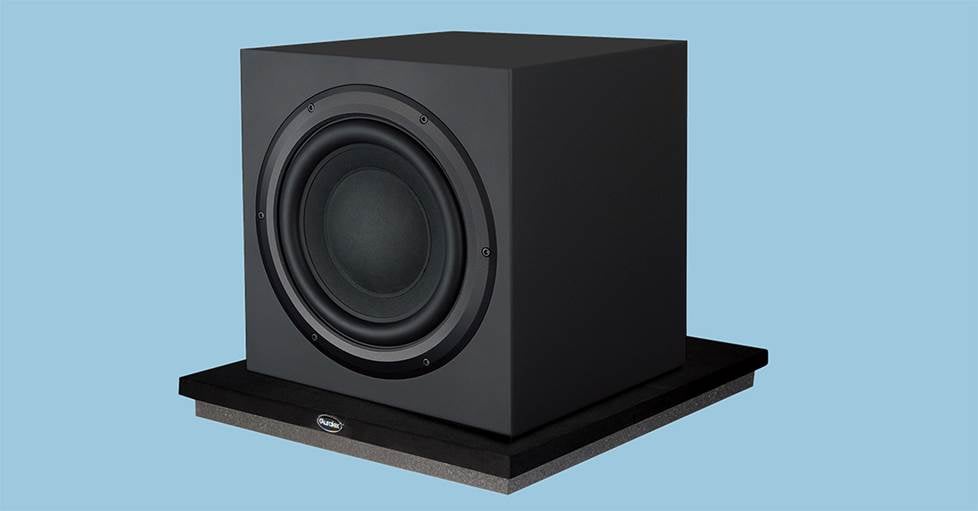
Acoustic isolation decouples your sub from the floor, which both prevents rattling and increases your output.
Being considerate
One quick tip: lower-frequency sound travels in slower, longer wavelengths. This can sometimes feel surprisingly more intense for folks farther from the sub, or even outside of the room entirely. So, it's good to do a quick walkabout when your sub's turned up to make sure you're not disturbing your housemates or neighbors.
How to connect your subwoofer
Most modern subwoofers connect to a home theater receiver via RCA. The sub will either have a stereo pair or a dedicated mono-RCA input called LFE or "low frequency effect." But some subs have additional connections, like speaker-level inputs or higher-end options like XLR.
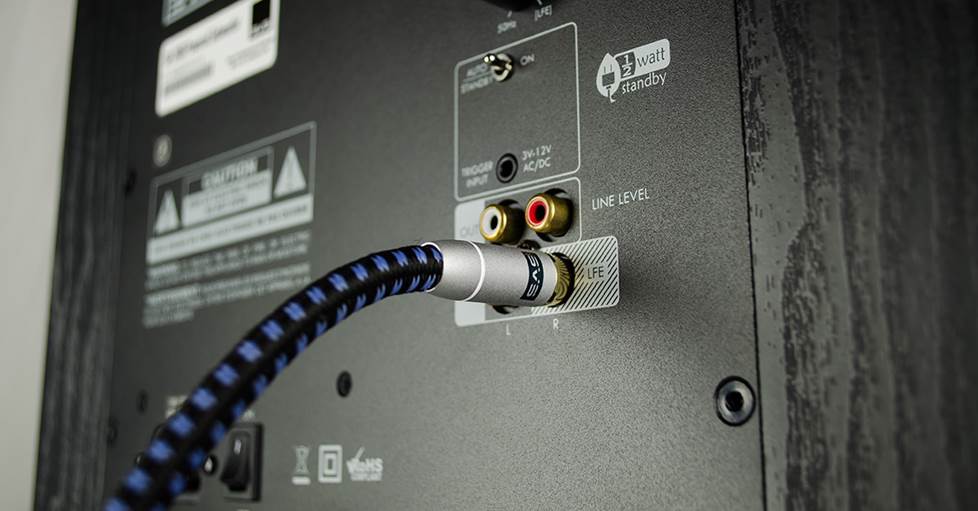
Most subs connect to the rest of your system via a mono-RCA input labeled "LFE."
Some gear, especially vintage receivers, may not have a dedicated sub out, so having alternative connections on your sub can be a life-saver. XLR inputs are a bit of upgrade over RCA. They're also line-level, but have a "balanced" design that helps keep noise out of your signal for cleaner bass.
There are also folks that prefer a speaker-level connection because they can send the same exact signal to their sub that is sent to their other speakers. This helps make sure your sonic signature and other fine details blend together naturally. REL subs are designed with the philosophy in mind, for example.
You'll always want to make sure that your receiver has matching connections, and you have the correct cable(s). Few things are as deflating as getting ready to set your system up and realizing that you don't have the right gear.
Wireless options
The signal your sub gets from your home theater receiver doesn't have to come from a long cable stretching across the floor. Plenty of subs can now connect to a receiver wirelessly. This gives you additional flexibility when it comes time to choose where your sub will be sitting.
Usually, wireless subs have a transmitter that plugs into the back of your receiver. Some models will have this included in the box, while others can add one as an optional accessory. There are also wireless kits with a plug-in receiver and transmitter that can transform basically any wired sub into a wireless one.

A simple kit with a transmitter can be plugged into most subs for a wireless connection to the rest of your system.
Don't forget that a wireless sub will still need to plug into an AC outlet. The "wireless" here only refers to audio signal.
Subs made for sound bar systems
Sound bars are an increasingly popular way to handle a home theater. They're simple to set up and offer way better sound than modern TVs can provide on their own. A lot of models also come paired with a subwoofer in the box. While plenty of other bars have the option to add a subwoofer separately.
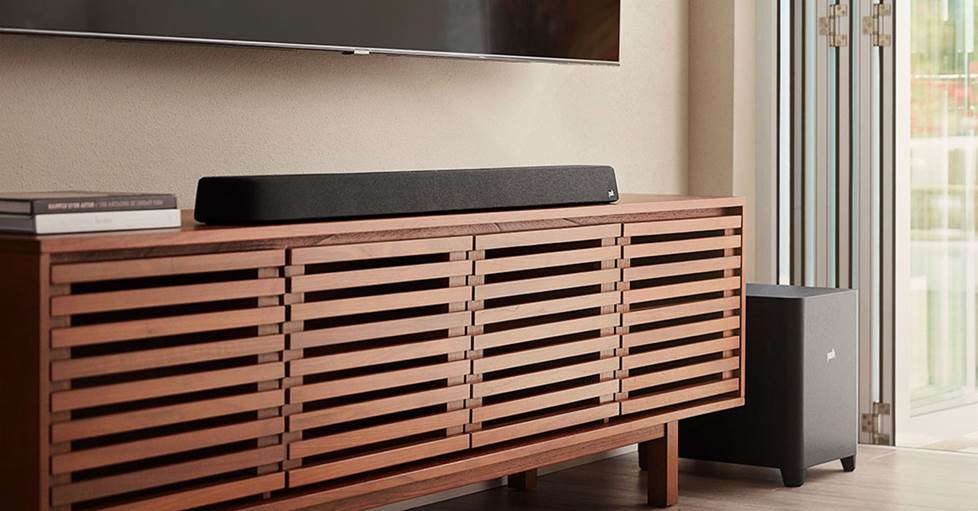
Some sound bar systems come packaged with a wireless sub to help give their bass a boost.
Usually these subs are wireless and connect to the sound bar automatically once they're powered up or after quickly setting the system up via a smartphone app. But a handful of sound bars opt for a wired connection instead.
Most of these options are specific to a brand or even a line of products, ensuring the bar and sub are a sonic match, but limiting your options more than a traditional receiver-based system. That being said, some bars have a regular subwoofer output, letting you potentially add almost any third-party sub for extra flexibility.
Get started today!
There are tons of great subs to choose from. Check out our lists of the best home theater subs and best budget subs for a few quick ideas. If you need a little guidance finding exactly what you’re looking for, don’t hesitate to get in touch with one of our friendly Advisors.
Free lifetime tech support is included with your Crutchfield purchase.





John
Posted on 5/7/2026
Hello, We have / had a Definitive Technology SC 2000 Super Cube that we lost due to a broken pipe and flood in our home. Looking for something with similar performance. Was considering adding an additional super cube prior to the loss. Additional Sub not a must, just considering. Must be wireless. Any advice would be appreciated.
Charles from Sedley
Posted on 2/10/2025
Howdie, I'm in the market for a sub to go with my semi vintage 2 channel stereo system. Application is only for music, not Home Theater. My room is 16x25 ft. Concrete floor, plaster walls. My speakers are vintage Klipsch klf 30s... That have dual 12 inch woofers in each cabinet. The brain of the system is a vintage McIntosh C30 preamp. I will be running out of one of the McIntoshs pre outs that is full range. My favorite artist are Jimi Hendrix and Robin Trower. I like to crank, I like to feel bass. I will only probably be able to afford one sub that will not have many location options... like way right or way left to in the room. Hmm I think that's about all the details I can think of...ohh, my budget max is $1500. What's your recommendation...if you have anything that will be fantastic for my needs? Jeff Turner
Mario
Posted on 4/18/2024
Salve, ho una coppia di altoparlanti da scaffale attivi Dali Oberon 1c guidati dal sound hub compact in una stanza di circa 20 mq, sono indeciso sul subwoofer da acquistare tra Svs sb-2000 pro e Dali e-12f, mi interessano sia musica che home teatro, cosa mi consiglia? Per il settaggio filtro passa basso, il sound hub compact provvede automaticamente o posso gestirlo io (penso all'app Svs, la potrei sfruttare?)? Grazie per consigli
Rickie from NC
Posted on 1/2/2024
Unless I missed it, I apologize but what about downward versus forward firing subs. In other words, what would the environment have to be for each one to succeed? Thanks!
marcos from ellenton, florida
Posted on 6/29/2023
i"m looking for steal shots for pangea ds-200 speaker stands
Will
Posted on 3/10/2023
Will from Bristol Posted on 2/3/2023 Kramer, I have an Anthem 710 receiver powering Paradigm Premiers 800F and Monitor Atoms. I Currently have the Paradigm V10 subwoofer and would like to run dual subs. My question. Would you recommend the Paradigm X 10 or X 12 subwoofer to run dual subs with my system? Thanks, Will
John Mark Richardson from Foley
Posted on 2/17/2023
I'm looking for a subwoofer to supplement my Focal 302's. Strictly a 2 channel, music only system. Audio Research D200 SS amp. Van Alstine tube pre. Room is 24x24, 8' ceiling. Seating area is 10' from speakers. White would be a plus. Might get a 2nd sub.
Will from Bristol
Posted on 2/3/2023
Kramer, I have an Anthem 710 receiver powering Paradigm Premiers 800F and Monitor Atoms. I Currently have the Paradigm V10 subwoofer and would like to run dual subs. My question. Would you recommend the Paradigm X 10 or X 12 subwoofer to run dual subs with my system? Thanks, Will
Dave Swenson from Davis
Posted on 1/5/2023
I just bought the KEF LS50w Wireless II speakers and would like to get a subwoofer. I will use them for listening to HiRes music only. My listening room is large (21' x 21' w/ cathedral ceiling) I'm currently considering the KEF KC62 or the SVC SB-2000 Pro, but also open to any other recommendations (price < $1500) I am more interested in having accurate tight bass, rather than a loud booming effect Do you have a suggestion? Thanks Dave
Dan from Denver
Posted on 11/10/2022
We're looking add a subwoofer to our music only system consisting of Klipsch Heresy IV driven by Cambridge Audio CXA81 in a midsized room. We're considering a single SVS SB-1000 Pro, the PB-1000 Pro, and the SB-2000 pro, but wonder which would pair best with the Heresy's or if there are other better options to choose? We listen to classic rock, jazz, blues and instrumental piano.