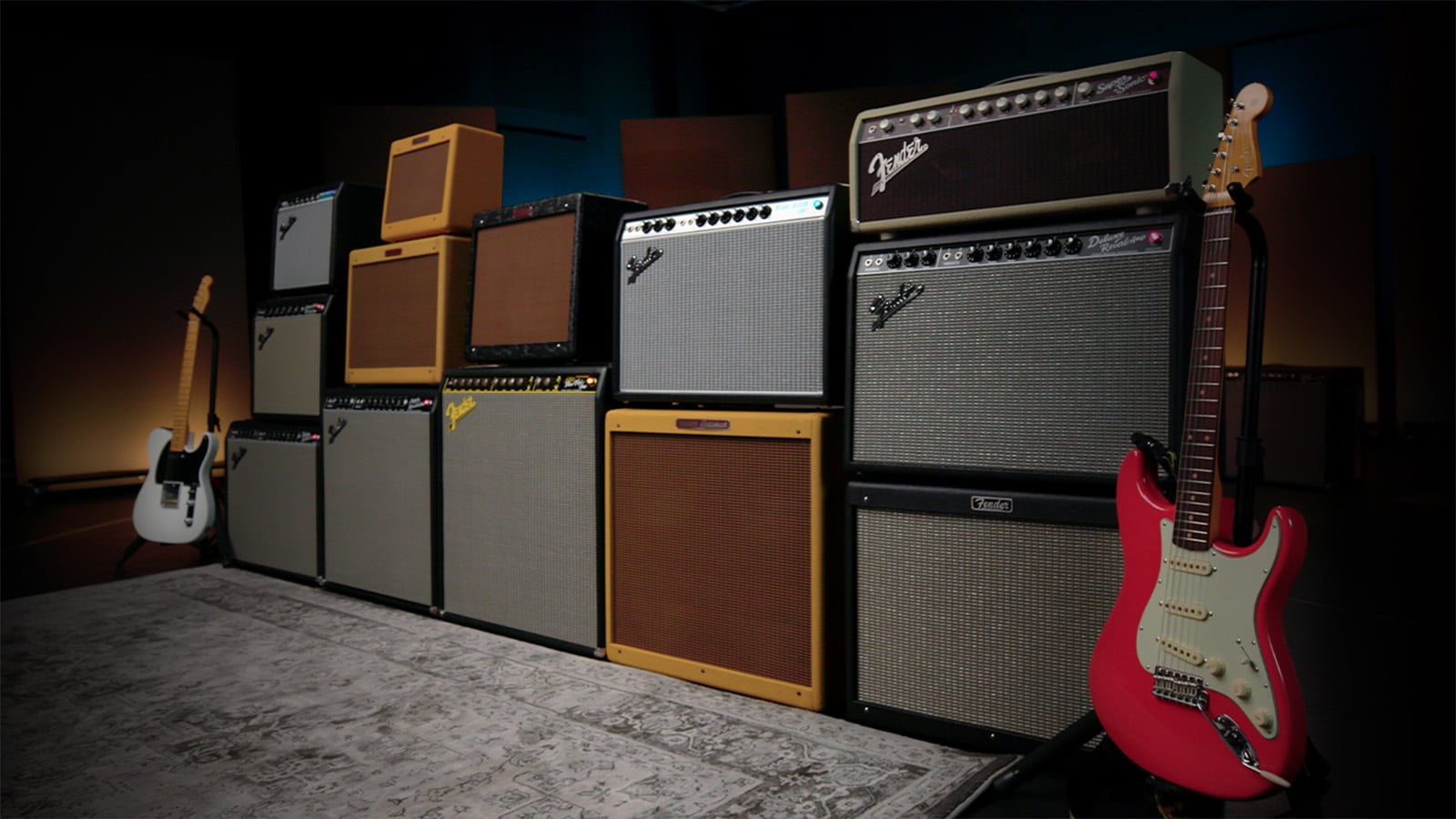
Guitar amp buying guide
Find the right amplifier for producing the tones you want to hear

In this article: I’ll introduce the main types of guitar amplifiers, including
- Combo vs amp heads
- Tube amplifiers
- Solid state amplifiers
- Digital foot pedals designed to replace a traditional amp rig
Then we'll go over some of the most common features to look for when you're shopping.
A guitar amplifier gives voice to your electric guitar. The guitar tones we hear on classic recordings are mostly down to the player. After that, they have as much to do with the amp as they do with the guitar. From Chuck Berry to Keith Richards, to Jimi Hendrix to Stevie Ray Vaughan, the amp matters.
Amp buyers have a lot of choices — some might say too many. You can find vintage-correct recreations of classic tube-drive amps, reissues that make use of modern circuit-board construction, and digital modeling amps that can faithfully reproduce a wide range of classic amp tones.
In this article, I'll talk about form-factor considerations and lay out the main characteristics of each type to help you figure out the best amp for you.
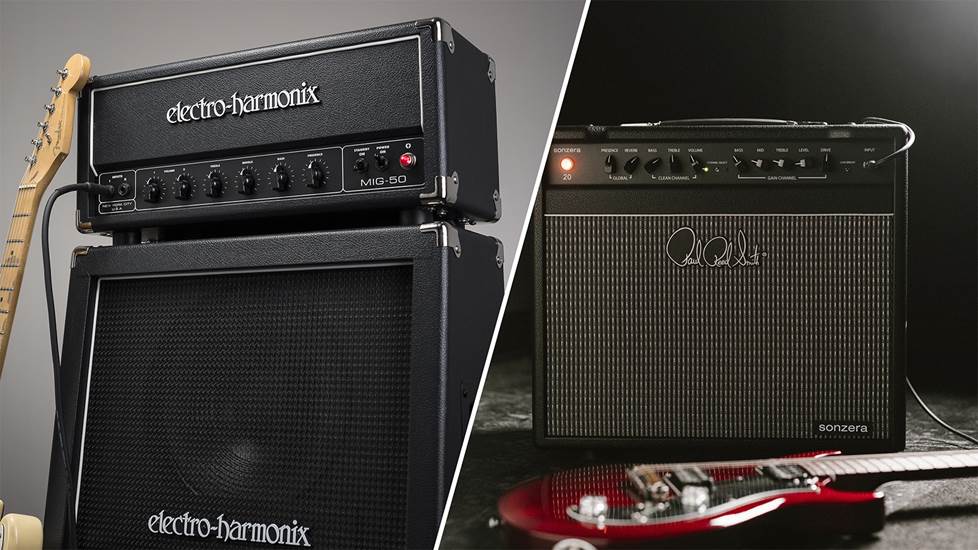
Combo amps vs head + cabinet
Guitar amps come in two main configurations. Self-contained combo amps are the most popular. Since they have amplification and speaker(s) in one enclosure, you can "grab 'n' go" with them. Combos with solid-state amplification can be extremely lightweight, so if portability is important to you, you can find models that you can comfortably carry in one hand. Grab a guitar in your other hand and you're off to the gig.
Head + cabinet setups give you the freedom to experiment with a wide range of cabinets matched with any given amp head. You’ll need speaker cable to connect them — the most popular length is 3 feet, but a longer cable gives you more flexible placement options, like in a studio where you might want the head in the control room and the cabinet in a separate room.
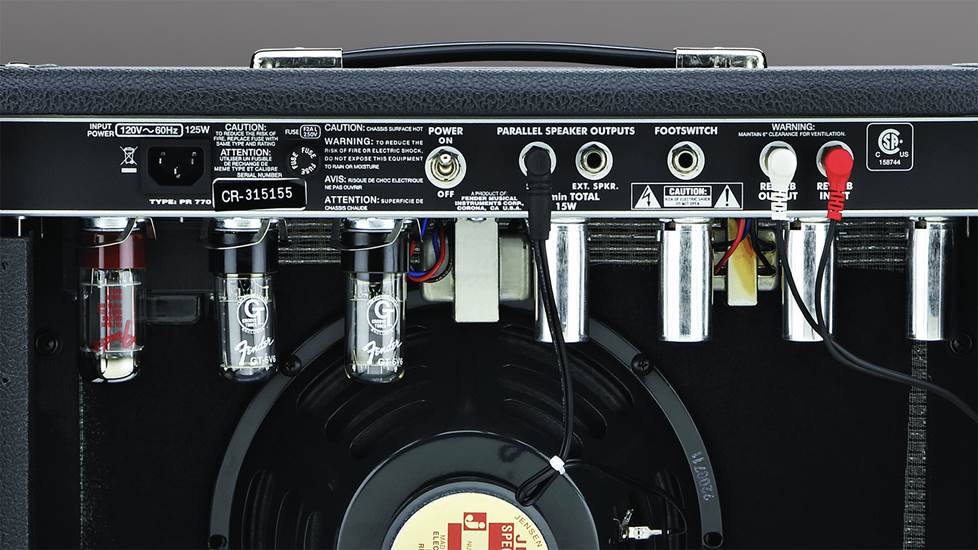
Tube guitar amplifiers
All guitar amps use either solid-state or tube amplification. I'll start by talking about tube-powered amps, because they came first and created the iconic tones that solid-state amps are designed to emulate.
Vacuum tube amplification technology dates to the early 1900s. It was the only commercially available choice until the mid '50s, when solid-state technology reshaped the course of electronic audio.
Tubes resemble light bulbs that glow with the electrical current created inside of them. They get very warm under normal working conditions, so they need some ventilation. They're not super-efficient, but that's in part why they produce their characteristic warm, organic tone. Check out our article on vacuum tube audio to learn more.
Even though tube amplification isn't practical for a lot of audio gear, a large number of guitarists, including me, feel like the touch sensitivity, sonic bloom, and natural overdriven distortion of real tube amplifiers have not been matched by solid-state/digital re-creations.
That said, there are some amazing solid-state digital modeling amps, which we'll talk about in the next section.
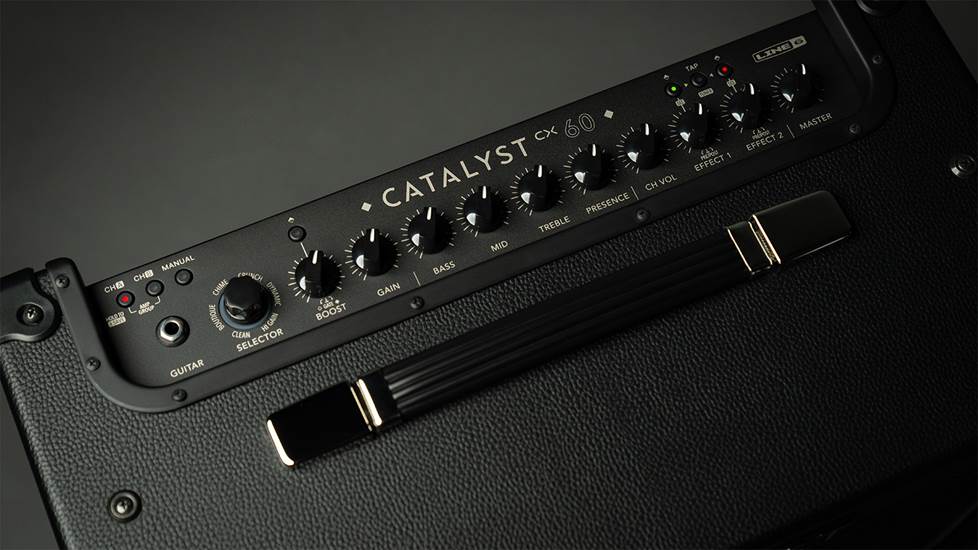
Solid-state guitar amplifiers
Solid-state guitar amplifiers have come into their own as the age of digital audio evolves. They tend to be less expensive than tube models, and more widely available in a variety of shapes and sizes. You can get a small, basic, low-wattage practice amp that weighs less than ten pounds for under a hundred dollars.
For a few dollars more, you can get into entry-level digital modeling amps that re-create classic models and have a bunch of onboard effects. And you can get full-range/flat response powered speaker cabinets especially designed to work with powerful non-amplified modeling pedals.
They're great if you want sparkling Fender-y clean tones on some songs and Marshall-y crunch on others without lugging two amps to the gig.
Fender makes digital versions of some of their classic amps. Their Tone Master Deluxe Reverb sounds and looks amazingly authentic at about half the weight of the all-tube '65 reissue. It also runs cool and has extended features like a balanced XLR line out for connecting to a P.A. system and power scaling for reducing output in smaller spaces.
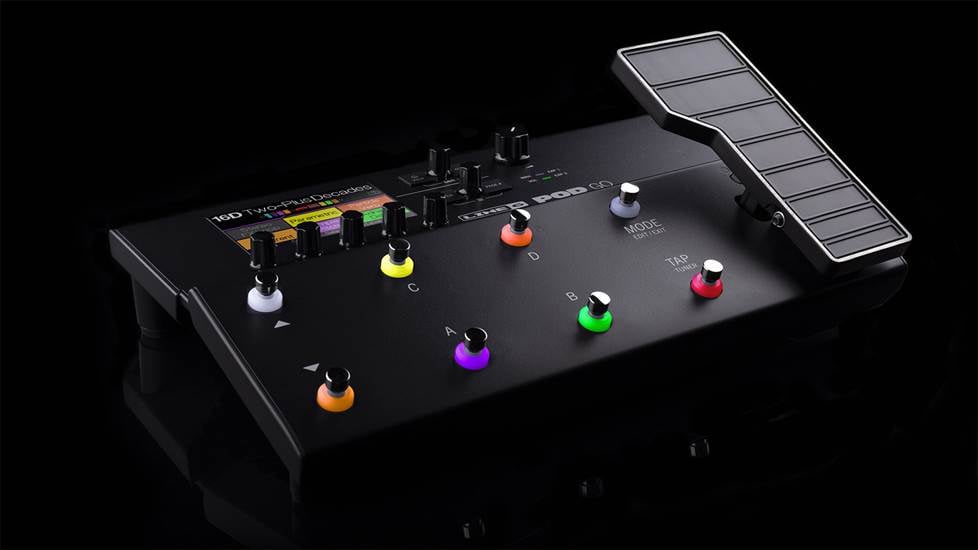
Multi-effects pedals designed to replace an entire guitar amp rig
Modern multi-effect footpedals — sometimes called "modelers" — have virtual versions of multiple popular amplifiers, effects, cabinets, and even microphones in some cases. But they don't have onboard amplification. So how do you get sound out of them?
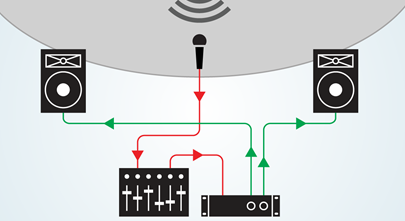
In live situations, many players simply connect their multi-effect pedal directly to the PA via an XLR cable and rely on stage (or in-ear) monitors to hear themselves. This usually pleases the sound person because it helps reduce onstage volume, which makes their mixing job easier.
Some players use a kind of powered speaker known as an FRFR (full-range/flat response) cabinet — it's like traditional guitar amp but with a very transparent response that preserves your modeler's nuanced tone without adding coloration.
In a studio setting, you'll usually use headphones or studio monitors to hear your sounds.
Key guitar amplifier features to look for
A good amp makes it easy for you to get the sound you want. Some players are happy with one input and a volume knob. Others like to have a suite of amp simulations and effects they can control with a smartphone.
Below I've listed some key features it's good to keep in mind when you're shopping.
Speakers
Amps are the voice of your guitar; speakers are the voice of your amp. The first thing to consider is the size of the speaker. The most common size is 12". You'll also find combo amps with 8", 10", and 15" speakers; ditto for unpowered guitar cabinets for use with an amp head.
In general, the bigger the speaker, the bigger the sound. Some amps and cabinets have multiple speakers, like Fender's 2 x 12" Twin Reverb.
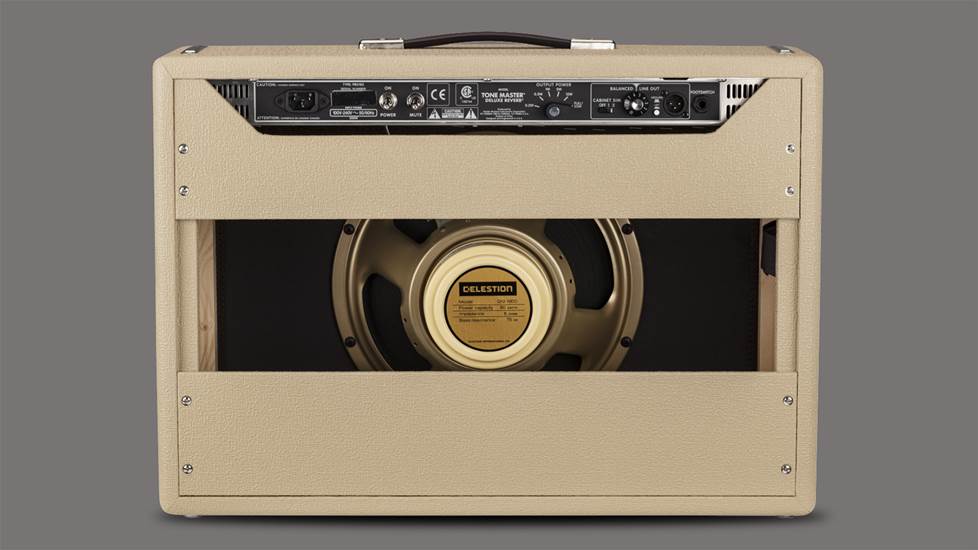
Speakers affect tone: Fender's Tone Master Deluxe Reverb Blonde uses a "British-voiced" Celestion Neo Creamback speaker.
Different speaker designs have different sonic characteristics. Fender uses an "American-voiced" (slightly mid-scooped) Jensen speaker in its '65 Deluxe Reverb and a "British-voiced" (slightly mid-forward) Celestion speaker in the '68 Custom Deluxe Reverb. Play them side by side and you'll hear a difference, some of which is due to the different speakers.
Combo amps come with built-in speakers that can be replaced if needed — or if you want to try for a different sound. Amp heads (and a lot of combos) have external speaker outputs (see below) that let you experiment simply using a speaker cable to connect to different speaker cabinets.
Variable impedance speaker outputs
The speaker outputs on any amp are usually rated at 4, 8, or 16 ohms. Some amps let you switch the rating or have multiple jacks to accommodate speakers with different impedance ratings. That makes it easier to experiment with different speakers and cabinets.
Two channels
Some amps have two separate channels. That lets you switch between two different tone profiles. Examples include the "Normal" and "Vibrato" channels on classic Fender amps and the "Clean" and "Drive" channels on amps like PRS's Sonzera.
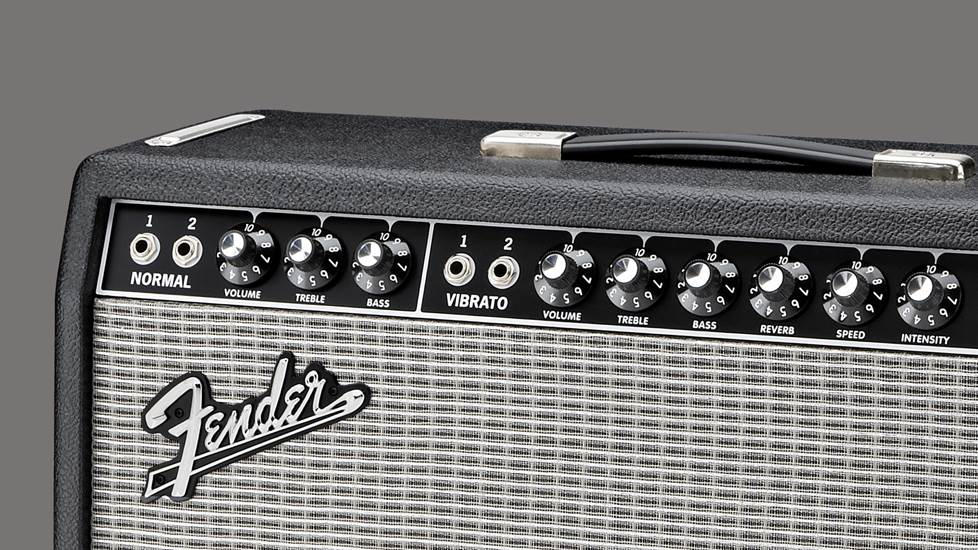
The Normal and Vibrato channels on the Deluxe Reverb have different tones and effects.
Some amps, like the Sonzera, let you switch between channels on the fly — it's like having an effects pedal built in. Most models with this design let you toggle between the channels with a footswitch.
Footswitch
Some amps with built-in effects and/or channel-switching come with a footswitch. That makes it easy to change things up without missing a beat in your playing.
Analog spring reverb
Reverb was one of the first effects built into guitar amps. It’s the echo effect you hear on the famous “James Bond Theme” as it first appeared on the Dr. No soundtrack, as well as on classic surf records like Dick Dale’s “Miserlou” and countless others.
Classic analog reverb passes the guitar's signal through a set of springs in a "pan" encased in a layer of damping and screwed to the bottom panel inside the cabinet. That's why if you bump or shake an amp with spring reverb, you hear crazy noises — it's the reverb springs rattling inside the pan.
Analog vibrato
Vibrato, often offered in tandem with reverb, is another of the earliest built-in guitar amp effects. It makes the sound "wobble" or modulate at an adjustable steady rate. There are a few different types, including optical, harmonic, bias-varying, and pitch-shifting vibratos.
Each type has its own sonic character, but they all work in essentially the same way: you control the rate of the wobble with the "speed" control knob on the amp. And the "intensity" control adjusts how pronounced the vibrato effect sounds.
DSP
Digital signal processing (DSP) gives you virtual effects. You can find amps designed to emulate a single classic amp model (with some modern features), like Fender's Tone Master Series.
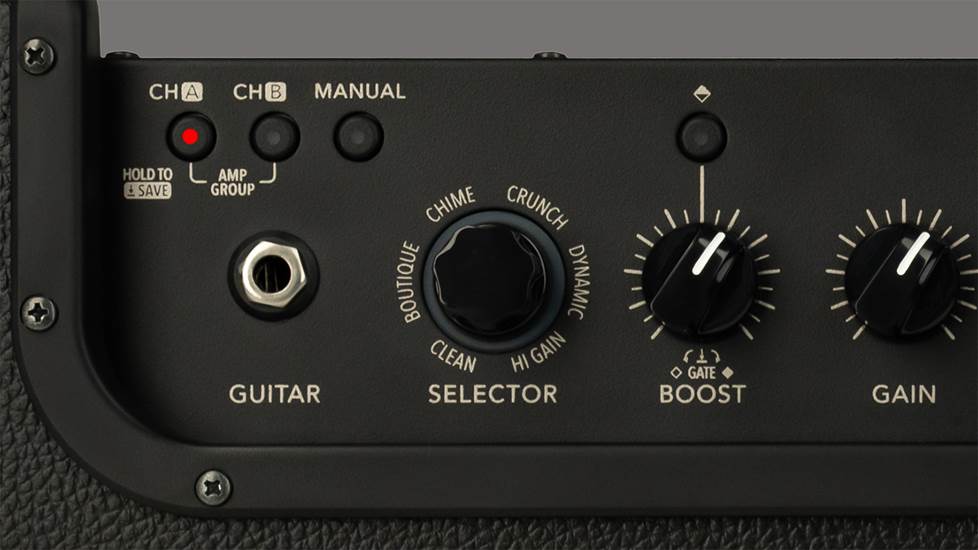
Built-in modeling DSP gives you access to a digital recreations of classic amplifier tones.
And you can find amps that "model" a wide range of amplifiers and effects, for an incredibly versatile palette of tones in a single cabinet.
Effects loop
If you use pedals or other outboard effects, the most typical signal path is to plug your guitar into your pedal(s) and then connect the pedal's output to your amp's input. When you do this, you're putting your effects before the amp's internal preamp, which controls your volume and tone.
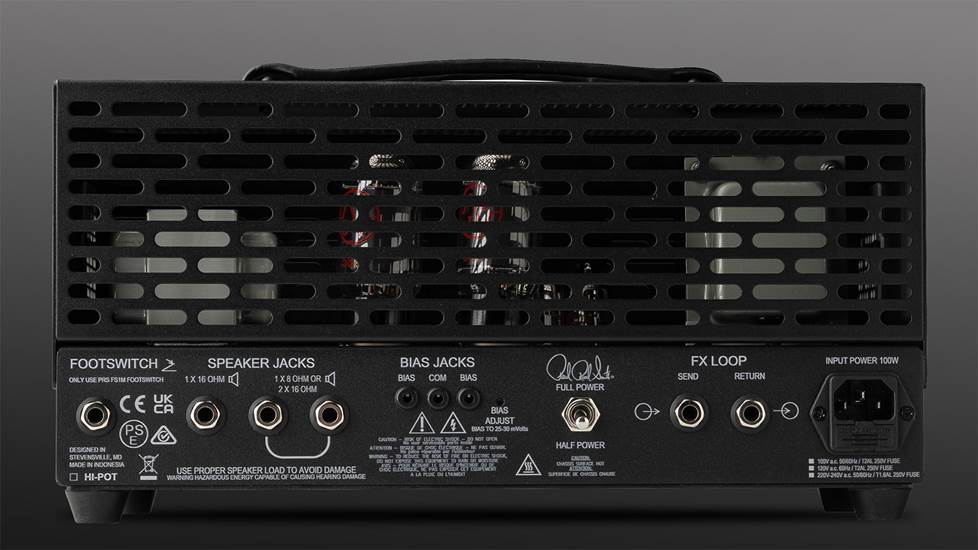
An effects loop gives you finer control over your pedals and other effects.
Some amps have an effects loop, usually on the back panel. It consists of 1/4" "send" and "return" jacks. This feeds your signal to the amp after the preamp. That's great when you want to keep effects like delay from taking on preamp distortion and sounding muddy.
XLR line out
Amps with a balanced XLR output let you connect directly to a PA system. Using a direct wired connection reduces onstage or in-studio clutter by taking the mic and stand out of the equation. It also provides a cleaner signal than a microphone and won't pick up other nearby sound sources.
That's great for keeping stage volume from getting out of control, which helps the sound person create a better mix. It's also useful for isolating the guitar track when recording.
Power scaling
Some tube amps don't reach the desired natural distortion until they're too loud for anything but larger stages. Amps with power scaling let you drop the amp's output by one or more increments. That's useful because while your amp sounds great at full power in a live setting, it might overwhelm your practice space or recording space.
To reach that overdriven sound at a more manageable volume level, some players use outboard attenuators. Built-in power scaling lets you get the sound of natural tube saturation at a lower volume without an extra box and cable.
Variable dB inputs
Some amps have two inputs on the same channel. For example, Input 1 on either channel of the Fender Deluxe Reverb provides 6dB more gain than Input 2, making it the usual choice for guitars with lower-output single-coil pickups.
Guitars with higher-output pickups, like humbuckers, usually sound best in Input 2. But sometimes doing just the opposite can help you find the guitar tone you're looking for.
Bias adjustment jacks
From time to time, tube amps need their bias adjusted to balance the tubes' output and make sure it's in the recommended output voltage range. If your tubes overheat or "redplate," or if your amp sounds anemic, you might need to adjust the bias. A lot of players prefer to have a professional amp tech make that adjustment.
If you're handy with a multimeter, bias adjustment jacks let you take voltage measurements and set the bias without having to remove the amp chassis.
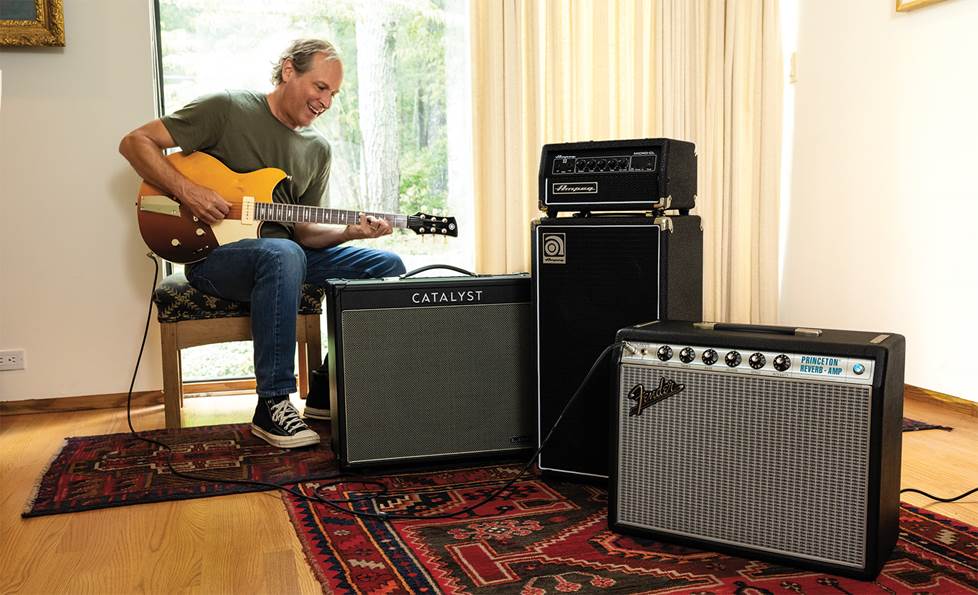
Guitar amp insights from our experts
Want to dig a little deeper? Our music pros can help you choose the right amp and answer any questions you have about the different makes and models. Give one of our Pro Audio Advisors a call at 1-800-315-0443 or contact us online. Free lifetime tech support is included with your Crutchfield purchase.


Comments (0)