Podcast Ep 77: Matching car subwoofers to amplifiers
Matching car subwoofers to amplifiers: Impedance, the Rule of Twos, and finding the sweet spot

In this episode:
JR goes full deep-dive this month on a topic that's been teased on this show more than once — how to match car subwoofers to amplifiers so your bass system performs the way it should. Huffy is here too, playing the role of someone who just wants great low end. The episode has two parts: if you just want the quick answers on which impedance subs to buy for the most common setups, JR serves up the fish in the first few minutes. If you want to actually learn how to fish — understanding what impedance is, why two ohms is the sweet spot for most sub amps, and how series vs. parallel wiring affects what your amplifier sees — that's the rest of the show.
Along the way, JR introduces the "Rule of Twos," a simple memory tool for getting dual voice coil sub wiring right, and explains when you can safely go to one ohm versus when you probably shouldn't. The episode also covers powered subs and pre-loaded enclosed subs for anyone who'd rather skip the math entirely — and no judgment there. Visual learners: here are some links to Crutchfield's subwoofer wiring diagrams and YouTube videos, because some of this stuff really does need a picture. Please send your follow-up questions (and pushback from your knowledgeable friends) to [email protected].
- Subwoofer wiring diagrams
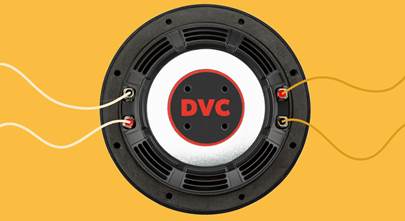
- What are dual voice coil subwoofers?
- How to match subwoofers and amplifiers
- How to wire multiple subs to your amplifier | Crutchfield
- How to match amps and subs in your car | Crutchfield
Transcript:
[01:00:00:05 - 01:00:06:04]
That's right. Yes. I'm gonna need a lot of yes. You want me to say yes. Yeah. Yes is a good one about correct
[01:00:07:08 - 01:00:17:19]
Yeah, I'll take all three of those just pepper them in, you know, don't use the same one over and over. That's right Yes, and correct. Hey, maybe you could drop in a fantastic. Oh fantastic. Yeah
[01:00:19:10 - 01:00:24:08]
Glorious is that too much? That's a little much. Yeah. Yeah got my notes
[01:00:32:12 - 01:01:25:03]
Hello and welcome to crunch field the podcast. I'm your host. JR joined in studio once again by my good friend Huffy. How are you doing, buddy? I'm doing great Fantastic, even I'm so glad to hear that Today's gonna be we're gonna try an experiment. Okay So, you know how we will often say in an episode where we touch on like a certain aspect of a topic Oh, that's a whole separate episode all by itself Yeah, we don't don't go deep on that whatever that side tangent might be. Yeah, we try to avoid avoid rabbit holes. Exactly yeah, we do that because we try to keep episodes from being like way too long and Avoiding side tangents, especially when they are worthy of an entire episode Well, this is one of those episodes where we are going to explain the side tangent The deeper thing the thing that is worthy of its own full episode
[01:01:26:07 - 01:02:23:13]
Exciting We are going to dive deep into how to match car subwoofers to car amplifiers And that's why you didn't give me notes to go over before the episode. Okay, exactly I did I knew you didn't need them for multiple reasons for multiple reasons. That's correct So we've done episodes where we've talked about subwoofers before. Yeah, of course We've done videos on our YouTube channel about subs and amps But none of our content so far other than the articles on Crutchfield comm that go deep on subwoofer wiring and diagrams and stuff None of them go deep on how to know what impedance subs to buy and why and then how to wire them to your amplifier to get the right amount of power riveting yeah and You know what? I'm gonna do I'm gonna let you and our listeners off the hook Like if you feel like you don't need the full deep dive technical explanation
[01:02:24:13 - 01:04:11:19]
You're not gonna need to listen past the next minute or two Okay, because I'm gonna start by telling you what impedance subs I recommend you use for the most common amp and sub Situations you just want to just tell me what to buy. That's well, I'm giving you the tools to be a smart shopper Icy I was gonna make you wait through some pretty technical explanations for why I'm making these recommendations But if you just want to you know, trust me I'm about to tell you so is this one of those situations where you're trying to teach me how to fish? Yes I just want to fish. Yeah. All right. This part is for the people that just want some fish. Okay, okay And then if you want to know how to fish I will teach you that in the second part of this episode Okay, well, I'm hungry. Yeah, if you want to stick around for the why Behind my recommendations. Well, awesome. I would I love you. Thank you for listening So let's start. I'm just gonna hit this these four bullet points Were at the very end of my outline for this episode I have moved them to the beginning so that I just don't want to bury the lead. Okay so if you are considering buying a amplifier and a subwoofer to make bass in your car and You are not just gonna go the easy route and go with a powered sub or a box that already has a sub or subs in it You're gonna match everything up You're gonna match the box to the woofer and the woofer or woofers to the amplifier if you're gonna go completely Alucard you have to know what impedance subs are the right impedance subs to buy Okay, okay. That makes sense. If you are buying one sub, uh-huh and that one sub only has one voice coil
[01:04:13:10 - 01:04:39:03]
Get a two ohms up we sell those we sell those yes Okay, two ohms up get a two ohms up now again I'm gonna tell you why in a few minutes But these are the straight facts These are the answers to the questions that I'm about to raise and then answer with more detail Now if you're gonna buy one subwoofer with dual voiced coils a dual voice coil sub a DVC And you just want one sub like one 10 inch or one 12 inch
[01:04:40:07 - 01:04:42:21]
Get one with four ohm voice coils
[01:04:44:00 - 01:05:00:10]
So that you can wire those two voice coils together in parallel and get it down to two ohms Okay, that computes you with me so far. Yeah good Now what if you want two subs if you want two subs and each sub is only gonna have one voice coil
[01:05:01:17 - 01:07:22:17]
Get four ohm subs. That's right because we have two single voice coil subs They won't stay at the same resistance You're gonna go after one of them together to a mono subwoofer amplifier and two four ohm subs wired together in parallel Will present a two ohm impedance in to your amplifier Which is back to where we want to be right where you want to be right and more on why? That is right where you want to be is coming up. That's in the this how to fit. Yeah, exactly how to fit I said how to get how to how to fish part Exactly. Okay, and lastly for the easy people that just want fish If you want two subs and each sub is going to have two voice coils So two DVCs to do a voice coil subs get subs with two ohm voice coils That way you can wire the voice coils on each sub In series and then wire the two subs together in parallel to get to two ohms at your amplifier You you want two ohms at your amp and that is how to do it if you make a mistake and buy two Four ohm dual voice coil subs you cannot get to two ohms. Nope. There's no way to wire it to get to two ohms So there you go. That's that's the fish. Okay, there's the salmon on a plate. I thought you ready for you to eat I thought you're gonna just tell me which sub to buy no, I'm not one size About the brands of subs okay how much bass you're gonna get this is only about the science and the math okay, I'm matching up Any subwoofer to any amplifier fair enough you with me on this. I'm not putting up any resistance The rest of this is a condensed audio only version of what we train our sales advisors to know about subs This is like a couple of days of training packed into one Podcast episode and I really hope it raises questions for you dear listener and that you send us those questions podcast at Crutchfield comm people are gonna try to push back with science I Everybody yeah, everybody has a buddy who did it this way. Yeah, that's coming I I welcome that we would let we would love nothing more than to do an entire other episode Where we answer all of those questions right bring them on
[01:07:23:18 - 01:07:45:22]
And if you want some visuals for what I'm talking about there are visuals out there in the links in the show notes for this episode Which will be available at crutchfield comm slash podcast or in the show notes wherever you listen to your podcasts There will be links to our YouTube videos all about matching up subs and amps We even have one with Chris from our tech support department
[01:07:47:00 - 01:08:33:11]
Showing you detailing exactly how to do parallel and series wiring and two subs to amps things like that So we've got the visuals if you need the visuals the rest of this is obviously audio only and huffy Here's your role today. Okay rest of this show. I've been waiting for this part. I think I think so the listeners Everybody wants to know why I'm here. Well, your role is the same as theirs except you're here with me So you get to act upon it? Okay, and so you are playing the role of a person that maybe doesn't know all about sub and amp wiring and You get to stop me and ask me questions live here and in the moment. Also, they better be good. Okay Yeah, you got to bring it buddy. Your job is to come up with questions. And if you don't have a good question It's okay to just let me talk
[01:08:34:13 - 01:08:36:19]
You know how I love yeah
[01:08:38:23 - 01:08:52:01]
Okay, I think we've set the table the fish is on the table and some people are already eating Okay, the rest of us are in the kitchen making fish and here's we're gonna get into it cooking fish cooking fish
[01:09:04:12 - 01:10:30:18]
So when you're matching up a subwoofer to an amplifier There's a few numbers you have to know about and its power and impedance Those are the two things you just have to understand and this is true with every speaker and amplifier Combination whether we're talking about home speakers with home amps or car speakers with car amps or subwoofers and amplifiers amplifiers are designed to work at a Specific impedance they're rated to put out a certain amount of power With a certain amount of distortion at that impedance So let's get deeper into how that works power leaves the amplifier on speaker wires and travels over to the speaker and goes into the speakers voice coil The voice coil is just more speaker wire It's a long strand of copper wire around around the tube and placed inside a magnet The length and the thickness of that voice coil along with all the speaker wire between the amp and the sub Determine the impedance that the amp sees from the speaker and impedance is just another word for I'm so you ask the right question. There we go. Excellent job, Huffy Impedance is electrical resistance. There we go The speakers impedance holds the amp back from pumping out so much power that it overheats and shuts down If you have no speaker hooked up to the positive and negative output terminals the amp sees so much Impedance it puts out no power
[01:10:32:13 - 01:10:54:02]
Because the air that connects the positive to the negative doesn't conduct electricity so there's an infinite amount of impedance there Okay. Now when you hook up pause like I was supposed to ask a question Oh, I don't know you were looking up at the sky going wait What is he was what he's saying making any sense? But it is I was remembering I need to do laundry actually
[01:10:55:03 - 01:11:49:22]
So when you connect a speaker you lower the impedance down low enough that the amp can release its power Too low and the amp releases too much power Too much impedance in the amp puts out less power So amps and speakers are designed to work together at a specific impedance to get the output power just right We refer to this as the load on the amplifier Less impedance is a heavier or more load more power But that makes the amp not have to work as hard. No, you got it backwards Oh, I got it backwards less impedance So lower impedance numbers like right from four ohm down to two ohm down to one. Oh, that's a heavier load on the amplifier It's making the amplifier work harder and put out more power Got it. There's a downside to that. It might sound like that's exactly what everybody should do Yeah, there's a lower number better, right?
[01:11:51:02 - 01:12:58:00]
Lower impedance more power but also more distortion and more heat The amplifier will have a hard time dealing with that heavy load so it's kind of like having your Foot on the gas pedal all the way down for like a long period of time and going over downhill And okay and going all right at some point your car is gonna be like this is too fast fair enough Yeah, okay one. I'll take that one. Okay. I knew there's a reason I had you here today Car speakers are generally designed to present four ohms of impedance to an amplifier now we talk in factory or aftermarket Aftermarket, okay. Yeah stuff. We sell yeah, this is kind of an industry standard. There's exceptions to our rule, right? Of course, but anybody in the industry would agree that the standard impedance for car speakers is four ohms So for amplifiers designed to power most car speakers, the power is rated at four ohms For example, you might find a four channel amp rated at 75 watts by four channels at four ohms When you hook up for ohm speakers to it, you can expect up to 75 watts of power
[01:12:59:06 - 01:13:42:02]
Now some brilliant person long ago thought to themselves What would happen if we connected a speaker with less impedance to the same amplifier? More power can I get more power out of it? Can I do this in a way that my amplifier will give me more than I paid for but then there's that distortion thing? You just talked about this. I'm paying attention So when you when you do that when you lower the impedance below four ohms your amp does indeed put out more power Likewise if you raise the impedance The amp puts out less power and you do this by connecting a speaker that is different than four ohms So an amp that puts out 75 watts into a four ohm speaker will put out more power than that into a two ohm speaker
[01:13:43:03 - 01:14:32:12]
Depending on the amp as much as double It might put out up to 150 watts because it sees half of the impedance With a two ohm speaker compared to a four ohm speaker Now once again twice the power sounds great, but it does come at a cost The amp has to work harder It has to get hotter and that heat causes it to lose some clarity and you will hear more distortion So power good distortion bad. So it's about balance. Yeah, okay, but that extra power though people want it That's a bigger number. It's a bigger number bigger number battery enticing, but it comes at a cost However, most amps are indeed designed to do this the job I just explained two ohms really not a problem for most amps They are stable able to perform just fine with a two ohm load or two ohm speaker
[01:14:33:20 - 01:18:45:22]
There's another way to get your amps to put out more power If you connect two speakers to the same amp channel and you connect them a certain way and the two speakers are the same Impedance in fact, they need to be identical for this to work simply Here's what happens if you connect to four ohm speakers in parallel to an amp The impedance the amp sees is cut in half So two ohms and if your amp is designed to be okay with two ohms and your speakers are getting enough power That's great. Right? Like you're getting all the power from the amp but to both speakers, right not to but both Okay, I said that kind of weird both speakers are getting like the full listed power Sure, because you've whatever power your amp puts out at two ohms It gets divided 50 50 half of that power goes to one speaker half goes to the other and if the numbers match up Then that's a good combination You'll still have to pay attention to how much power your speakers are rated for and is your amp putting out that much power right and Mostly, this is great The amp will run a little warmer because most amps are fine at two ohms with a little more distortion But not enough to be a problem, especially for subwoofers. So yeah, this is a desired result it is something a lot of people do with great success all the time hook up two speakers to one amp channel and Parallel and get it down to two ohms and get more power. It's great Now let's talk about the opposite because when you connect two speakers to an amp channel in series you raise the impedance It's just a different way of wiring the positive and the negative speaker wires from two speakers You do the opposite with the impedance you double it So two four ohm speakers wired in series the impedance changes to what eight? Exactly add them together. So is that good or bad? Well, it makes your amp put out less power, which is probably not Good, right. We pay more money for amps because add more power buying amps for the power, right? So less power is probably not good. But does that mean it has more control? Because okay the amp will run cooler and we'll have less distortion But generally people are buying amps for power. So it's not the desired result So again, it's about that balance it very much So you got it and the idea behind matching a sub to an amp is to try to land in what I like to call the sweet spot ooh Most sub amps are at their best when powering a speaker or speakers that present The amp with two ohms of impedance sub amps specifically mono subwoofer amplifiers are built and priced and Designed to perform just fine with two ohms of impedance. In fact, I would even say that's when they're at their best That's when you're getting the most for your money. Now, there's plenty of amps that can even perform fine at one Ohm But the same problems exist that we just talked about usually you get more power But at the cost of more heat more distortion and really a shorter life for that amplifier But once again, it's that extra power though and people want it. Yeah people like power. Yeah I do want to come back to though two Ohm is the sweet spot just because we have amps that can do One Ohm of impedance does not mean that's where you should be just means if you want to go there you can so And so you call that the sweet spot when you get to two homes, right? Yes So if an amp is capable of going all the way down to one home, but I don't take it there I leave it at two homes. I'm not getting that the full power that that amps potentially capable of But it should run cooler. Yes, right. Yes, and should have a little bit more control. Yes, right Yeah, everything will perform better in an amp that is capable of one home But you're only showing it two homes. Everything will be happier. There we go. All right two homes Awesome So now that we understand impedance and kind of what it is and how subs and an amplifiers work together How do you get a sub that is the perfect match for your amp? Well, we're gonna start with the easiest way possible to do that
[01:18:47:06 - 01:20:57:14]
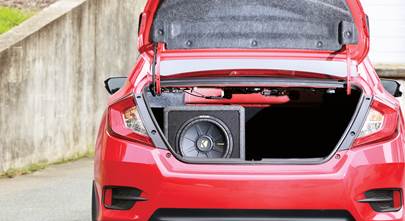
Just by a powered sub Sorry done for you. Yeah, here's some more fish for those of you that don't want to learn how to fish Skip it's like passing, you know skip passing go or whatever. Whatever. I don't know what analogy my eyes now That's that's right. Oh fish. Yeah. Yeah The manufacturers already done the math on powered subs, right? They're gonna make sure that they have the amp and the sub all figured out It's gonna be the right and airspace for that matter everything. Yeah, all those other things I gotta do get it connected and then turn it on and write in the knobs and you're done You don't have to worry about too much power for the ant for the sub, right? It's all there It's optimized to work together. You don't need to think about impedance Just how big of a powered sub do you want right? How much how much room are you willing to give up? Exactly that will the more room equals more base and there's plenty of great choices in power subs that they fit under your seat Sometimes there's small ones medium ones big ones and all of the math is done for you You're just gonna need an amp wiring kit and you're there And it's some of them even look great like they're designed to be a showpiece in the trunk or cargo space of your car and So if you are we're looking for your next opportunity to bail on this podcast because you got the information you needed Maybe you just did powered subs. They do make your life easier You you found out that impedance is not something you care to know that much more about that's totally fine You're off the hook as far as I'm concerned. I can see why I didn't lead with that because no one would be here You might be the type though that wants to customize your base system a little bit more than that More than a powered sub would allow you to so the next thing to look at the next easiest way to get this done is To look at enclosed subwoofers if you're shopping on crutchfield.com This is a category of subs you can go look at these are boxes that are pre-built by the manufacturer with the subs already in the box So you don't have to build your own box or figure out how much internal airspace and matching up the subs to the box That and that by the way is a whole separate episode of the podcast all by itself So you just need a tape measure and a credit card, right?
[01:20:58:16 - 01:21:40:17]
But maybe you do want to do the work of matching your enclosed sub to the right amplifier And it's easy. You simply look at the max RMS power handling of your sub box and at what impedance and usually we recommend Start with the sub then pick out the amp right because we got to make sure it fits in the space great point Yeah, pick out the subs that are right that are that that given the right amount of power will make the base you want Right because we have a lot of them and then find an amp that does that. Yes. Yeah So for example, you might buy an enclosed sub box with two 12 inch subs in it Total power the box can handle is 600 watts, which means 300 watts per sub and
[01:21:41:19 - 01:23:37:03]
The subs inside the box have already been wired up together to present a 2 ohm load on your amplifier See how they've done the math for you here. I like that So then you go look for an amp that puts out up to 600 watts At 2 ohms, that's a controversial take right there. You said up to yeah, and I'm gonna get there Exactly where you're going the closer you get to 600 watts without going over in this example The better your subs will perform if you go over that number you run the risk of blowing your subs Especially if you are like me and you will crank it to the max and leave it there for long periods of time And if if you did happen to blow your sub you might even have voided your subs warranty So we don't recommend it officially now There's plenty of you out there that are already typing your email in to say oh I put in a thousand watts to my 600 watts up and it's fine. It sounds great. You just got to know what you're doing Yeah, we know a couple people like that. We agree You got to know what you're doing and it can be done But we are not here to make that official recommendation kind of goes back to that amp thing you're talking about with the sweet spot Yeah, right. So yeah Trying to figure out that combination of Performance and longevity. Yep. Yeah, and on the other side there are people saying oh, you don't need to give it a hundred percent You can give it less power than that and you'll still get great bass And that's true if you find an amp that's a little less than 600 watts like in this example That's fine. If you go way below 600 watts. Let's like let's say you use an amp that only puts out 50% of the power rated here. So 300 watts at two ohms You'll still get bass maybe even enough to be happy with the result But what you won't be getting is the maximum performance of your subs
[01:23:38:09 - 01:24:35:01]
You might feel like you want more and so what you do as you're driving around listening to music you turn the volume knob up Or if you have a bass knob you turn the bass knob up But then because you don't have enough power You're asking for more bass than your system can deliver and this is when your amp starts to put out more distortion And runs hotter and could damage your subs So try to get as close to 100% of the subs max RMS without going over as you can. Alright We're into the hard stuff Because from here on out it's all about those of you that want to shop for subs Alucard completely alucard you want to pick out the subwoofer or woofers as drivers not something that's already in a box You're gonna pick out or maybe even build your own box You're going to find a perfect amplifier. You're gonna wire all of this up yourself, right? Like you are ready to do the hard work
[01:24:36:04 - 01:25:26:05]
We're here to help you. Yes, we are Yeah And if you're gonna do that you still need to pay attention To the impedance the subwoofers how many of them how what the impedance of all of them How are you going to wire them and how are you gonna match them up to the end? So that's what we're talking about now, and I'm really wanting you to know it's not that hard to do We're gonna start with one sub you want to buy one driver a subwoofer It doesn't matter if it's an 8-inch 10-inch 12-15, whatever. It's one and That sub is only gonna have one voice coil depending on the sub you've chosen It's either available as a single voice coil or a dual voice coil. Some manufacturers make both you have choices, right? Suffice it to say you've chosen a sub that has one voice coil and you only want one sub
[01:25:27:14 - 01:25:45:17]
All you have to do is make sure that subwoofer is a two ohm sub That way you can easily match it up to a sub amp that puts out up to that subs max rms at 2 ohms There actually is no math to do Let's say you picked out a sub that handles 200 watts at 2 ohms
[01:25:46:18 - 01:26:13:11]
All you got to do is go find an amp that puts out 200 watts at 2 ohms and you're done And that should be relatively easy to find now if you want two subs in your new box That's also pretty simple Just get two 4 ohm subs and wire them in parallel to your box and your amplifier And then get an amp that puts out the combined total max rms for the two subs at 2 ohms
[01:26:15:08 - 01:27:06:17]
Should we should we dive into that one a little deeper? You're starting to get into the thick of it. Yeah. Yeah, we are because if you have two separate woofers each with one voice coil And both of those subs are 4 ohm subs Then you're not going to end up at 4 ohms at the amplifier You have to wire them either in parallel or in series to your amplifier. You have to so it's either one or the other Up or down as far as impedance. So with two 4 ohm subs series wiring gets us to 8 8 ohms and in parallel gets us down to 2 And is and is 2 the sweet spot eric 2 is the sweet spot. Oh, gee eric We're just going to pepper that in every now and then yeah 2 ohm is the sweet spot. So Two 4 ohm subs in parallel to 2 ohms. We're at the sweet spot. Then let's say each of those subs can handle 250 watts
[01:27:08:01 - 01:27:20:14]
We need a total of 500 watts because we have two subs that handle 250 watts each And we know we're going to wire them in parallel down to 2 ohms. So we need 500 watts at 2 ohms
[01:27:21:21 - 01:27:27:03]
Okay, that's why if you want to buy two subs single voice coil get 4 ohm subs
[01:27:28:18 - 01:28:49:13]
I said this at the beginning of the show. You did. This is the why behind that All right. Now you're teaching us to fish and so so far We've only been talking about single voice coil subs if you want one get a 2 ohm If you want to get 4 ohm that really is the simple answer answer here You're wondering about dual voice coil subwoofers. I could hear it Yeah, through the air. You're driving in your car listening to this podcast huffy. You're sitting across the room from me All of you are wondering well how to dual voice coil subwoofers factory. Well dual must be twice as good It's more that yeah It's two instead of one. So twice as good right and there's a ton of dual voice coil subwoofers to juice from They are plentiful. You can't avoid them if you are looking through subwoofers on crutchfield.com They're all over the place. Yeah Uh, I do have it pulled up here because I was curious 203 dual voice coil Component subs that we sell so just standalone subs. Yeah, many subwoofer companies are making dvc's or dual voice coils Subs that have two voice coils on each sub so looking at our website. Yeah Do you think we carry more single? Voice coil subs are dual voice coil subs when you think about every size of subwoofer That we carry you're looking at all subs general features of the subs we carry
[01:28:50:15 - 01:29:12:00]
What's the total? No, if you give me that number i'll have the answer the total over all of subs 378 Oh, so now I have the answer. So most of them are dual voice coil subs. How do you get to that? Well, you just told me that we had like 200 Yeah, okay, so I messed that up we carry more dual voice coil subs falling into my trap Yes
[01:29:13:14 - 01:30:25:23]
Let's see you're doing math over here you've been doing math this whole time. That's right Yeah, we actually carry more dual dual voice coil. That's a little surprising to me to be honest So why do so many companies make subs with two voice coils? Why is that now kind of the norm? And the answer is that it simply allows you to do a little bit more math To do a little bit more complex wiring so that you can present just the right amount of impedance to your amp and It's especially useful for people that want to wire up A lot of subs in a very complex sub and amp system and we're not here to dive quite that deep in this episode We're trying to focus on The situations that the average joe who wants to go better with their subwoofers is going to find themselves in dual voice coil subs Are especially useful for those that really want to get complex with their amps and subs many subs and many amps and you got options Different ways to wire them. We're not here to get quite that deep in this podcast We're going to really focus on more common sub and amp combinations Suffice it to say you can wire each subs voice coils together In parallel or series so that each sub can be one of two impedances
[01:30:27:03 - 01:31:17:07]
That's really where the magic is happening on dual voice coil subs When you have a sub that says dual four ohms It's not a four ohm sub it can never be By itself a four ohm sub but let me explain it could be a two or an eight though, right exactly So just like two subs. Yep So are you are you sure you I didn't send you a copy of my script? Because the next thing I was gonna say paying attention to the first part. It's I can tell you're listening For example a sub with two four ohm voice coils can either be a two ohm sub with the two voice coils wired in parallel Or an eight ohm sub with the two voice coils wired in series It can never be a four ohm sub because you must wire up both of those voice coils You can't just wire one and there's no way to wire them that presents the amp with four ohms
[01:31:18:10 - 01:31:19:16]
So now that you know that
[01:31:20:18 - 01:31:32:19]
You can do just a little bit of math and buy dual voice coil subs and still make sure you end up at two ohms at the amplifier So let's do it if you only want one sub
[01:31:33:20 - 01:32:46:21]
And it's a dual voice coil sub Make sure it's a four ohm dvc So that you can wire them in parallel and show your amp two ohms of impedance And then you go find an amp that puts out that subs max rms at two ohms There's a little bit more to unpack there Because we only have one sub and you'll often see the max rms rating for the sub as a whole Right, so it might have two voice coils But the power rating is often given as one number Let's say 600 watts Right. Yeah, so is that 600 watts? Totally. No, or it's a total. Okay, and in most Sometimes you will see it on subs where they say the power per voice coil Yeah, like that in that example, that would be 300 watts per voice coil for a total power handling of 600 watts Got it. So if you only see the one number It's for the sub as a whole if you see it say per voice coil. That's what that means So if you have a dual four ohm sub that handles a total of 600 watts You need an amp that puts out 600 watts at two ohms make sense
[01:32:48:01 - 01:35:32:22]
Yeah, you still feeling iffy on that i'm i'm feeling like I might be a powered subwoofer kind of customer Oh, yeah You know if that's the takeaway and if you at home are thinking, okay, this is too deep for me I want to just keep it simple. Please do Yeah Every you will be very happy with the amount of bass you get if you pick out a nice enclosed sub with all the wiring done For you and then get an amp or a powered sub that's all all of it's figured out for you I'm going to keep coming back to that because it's a very real solution If this is for people that want to get more granular with it To wire things up and to really understand the science behind how this is all working Maybe build a custom subwoofer box or something like that. Yeah. Yeah, so here's the this is the culmination of what we're doing today You ready culmination culmination? What if you want two subs and they're both dual voice coil subs the sub you have picked out whatever brand you like Whatever size you like is available only as dual voice coil subs and you want two of them What do you do? I get two on two you're gonna get dual two dual two exactly, right? That's right It's only slightly more complicated than buying one. Well voice coil. So I know if I have a a dual voice coil sub the listed Resistance on each voice coil that you can't get that resistance at the amplifier if I only have one of them because you have to wire Those two voice coils together right? So either get the goes up or down exactly up or down And before we talk about if we add two subs That it's the exact same way So it's now like I'm kind of like undoing the thing that I did with the wiring as far as the resistance And you know what? In my head it works. Okay, i'm there I yeah, I get it I love you, man That's great. I'm gonna leave all that in have it because you at home listening to this might be just as uh, like what? Is going on here. Uh, let me try to break this down as simple as I can So if you want to hook up two subs and they're dual voiced coils We're gonna follow what I like to call the rule of twos. Now. This is one I did make up I've never heard anybody else refer to it this way. So this is like a rism This is like a little memory System for our advisors to help them remember as they're starting to talk with our customers about matching up subs and amps Okay The first time they get a call from a customer that wants two dual voice coil subs follow the rule of twos And that means this when you want to end up at two ohms at the amplifier And you want two subs and each sub has two voice coils. You need to make sure they are two ohm voice coils That's the rule of twos because if you wire each subs two voice coils in series
[01:35:34:00 - 01:35:36:23]
You'll turn those subwoofers into four ohm subs
[01:35:38:03 - 01:36:22:13]
And now you have two four ohm subs And you can wire those together In parallel to the amplifier and when you wire two four ohm subs up in parallel You bring the impedance back down to two ohms. I feel like we're saying the same thing My way was a little cooler, but i'm glad you spelled it out there. There's a name for this kind of wiring It's called series parallel wire. Whoa. Whoa. No, you said it was the rule of twos It's also that follow the rule of twos then use series parallel wiring to make sure you end up at two ohms Because again two ohms is the sweet spot. So if you have two dual voice coil subs two ohms Uh, and let's say each sub is rated for a total max rms of 600 watts
[01:36:23:16 - 01:37:25:02]
You now have two of them you need 1200 watts And if you follow the rule of twos and you do your series parallel wiring you'll be at two ohms And so now you need to go find an amp that puts out 1200 watts up to 1200 watts at two ohms You will have no trouble finding that fair enough plenty of options if you get a pair of four ohm dual voice coil subs There is no way to wire it down to two ohms. I bet you get to one You can your choices really your realistic usable choices are either four ohms or one ohm Four is a little too cool. I'm not getting a lot of power. That's two subs Yeah, probably not going to want to do that one ohm now i'm kind of in that hot I see some customers wanting to do that. Exactly. So it's not the end of the world, right? There are plenty of amps now that are stable down to one ohm Right, you might be able to find the perfect matched amp at one ohm Right. Is it better than if you did the same thing, but at two ohms
[01:37:26:03 - 01:38:13:00]
No, it might be a little cheaper Yeah, it's just not better It might be a little less expensive if you get one of those amps I can go down to one ohm you get the big power number and you get to brag to your friends that you get One ohm power and I get the desire to to be able to one up to keep up with the jones But the control and the longevity or the amplifier are you gonna brag about how much hotter your amp is running? That's how much more distortion you have Uh how how your amp isn't gonna live as long because it's running hotter like it's not better Yeah, two ohms is better than one ohm even though your amp says it can do it So please follow the rule of twos and stay at two ohms Uh you get some of this fire We could sum this whole episode up with follow the rule of twos stay in the sweet spot. Yeah bingo two ohms
[01:38:14:01 - 01:39:02:00]
Get it to two ohms uh, so i'm gonna go back to the beginning and i'm gonna Reiterate the first four combinations I put out there just to sum them up again This is exactly where we started this episode because now that we've explained the math and the science behind it Maybe these will make even more sense to you So here they are in quick succession one sub with one voice coil Get a two ohm sub it's that simple If you get one sub with dual voice coils get four ohm voice coil so that you can wire it down to two ohms If you want two subs and each of those subs have one voice coil each get two Four ohm subs so that you can wire them together in parallel to show your amp two ohms of impedance
[01:39:03:00 - 01:39:14:14]
and If you get two subs with dual voice coils get two ohm subs So that you can wire them in series parallel to show your amp two ohms of impedance
[01:39:16:03 - 01:39:21:22]
so Sweet spot rule of twos sweet spot rule of twos series parallel wiring
[01:39:24:03 - 01:40:23:06]
All right All right. There's there's a little bit more huffy I know you thought we were done, but we're not as long as you do an even number of subs You can do the same math to determine the final impedance So if you go to say four subs and they're all single voice coil Just make sure they're two ohm voice coil subs then you can Wire them in series parallel to get back down to two ohms at the amp Just like we did with two dual voice coil subs It's actually the same exact number of voice coils that need to be connected You just have to make sure you have enough total power for all four subs at two ohms All right And if you want to do four dual voice coil subs you now have eight voice coils to wire to your hands That's a lot of voice. So that has to be better. That's a really big number. It's so much more of everything, right? You can once again use series parallel wiring to get it to two ohms as long as you start with four ohm dvc subs
[01:40:24:07 - 01:40:34:23]
And i'm going to talk you through it, but we're not going to go deep ready Hit me you would wire each subs voice coils together in series to create four eight ohm subs
[01:40:36:05 - 01:40:51:02]
Then you would wire each pair of subs together in parallel to get down to four ohms Now you got two pairs of subs Then you wire the two pairs of subs together in parallel to the amp to get it down to two ohms
[01:40:52:14 - 01:44:14:07]
Did you catch all that? It's basically series parallel parallel. I think i'm at the point where I need pictures. I gotta be on it. I love it. Yes On crutchfield.com. We have a whole article All about subwoofer wiring. It's called subwoofer wiring diagrams. Did you know that's one of our most hit articles? It does not surprise me at all and yeah, it's not it is way up there It's one of most one of our most visited resources on our website. That's not a product page Uh, and we've had it on there for well, I think just about as long as we've had the website and we we use it in training Our advisors to help them understand the impedance how subs match up with amplifiers one sub two sub three subs four subs They're all on there, right? And are you just using a mono amp or are you using a two channel amp and that complicates things, right? Yeah, use a mono amp. But yes, yes, but we have it Just in case we have that there covered so you can go to that page and tell it how many subs you want How many voice coils those subs have right and it will give you the impedance options Yeah, yeah, there's a picture that goes along with it, but it The math maths there if you will, right it literally diagrams out how to do The series parallel wiring or just series or just parallel or whatever applies to the subs you've chosen And it's incredibly helpful put some visuals on it And hopefully makes a lot of this really technical stuff we're talking about makes some visual sense Yeah, we should definitely make sure we have a link in the show notes. That's what we do, right? Yes, crunchy.com slash podcast for the full Description and show notes and everything. Yes Oh, then this one's really gonna mess with your head because if you wanted to do an odd number of subs you certainly can Dang it. The math is just not as clean. You took my pun from me You're gonna you're supposed to lead with and now let's talk about three subs and I was gonna say you were gonna say that's odd That's an odd amount of subs When you wire three subs in series, it's actually simple math You just add the impedances together to get to the total impedance So three four ohm single voice coil subs wired in series is 12 ohms of impedance on your amp That's not great, right your amp will not put out much power at all. So not the desired result So you're gonna not do it that way instead you're gonna wire three Four ohm single voice coil subs together in parallel when you do that. The total impedance is 1.3. Ohms That's a yeah. Well, that is an odd amount. It is not thank you It's and it's a fine number as long as your amp is stable down to one ohm But as you can see the math is not quite as clean when you wire an odd number of subs in parallel In fact, there's no easy way to do the math You're probably just going to have to google it or look it up on a subwoofer impedance calculator of which there are plenty out there You can even use the wiring diagrams we have on crutchfield.com. That's how I did it It's there's plenty of ways to find out what that impedance would be So just know if you do an odd number of subs you might need some help calculating the final impedance when you wire things up In parallel, uh, if you do an even number of subs, it's actually pretty easy to figure out one is an odd number of subs Yeah
[01:44:16:07 - 01:44:20:22]
Yeah, but we've already covered one that is easy that is the easiest way good call
[01:44:22:11 - 01:46:17:03]
So all of these combinations i'm talking about are based on the total number of subs getting powered by one amp a mono subwoofer amp another way to do this is maybe maybe even a better idea is to get more than one amplifier Right, maybe even one amp for each sub or for each pair of subs So is your advice now just throw more money at it more more more? Okay more power Okay, and if you do that fewer subs per amplifier, uh, the math the wiring it's all less complicated And it will be easier to wire them up to your desired impedance The complicated part becomes how do you power all these amps on your car's electrical system? And you know what? That is a that's a whole side. Tanya would cover in a different episode of this show. Here we go Well, I get uh notes leading into probably not no no not at all Whoa, uh, so that was that was a lot. Uh, that was the technical stuff If you are still listening to this podcast You must care a lot about learning how to fish about Serious base and understanding how to do so in a way that maximizes your amps power and sounds good If that's you we are here to help if you need more than this podcast delivered We've got you taken care of my main job is to train all of our advisors to help you get the right sub and amp combo So if you call or chat with any of our advisors, you should walk away with a combination that makes sense and sounds great Also the videos I mentioned earlier looking for those in the show notes also articles galore on crutchfield.com Links to those in the show notes here So if you want to dive deep and learn more about the how all this works go look at wiring diagrams, etc We've got your back
[01:46:18:12 - 01:46:38:07]
All right, huffy, you can stop pretending you don't know anything about amps and subs now and tell me how did this go? I think it went great. Um, I am really good at pretending that I don't know what's going on Yes, i've been told this quite a bit you play the role of a person who doesn't fully understand sub and amp wiring very well today All we all know that you do clearly
[01:46:40:07 - 01:47:55:01]
So Thank you for listening huffy for listening and everybody at home that's still listening major props and love to you Uh huffy. Thanks for being here for helping me get through this very technical Diet tribe of mine there's pictures on our website Yeah I'm gonna send this fully edited version of this podcast over to dom and he's gonna tell me whether or not it works or not And i'm gonna tell dom. Thank you for your help in creating crutchfield the podcast Thanks to alexis and abby for their help on the social media side. Thank you to you our listeners and most of all Thank you once again to bill crutchfield for continuing to pay us to talk about the coolest stuff on the planet. Thanks bill Thank you bill. Peace out. Everybody. We'll see you next month (Music)
[01:47:59:22 - 01:48:06:21]
Hey jr aren't some subs 1.5 ohms Yeah, yes, they are but that's for a different episode




Comments (0)