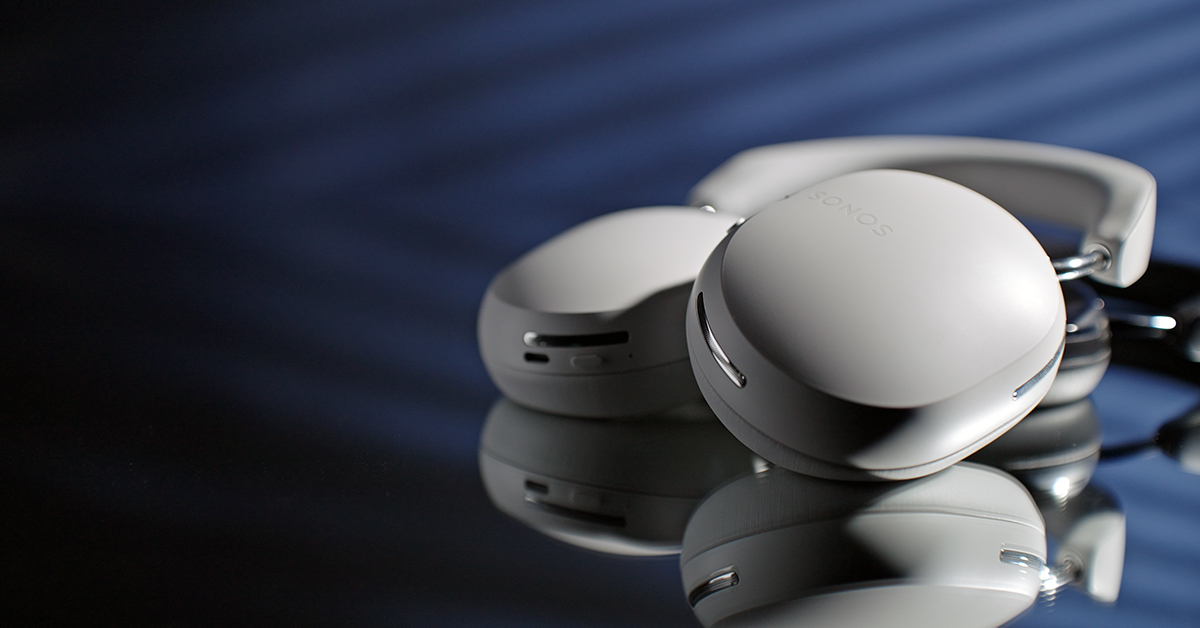
Sonos Ace headphones review: our expert tests them for a month
Hands on with the very first headphones from Sonos

I
’ve spent a whole month with the Sonos Ace, the company’s first headphones. They make a striking first impression and have been a pleasure to “live” with, too. But I think it’s important to clarify what these super-premium Bluetooth noise-canceling headphones will and won’t do.
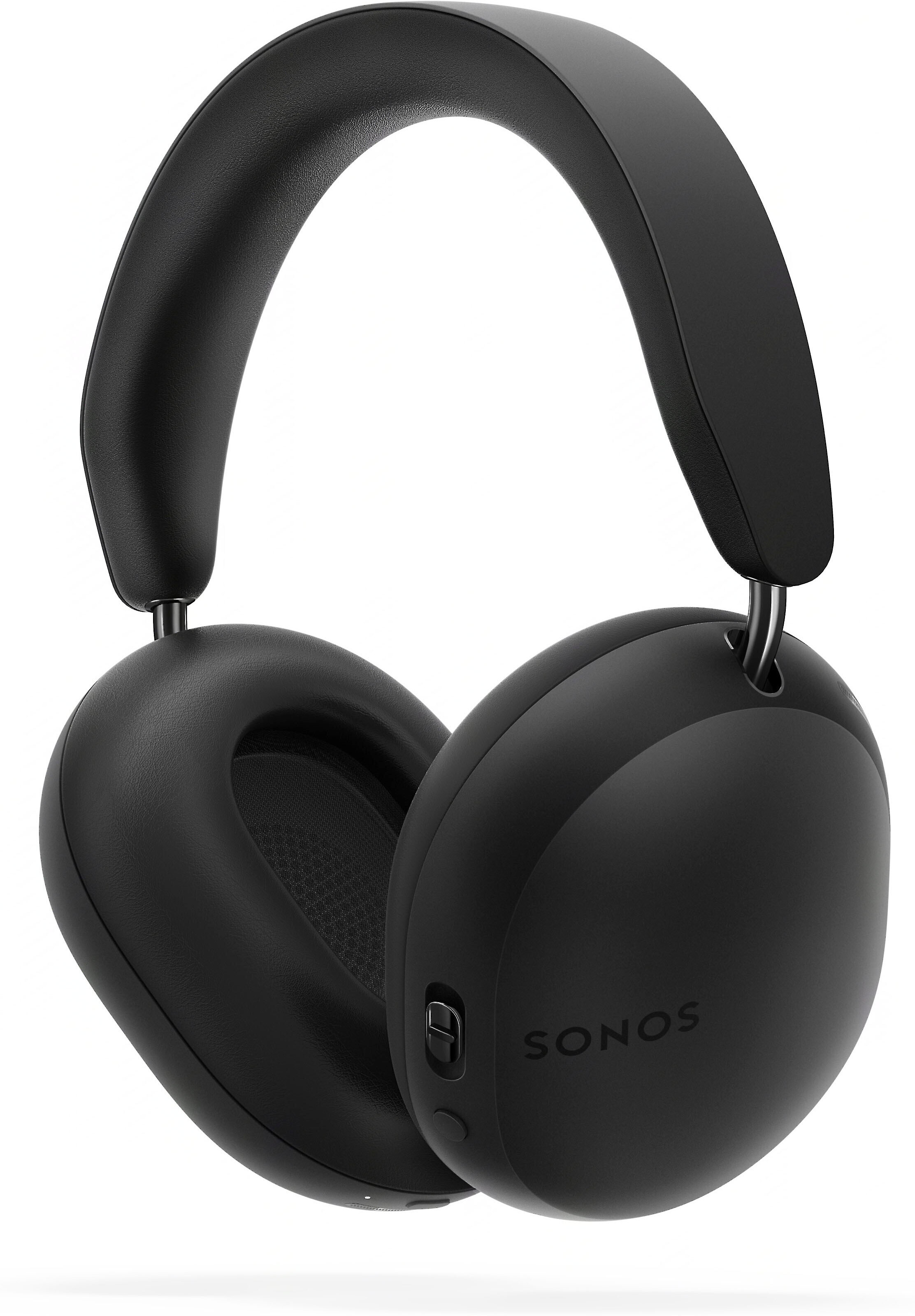
I’ll share some of my personal impressions, explain how they work with other Sonos gear, and break down how they compare to other headphones in this class.
A first for Sonos
Crutchfield has carried Sonos speakers, amps, and accessories since 2005 — that’s two years before the original iPhone was released. We’ve heard one question from our customers pretty much ever since: “When is Sonos going to make headphones?”
Well, they have, and they are built very well and loaded with features. They offer excellent noise cancellation, dynamic head-tracking, and expansive, outside-the-head sound with a cinematic sense of space.
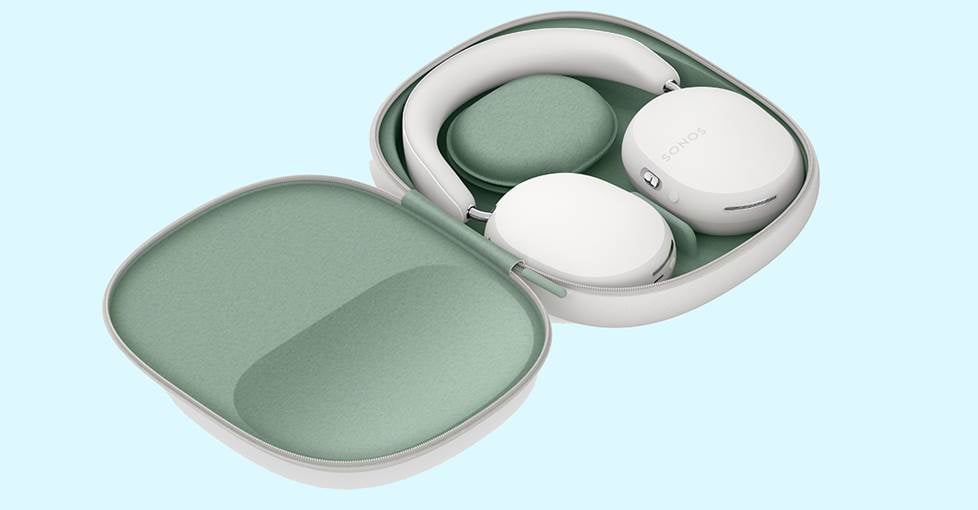
The Sonos Ace headphones arrived in a form-fitting, zippered travel case that slipped neatly in a bag.
How the Sonos Ace fits in with — and differs from — other Sonos products
This represents a new frontier for the company and in a few key ways, these headphones are much different than any other product Sonos has released. These are Bluetooth headphones that do not connect to your Wi-Fi home network or appear as a “room” in the Sonos app. And you use your native music apps and streaming services for music playback, rather than the Sonos app.
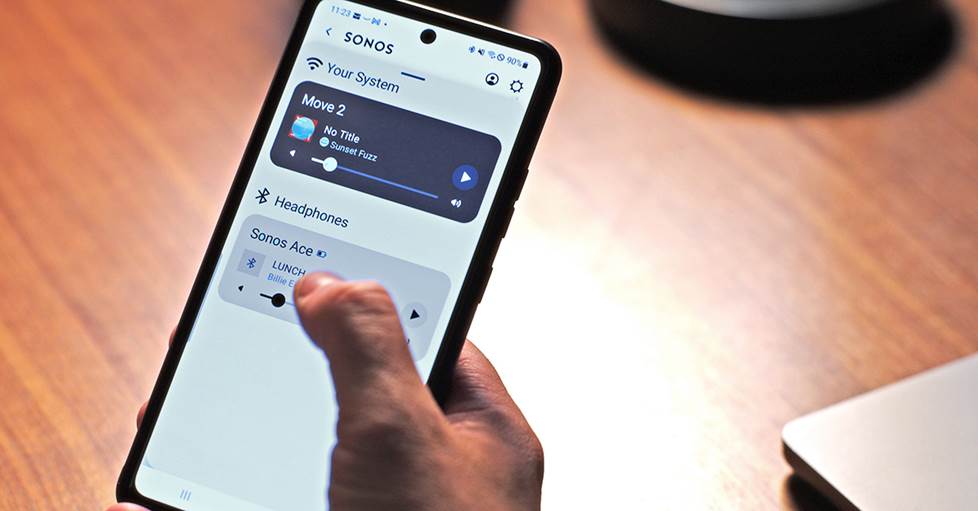
In the Sonos app, the Bluetooth headphones appear separate from your main Sonos speaker system.
In other ways, they fit right into the Sonos ecosystem. They share a familiar design language, offer thoughtful controls, and deliver a top-notch performance and presentation. And if you have a Sonos Arc Ultra, Beam, or Ray sound bar, you can switch TV audio back and forth between the bar and headphones at the press of a button. (More on that a little later.)
Advanced Bluetooth connectivity and battery life
Music plays wirelessly via Bluetooth 5.4, a newer version that’s stronger and more reliable. It also allows for less compression with certain phones.
I could stream spatial audio with Dolby Atmos from my Samsung Galaxy phone. I could also place the phone on my desk and walk around the open-office top floor of Crutchfield HQ without any audio dropouts.
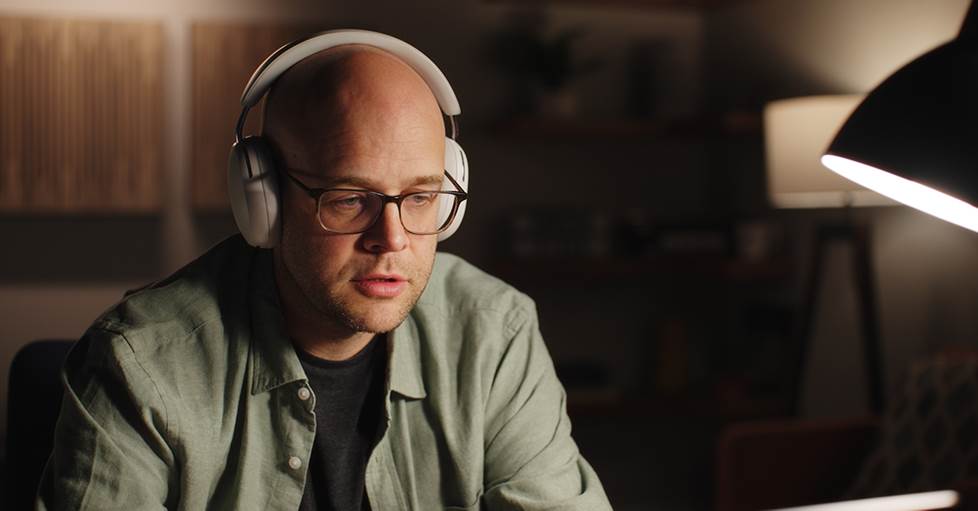
I wore the snug-fitting headphones through entire work shifts with little fatigue — and only had to charge them about once a week.
Battery life is on par with the competition. Sonos says you get up to 30 hours of wireless listening with noise cancellation, and I’ve only had to charge it about once a week. Plus, a three-minute charge buys you three hours of listening.
Substantial build and snug, well-padded fit
Like most Sonos products, the Sonos Ace headphones sport a look that's at once on-trend and timeless. And they feel robust in the hands. The materials and build exude the same high-end feel as the Bowers & Wilkins PX8 and AirPods Max, and I personally think they fit more comfortably than the Max.
For comparison’s sake, the Bose QuietComfort Ultra — which are also in this class of headphones — have a more relaxed fit, that I find a bit more comfortable. But they don’t feel nearly as sturdy and well-constructed as these headphones.
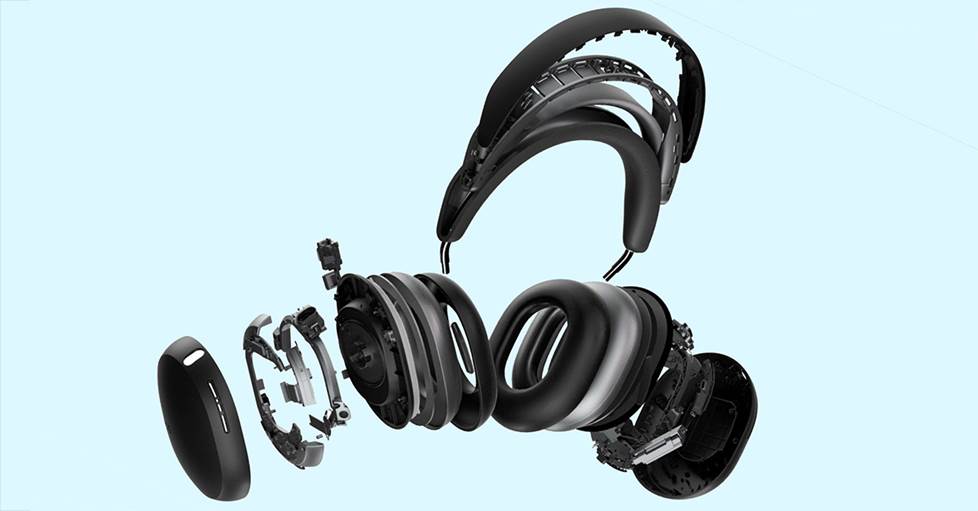
Strong, heavy-duty materials protect the vitals, but the weight is well-distributed when worn.
Despite their robust, heavy-duty construction, the weight is distributed well, so they feel lighter on the head. And the ear pads and headband are well cushioned. Sonos has clearly made comfort a priority here.
They fit snugly, which I know a lot of people prefer (shout out to my wife, Meghan). They don’t clamp too tightly, though, because there’s some flexibility where the metal yoke meets the earcup — extra helpful when you wear glasses like I do. And the headphones stay in place whenever I move or nod my head to the music.
And here’s an attention to detail I appreciate, as someone who tests headphones for a living: Notice how the inside of the earcups are two different colors? That’s so you can tell which is left and right at a glance.
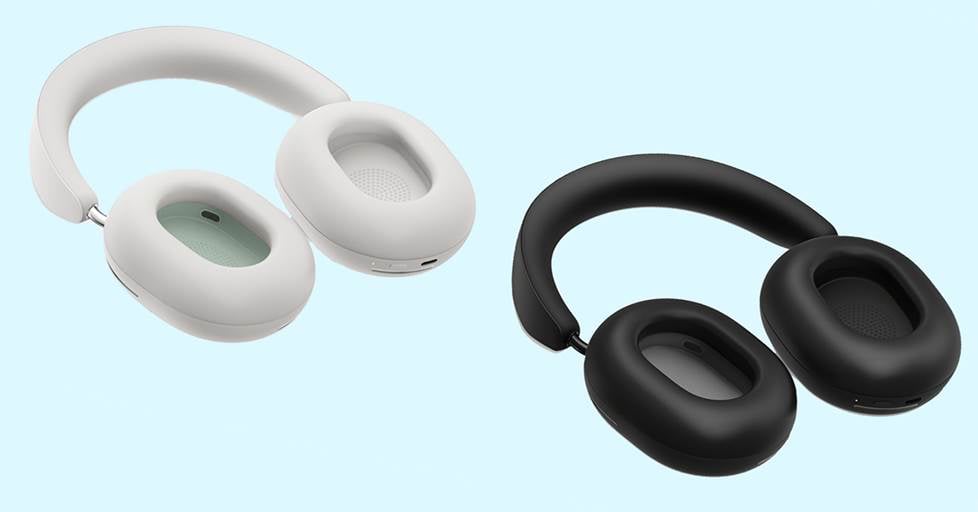
The inner part of the earcups are shaded different colors to signal left and right.
Straightforward, tactile controls
The controls were easy to pick up on, too. Instead of touch controls, there are tactile buttons on each earcup for controlling music, calls, volume, and more. That's something I prefer since there's less of a learning curve — and you can quickly feel the controls, since you can't see them when you're wearing headphones.
Without touch control, you lose some of the neat functions or special features found in other headphones. But believe me, there is nothing wrong with simple and straightforward!
Take the slider on the right ear cup, for example. You move it up and down to control volume or press it in to quickly pause your music. Below that, you can toggle between noise cancellation and Aware mode, which allows you to hear external sounds, without removing your headphones or turning off your tunes.
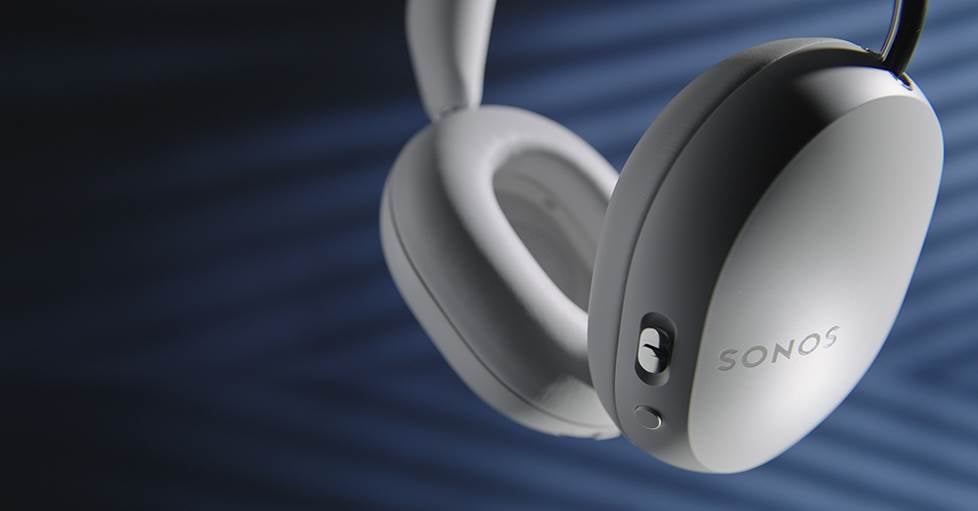
The volume slider doubles as a button you press to pause music. You can repurpose it to control the "TV Audio Swap" feature.
Adaptable, real-time noise cancellation and quick awareness
The noise cancellation might be what surprised me most about these headphones. Sonos uses an array of multi-directional mics to capture external sounds, and adjust the level of noise cancellation accordingly. I found them slightly more effective at canceling noise than the AirPods Max, and in the top-tier conversation with the Bose QC Ultra and Sony 'XM5s.
In fact, I tried them side by side with the Bose QC Ultra next to my washer and dryer — the Sonos noise-canceling circuitry held its own. Both canceled out the main low-frequency throbbing, humming, and the tumbling clothes. Though the Ace headphones let through more squeaking and less-constant higher-frequency sounds.
But while Bose offered more overall quiet, you could hear them “working” more — the out-of-phase white noise was more apparent through the QC Ultra, while the Sonos Ace presentation sounded more natural. I look forward to trying these headphones on a flight, where I think they should cancel the drone of the plane engine just fine.
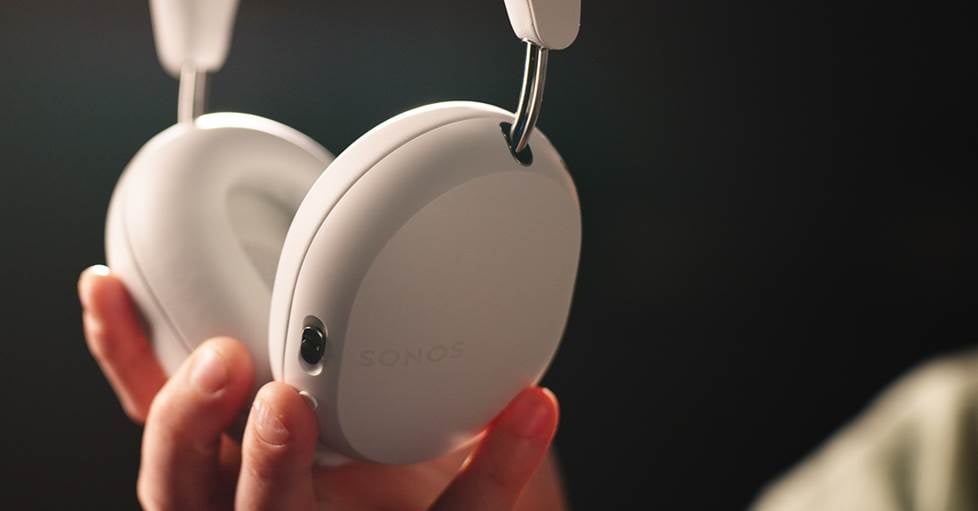
The dedicated "Noise Control" button below the volume slider lets you toggle between noise cancellation and Aware mode.
If you need to hear your surroundings, you can press the dedicated "Noise Control" button on the right earcup to switch to "Aware" mode. The built-in mics will pick up external sound, so you can instantly hear important ambient noise or voices. On a walk, I could hear if a bike or someone was coming from behind and move to the side of the trail.
I listened to a podcast and took some calls as I strolled along. Voices came through clear and were easy to understand for both. And the Aware mode delivered a very natural blend of the real world and what I was listening to.
App settings and the special wireless TV headphone feature
Inside the Sonos app, these headphones show up separately from your main Sonos multiroom system. And in a change of pace for the company, music playback is handled directly through your streaming service of choice. For example, I used the Qobuz app primarily, switched to the Apple Music app for spatial audio, and Spotify for podcasts. All separate from the version of those music services I have in the Sonos app.
I know some might worry that Sonos is venturing out of their tight-knit-system approach to audio. (I also realize we’ve had a long time to imagine what a Sonos headphone “should” be.) And I don’t want to dismiss anyone’s concerns.
But after living with the headphones and the app for a while, I never felt limited. For the most part, my headphone listening was separate from the listening I did through Sonos speakers, anyway — especially, of course, when I was on the go.
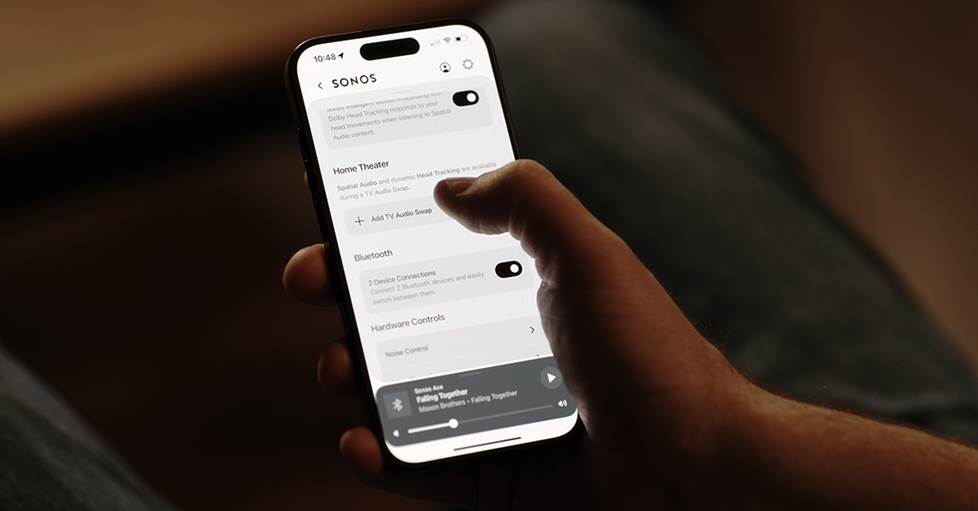
The "TV Audio Swap" feature is available in the iPhone and Android app.
The app let me adjust EQ, customize the on-ear controls, and activate dynamic head-tracking for spatial audio. (With head-tracking "on," the sound field stays fixed and centered as you move your head.)
TV Audio Swap with the Sonos Arc sound bar
I also activated the “TV Audio Swap” feature between the Ace headphones and the Sonos Arc sound bar. After a one-time setup in the app, a long press of the volume slider/button on the earcup sent the TV audio back and forth from the sound bar to the headphones.
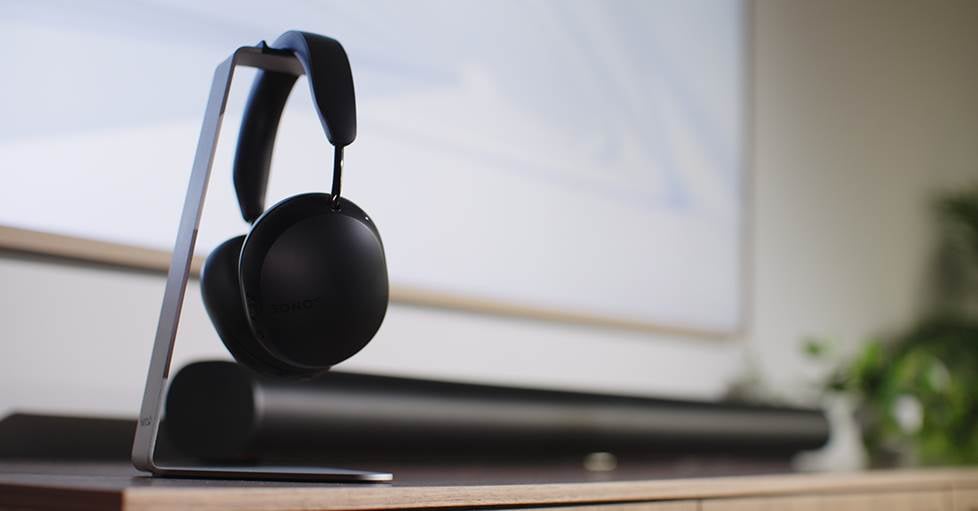
You can switch TV Audio back and forth between the Sonos Ace headphones and Sonos Arc sound bar.
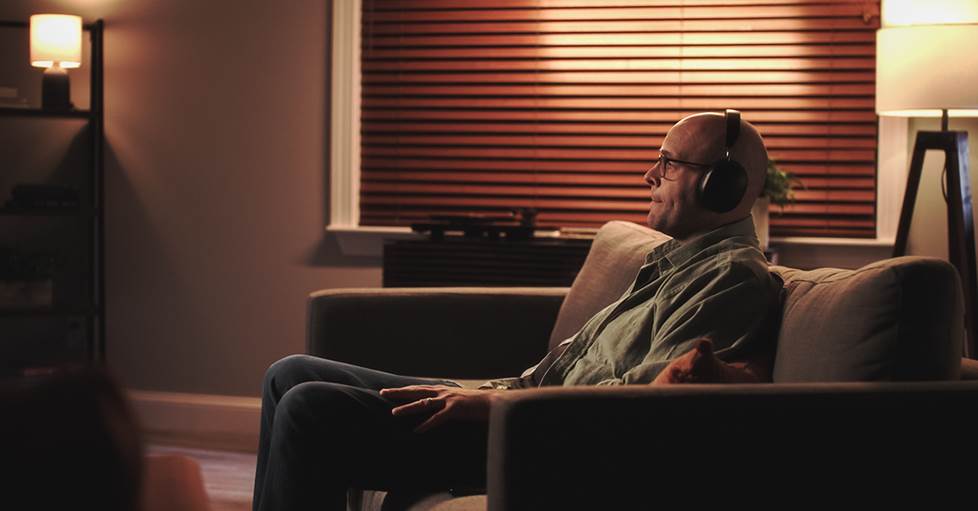
Through the headphones, I could watch the West Coast games while the kids were asleep — and still get the full sonic impact of the action. Crowd noise was ever present, but lived in the background until a big play brought it to the forefront.
For shows and movies, dialogue was clear and easy to understand. I've used TV headphones before where speech was lifted and boosted in an unnatural way, but here it meshed appropriately with other sounds in the mix.
The Dolby Atmos processing takes place inside the Arc sound bar and is sent to the headphones via Wi-Fi.
Atmospheric effects had real presence, too. In the Avengers: Endgame scene where Hawkeye confronts the yakuza leader, rain seemed to pour from above me. When Black Widow arrived in frame, the sound of the showers subtly shifted to the left, pounding and pattering off her umbrella.
Sure, it wasn't a full Sonos 7.1.4 Atmos system, but the sonic presentation was sizeable, layered, directional — and lots of fun.
My music listening impressions
That brings me to how they sound for music. I like the tuning out of the box. There’s a mild emphasis on the bass and treble, but nothing distracting.
The headline feature here is the supersized sound presentation — and special processing for Dolby Atmos and spatial audio. Instead of a traditional left and right presentation, spatial audio envelops you from all directions. It can be dazzling with a full setup with actual, large speakers placed around you. But headphones rely on spatial cues to trick your brain, so results may vary.
Spacious sound that still packs a punch
Fortunately, Sonos provides an excellent sense of direction or location — without some of the common pitfalls. I’ve heard headphones where the extra space can be at the expense of dynamics, midrange presence, bass impact, or all of the above. Not to worry here.
On the Atmos mix of the Conway the Machine’s new album, I heard the strong, controlled bass thump you want for hip-hop. And the emcee’s vocals cut through with texture and urgency – but certain instrument samples and ad-libs extended the scope of the soundstage.
A feel for the room — and beyond
The spaciousness worked well for live performances, too. On Kacey Musgrave’s Apple Music Live set from Electric Lady studio in New York City, I had a real feel for the tone and decay of the room. It was especially effective on the song “Nothing to be Scared Of,” where she duets with her lead guitarist, sitting in a stairwell. With all the reverb and background noise swimming left, right, and behind me, I was transported there.
Speaking of Electric Lady Studios, the recent Jimi Hendrix Atmos remixes really push the boundaries of this immersive format. The Atmos mix was created by Eddie Kramer, the producer and engineer who mixed the original releases alongside Jimi himself. (Kramer reminisced on the creative process in a recent interview, and detailed Hendrix's fascination with panning instruments and moving sounds around.)
And they stretch the soundstage to the extreme! "Room full of Mirrors" off the First Rays of the New Rising Sun compilation is a thrilling, trippy example. You hear dueling, wailing guitars off to the far left and right with percussion pounding and splashing in-between. All the while, sonic artifacts travel around your head, including front to back, exploring the sonic space.
Some mixing engineers have said that in the "limitless" sonic sandbox of Dolby Atmos, restraint can be your strongest tool. Kramer and company clearly don't subscribe to that. But in this case, the embellishments and excesses assist in the emotional storytelling — and the Sonos Ace headphones are up to the challenge of delivering them.
Are the Sonos Ace headphones right for you?
So, judging these purely as wireless noise-canceling headphones, the Sonos Ace holds their own against the heavy hitters in this category.
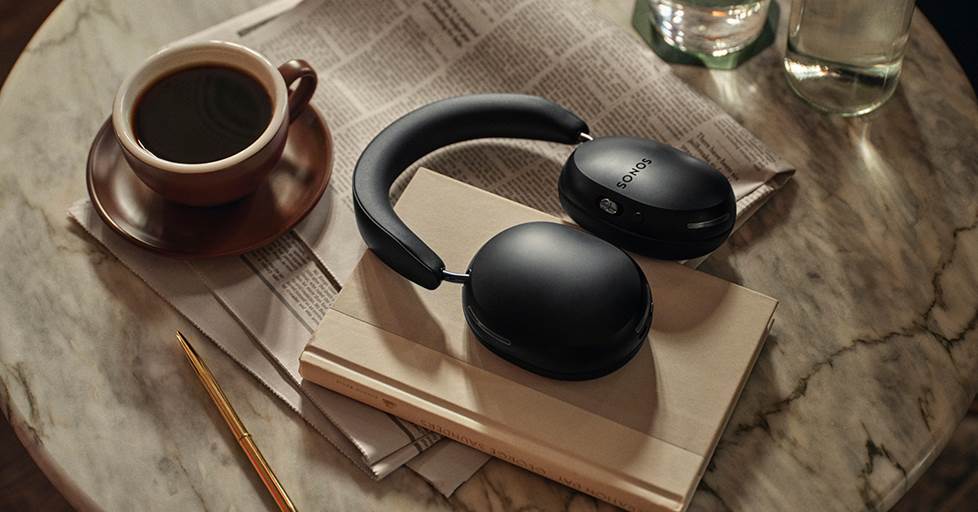
The Sonos Ace headphones hold their own against the strong competition in this category.
If you don’t have a Sonos system at home, they serve as a strong introduction to the company. For those already in the Sonos ecosystem, these headphones exhibit a familiar vibe, deliver high-level performance, and offer the specific, unique TV headphone solution.
All in all, I'm excited to see the Sonos-verse expand — as long as they stay mindful what made us fans in the first place.
Questions? Contact us
If you have questions about these headphones or Sonos in general, let us know. Drop me a comment or get in touch with one of our knowledgeable Advisors. Free lifetime tech support is included with your Crutchfield purchase.





Owen from Port Saint Lucie
Posted on 6/4/2024
Do these headphones have an on off switch not like the Apple headphones, which don't
Jeff Miller from Crutchfield
on 6/6/2024