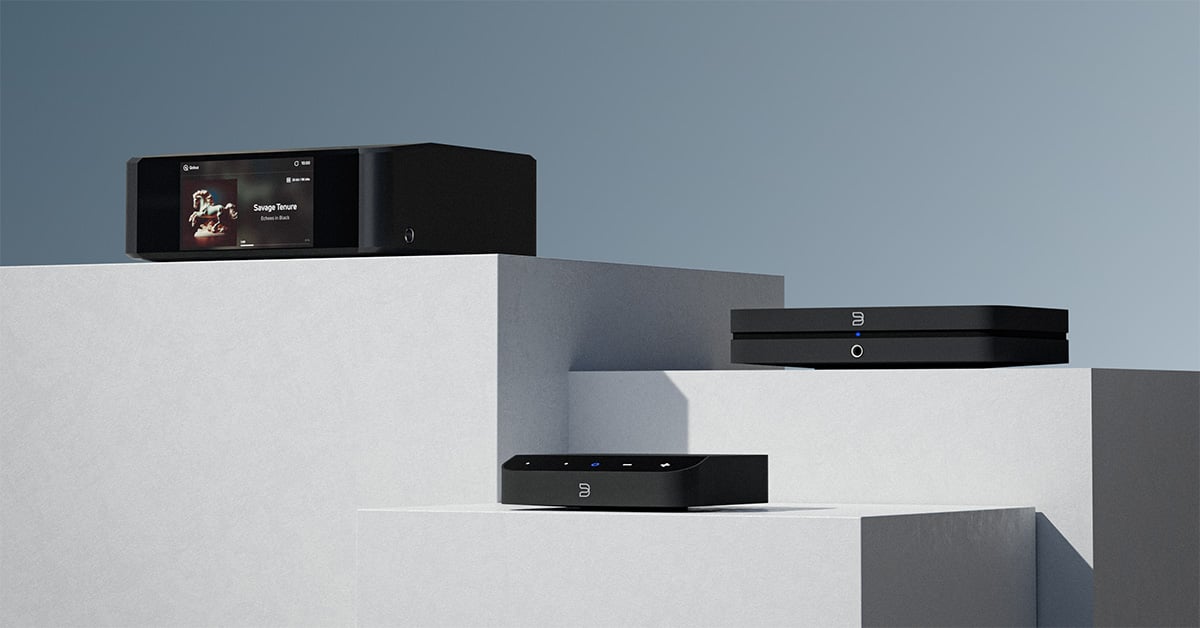
Bluesound's NODE family of streamers
Compact components that add high-res and multi-room streaming music to your sound system

In this article: We'll talk about Bluesound's popular NODE family of streamers featuring the BluOS wireless multi-room app-controlled operating system, including...
...But first, we'll take a quick look at Bluesound's history and key BluOS features.
Bluesound made a good thing when they made the first NODE. Their current lineup benefits from 10+ years of experience with refinements that I think anyone can hear. In this article, we'll look at the three concurrent models. In good, better, best order — the NODE NANO, the NODE, and the NODE ICON.
Each model lets you add high-res streaming from subscription services like Spotify, TIDAL, and Qobuz to an existing sound system. You can connect a NODE streamer as a source or use it as a preamp that lets you add sources, control volume, and more. And its built-in, app-controlled BluOS operating system lets you sync it with other compatible players on your home network.
You get meaningful upgrades as you go up the NODE line, but each of these streamers can deliver excellent sound. I'll call out the differences to help you figure out which would work best in your sound system.
Bluesound history
Bluesound was introduced in 2013 and quickly gained footing as a popular brand for multi-room audio. Its BluOS operating system lets you add high-res streaming to pretty much any sound system. And its powerful multi-room capabilities let you sync music on compatible players throughout your home, or control each player independently all from an easy-to-use app on your smartphone or tablet.
Its outgrowth from NAD amplification and PSB speaker technology gives it audiophile credentials. And its varied products let you add it to your existing system or build one from scratch on a budget as modest or extravagant as you require.
One big thing that sets Bluesound apart from other multi-room audio systems is the range of gear available. In addition to all the Bluesound stuff — which includes standalone streaming speakers, amplified streamers, and more — you can also find BluOS in its parent brands.
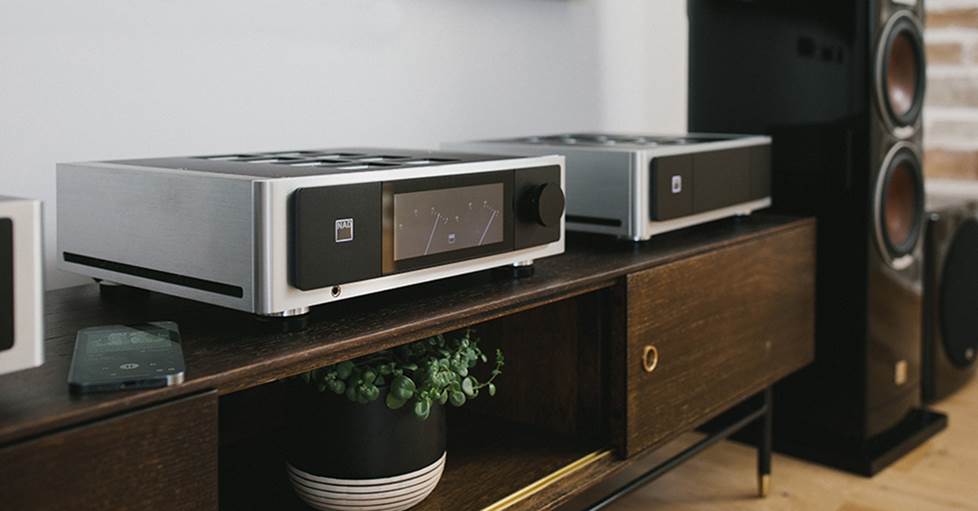
No other wireless multi-room platform does audiophile sound quite like BluOS
PSB puts BluOS in their streaming speakers and NAD puts it in a number of components, including their MDC-2 BluOS-D module, which can upgrade certain NAD integrated amps to include BluOS and Dirac Live room correction. And any component with BluOS will work seamlessly with all the others.
Most other multi-room audio brands don’t offer audiophile components like the NAD Master Series M66 stereo preamp with BluOS built in. They may be great at what they do, but at this time, none of them do audiophile sound quite like BluOS does.
BluOS features
Let’s talk about why you’d choose BluOS for your streaming platform. The sound quality can absolutely do justice to a really nice stereo system. All BluOS players support true high-res 24-bit/192kHz digital decoding.
For my money, I think it’s a great option if you’re looking to get multi-room sound, but also if you’re just looking to add streaming to any sound system. I thought I just wanted to add a streaming source to my main system. I ended up adding other BluOS players in other rooms.
It's nice when we have company or around the holidays to use the players synced together. If we have weekend guests or the kids are in town or something, you can absolutely use the players independently.
The BluOS app
I would put the BluOS app in the top three of multi-room control apps. The app works with Android and Apple devices, including the Apple watch.
Some people will definitely prefer the convenience of Apple AirPlay 2, TIDAL Connect, and Spotify Connect — and sometimes I am one of those people. When you take advantage of BluOS’s support for those options, you won’t need the app except for setup.
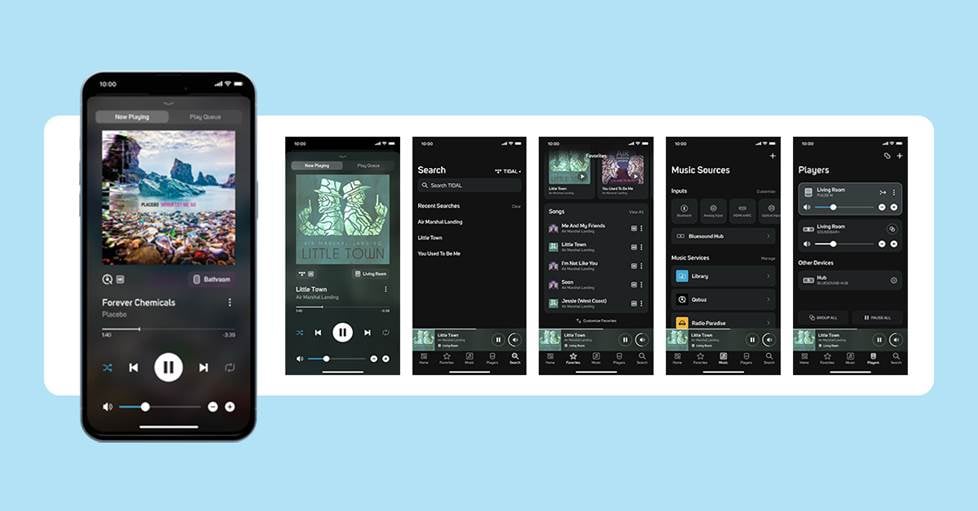
The BluOS app gives you powerful control to search, play, and tweak your music.
But I’ve come to prefer the way the BluOS app handles my streaming services. Plus I have an SSD loaded with music files attached to my NAD C700 with BluOS built in, so when I’m choosing music to play, I can see it all in one place in the app.
If I go out to lunch or something and come back and want to start the music where I left off, I just press “play.” I don’t have to re-pair with the player. I love the stability and the responsiveness of the app, too. The music starts or stops the instant you touch the buttons on your phone — not the case with AirPlay.
There are also advanced audio settings in the app that let you adjust bass, treble, and more. You can set any of these NODEs’ output to "fixed" if you’re connecting to an integrated amp or receiver that you’ll be using to control the volume.
You can also set the streamer's output to variable if you’re connecting directly to a power amplifier and using the NODE to control volume. I’ve experimented with a few different power amps in this kind of setup, and I really liked the sound and the simplified control.
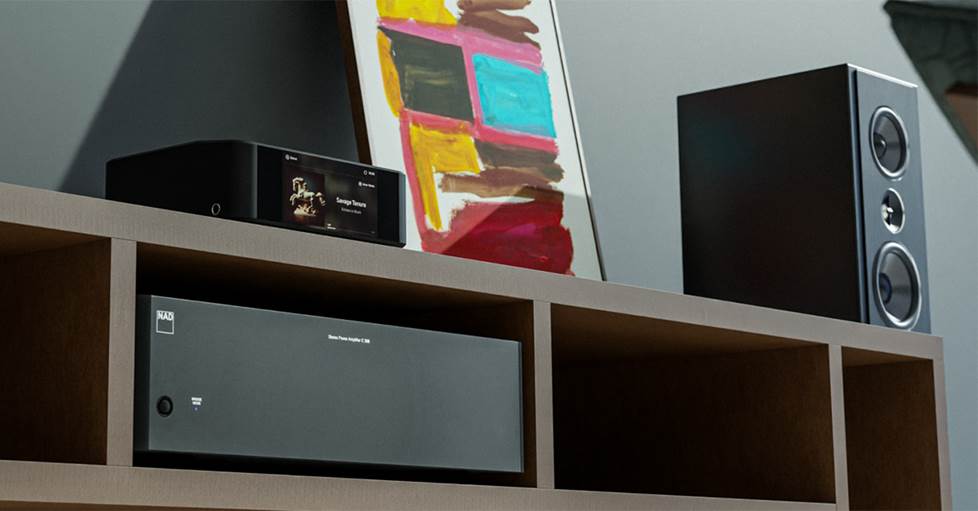
I like the simplicity and clean sound of a Bluesound streamer connected directly to a power amplifier.
You can turn on “auto-sense” for your most-used digital input on these streamers. If you turn “auto-sense” on for the HDMI eARC input, for example, whenever you turn on the TV, the NODE will switch to that input and play sound.
Another cool app feature if you’ve got a powered subwoofer connected — which you can do with both the NODE and NODE ICON — is adjust the output crossover plus sub volume and delay to fine-tune bass right from your listening position. That makes it a lot easier to dial in seamless sound with your main speakers.
Bluesound RC1 remote control
As good as the BluOS app is, I also love the Bluesound RC1 remote, which is sold separately. It uses IR to communicate with any BluOS player — you don’t even need to pair it.
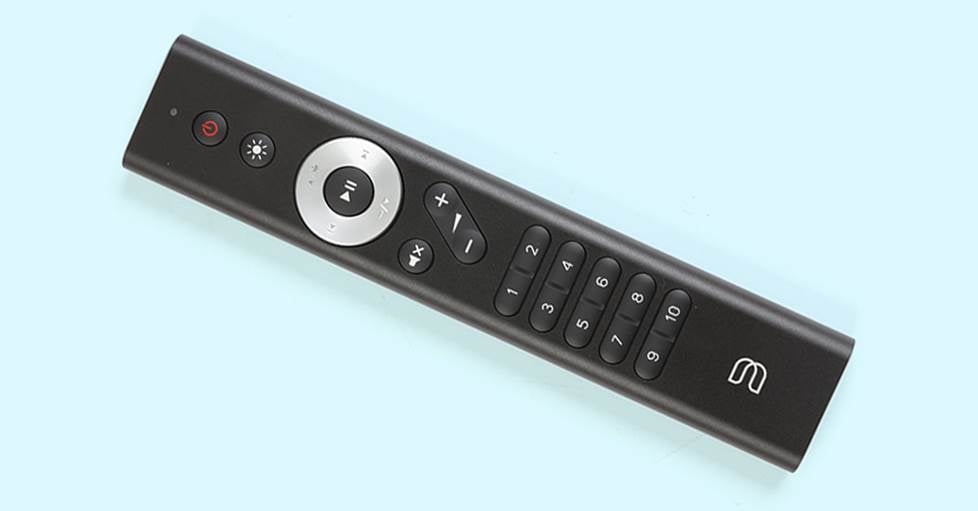
The streamlined RC1 remote works with any BluOS player — no pairing required.
That’s great when you need to control the music and your phone is out of reach or tied up. It’s got volume and playback control, plus 10 presets. Simple. Practical. I love mine and use it all the time.
A closer look at the NODE family of streamers
Let’s take a closer look at these NODE streamers. They all use the same ESS SABRE 9039Q2M DAC chips. The entry-level NODE NANO has digital and analog outputs and a USB-A input. Step up to the NODE and you get more inputs, including an HDMI eARC port that lets you get really nice TV sound.
And the top-of-the-line NODE ICON has even more inputs, plus balanced XLR output, and two of those SABRE DACs chips in dual-mono configuration for better dynamic range and a lower noise floor. It's also got a full-color display.
All three of them have BluOS, of course. That means they also support Apple AirPlay 2, Spotify Connect, TIDAL Connect, and Roon. They also support Amazon Music, Qobuz, internet radio, and more.
All three have two-way Bluetooth, which you can use to play music or podcasts or whatever from your phone or other compatible device to the player or to send that music through the player to a pair of Bluetooth headphones. And all three can connect to your home network via Wi-Fi or Ethernet.
The NODE ICON and NODE also come "Dirac Live ready." That means you can purchase a license and a calibration kit separately and use Dirac's advanced software to fine tune your sound to account for the unique acoustics of your listening area.
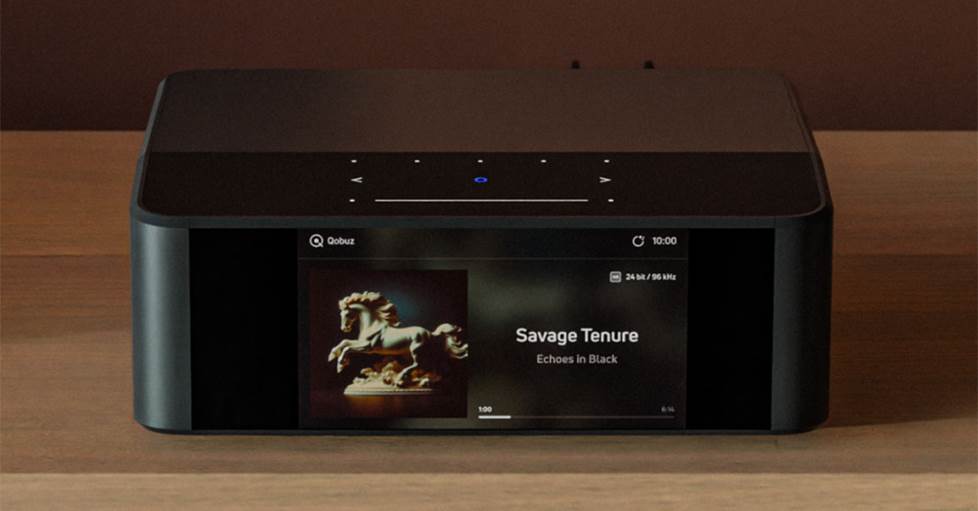
Bluesound NODE ICON
Bluesound's top-of-the-line streamer is the NODE ICON. I mentioned the dual DACs, the balanced output, and the color screen. You also get a ton of connectivity, including a balanced analog stereo XLR output to your amplifier.

The full-color display — not a touchscreen — shows album art and track info and you can customize it to show more or less detail, or to be a volume meter. You also get simple capacitive touch playback and volume control on the top panel. And it’s still fairly compact.
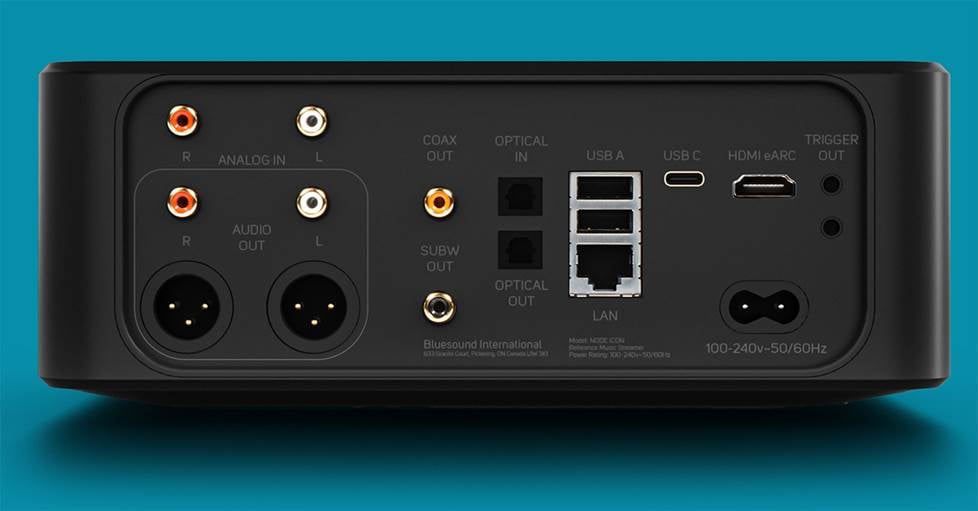
Balanced XLR outputs on the NODE ICON let you send the cleanest possible signal to your amp.
Our customers — and my colleagues — have raved about the ICON's incredible audio quality, noting that it sounds better than previous NODE versions. They also love its extensive connectivity, easy setup, and bang for your buck.
Details
- dual ESS SABRE 9039Q2M DAC chips
- analog stereo balanced XLR and unbalanced RCA inputs
- digital inputs include optical, HDMI eARC for your TV, USB-C for connecting a computer, and USB-A for a storage drive
- optical and coaxial digital outputs
- dual full-sized 1/4" headphone jacks and built-in THX AAA headphone amp
- HDMI eARC for seamless TV sound
- full-color screen
- Dirac Live ready with optional license and calibration kit (sold separately)
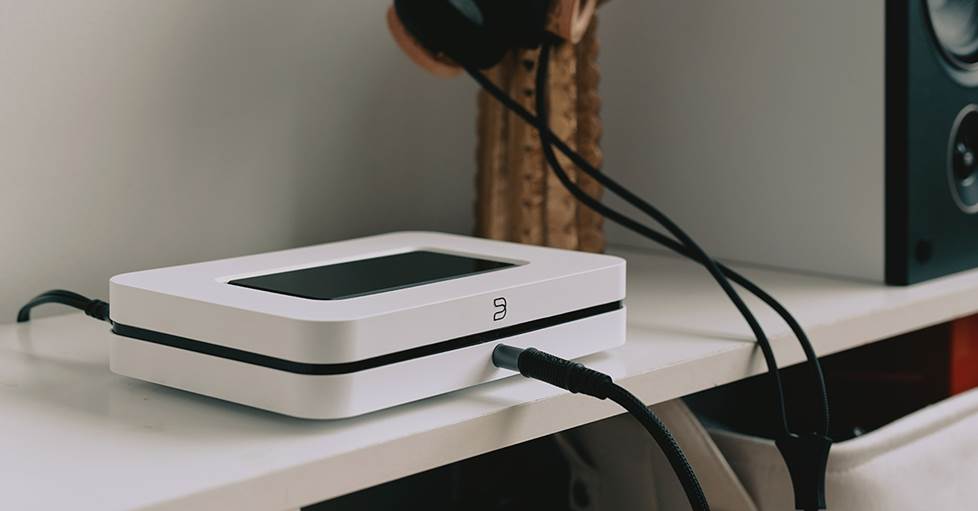
Bluesound NODE (N132)
The NODE has excellent sound quality and sits at a price point that make it perfect as digital audio nerve center, or as a way to add streaming and super-versatile digital connectivity to a secondary system like a den or office.
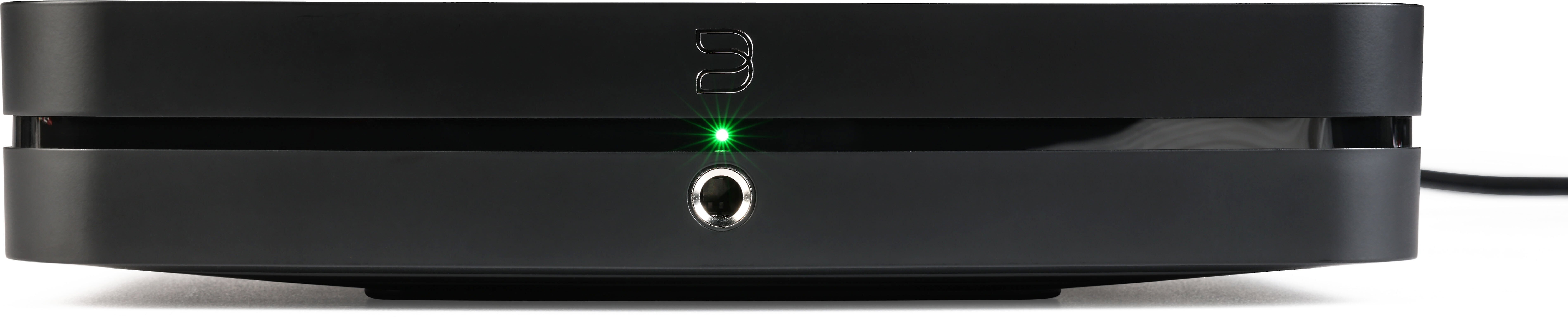
It looks a lot like former NODE versions, all of which have been very popular with our customers because of audio quality, wireless multi-room quality and stability, and price. This newest N132 model sounds better than a couple of previous versions that I have — and those still sound great. This NODE’s single full-sized headphone jack is powered by the same smooth, powerful THX AAA amp that’s in the NODE ICON.
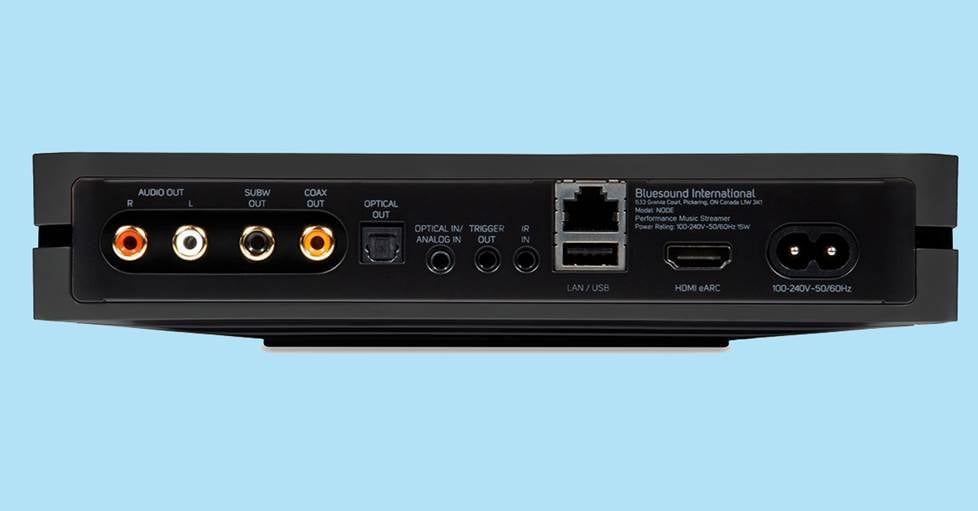
The NODE's versatile connections include HDMI eARC for high-quality TV sound and control.
This is a Swiss Army knife streamer. It can add streaming to your hi-fi system and deliver fantastic TV sound, thanks to its HDMI eARC input. It also lets you connect an analog or digital source, plus a storage drive loaded with high-res music files. And of course, you can connect and control it with other BluOS devices on your home network.
What else can I say but that this is a great model that keeps getting better.
Details
- ESS SABRE 9039Q2M DAC chip
- outputs include analog stereo RCA and optical and coaxial digital; mono output for a powered subwoofer
- inputs include USB-A for compatible storage drives, combo 3.5mm analog stereo or mini optical digital
- HDMI eARC for seamless TV sound
- full-sized 1/4" headphone jack and built-in THX AAA headphone amp
- combo 3.5mm analog stereo/mini optical digital input, USB-A for storage drives
- Dirac Live ready with optional license and calibration kit (sold separately)
Bluesound NODE NANO
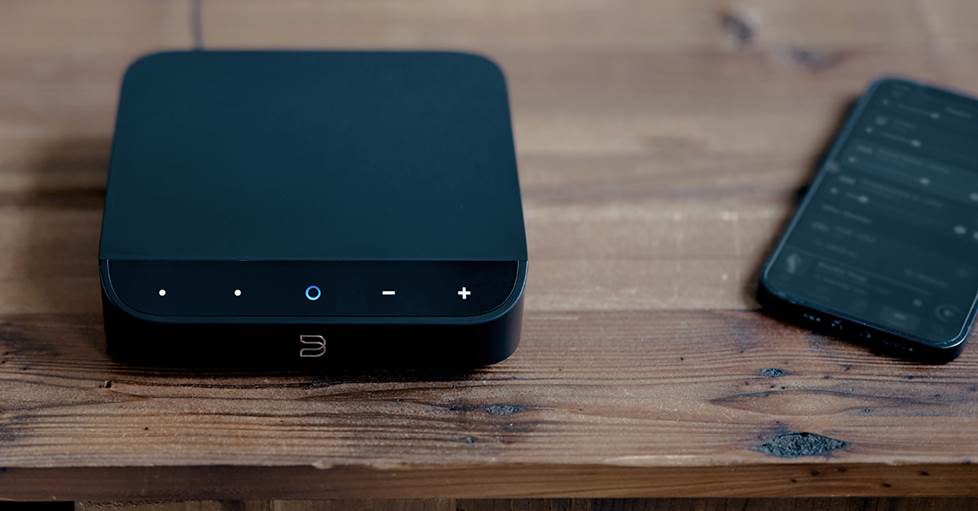
The third and final model we’ll look at is the NODE NANO. It’s super-compact and streamlined. It’s got the same great DAC as the NODE. If you’re mostly streaming with online music services, the NANO is a solid choice. You can also plug a compatible USB storage drive loaded with music files
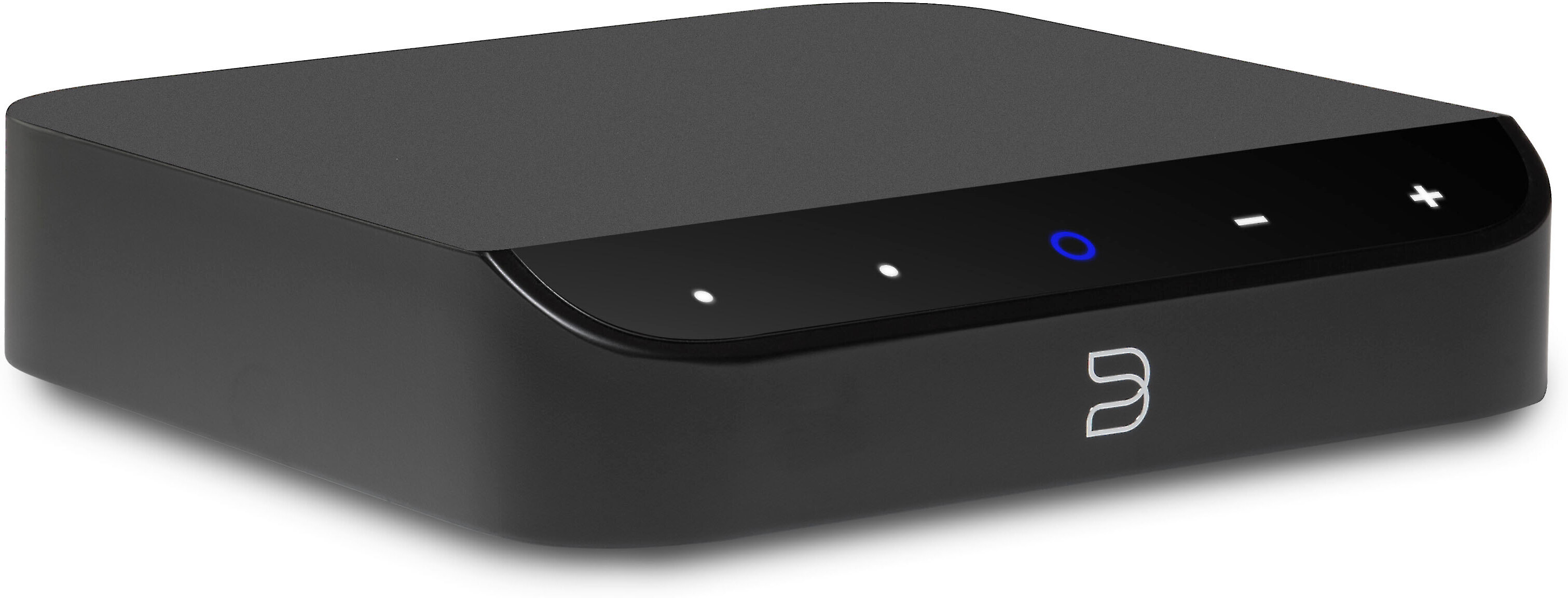
If you’re adding a room to your BluOS system, or if you just want a great-sounding streaming source in an apartment or office, this is a small-footprint, budget-friendly option that I feel good recommending.
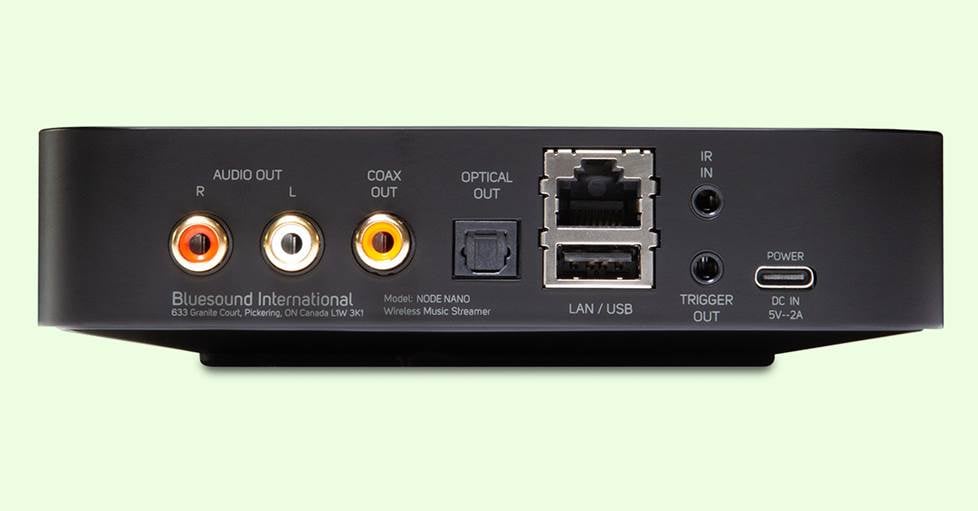
The NODE NANO fits in tight spaces and serves up high-res music via network streaming and USB storage drive.
Details
- super-compact footprint fits in tight spaces
- ESS SABRE 9039Q2M DAC chip
- outputs include analog stereo unbalanced RCA plus optical and coaxial digital
- USB-A input for connecting compatible storage drive loaded with digital music files
Is BluOS for you?
I feel good recommending BluOS in general, for their wide range, from affordable to somewhat luxurious audiophile components. And for the powerful, stable control they offer.
Bluesound has been around for over ten years now, and their parent companies NAD and PSB have been around much longer. That gives me confidence that they’ll keep improving and be there to help if you need it.
Want to learn more before deciding?
If you need help choosing between these three NODE models or have questions about Bluesound and BluOS wireless multi-room streaming, contact us today.
Our friendly, knowledgeable Advisors can help you find the best fit for your unique circumstances.
And don't forget, free lifetime tech support is included with your Crutchfield purchase.
mobilee.jpg)

Robert
Posted on 3/19/2026
The Bluesound app is a nightmare when running Quobuz. Frequent file errors, communication issues. Yuck. Fortunately Quobuz finally got their act together and now have a Quobuz connect feature that actually works.