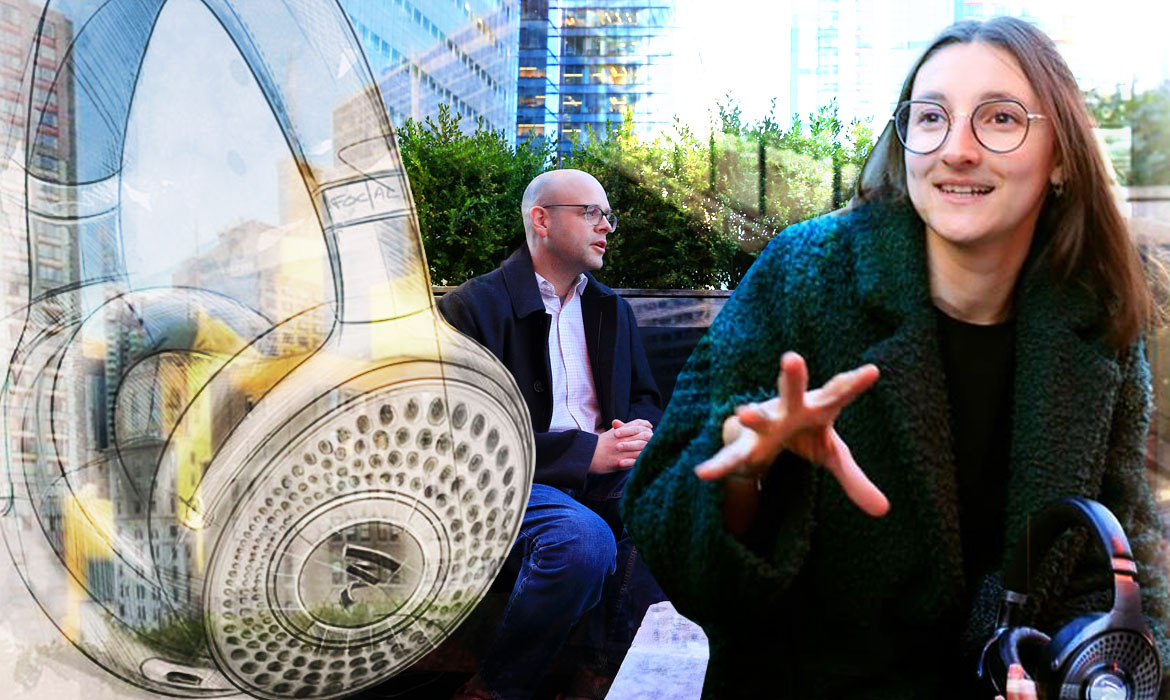
Building prestige: the inside story of Focal's world-class headphones
An interview with Mégane Montabonel, headphone product manager at Focal

E
ven for Focal, the goal was lofty. The storied French audio brand — known for their high-end home and car speakers — set out to create wireless noise-canceling headphones on par sonically with their wired audiophile offerings. Mégane Montabonel, their battle-tested product manager, knew they also had to succeed as modern travel and work headphones.
There could be no trade-offs. "We won't choose," she told the team. "We are Focal! So, we need to find, let’s say, a balance of very good noise cancellation and excellent sound.”
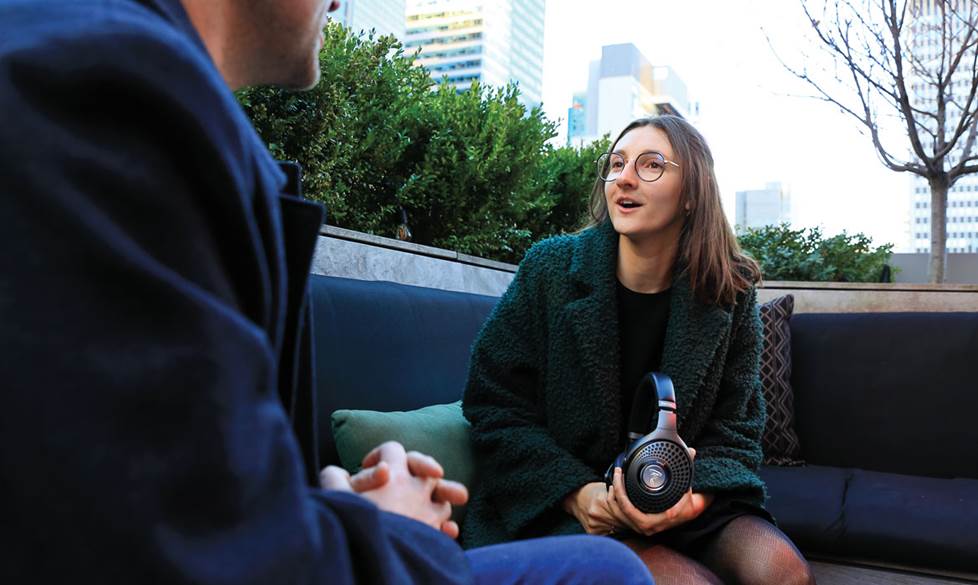
Mégane traveled from Saint-Étienne, France to meet us at a Manhattan rooftop lounge ahead of CanJam NYC.
I met Mégane earlier this year in New York City to discuss her part in developing Focal’s world-class personal audio lineup, including those now successful Bathys noise-canceling headphones. She was in town to show off Focal's latest wares to the personal audio aficionados attending the CanJam NYC high-end headphone show.
Update, June 2026: Since we released this profile three years ago, Focal has since released the even higher-end Bathys MG headphones with full magnesium driver domes. We've preserved this article because it serves as an origin story for the Bathys MG, now one of our top-5 most comfortable headphones and the only wireless model on our list of best audiophile headphones.

For the past six years, Mégane has helped create some of the world’s finest headphones. Her résumé at Focal also includes the closed-back Celestee, the striking Clear Mg, and an update to the company's $5,000 crown jewel, the Utopia.
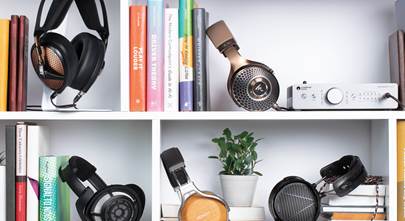
Focal has produced a staggering stretch of gorgeous, sublime-sounding headphones. Each model is a beautiful blend of precious metals and fine materials, built with a watchmaker's precision and care. In fact, their design touches can evoke those of a modern timepiece as much as a traditional headphone.
Mégane's influence starts in the very early planning periods and stretches through development, release, and all the marketing efforts. Her day-to-day work includes big picture, fine detail, and everything in between.
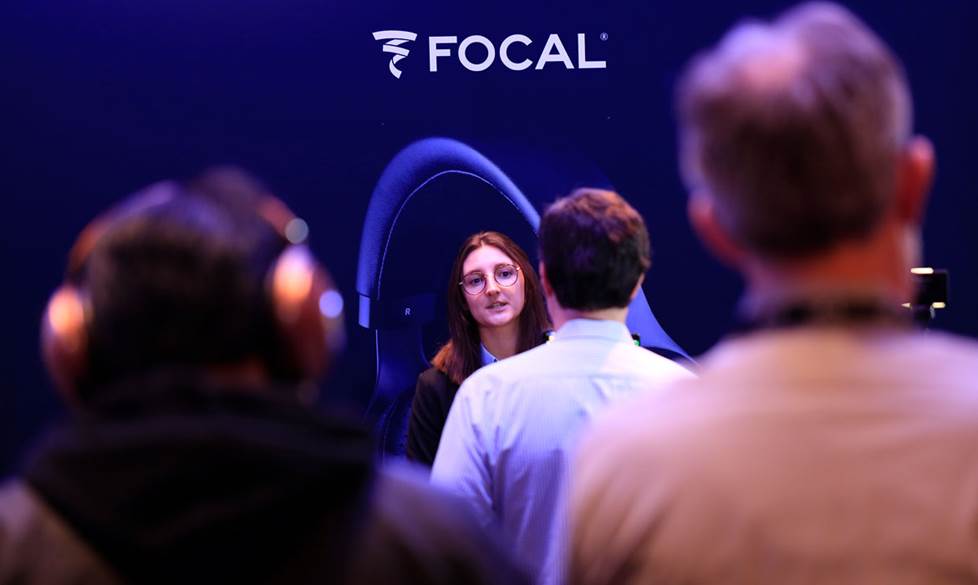
Mégane gets face-to-face feedback from the most discerning listeners at the CanJam NYC show — where the Bathys headphones earned high praise.
She spoke to me openly and earnestly, shoulders relaxed, and perched to accentuate key points with her hands. Often, she deferred credit to the team and used "we" whenever grammatically possible. And she held the highest reverence for Focal's gifted Research & Development team.
Focal's strong R&D foundation
Focal's engineers, designers, and operations team all have strong ideas about what their final product should look, feel, and sound like. But Mégane told me that when a project starts, “It’s just as important to define what we don’t want to accomplish, so we can narrow our focus.”
That's where R&D comes in, led by longtime Focal engineers Ludovic Uhring- Cadart and Shahin Rezaei. They work closely with Mégane to sketch out guidelines. Their early input is crucial because if there’s something they won’t be able to do, she said, “There is no point.”
In the case of the Bathys noise-canceling headphones, the challenge was making them travel-friendly. “They must sound like Focal headphones,” Mégane recalled saying. “We can’t compromise on that.” But they had to streamline the overall design and balance sound quality with the noise cancellation and convenient features, like calls and controls.
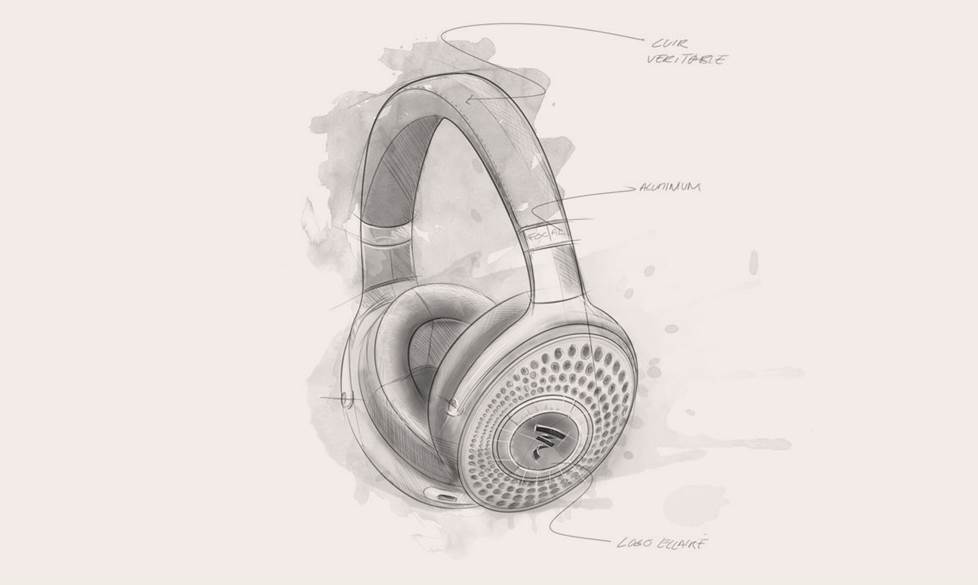
For most headphones, the time between initial concept phase to when the first batch ships is one to two years. For the Bathys, the process took nearly three.
It's often said that constraints like these can breed creativity. But we’re talking about the team who designed the Utopia headphones. An R&D team that was given carte blanche — and basically a blank check — then came back with a masterpiece.
"Among the best headphones in the world"
The Utopia headphones originally launched in 2016, nearly two years before Mégane joined Focal. And the stakes were high. According to Romain Vet, Focal’s current VP of sales in North America, it was a make-or-break proposition.
“This was one of those products you create and depending on its success, you decide whether to continue the story or not,” said Romain, who occupied Mégane’s job as product manager at the time (and originally hired her at Focal). “Either we have a hit or we’re out of the headphone business altogether.”
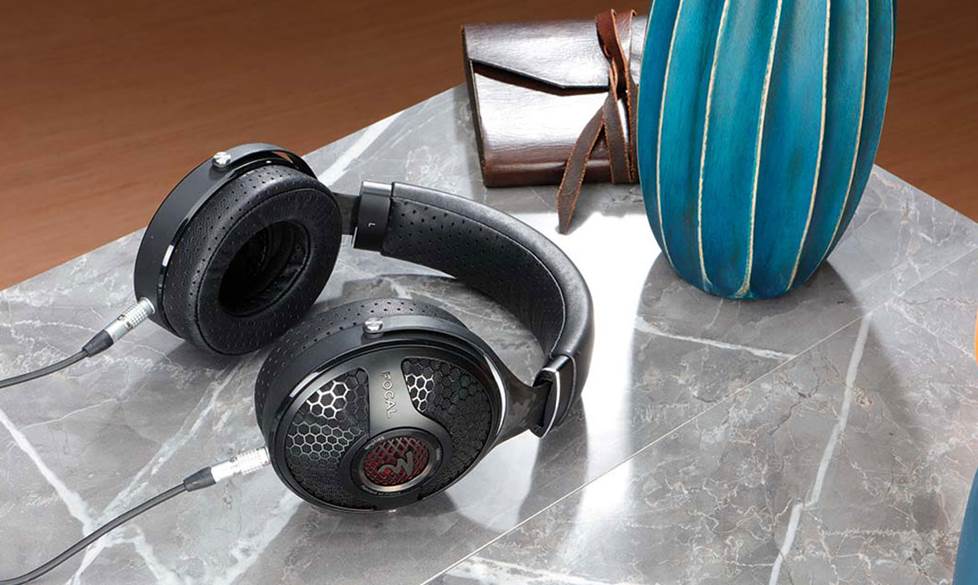
Focal's top-shelf Utopia headphones (now in the third generation) set the standard and template for the company's entire high-end line.
Focal went all in. They built the Utopia from lightweight, heavy-duty, cost-no-object materials. These headphones sport a racecar-grade carbon fiber and aluminum frame, lined with fine leather. They share the Utopia name with Focal's towering, six-figure flagship home speakers and top-of-the line car speakers. They also use the same primary driver material: pure beryllium.
In fact, their premium headphone drivers are still constructed side by side with their super-high-end speaker drivers. The nimble sharing of ideas, techniques, and technologies continues to accelerate breakthroughs and lift the possibilities across all categories.
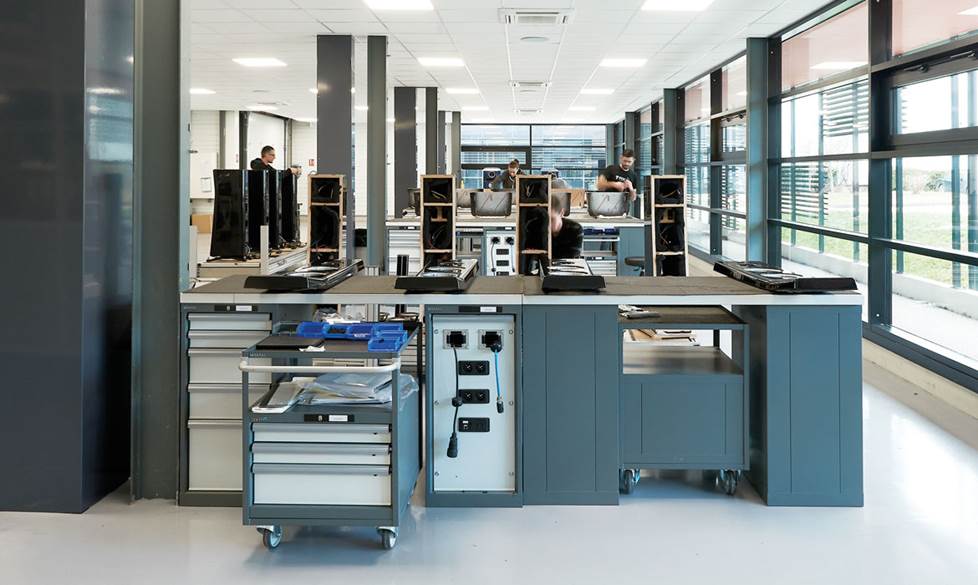
Mégane credits the fact that Focal has high expertise across many areas — home, car, studio, and personal audio — for their success.
Pouring all their efforts into the Utopia headphones paid off. After their release in 2016, they earned high praise from major audio websites like Stereophile, Head-Fi, and CNET. The latter listed them among the world's best headphones.
More importantly, they set the template for Focal headphones going forward, both with their overall design and fast-attack "M"-shaped drivers. Mégane described these drivers as miniature versions of the smooth-moving diaphragms found in their high-end loudspeakers and car speakers.
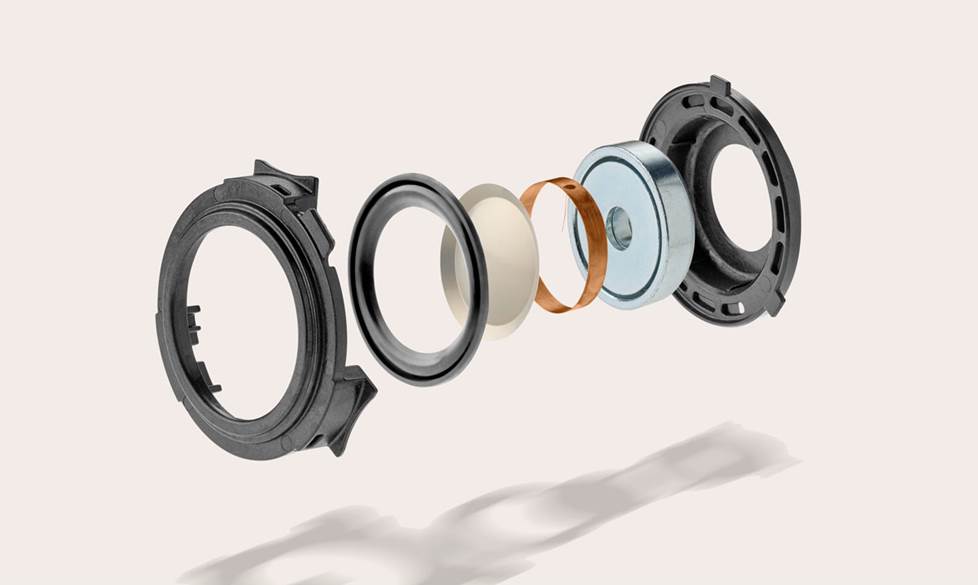
Focal uses rigid, lightweight metals like aluminum, magnesium, and beryllium for their smooth-moving driver domes.
The “M” refers to an aerodynamic fold surrounding the border of the dome. This gives the drivers a more fluid movement, which greatly reduces distortion and phase problems. It's why Focal headphones always sound so dynamic and yet controlled, across a wide frequency range.
Late last year, Focal released a "recalibration" of the Utopias under Mégane's watch. To eliminate distortion in the treble, they updated the voice coils and built new inward-facing grills to match the "M" shape of the drivers. But like with all Focal's high-end headphones, the general design of the drivers hasn't changed.
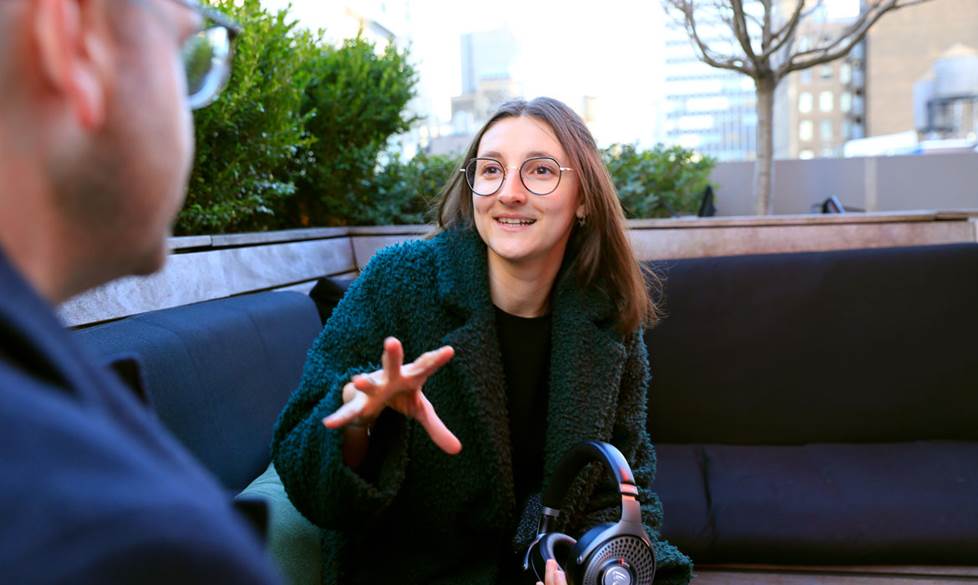
“We know how to make drivers for headphones,” said Mégane, referring to the fast-attack design originally developed for the Utopia and used ever since.
That includes the drivers inside the Bathys. Here, the domes are built from a blend of aluminum and magnesium instead of beryllium, but the size and principle remain the same. Mégane said she learned early on at Focal: "Sound is one area where we don't compromise."
"OK, why not?"
Mégane grew up in the shadows of Focal’s main headquarters in Saint-Étienne. This mid-sized city straddles the Furan River and bumps against several mountains in southern France. The architecture is a delightful mix of old and new — castles, cathedrals, and old-world bridges dotted with bright-colored, artfully oblong postmodern buildings.
Historically a mining and industrial town, Saint-Étienne has been reinvented in recent decades as a haven for banking, tech, and perhaps most notably, design. Mégane recalled how the company’s Wonka-esque mystique spread through the city’s rolling hills, sparking her natural curiosity when she was younger.

There's often a memorable, challenging stage of the Tour De France that treks through the urban and natural elements of Saint-Étienne.
Focal was established there in 1979 by founder Jaques Mahul. Since then, this unique speaker company and distinct city have shared a mutual influence on each other. Focal products are often as visually interesting as they are sonically engaging. “Growing up, [Focal] was very well known in town,” she said. “And we were always asking ‘what are they making in there now? What’s their next big thing?’”
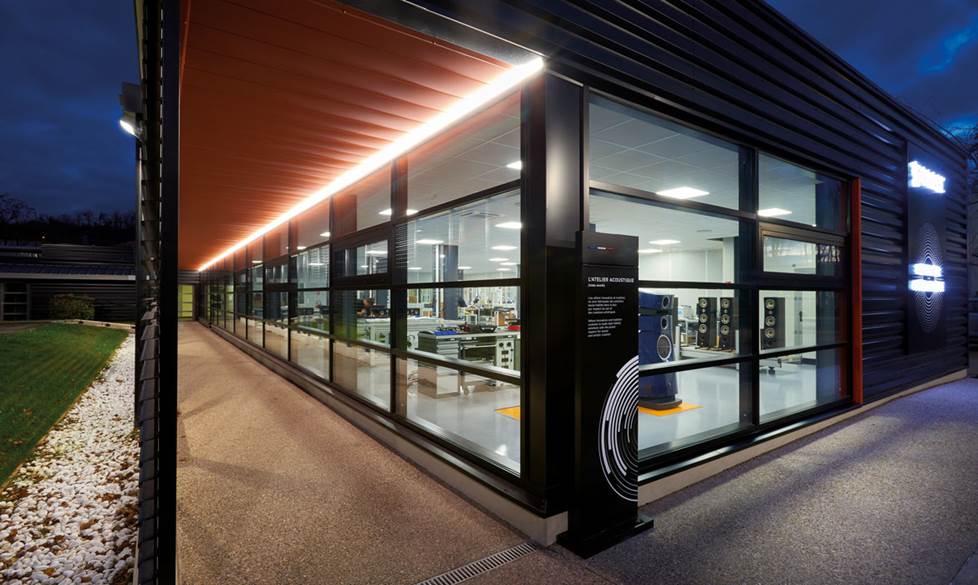
Focal headquarters in Saint-Étienne, France
When it came time for Mégane to choose an internship for college, a professor suggested Focal. She said, “OK, why not?” Her father had always spoken highly of the company in their house, associating them with sound quality. He even owned an earlier, more traditional set of Focal headphones.
“Mégane brought a lot to the table day one, like deep intelligence and a fresh view,” said Romain, the current VP who hired her in 2017. She also took quickly to Focal’s design language and sonic philosophies. All new hires at Focal go through extensive training that involve continual listening sessions.
Mégane said her training class would listen to speakers and audio gear of all shapes, sizes, and price tiers. They were taught to identify different sound attributes. ("Like, say, do higher frequencies sound too sharp or muted?"). They also learned to properly articulate what they were hearing — invaluable for Megane, who communicates with Ludovic, Shahin, and other engineers daily.
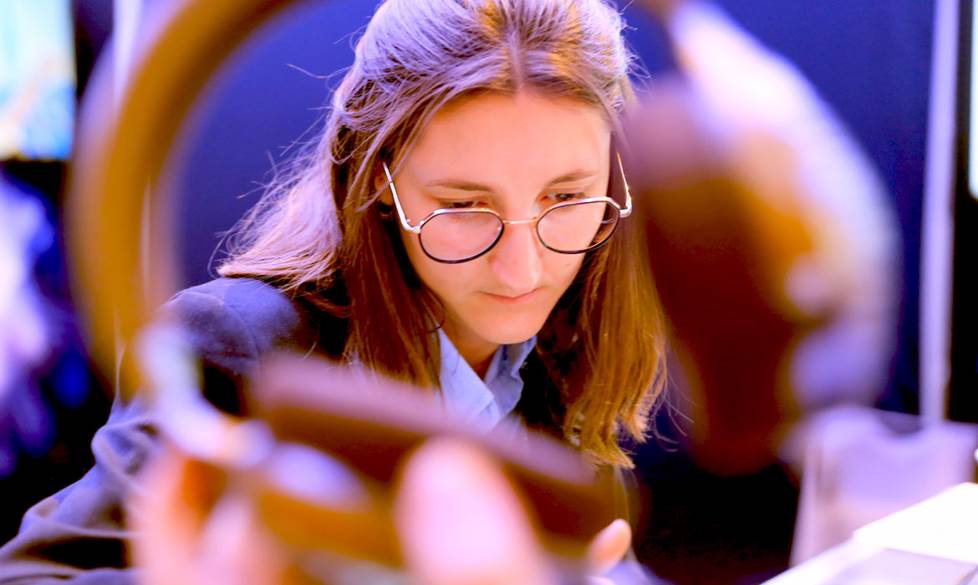
Mégane collaborates with Focal's R&D, Quality Control, and Marketing teams to create and promote world-class headphones.
It didn’t take her long to rise to product manager of the headphone division, a role she’s held since 2018. She said that it can be a pressure cooker of a gig. Like whenever she has to make the final call on whether or not to halt production.
Once, there was an issue with the color of the inner ear pad fabric. The Quality Control team told her they'd received several meters that were slightly darker than specifications. For some companies, it would be a no-brainer to continue production — time and money were of the essence! But Focal holds themselves to a higher standard.
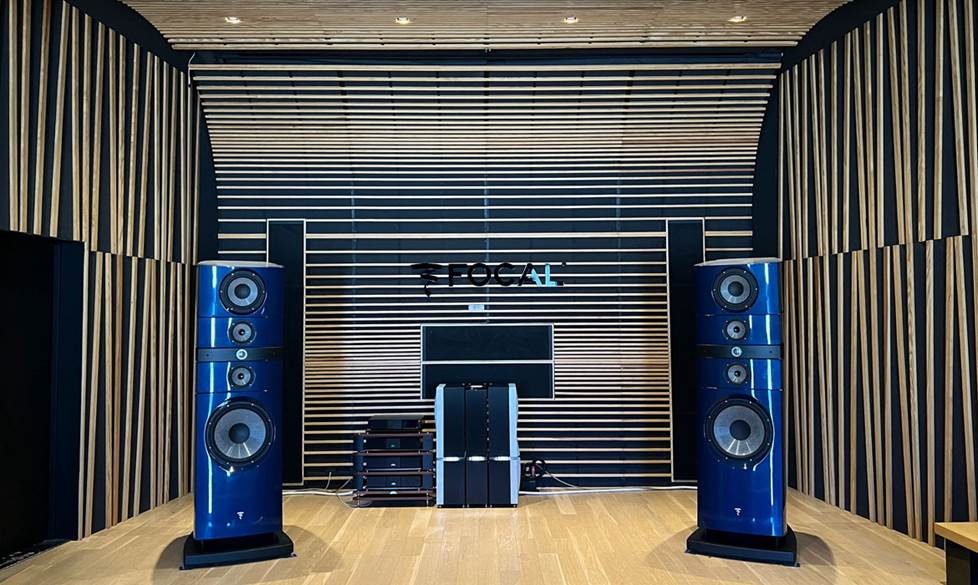
Focal speakers and products are known for their visually stunning design and pronounced dynamics.
The job does come with some cool perks, though. Being on the inside at Focal HQ means she now gets to keep all the secrets. In fact, under strict NDA, she couldn’t even tell friends or family about the development of the Bathys. I asked if that included her dad, the huge Focal fan.
“Especially him,” she laughed.
Developing the Bathys
Focal uses the same shape, frame, and general make-up for all of their wired high-end models. But since the Bathys are noise-canceling wireless headphones, Focal designed them with on-the-go listening in mind. Still, their famous "M"-shaped drivers require a certain amount of real estate — in order to move with piston-like speed and fluidity.
So, they went with lighter materials — durable plastic in places where they usually use metal. That allowed them to keep the same geometry, reduce the size of the earcups, and still hold the full-size drivers. “We also chose magnesium for the yoke,” said Mégane, explaining how it reduces the weight significantly from the aluminum used on the larger wired headphones.
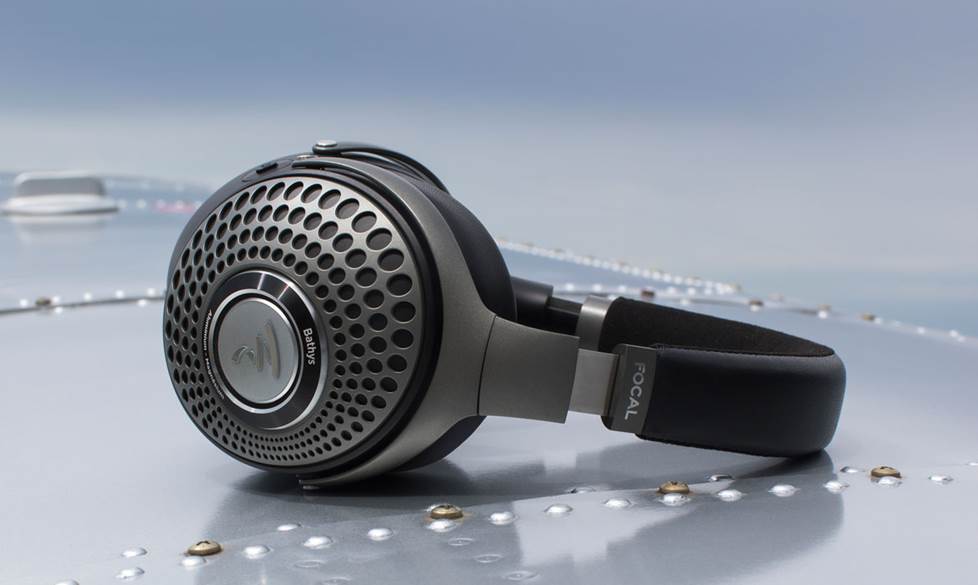
The Bathys sport a pleasant, if snug fit that doesn’t cause fatigue over long listening sessions — or flights.
While the earcups are still larger than most travel over-ear headphones, they’re much smaller than the open-air chambers that typically house these drivers. To compensate, the team shrewdly placed vents around the glowing Focal logo to release excess energy and avoid distortion.
That illuminated logo is the chef’s kiss of the design. That LED light can be dimmed or turned off completely, so I asked Megane how she wore it on her flights from Saint-Étienne to Paris to New York City. “I generally keep the light at 50% [dimmed],” she said, smiling. “I did turn it off as a courtesy at night — but otherwise, why not let it shine?”
Quality in quietude
To the CanJam crowd, the phrase “noise cancellation” has come to signify convenience at a cost. It’s often at the expense of clarity, resulting in middling sound. Focal was determined that wouldn’t happen with the Bathys. “We were quite confident with the sound,” Mégane said. “There were challenges with size and weight, but that was nothing compared to developing the noise-canceling [circuitry].”
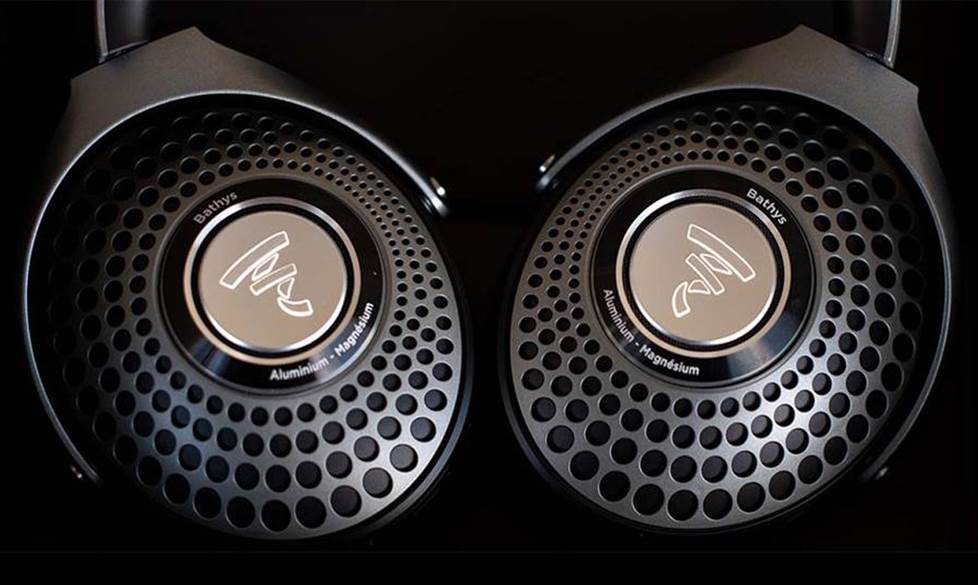
The Bathys' LED earcups, shown fully illuminated, can also be dimmed or powered off.
It took design effort and old-fashioned trial and error to achieve noise-canceling performance that met their tastes. So, they would try new microphone combinations and placements. “We’d say ‘okay, this is the right level of quiet, but the sound has lost its punch,’” she said. “Or vice versa — the sound was dynamic, but noise cancellation wasn’t strong enough for travel.”
All told, Mégane said they went through 22 different models of mics before they got it precisely how they wanted.
Stealth testing and fine-tuning
For most Focal products, prototype testing can be done in-house. But Mégane said that while they tried to create noisy environments by piping in artificial plane, crowd, and engine noises — there’s nothing like the real deal to test noise cancellation.
She took four flights with a prototype version of the Bathys. “We put tape over the logo,” she laughed, wondering out loud if that made the headphones more or less conspicuous.
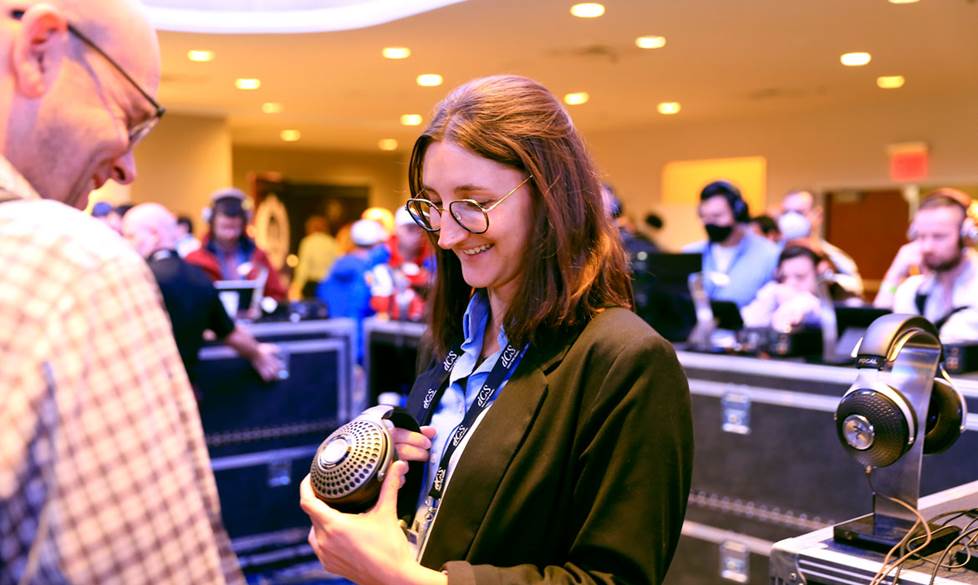
Mégane and her colleagues listen to familiar songs during tuning to ensure the headphones deliver their signature sonic characteristics. "They must sound like Focal headphones," she said.
Back in her office for final tuning, Mégane paid close attention to specific details and the overall vibe. “We wanted an accessible sound,” she said, “that was warmer with a bit more low end and so on.”
But regardless of the frequency response, Focal knew they must preserve their signature dynamics. Those pronounced loud-to-soft moments can turn a listening session into an epic event.
The high-end headphone world reacts
When you control so much throughout the creation process, Mégane admitted that it can be hard to let go. Yet, here she was in New York City, letting the world’s most discerning and opinionated listeners try out the Bathys, Utopia, and entire headphone lineup in an environment she couldn’t control. The crowded CanJam floor is a less-than-ideal place to audition headphones, particularly the open-back models.
Mégane shuddered at the memory of a past Hi-Fi show where Focal was set to debut a set of high-end speakers in a cavernous ballroom. The resonance was unbearable. “We are launching this product,” she said. “The first impression cannot be like this!”
For that show, the team spent half the night putting up acoustic treatment all over the room, even scaling the walls to treat the ceiling. Here at CanJam, the best they could do was construct a nice booth to impress attendees.
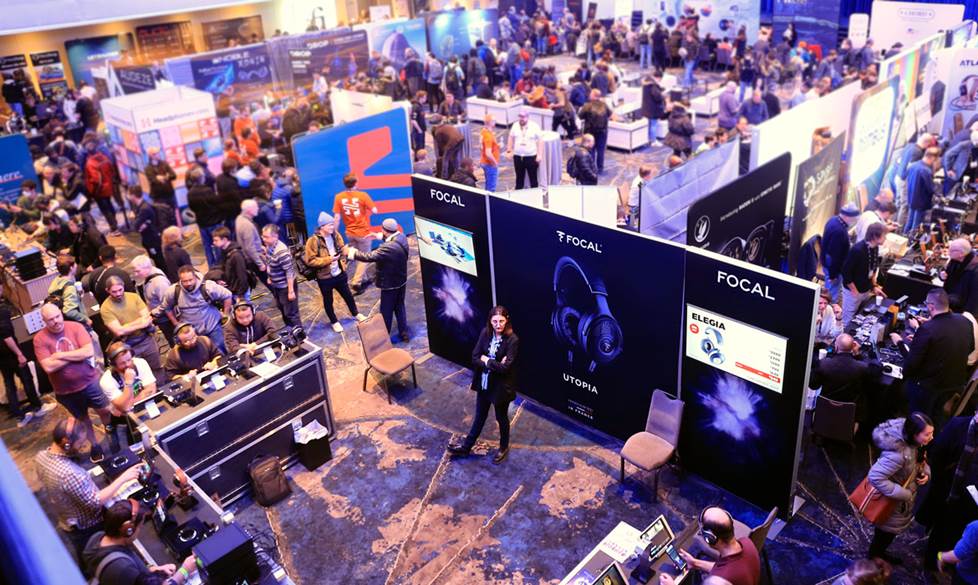
Focal had a large and impressive presence at CanJam. The team spent several hours constructing their booth, finishing around 3:30AM the morning of the show.
And Mégane has learned there's only so much you can control. The same month the Bathys were released — unbeknownst to her — Bowers & Wilkins were preparing to announce their own super-premium noise-cancelers, the PX8 headphones. That made three "sonically focused" noise-canceling headphone releases within a year, including the Mark Levinson No. 5909s.
Rather than a clear winner emerging, a rising tide has lifted all three to our top sellers list. It helps that there are clear distinctions between them: the PX8 offers extra resolve in the highs, the 5909s deliver a neutral, hyper-accurate presentation, and the Bathys is spacious and dynamic.
In some ways, the kinetic showroom floor of CanJam was the perfect place for Focal to showcase the Bathys. It put the noise cancellation to the full test — and attendee after attendee walked away impressed. And maybe a little surprised at how the sound held its own, in a ballroom packed with the world's best headphones.
A winning reputation
Focal may never sell as many headphones as Apple, Sony, or Bose, nor is that their goal. So how exactly do they measure success? How does Mégane? Right before we wrapped up at the rooftop lounge, I asked her.
“Of course, I can look at the figures,” she said, taking a beat. “But for me, in the end, it’s really those first reactions — whether it’s press, reviewers, customers, or enthusiasts [here at CanJam]. Not only hearing that they enjoy it, but how they have to tell someone else about their experience. That is something so, let’s say, special.”
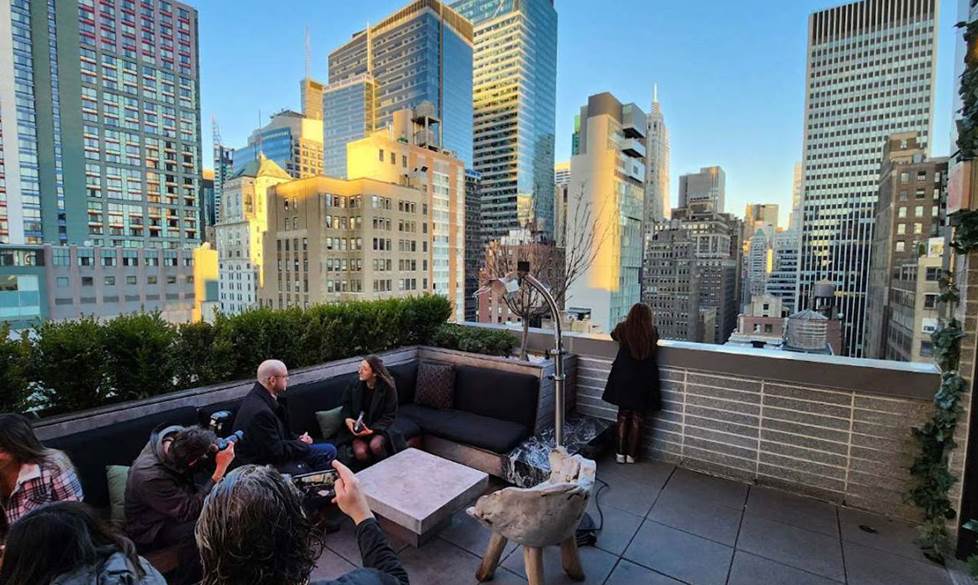
Mégane remained focused on the subject at hand over the thump of the restaurant’s techno playlist and the frigid wind whipping between buildings.
After the interview, Mégane and the Focal team headed back to set up for CanJam, vanishing into the crowd on Sixth Avenue. I glanced up at the skyline and took in its breathtaking scope. Then I scanned back down to street level and noticed the industrial hues, the sturdy foundations, all the intricate scaffolding.
Often, the most enchanting sights and sounds are built on ingenuity, determination, and more than a little grit. That's something to think about the next time I slip on a set of Focal headphones.
Need more help? Contact us!
Have questions about headphones? Contact us today.
Our expert Advisors know audiophile headphones inside and out. Your Advisor can send specific Crutchfield pages to your screen, saving you a lot of browsing time. You'll get a shopping cart loaded up with everything you need.
Free lifetime tech support is included with your Crutchfield purchase.


Comments (0)