Podcast Ep 73: Home speaker placement tips
How to get the most out of your home speakers: Placement, acoustics, and pro tips

In this episode:
JR and Huffy are joined by Mulligan — Crutchfield advisor, AV design specialist, and all-around full-service operation — to talk about all the inexpensive (and sometimes free) things you can do to make your home speakers sound as good as they possibly can. The conversation covers where to put your speakers and why pulling them off the wall matters more than you might think, how to treat your room's acoustics without going overboard, why you should decouple your speakers from the floor, and how to use your receiver's room calibration to take the room itself out of the equation.
Mulligan also brings a few bonus tips, including one surprisingly simple digital trick that costs absolutely nothing and can immediately improve your sound quality — no new gear required. Whether you've got a modest bookshelf setup or a serious multi-room system, this episode gives you practical, real-world ways to get more out of speakers you already own. Got questions? Reach the team at: [email protected]
Hello and welcome to Crutchfield, the podcast. I'm your host, JR, and I am joined in studio by my co-host as usual, Huffy. How are you, buddy? I'm doing great.
So happy to be here. Talking about some fun stuff today. Yes, indeed.
And we have a special guest in the podcast. Let's go ahead and bring him onto the mic now. Mulligan, welcome to Crutchfield, the podcast.
Hey, man, how you doing? I'm doing fantastic. How are you? Man, I am chilling like a cucumber in a crisper drawer. I am mellow like a marshmallow in a mug of hot chocolate.
I am wilding out like a wild cat on water skis today. Having a good time. Oh.
Happy to be here. You did bring the goods to Crutchfield, the podcast today. Wow.
Everybody who has ever spoken to me on the phone knows that I am the real Mulligan and this is how I talk. Yeah. So there's a reason you're here today.
First, let's discover who you are and what you do here at Crutchfield. Man, I do a lot of stuff. Okay.
So I do car audio, home audio, 12 volts, so remote start. I have recently picked up a shift over at AV Design, so I'm doing multi-room systems. I do smart home.
I'm a full service operation. Anything you have, electronics, if it makes light or sound, if it's powered by a wall socket or a car battery, I can help you with it. But today we're talking about something very specific, right? We're talking about- Today we're talking about inexpensive ways to make sure your speakers sound as good as they can sound.
Nice. We did this last month with car speakers and we thought it only made sense to do the same treatment to home speakers, right? There's plenty of things you can do to make your home speakers sound better that don't cost an arm and a leg. 100%.
So when you say you are in car audio, home audio, et cetera, I just want to make sure it's clear to our people listening at home that you're actually working with customers live either over the phone or over chat, maybe email, right? You are in our call center working directly with the people that need the stuff we sell. Yes, sir. I can be reached at 434-328-7582.
Come on down. Oh, I love that. You're dropping us digits and everything.
Wow. Taking full advantage of the exposure on the podcast. Oh, for sure.
I'm not busy enough. Give me a call. That's fantastic.
So as we've said, today's topic is some speaker tips, things you can do to make your home speakers sound as good as they can. And we've got a bunch of tips to talk about. Here's a quick sort of a rundown of the tips that we will be getting into more detail on here in the next few minutes.
We're going to talk about where you put your speakers in your room, both for two channel and we're going to focus on the front two channels, the two speakers in your home theater system. We're not going to get into like full home theater speaker placement discussions. That's probably an entire separate podcast episode some point in the future.
We're going to talk about how close your speakers should be to your walls, what kind of things you can do to your room to make it sound better, how you can calibrate your system for your room to make your speakers sound better. Should your speakers sit flat on the floor or should they be on those spiky feet that some speakers come with or the rubber feet that some speakers come with, and what else might you put your speakers on that can also help? We got a bunch of stuff to talk about, and that's why Mulligan is here because I... Yes, indeed. I believe you have... You spend some time working with customers directly, right? Absolutely, absolutely.
I work with customers directly in terms of recommending products and I'm also there on the back end to advise on getting stuff set up, making sure it sounds good and proper. Do you want to start with the $0 tips, like the freebies? I like this. No, we're going to finish with those because we need people to stick around to the end of the podcast.
Ouch. Ooh. Dang.
Going in with the... If we're going to start with most expensive first, then while still being quote unquote budget, my recommendation is throw a subwoofer on there. If you don't have one, if you're doing bookshelf speakers and an amp, like a kind of budget setup, just get you a little sub. I know there's one that we have for $200 right now that you can throw on anything that has like a preamp output or a subwoofer output.
Just adding more bass, like a larger driver to push the lower frequencies, is going to massively improve your sound. Trust me, I know. I've done this for a bunch of customers and myself.
My own personal bookshelf little 50 watt system sounded a lot better with the Polk sub that I got on the pickup from the good old SPCA Rummage. Oh. Got me a Polk for $80.
Dang. Yes, indeed. Thrift store subwoofer.
Absolutely. Now we're plugging the SPCA Rummage. Hey, you know, they need all the support they can get, too.
Absolutely. They're a non-profit. We can mention them.
Yeah, when you go there for woofers, you might go home with a subwoofer. Ha! Yeah, I have to stay in the car now. I can't go into the SPCA anymore.
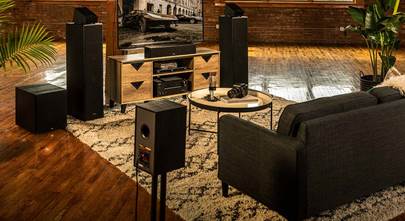
I keep buying old electronics. So it is my hope and dream that the tips that we share with you today could be applied to any set of like, say, floor standing speakers or bookshelf speakers that you might use as your main speakers, right? Like that's the focus of today. We're not going to get into all of the other ways to use speakers in your house, but the main two speakers, either in a two-channel audio system or in a home theater system, the front two speakers, which are usually floor standing or bookshelf speakers, either on stands or on furniture.
But let's think about those. As you're envisioning the solutions we're going to provide today, that's the picture I want in your head is those main two speakers. And you started out of the gate with probably the most expensive solution on our list today, but you also highlighted how it doesn't have to cost a ton, right? You can do a subwoofer for a very reasonable price.
What does adding a subwoofer to a set of floor standing speakers that can produce plenty of bass do for your system? Yes. So there's a couple of things that it'll do for you. For one, floor standing speakers are designed to output full range audio.
They can output lower frequencies, but they're not going to be as efficient as adding a subwoofer. Another thing you can do when you have a subwoofer is you can actually cut the lower frequencies going to the driver, assuming that you have a receiver that is capable of that kind of EQ. Then you're conserving power, which is going to allow you to get better definition, dynamic range on the frequencies that you're sending to the bookshelf or tower speaker.
So you get to take some of the load off your amp and your speakers and send that to a subwoofer instead. So you're letting those main speakers then concentrate on the highs and the mid-range because you have something that's self-powered doing the bass. Yeah, that makes a lot of sense.
And as you said, that is dependent on your electronics, right? If you're using the least expensive stereo receiver available, it's not going to have high-pass crossovers you can use on your main speaker outputs, but you spend a little bit more, you might get that. If you have a home theater receiver, you're almost definitely going to get that. Guaranteed, yeah.
Yeah, very cool. So adding a subwoofer can be done for a pretty reasonable amount of money. Obviously, you can spend as much as you want on a subwoofer, and so that's not always guaranteed to be the cheapest solution, but if you can afford to add the sub, it should make everything better.
It should make those floor-standing speakers, those bookshelf speakers you just spent a lot of money on sound even better. Yeah, the thing I love about that idea of adding a subwoofer is most people think of deep bass, and we call them dinosaur explosions in here sometimes, joking about that thunderous Dinosaur footsteps in real life, absolutely. Yeah, thinking about that thunderous bass.
But a subwoofer can also help add warmth, right? A full-range sound, even if you don't have those pronounced bass notes that hit you in the chest, a subwoofer can really fill out that sound, even for vocals. It can make a big, big difference. Also, in a large room, it can help out a good bit to fill out that sound, because we lose those bass frequencies in larger rooms at a much quicker rate.
So yeah, I think that's a great recommendation, especially if you have smaller speakers for your main speakers. Subwoofer, that's a big deal. All right, so now we've stretched the definition of budget to the very limit.
Let's go down the rabbit hole and talk about more economical solutions. Let's start with free. Let's start with... All right.
Let's just... Zero dollars. Yeah, where do you put your speakers, and does that affect how they're going to sound? 100% it does. What are some placement tips? You know, before I throw it to you, I want to say, Huffy and I have done this many times, where we are talking with our training classes about home speakers, and one of the joys these days is all of the customer-uploaded pictures in the reviews of products on our website.
And so often, we get great pictures of amazing setups where the speakers are in the exact right place. I tell you. And we look at that and go, boy, that looks like a great setup for good sound.
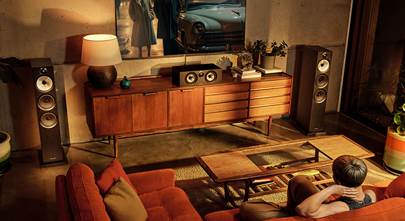
And then occasionally, we see a picture where the speakers are not quite set up with the ideal placement in mind. They've had to make concessions to the shape of the room, the other furniture, et cetera. So if you are going to place your speakers in a way that's going to make them sound their best, what are you looking to do, Mulligan? Take your dang speakers off the wall.
Step one. Having them on the wall means that they are going to reflect... Okay, the speaker pushes air, right? It's pushing frequencies of air, and that's what you hear that is music. The frequencies are also going backwards.
They go from every direction out of the speaker, pretty much. There is an optimal zone. We're going to talk about that in a second.
But the sounds that are coming out of the speaker and bouncing off of the wall can hit the sounds that are coming out of the speaker, and if the frequencies are not lined up just right, they can amplify or cut those frequencies. So basically you can think of it like throwing a stone into a pond and those ripples bounce off the wall of the pond and kind of eat each other up in a weird way. That's what's happening to your sound.
It's going to make it sound kind of muddy. It's going to make things sound louder or quieter. So the way that you avoid that is you pull your speakers off the wall so those reflections are not as bad.
Corners especially. Get them out of the corners. It costs $0.
It might cost you some social currency with the people that you live with. So check your exchange rate, of course. But that is the best $0 tip I have.
One of the best is just pull it off the wall. Get it out of the corner. That will do a lot for your sound.
You'll be shocked at the difference on that. I know I was. If you're setting up a listening system, right, then you don't need to be told this, right? You are already planning to get your speakers out, to tow them in, to get that perfect placement for stereo listening.
But if you are trying to work your speakers into a multi-purpose room that everybody in the house is invested in, in how it looks, how it feels, how you walk around, you might have to make some concessions. And you might be thinking, oh, I'll just put my speakers right up against the wall. And you pay a price for that with sound.
You just need to know that. And if you can do something different than that, do something different than that. 100%.
Huffy, you look like you have something to say, buddy. Yeah, well, you mentioned something there with towing in. I think it's also important to know that, you know, consult the owner's manual.
I hate to be that guy. No, I am also that guy. It's like, read the directions.
But different speaker manufacturers with the design specifically of the tweeter and then how they handle their bass as well. But some recommend more of a towing. That's a term you mentioned.
And that just means kind of tilting the front of that speaker towards the center of the room. And you know, some speakers actually don't recommend. The majority benefit from it, the vast majority benefit, but there are a handful that say don't do it.
So I think it's important just to throw that little caveat out there. 100%. Yeah.
And that's an overarching theme that I wanted to touch on as well, which is the larger thing I would say will save you a ton of money is diagnose the problem you are experiencing before you throw a solution at it. Do some research and just try to figure out what exactly is going on that you're looking to fix. Right.
To Huffy's point, if you have speakers that have a very wide dispersion that are not as concerned with towing, you won't get as much of a benefit when you tow them in. You'll probably still get some. And the other caveat I want to throw in there is like we're this for this placement stuff.
We're talking about optimal, right? And in generalities as well. Yeah. Optimal generalities.
Yeah. I mean, I'll shoot you 100% straight. Guess where my speakers are right now? Against the wall.
Yeah. Not towed in. That's where they fit.
Unfortunately, that's where they fit. That's okay. Did you throw a subwoofer at it to help fix the lack of bass? I threw a subwoofer on there.
Absolutely. And I brought them out of the corner to listen to them. I was like, man, that sounds better.
I can't move through my living room right now, so I got to put these back. You mentioned social currency, and I loved that. I don't know that I'd heard that one before.
And I thought that was great because at the end of the day, we live in these spaces with other people often, and it's only got to sound good to you. That's the important thing. We could so get into the weeds on this, right? Whether your speakers are ported, there's ports on the rear, is it a sealed enclosure? Down firing ports.
Yeah, exactly. How your speakers are shaped, how they're designed. Some have speakers on the back of the speakers, right? So proximity to the wall is something to consider.
And the whole idea of check your owner's manual, it's a real thing. And we were all going to go there. In addition to the owner's manual, you can just go to the product page for those speakers on crutchfield.com. Go to the specs tab, expand that thing, drill way down in.
We've taken the information from the owner's manuals and made it a little bit more readable, palatable, digestible, understandable, right? So use crutchfield.com for these types of resources as well. And if you're in doubt, call your advisor. They can help you as well.
You read my mind. Tech support can help you as well. I was going to say, call us up.
We are happy to help with that. Well, that's the first two bullet points on our list. Kind of done right there.
Let's move on to number three. And I have a feeling you are dealing with this more now with your AV design work than you might have as a general sales advisor. Correct me if I'm wrong on this.
Do we need to define what we mean by AV design work? Because we have a lot of folks here that do AV design work, but we have a few specialists that add on to that. Do you want to... I'll let you speak to that. Yeah.
So the AV design department at Crutchfield handles larger, very often pre-construction, sometimes remodel whole home audio systems by and large. So if you're building a new house and you're like, you know what? I want speakers in the ceiling of every room. I want it all controllable by my phone or a tablet, and I want a home theater in there as well.
And I want one guy to design and manage all of that for me and work with my contractors and everything else. Then you get routed to AV design. That's us.
That's what we do. That's the vast majority of what I do every day, is making sure that when you run your wires and when you get it set up, it works good, sounds good, and it lasts a long time. That's the main thing.
So you'll end up talking to customers about speaker placement in bathrooms, front porches, outside, as well as a dedicated two-channel system, a dedicated home theater system. Absolutely. They can mix all of that together into one system.
That might be a bit much for a general advisor to help our customers with. That's where you, the specialist, comes in. Yeah, room acoustics are incredibly important for my work.
The managing, like explaining to customers the difference between an outdoor space and an indoor space in terms of what that does to your standing waves, what that does to your power. Outdoor, it just dissipates into the ether. So you need approximately twice as much power for the same enjoyable level of volume.
That kind of stuff becomes incredibly important, bearing in mind the size of the space and how many speakers are needed approximately for coverage, stuff like that. Incredibly important stuff. And something a lot of people don't think about is the surfaces in our rooms are an active part of how your music sounds, how your home theater sounds, right? The wall material, the floor material, the ceiling material.
Do you have curtains? Do you have floors? Do you have carpets? How tall are your ceilings? And what I don't expect most people to do is to build a room for listening. And if you can, great, do that. But if you're like most of us, you can't.
And so there are things you can do to, quote unquote, fix your room, right? And so do you often find yourself talking about acoustic panels and treatments and stuff like that for people's rooms? Absolutely. How does that go? So the best cost-saving tip that I have for acoustic treatment is do not buy the acoustic treatment until you have bought the speakers and amplifier and then set them up and can listen to them. Because you don't know what the acoustics of your room are until it's set up.
I love that the tip is don't buy this stuff unless you really need it. Don't buy it yet. Wait until you have your speakers in, then listen to your speakers, then diagnose the acoustics of your room, then purchase the correct product.
That is the, if you do it that way, you will buy exactly what you need. If you try to treat the room before you know what's going on acoustically, you're going to miss the mark. It's not possible to gather that data.
Every room is different. It is the product of every reflective surface in that space, the speakers and the amplifiers. It's unknowable until you test it.
Yeah. That also gives you an opportunity, if you have that flexibility, to pull things off the wall a little bit, you know, to move them. Sometimes just moving the speakers a couple of inches even can make a huge difference by the time that sound reflects all the way around the room, interacts with itself.
So sometimes you might find that you don't need that thing you thought you needed. So what should the layman listen for to know, oh, hold on, something's not right here. Like an expert who listens to sound and analyzes and thinks about this stuff is going to pick up on stuff quickly, but a person who's never done that before might go, oh, I think this sounds okay.
What kind of things might they listen for to then maybe fix? Yeah. Turn off the stereo, stand kind of in the middle of the room or where you're planning to listen to and give them one of these. If you get a lot of echo or reverb, that's your treble coming back.
That's your treble reflecting off the walls, right? Give me another clap, and I'm going to add some echo and reverb later so everybody can hear what you're talking about. Ready? So what you just heard at home was me adding some processing to that. It's going to be delayed and reverbed as if you were clapping in the middle of like a bathroom or something.
You can't hear the reverb in this room because JR did a good job of setting up the microphones. So we'll add it in post. But yes, that is what you're hearing.
If you hear reverb, if you hear echo, that is the sound bouncing off the walls, literally. So that will tell you that you need a little bit of treatment. Generally speaking, you want to kind of... The sound actually just comes from the speaker, bounces off the wall, and then hits your ears.
There's a lot of good information on the internet on how to dial this in, but the basics of it are you want to find the place where it's bouncing off the walls and deaden that so it captures it instead of bouncing it. It's going to vary based on the room. And there's a lot more... We could spend all day talking about that, but that's in essence what you're doing.
And there are podcasts out there where they do spend all day talking about that, but suffice it to say, there's things you can put in the corners of your room, base traps they call them. There's things you can hang on your wall that some of them look really nice. Some of them just look like acoustic treatments and they fit nicely into your decor or they don't.
But those things are out there. Oh, I got this on lock too, in terms of talking about social currency, sound deadening that fits the aesthetic, drapes, curtains, paintings, couches, rugs, all of those. Soften up your room.
And if your room is full of hard surfaces, it will sound like a bathroom. This is great stuff, Mulligan. Can you think of any situations you've had specifically with some customers where you had to recommend this stuff? Maybe they called you back and said, hey, getting this crazy sound in my room, what can we do about it? Oh yeah, man.
There was a serious acoustic mismatch that I had to help a customer with. He actually bought a pair of Klipsch Heresies from us. Great speaker.
I love Klipsch speakers. Great speaker, but also very crisp. Those horn tweeters, those Heresies, it's more than just a horn tweeter.
They're super bright. They're in your face. I'm a drummer.
They make cymbals sound electric. And I love my Klipsch speakers, but I know that they can be very bright for some people. Yeah.
And that's what was happening to this guy. He ended up with me on the phone and he was like, Mulligan, I don't understand. I bought this really nice system, good amplifier to power it.
I think it was like an NAD, but it's crushing my ears. It hurts to listen to. And I asked him some questions about the room.
Turns out, hardwood floors, concrete walls, right? Yeah. That's not necessarily a great match. So he didn't talk to you when he picked out these speakers? Not when he had.
Right? Because if he had, you would have asked him about his room. And you would have said with a room like that, it's going to be challenging to make these Klipsch not sound super bright, right? And you might've gone with different speakers. Now that he's got the Klipsch though, what are some things he could have done to make those Klipsch sound big in that room? It's still super salvageable.
Like you can get some acoustic paneling. We actually carry a really nice line of it just to absorb the sound bouncing around the room. That is very, very salvageable.
You can absolutely make that work. Basically you want to have the acoustic panel. What's actually happening when, I think we talked about this already.
You just want to capture the sound before it reflects off the walls and muddies your experience. So get some acoustic paneling, take some measurements of where the sound is bouncing from in your listening position. And you can have that set up work perfectly and sound amazing.
So acoustic panels on the walls, if possible, put carpet on the floor, right? You don't have to necessarily go install wall-to-wall shag carpeting, but even an area rug or an oriental rug in the middle of the floor, that's going to make a difference. Curtains on the walls. Soften that room.
What can you do to soften that room? Add a big ottoman. Throw a big pillow. Soft furniture.
Yeah. Don't go with shiny leather furniture. Go with stuff that soaks up sound instead of reflects it.
I like it. All right. Let's move on to our last two points, which are something you might just need to make a decision on once you receive your speakers.
It all depends on the speakers you buy. Some of them come with just nothing to think about on the bottom of the speaker. You just set the speaker on the floor and you're done.
Others come with options. Options include spiked feet and rubber feet. Sometimes you have that choice to make.
It all depends on which speakers you buy, right? So we're going to talk in generalities here rather than specific speaker models, but what do you do when you are presented with the choice of rubber feet versus spiked feet on speakers? Yeah. So the spiked feet generally are specifically for carpeting. That shag carpet room we were talking about earlier.
That shag carpet, baby. Yeah. So the spikes generally, I wouldn't recommend them for anything other than a carpet floor.
You're going to scratch up whatever else you put them on for other surfaces. So the reason why you might want to put feet on your speakers is when the speaker vibrates the air, it also vibrates. If you have a lot of surface to surface contact, some of that vibration can get absorbed or transduced into whatever your speaker is sitting on.
So your table, your floor, what have you. And we always have a running theme of diagnose, right? So the way that you diagnose this is put your hand next to the speaker when it's playing. See if you can feel any vibrations being transduced into the surface it's on.
That will tell you if it's worth doing to maybe lift it up a little bit. It'll tell you if your feet are sufficient or if they are transducing a little bit. So if you have a bookshelf speaker and you've set it on your credenza or something, right? Put your hand on the credenza while music is playing nice and loud with plenty of bass.
And are you feeling the bass in the credenza? If so, something needs to be done. That is acoustic energy that is being transferred into your desk as opposed to the air, right? So that's a sign that you want to throw some feet on there. So the spike feet are for carpet.
And I'm just trying to visualize that. The spikes themselves literally dig into the carpet to anchor that speaker. So it doesn't move in and out when your speaker is moving in and out, right? These movements are subtle.
It's not like you can watch your speaker dancing around on your carpet. Well, I can help with that if you want to. But if you don't do it right, you might find after a month of listening to a lot of music, your speaker has moved.
Like it could physically move an inch or two. A hundred percent. And all of those movements are removing acoustic energy from your ears, right? You're losing it into the floor, into the carpet, unless you do something about it.
All right, so spikes for carpet. What about the rubber feet? Yeah, rubber feet, almost certainly worth doing. If they came in the box with the speaker, you should definitely put those on.
Ultimately, there's no reason not to do it if they came in the box. Definitely put the feet on. Just putting two flat surfaces together allows a lot more energy to transfer from one to the other, as opposed to four tiny points on the bottom of those rubber feet.
Same deal with the carpet spikes, by the way. Less surface area, less contact for your anchor, whatever is holding up the speaker, is better. So if you're putting your speaker on a hard surface, so if it's a floor-standing speaker going directly on concrete or hardwood floors, rubber feet, not spikes.
If you're putting bookshelf speakers on a piece of furniture, a bookshelf, a credenza, whatever, rubber feet. If you're putting them on stands, even, rubber feet, right? So hard surface to hard surface. The bottom of the speaker to the surface it's sitting on.
Separate those with some rubber feet, if your speakers include those. Can I tell a quick story? Back to Klipsch. I have some nice Klipsch RB81s from about 15 years ago.
When I first brought them home, I set them up in my office. I had a nice set of electronic drums. The kick drum, I was having it play through these RB81s.
This is not how you're supposed to do it. Yeah, this doesn't sound like expert advice right now. But it was amazing for me when I would hit my foot on the kick drum pedal on these electronic drums to see the woofers and to hear the bass.
They were handling it fine, but it was pretty fun to watch. And so I got busy playing some music. And about halfway through the second or third song, one of my bookshelf speakers had danced itself to the edge and threw itself on the floor.
Because what I had not done was stick the little rubber feet on the bottom of those bookshelf speakers when I bought them. They were included. Klipsch gave them to me.
I have no excuse other than I was super excited to play some music, and I couldn't be bothered with putting the rubber feet on. Don't do what I did. Those speakers disliked your music so much that it decided to leap.
My interpretation of the kick drum pattern on those songs, Klipsch was like, no. I'd rather throw myself on the floor than hear your kick drum. So use the rubber feet or the spikes if they are included.
Now, speakers that don't include any of that, or even maybe some that do, there's additional things you can do, you can put between your speaker and the floor or the surface you're putting them on. And we have a fancy term for that. Huffy, I'm going to give it to you if you want to say it, buddy.
What is the term for that? We want to decouple the speaker. Acoustic decoupling. Acoustic.
I feel like I messed that up. I feel like you did. Yeah, I did.
I gave you the opportunity. I know. I know.
I only gave you halfway there. Yeah, so acoustic decoupling. That's kind of what the spikes are doing.
It's what the rubber feet are doing, but there are also products designed to do that way better. Yeah. Do you find yourself recommending those in your solution packages that you put together for customers? So increasingly, yes.
I'm very much a diagnose and fix kind of guy. And it is that not everybody is JR turning their Eclipse all the way up and dancing them off the table. Yeah, mine was an extreme situation for sure.
For the people who do have that kind of setup, who are rocking serious power and have a bookshelf speaker or tower speakers that maybe just have rubber nubs, those rubber nubs do have resonant frequency. You will hit it eventually if you throw enough power at it. So the stuff we're talking about, acoustic decouplers, you can think of them like a suspension system for your speakers.
They have like an internal spring that absorbs that. So they won't hit a resonant frequency. They won't allow themselves to vibrate and dance around.
So that's the next level decoupler. And yeah, for the applications where it makes sense, absolutely. And you can get those in several different sort of form factors, right? You can get ISO Acoustics feet that you might put on the bottom of your speakers instead of the rubber feet or the spike feet that they came with.
You can apply these four feet to the bottom of each of your floor standing speakers. They've got smaller ISO Acoustics platforms for your bookshelf speakers, maybe even your floor standing speakers. You can approach it in different ways.
It kind of depends on what look you're going for. But the reason they exist is to take this problem, when you really discover this is a problem, and really solve it in the best way possible. Yeah.
And Jaren, I know that you have a story about decoupling, but I'm going to say mine first. Okay. Go for it, Huffy.
I'll allow it. Yeah. So I've got a small home theater, right? I definitely have a decent subwoofer in that setup.
It's an older sub. It's a definitive technology sub, and it packs some power. And in my room, my main home theater room, I also have some, we'll just call it glass storage, an adjacent closet that has a lot of glasses and other devices that are other.
Yeah. Some of them are very nice looking bottles. Some of them have a lot of liquid in them.
I already know where this is going. Yeah. So anyway, when the bass would hit, I'm sitting there getting some dinosaur explosions because well, that's what I like.
And all of a sudden, I'd start hearing some rattling. And then the rattling would get louder and I'd have to get up and I'd have to go rearrange some things so that the glasses weren't hitting one another. And then I'd sit back down and five minutes later, it would start back up kind of like your clip speaker trying to jump off the shelf there.
You know, my, my, some things were shifting around. And so eventually I ended up getting a product called the sub dude. So that's a specific product that we carry.
And I put that under my subwoofer. Granted, this room was already carpeted. So, you know, this is shag carpet, right? No, not shag carpet, but carpet nonetheless.
So I honestly went into not thinking that this would make a huge difference, but wanted to give it a try. And I haven't moved glasses since. Like it absolutely took care of it.
So that base, those frequencies were transferring through the floor and up the wall to those glasses directly. And I took care of that by decoupling the subwoofer from the floor. And you didn't lose base.
Like when dinosaurs exploded in your movies, it was still as impactful as you wanted. Absolutely. Get just as much space.
Exploded. Yeah, that's right. Damage person.
I get just as much base. What I don't hear is the room any longer. And that's what we're going for.
So I don't even know if I need to tell my subwoofer story now, Huffy, because I fixed it with the same problem. I had windows that were rattling every time bass would happen big time in a movie. And the sub dude totally fixed it.
And bass was still there. We weren't here to necessarily focus on fixing subwoofers specifically. Sure.
Because again, we could probably do an entire podcast on subwoofer placement, right? Definitely. But the Auralex sub dude is such an inexpensive solution that can be used for powered subs. I don't know about you, Mulligan.
I would actually recommend it ahead of time. It's one of those solutions where if they call back and say, hey, I'm having this problem and they're describing their glasses clinking in the room or their windows rattling like Huffy and I have had, then you solve it with a sub dude. But if I'm selling a subwoofer to somebody now, I might proactively ask them, hey, tell me about your room.
Yeah. Windows, glasses. I mean, like, do you have things in the room that you're worried might vibrate if there's a lot of bass? The only caveat I'll put on it, because I'm a hater and I like diagnosing things and getting them dialed in properly, is this is, we're talking about heavy duty subwoofers, right? Like the serious business, high output.
And your resonant frequencies will vary. But yeah, if you're rocking, if you're getting an SBS, like PB2000, something like that. Yeah, for sure.
Consider a sub dude. Absolutely. For your $150 Polk, you're probably fine.
Unless you've got like a bunch of house of cards and origami and other stuff in that room. Yeah. The more delicate your room or the more air you're going to move with bass, the more important this is.
And there are similar products for your floor standing speakers and your bookshelf speakers that, again, are acoustic decouplers. That's the concept you want to accomplish there. So there's some things you can do kind of in the digital domain to fix your sound as well, right? So far, we've been talking about very analog acoustic sort of solutions to making your speakers sound the way they do.
And a lot of the problems that people are trying to solve are related to an imperfect room, right? Right. A room that's not set up to be a listening space. And, well, there's a pretty fancy way to fix that problem.
It's in every home theater receiver. Like that's just kind of standard now. It's... Sorry.
It's just kind of standard now is what you're saying. Yep. It's just kind of standard now.
And it's even becoming more common in integrated amps and stereo receivers where you can go into the menu of the electronics, the thing that's powering your speakers, and have it adjust for the imperfections of your room. Now, typically, this involves setting a microphone up, putting some test patterns through it. There's a whole process.
It varies from manufacturer to manufacturer with how involved that is. But use the room calibrate. If you have it in your electronics, use the room calibration.
And I'm sure you both have stories about room calibration and either using it or not using it or whatever. What do you got? Huffy looks like he's ready. No, no, no, no.
Mulligan looks like he got set. What do you got, Mulligan? I will shout out CAF. They brought in their new soundbar, like their flagship, and that has its own custom room calibration based off of CAF's like 50 plus year history with acoustics.
And man, they turned it on and off and the difference was night and day. And that's in the conference room that has the 10 foot drop ceilings, 30 by 40 big old glass panel walls that we make them demo in, even though we know the acoustics are not ideal. I, you know, I like it.
For me, it's the thunderdome of audio. If you can sound good in that room, it's a good sign. Bottom line, the room correction on the CAF soundbar was night and day.
Like it was wild how much they were able to do with that. Yeah, I heard that demo as well. I think it's phenomenal.
And that's another product category that we weren't really getting into too much, but soundbars in general, you know, people using those for music, people using those for movies and quite a few of the higher end ones do have room calibration as part of it. And, you know, you're paying for the product, use that feature, see if it does the thing you want it to do. There's an on and an off to it.
You can, but by all means allow that electronics to take the room out of the equation by doing that room correction. And then from there, it's still really important to put your speakers in the right place to consider their distance from the wall, to acoustically decouple them, to do all of the other things we've talked about. But use that feature.
Regardless of how imperfect your room might be, also run the room calibration. 100%. Give the speaker the best chance or give your system the best chance it has to perform well.
And then the last touch, I think, would be doing that room calibration. The most cutting edge, top of the line, finite impulse response filter, room EQ software from whoever you want. It pales in comparison to what an acoustic panel can do.
So, yes, you should use both. Your primary solution should be actually targeting the sound waves. But you can get pretty good results from room EQ, and you should try it out if you have it.
This falls into the Mulligan, the mad scientist category of experiment with it, right? If you have the technology, try it both ways, see what you like. And this is a very digital solution to the problem, right? And if your music and your sound, your movies, if they're arriving to your home in a digital platform, right? A disc, a streaming, then all of this room calibration happens while it's all still in that digital domain. So you're not introducing noise or distortion or imperfections.
I could see somebody who is playing, say, analog stuff, turntable music, right? On a pure analog two-channel system. Maybe you don't want to introduce digital room calibration into the mix. And you don't need to, especially if you're doing all the other things we've been talking about, putting your speakers in the right place, acoustically decoupling them, treating your room, et cetera, et cetera.
Yeah. Last point as far as room calibration, for me anyway, is that the goal of that is, again, to take the room out of the equation and to bring the system to kind of a neutral level. I won't go into your house, Mulligan, and tell you that your bass isn't right in the room, and then turn up your bass or adjust your treble.
I keep inviting you. Well, maybe. Well, I would just turn the bass up.
I know me. But that's my point, right? At the end of the day, once you get that room neutral, the people it needs to sound the best for are the people that are using the system. For me, I'm going to run a room calibration.
I'm going to set up everything the best I can. If it's a home theater system, I'm probably going to turn up the rear speakers and turn up the bass, because that's the way I like it. And going back to your idea of experimenting, you can find what you like as well.
This is a conversation I have very often with customers, which is, should I use XYZ? What should I use, A or B? And very often, almost 99% of the time, my answer is, try both and see what you like. If you have access to both, I'm happy to tell you what I think is going to be the best application based on what I'm looking at, based on my data and my experience. I'll be happy to recommend that for you.
But ultimately, the best way for you to answer that question is to find out. And I'd rather teach you how to do that. Yeah, find your favorite song, your favorite scene from a movie that is important to you, that you needed to, that needs to sound amazing.
And then A, B, the thing, whatever it is, the rubber feet, the spike feet, the acoustic decouplers, room calibration on and off, etc. There's usually a way to demo it A and B, and that's pretty solid advice. Because it doesn't matter if you think it sounds good.
What matters in their home is if you, the customer, the person who just bought some really nice speakers and an amp to power them, does it sound the way you want it to? And if it doesn't, these are the things you can do about it. Two ways to do room EQ. You can chase the flat line, or you can do what sounds good.
And ultimately, experimenting and learning more about this stuff is what allows you to figure out how to get where you want to go. So yeah, do your research. Talk to us.
We are happy to wax grandiloquent about acoustics and EQ. We are lucky enough to get paid for it. We are happy to share that expertise with you.
And then turn up your subwoofer. Yeah. All right, we got time for some Mulligan specials.
Okay. Yeah, because we've hit on my list of things, Mulligan. So the floor is yours.
Amazing. All right. So this is for all of my Bluetooth and streaming off of a laptop people, which, you know, we're going to talk about why you might not want to do that.
But if you are doing it, if you're streaming from Bluetooth or you have a laptop USB out and you will have some form of software-based volume control, either the volume control on your phone or the volume control on your laptop, and you're sending that to a DAC or to a receiver or whatever. Yeah. Turn the volume on the amplifier all the way down.
And then on the software, so on your phone or on the laptop, turn the volume all the way up. Okay. So start with a source volume maxed out.
Yes, source volume on the computer maxed out. The reason I recommend doing this, and I've done it a lot, is the source volume, the way that software volume control most commonly works is it gives your waveform, like your digital file, a haircut. It just cuts the top off to bring the volume down.
So you're actually reducing the dynamic range of what's being sent to your amplifier. You're putting a DIY compression filter on your sound. So when you turn that up, it's going to open up and actually hit harder and be louder and have better dynamic range than if you had it like 70 or 50.
Yeah, because if you turn the volume up on your amplifier where there's electronics and clipping and stuff like that, you don't want to be maxing out your amplifier's volume knob because your amplifier will begin to add distortion. You're raising your noise floor when you do it that way. Ain't no clipping with ones and zeros, though.
Exactly. So that's a reductive volume control. If you take care of it in the digital domain, you're not introducing noise and distortion.
You're sending a clean signal that's maxed out. I'll say it again. Turn the amplifier down first.
Don't turn the volume all the way up with your normal settings because you will get blasted out of your chair. Turn the amp down and then turn the volume up. I made that mistake in college before I knew a thing.
Fried some tweeters and some speakers with really inaudible sound because I think I had the amplifier turned up. And I think at the time I was listening to music through Winamp. It's going back a ways.
And playing my MP3s on Winamp. And all of a sudden smelt something a little funny and at the time called up Crutchfield and they sent me some new tweeters. Oh, that was nice of us.
It was. Very nice of us. That was a long time ago.
Noted this man's account. Yeah. All right, Mulligan, what's your next tip? Yeah, so dovetailing into, that's the freebie.
Make sure your digital volume output is uncompressed at full volume. And then if you are streaming, man, it has never been more cost effective than right now to get dang old Wi-Fi lossless streaming instead. Like instead of compressing it and sending it through Bluetooth, instead you get a Weem streamer for $89 on crutchfield.com right now.
That'll let you stream lossless through a multiplicity, a plethora of formats. Take your pick. And I mean plethora literally, too many.
Do you know what a plethora is, Mulligan? Too many. Okay. For sure.
Yeah. And it also supports if you want to stream locally, if you've got a bunch of lossless files you've acquired, you can actually send that through your Weem app and have it all be lossless and uncompressed, which will make a huge difference in your sound. So no more Winamp.
Got it. Yeah. Just to make sure it's clear at home, what Huffy's talking about is an old technology that nobody's using anymore.
What Mulligan's talking about is... The right way to do it now. Is that new products by a company called... Is it Weem? I've always been saying Wim. You're right.
It's pronounced Wim. It is not somebody's last name, so I don't respect it as much. But yes, your made-up word is pronounced thusly.
It's Wim. Wim. Wim Audio.
So they do things kind of like a Sonos music ecosystem, right? But yeah, it's a way to stream music. And they do allow for lossless streaming to all of the zones of the Wim ecosystem. They got all the tricks, man.
They got a nice app. They got IP control, smart home integration. They're with almost every streaming platform you can name.
Like, man, if you're looking for just a good quality streamer to get you lossless, that is my go-to. And if you're into digital music and the convenience thereof, you're subscribing, probably, to a music streaming service. Absolutely.
Could be Apple, could be Spotify, Tidal, Qobuz, and some others, right? Some of those will give you the best fidelity possible, the highest resolution possible, and it might be worth it to pony up for that level of subscription to those services, because you're already paying for music. Why not make sure it's as good as it can be coming into your house so that what comes out of your speakers is also as good as it can be? 100%. Thank you so much for being here, Mulligan.
It's been a pleasure talking with you. I think our customers are in good hands. They get to deal with you directly.
You gave out your direct number earlier. So if you have questions for Mulligan, especially with his focus on setting up complete home systems, right? Multiple rooms, wires in the walls, indoor, outdoor, in-ceiling, in-wall, floor-standing, whatever speakers, however you want your music in all the rooms of your house, Mulligan can draw you up a system and make that a reality. Like I said, if you've got a 12-volt battery, 120-volt AC, you got a room or a car or a boat or a house or a houseboat or a car houseboat, I'll put speakers in there.
What about a car boat? I've put speakers in a horse and buggy. Boom. There you have it.
There you go. Absolutely. No job too small, no job too big.
100%. Come on down, 9 to 6 Eastern time. You got my number.
If you don't get me, just leave me a message. Let me know what you're trying to do. I'll get right back to you.
Huffy, what's your direct number so people can call you? No. Just call me and leave a message for Huffy. Huffy and I spend our time training our advisors.
Mulligan's been through our training, but has taken it way past whatever we could have taught him years ago. So you're in good hands if you get in touch with Mulligan. And thank you so much for listening to this episode of Crutchfield the Podcast.
We had a lot of fun making it. We've got some really fun episodes coming up in the near future. This is our April episode.
In May, we will be talking with Matt Palumbo from Stinger about some really cool direct-fit custom sort of stereos for some really popular trucks and Jeeps and stuff. So don't miss that. And in June, we'll be talking more in-depth about the Pioneer Sphera car stereo, which is now live on crutchfield.com as we record this today, which is Tuesday, April 14th.
That's that dang old Dolby Atmos Pioneer car stereo. That's the Dolby Atmos car stereo. Yeah.
We've also got some other stuff. We're going to have a special episode that I can't even talk about yet. But if you're into watching TV, we've got some new technology to discuss.
But we're not allowed to even mention what that is right now. So really fun stuff coming. So if you're listening to this show, please follow, subscribe, like it, rate it, tell your friends, comment on it, send us questions.
If you want all of the details, the links to the stuff we've talked about here in this episode, go to crutchfield.com slash podcast for all of the show notes, a full transcript of the show. It's all there. Thanks once again to Mulligan & Huffey for hanging with me today to talk home speakers.
Crutchfield, the podcast is recorded here at Crutchfield Headquarters, located in beautiful Charlottesville, Virginia. And it is beautiful today. It really is.
It's really nice. Spring is in the air. Trees and flowers.
So is the pollen. There's a lot more green than it's been for months. And it's beautiful.
And Charlottesville, Virginia is our hometown, right here where Bill Crutchfield started the company in his mother's basement in 1974. I know I'm going to get that email from Jimmy on Friday telling me to go outside and play. And this time, I might take him up on it.
Nice. And lastly, I'd like to end this episode as we end every episode by thanking Bill Crutchfield for continuing to pay us to talk about the coolest gear on the planet. Thanks, Bill.
Absolutely. Changed my life. Much appreciation.
Peace out, everybody.

Comments (0)