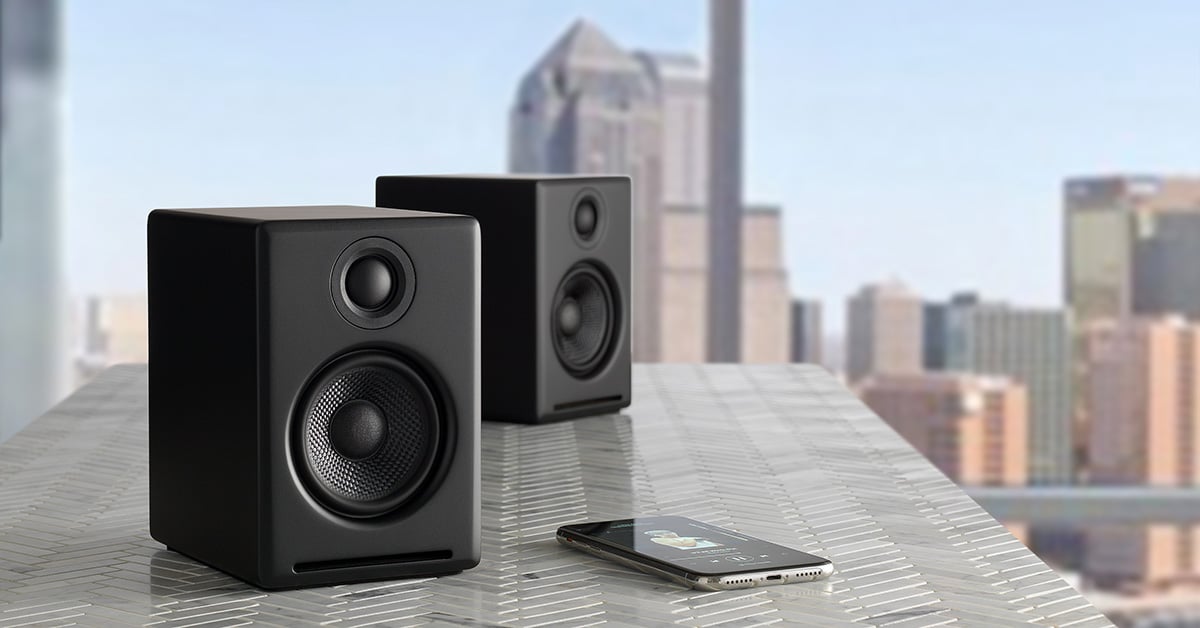
Best powered speakers for 2026
How to choose the right pair of amplified speakers for desktop use, stereo listening, or improved TV sound

In this article: I’ll offer some shopping tips to help you find the best powered stereo speakers for your home or office listening area. And I’ll recommend six of our favorite powered stereo speaker models...
- Best computer speakers — Audioengine A2+
- Best value — Kanto YU6
- Best powered speakers for TV — Klipsch The Nines
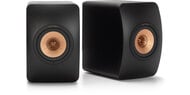
- Best audiophile powered speakers — KEF LS60 Wireless
- Best powered speakers for turntable users — ELAC Debut ConneX Adsum
- Best overall — KEF LS50 Wireless II
T
here's been a place in my heart — and my home — for powered stereo speakers (aka active speakers) for decades. They can give you a streamlined all-in-one sound system, since most models come with Bluetooth, Wi-Fi, or both. And you can find models with pretty much any type of analog or digital input if you want to add other sound sources.
I've used a pair of Mission Audio powered speakers at home for a few years now. As I write, they're set up to deliver great sound from my connected TV, turntable, and music streamer. I can (and do) also stream music to the speakers via Bluetooth. Their sound is expansive, detailed, and balanced.
Below, I'll talk about powered speakers in general, and how to find the features you want in a pair of powered speakers for your listening space. Then I'll go into some detail on the specific models that have impressed our customers, our employees, and me.
What are powered speakers?
Powered speakers are basically bookshelf speakers with built-in amplification. That's why they're sometimes called active speakers: you don't have to find a place to put a receiver or amplifier like you do with passive speakers. That makes them great for listening areas where space is tight.
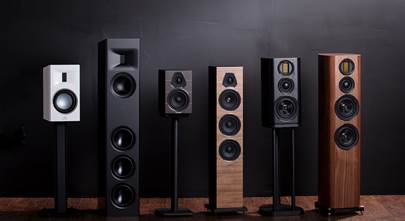
One of the reasons a nice pair of powered speakers sounds so good is that their built-in amplification is custom-tailored to their drivers. And they come in different shapes and sizes — from a set of desktop speakers for your computer to floor-standing speakers for home stereo or theater sound.
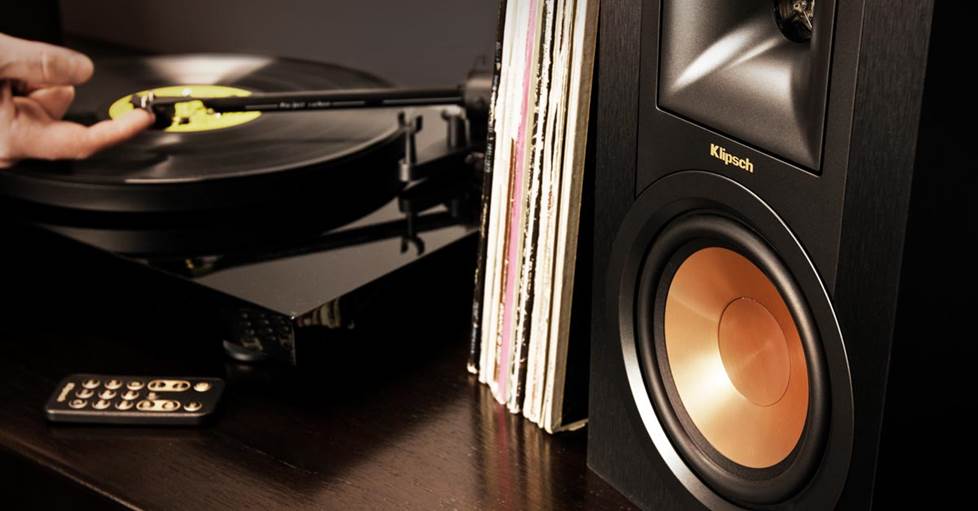
A good pair of powered stereo speakers can let you connect all of your music sources, and save tons of space.
How to choose the best powered speakers
Knowing which features you want will help narrow down your choices. Consider the following questions as you browse:
How and where will you be listening?
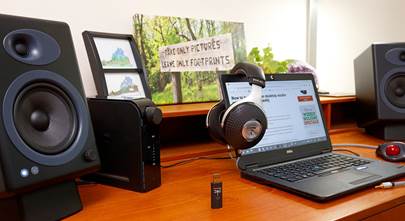
If you're looking for desktop speakers for your computer, a smaller pair with modest amplification might be the best choice. I use a pair of Mackie powered monitors at my home studio desk. They're great for hearing clear stereo detail at close "near-field" range, and the only source I have connected is my computer.

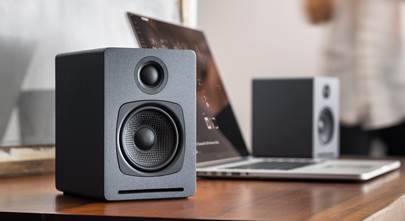
Compact powered speakers create an immersive near-field listening experience that's ideal for desktop use.
If you want to fill your living room or other large space with a lifelike, 3D stereo soundstage for music or soundtrack audio, you should be choosing from among larger models with more/bigger drivers and amplification. Larger models tend to have more wired connections for sources too.
What connections do you need?
Be sure to choose powered speakers that have all the inputs and outputs — wired and wireless — that you'll need.
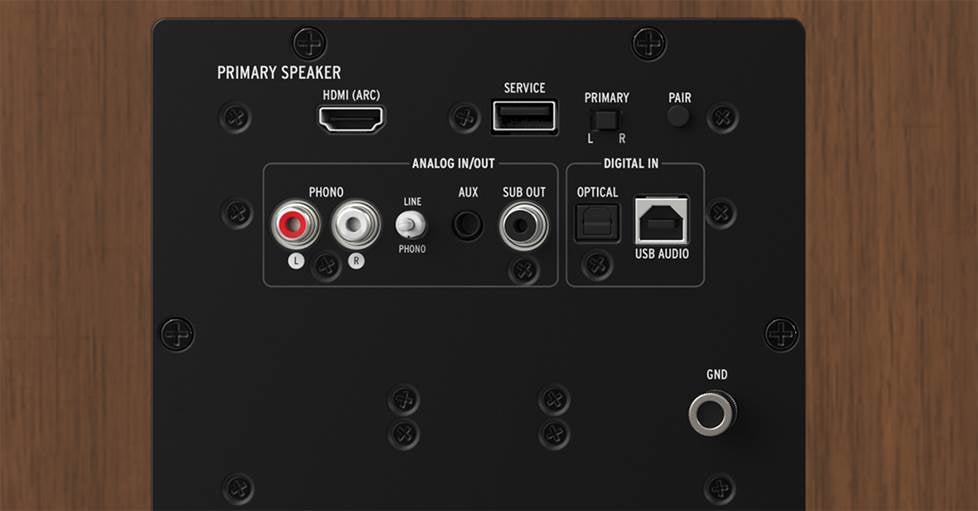
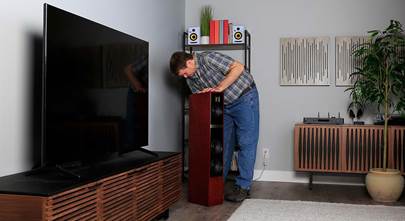
Powered speakers have connections for audio sources, a powered subwoofer, and more on the back of each pair's primary speaker.
Here's a list to keep in mind while you shop.
Wireless: Most powered speakers feature Bluetooth, and many also have built-in Wi-Fi for music streaming from compatible devices. Some powered speakers can be controlled by voice commands, with Amazon Alexa built in or optional, or Google Assistant built in or optional.
TV: Speakers with HDMI inputs let you connect a TV for sound that will far outperform its built-in speakers. And if your TV has an HDMI ARC or eARC port, you can connect things like a gaming console or Blu-ray player to the TV's other HDMI inputs and play their sound on your powered speakers. You can also connect some TVs if you have an optical digital input.
Turntable: If you want to directly connect a turntable, look for powered speakers with a phono input and built-in phono preamp. You can also connect a record player with its own built in preamp or an external preamp to a line-level stereo RCA input. And if your turntable has a balanced XLR output, look for a stereo XLR input.
Music streamer: Depending on what kind of output you have on your network music player, look for analog stereo RCA or stereo balanced XLR inputs. Most streamers also let you connect to coaxial digital or optical digital inputs. Using an analog input makes use of your streamer's internal DAC (digital-to-analog converter), while digital inputs use the DAC in your powered speakers.
CD player: Most CD players offer an analog stereo RCA output for connecting to stereo RCA inputs on your powered speakers. Some CD players have balanced XLR, coaxial digital, and/or optical digital outputs, so look for those types of inputs if one of them works best for your setup.
Computer, storage drive, tablet, smartphone: A USB Type-B input is great for playing high-resolution music files stored on your computer or network. USB Type-A inputs lets you connect a thumb drive or other compatible storage device. And look for a USB-C input for connecting a smartphone, tablet, or computer with that type of connection.
Ethernet: Wi-Fi is great, but for a more stable connection to your home network, look for powered speakers with an Ethernet connection.
Subwoofer: If you want to add more bass to your system, you'll need speakers with a dedicated subwoofer output. Some systems offer the option to make a wireless subwoofer connection. Adding a powered subwoofer also takes a big power burden off of your stereo speakers, which helps them perform more efficiently and sound better.
Headphones: To keep things quiet for privacy or to avoid bothering others, look for a pair with a headphone output.
Features for setup flexibility
Wireless stereo pairing: Most powered speakers use a wired connection from the primary speaker (the one with all the inputs) to the secondary speaker. Some models allow a wireless connection between the two speakers — look for that feature if your setup demands or would be easier without a wired tether between the speakers.
Left/Right speaker assignment: This feature lets you assign either one of the speakers in your pair as left or right. That's helpful if your room layout is such that your sources need to be on the right side of the room but the primary speaker is the left one in the stereo pair (which is typical). A L/R assignement switch lets you get the proper stereo imaging without running long audio cables.
What if I want strong bass?
In general, the bigger the woofer, the lower a speaker's frequency response. (Note: the human ear can hear frequencies ranging from 20-20,000 Hz). Speakers with smaller woofers — in the 2"-3"-range — can rarely play much lower than 80 Hz — if you want to feel the bass, you'll want to add a subwoofer.
Some larger powered speakers with up to 8" woofers have strong extended bass that reaches down as low as 30 Hz. But woofer size alone doesn't determine bass response — some powered speakers use multiple modest-sized woofers to deliver the low bass frequencies.
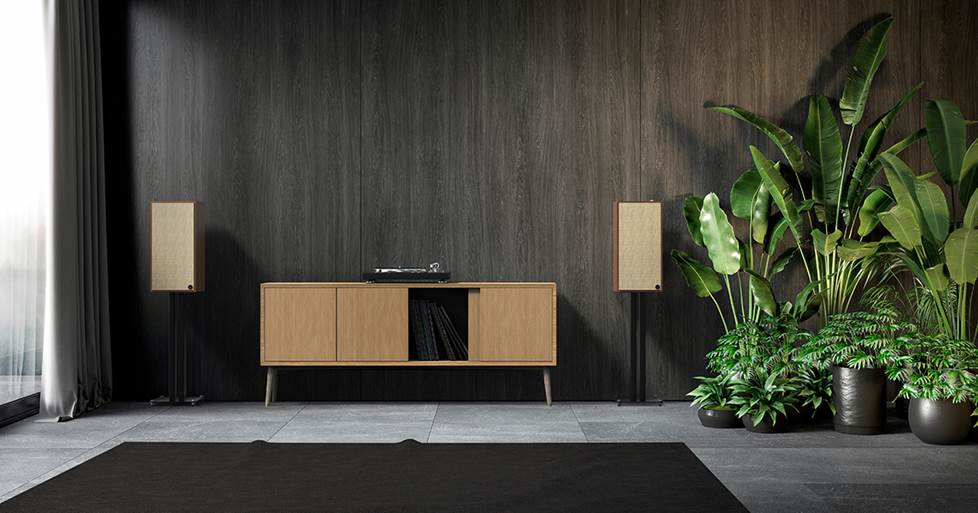
Powered speakers with bigger woofers deliver impressively substantial bass that might make you think twice about adding a subwoofer.
Bass reproduction makes heavier wattage demands on a speaker's amplification. If you want strong bass without an external subwoofer, you'll want larger woofers and ample wattage.
How many watts do I need to play as loud as I want?
Powered speakers' amplification is custom-designed to match its drivers, and wattage can give you some idea of how loud they will play. My desktop Mackies only have 25 watts x 2 — perfect for near-field desktop listening. Our higher end powered speakers have as much as 250-700 watts x 2.
Having ample wattage can also affect sound quality by providing extra "headroom" to make musical dynamic peaks sound effortless.
Powered speakers that use bi-amped or tri-amped designs have designated amplifiers for each driver, which can enhance audio performance.
What else will I need?
Speaker stands let you position the speakers at ear level for a proper soundstage. They can also minimize the kind of vibrations that might rattle your furniture and interfere with the smooth operation of your turntable.
If you're connecting sources to your speakers, you'll need to pick up the right audio cables. And if you're connecting a TV and other video sources, you'll need some video cables.
You can keep noise from electrical interference out of your music and soundtrack audio with when you plug into a power line conditioner. They also protect your home stereo equipment from power surges. Many even offer thousands of dollars’ worth of reimbursement if your stereo gear gets damaged by a lightning strike or other power irregularity.
Our top picks
We've put together some familiar scenarios and picked what we think would be the best powered speaker pair for each.
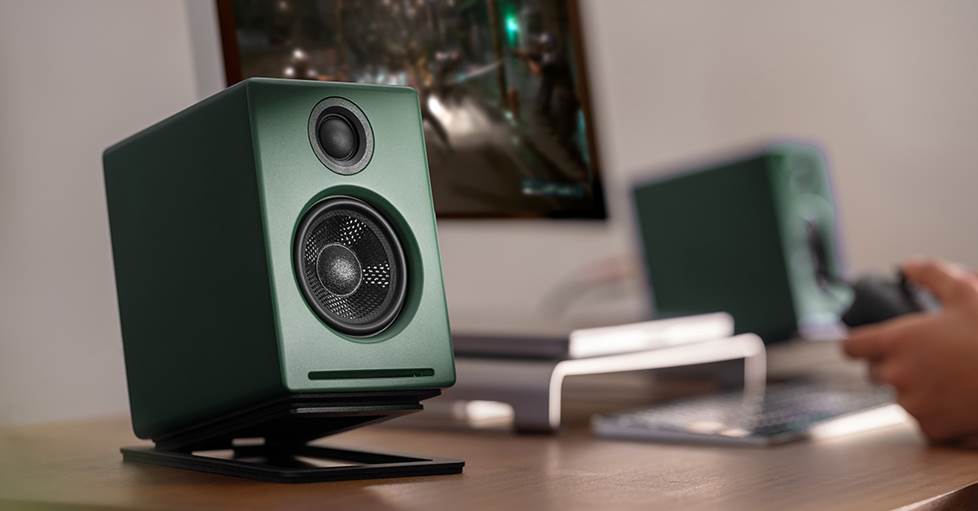
Best computer speakers — Audioengine A2+ Home Music System
Our customers and employees rave about the immersive near-field listening experience you get from the Audioengine A2+ Home Music System. These compact desktop speakers create an articulate, lifelike soundstage when you sit close and angle them toward your ears.
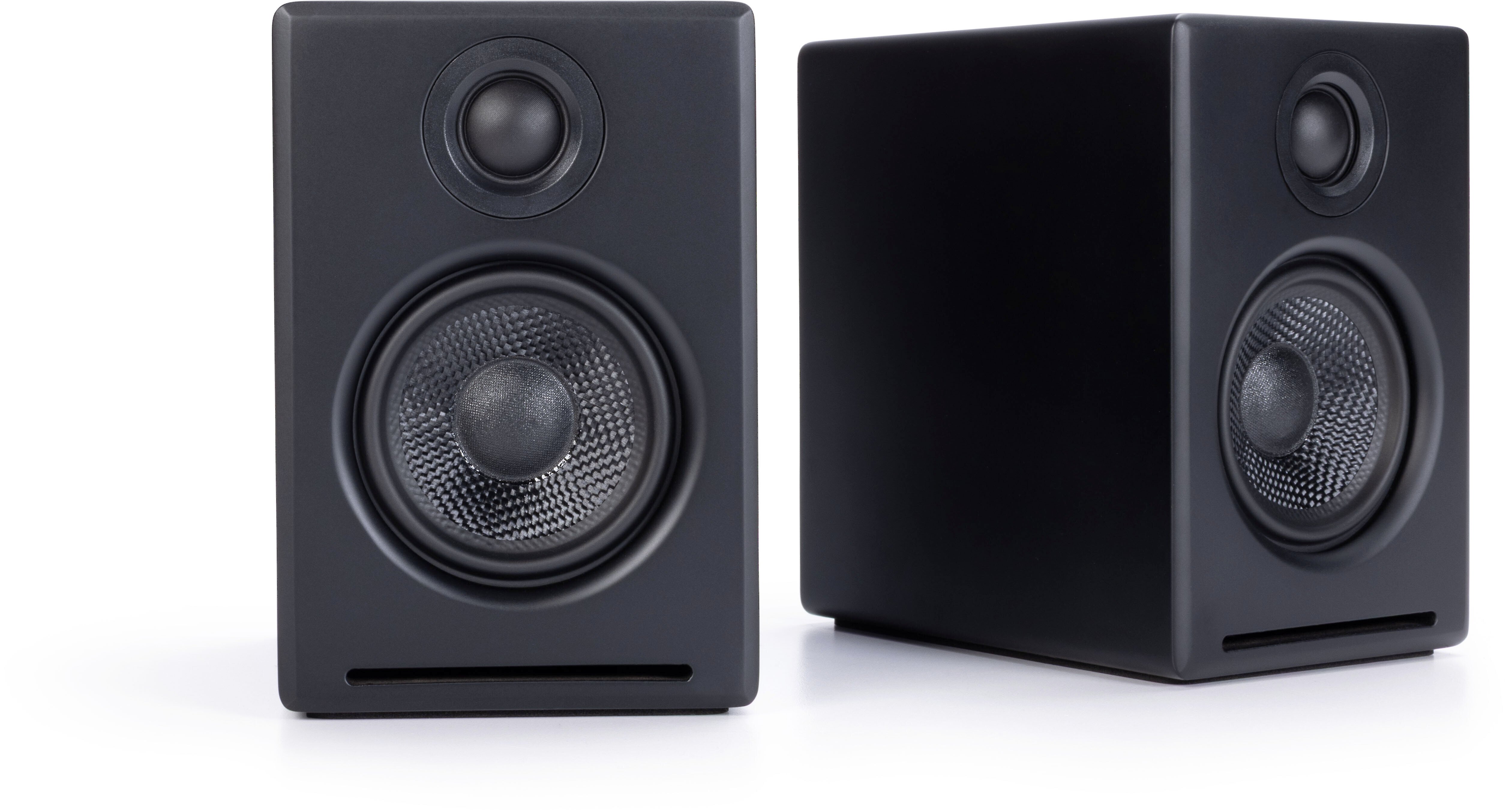
You'll hear smooth, clear high frequencies from its silk dome tweeters and impressive, articulate bass from the armid-fiber woofers. Slot-ports on the front of the cabinets help round out low-frequency performance and allow you to place them close to the back wall without flubbing the bass.
And Audioengine is well-known as the makers of some of the best powered Bluetooth speakers around, with detailed aptX HD sound quality and a stable 100-foot pairing range. And they've got connections for analog and digital sources, including a USB-C input for connecting a computer or other compatible device.
The A2+'s stoutly braced and damped cabinets feature rounded edges and slotted front ports for clear sound that's resonance- and -diffraction-free. And they come in a bunch of cool colors to match your décor.
- 3/4" silk dome tweeter
- 2-3/4" Kevlar mid/woofer
- two 15-watt RMS amplifiers built into left speaker
- frequency response: 65-22,000 Hz (±2dB)
- Bluetooth 5.3 streaming with high-fidelity aptX HD audio for greater sonic detail with compatible devices
- USB-C input and built-in DAC let you bypass your computer's sound card for better performance
- 3.5mm minijack and stereo RCA inputs
- variable RCA stereo line output for connecting a powered subwoofer
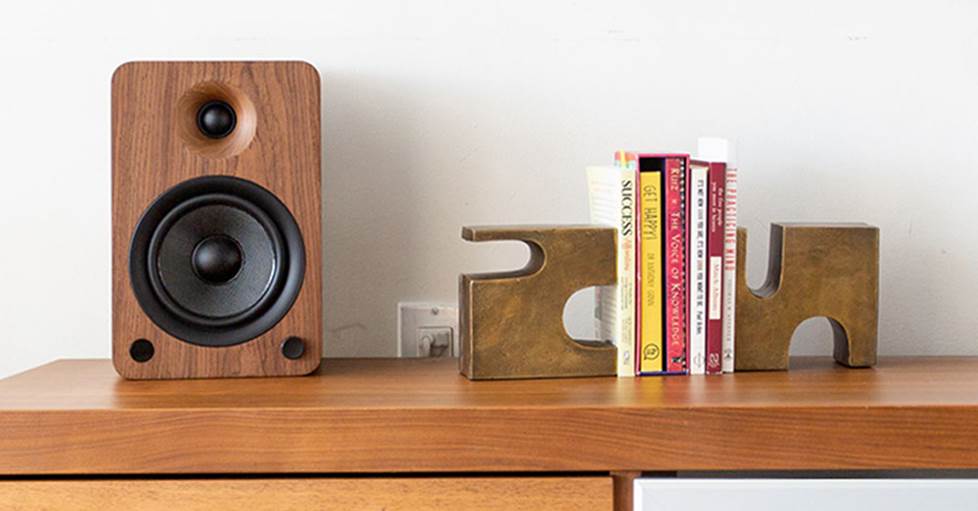
Best value — Kanto YU6
I love the way Kanto uses streamlined designs and high-quality components to make great-sounding affordable speakers. The Kanto YU6 monitors have earned resounding praise from our customers for their versatile connections and warm, inviting sound. The woofers provide surprisingly full bass, enhanced by rear-firing ports. And its silk dome tweeters can deliver silky smooth high frequencies, for sound that you can listen to all day.
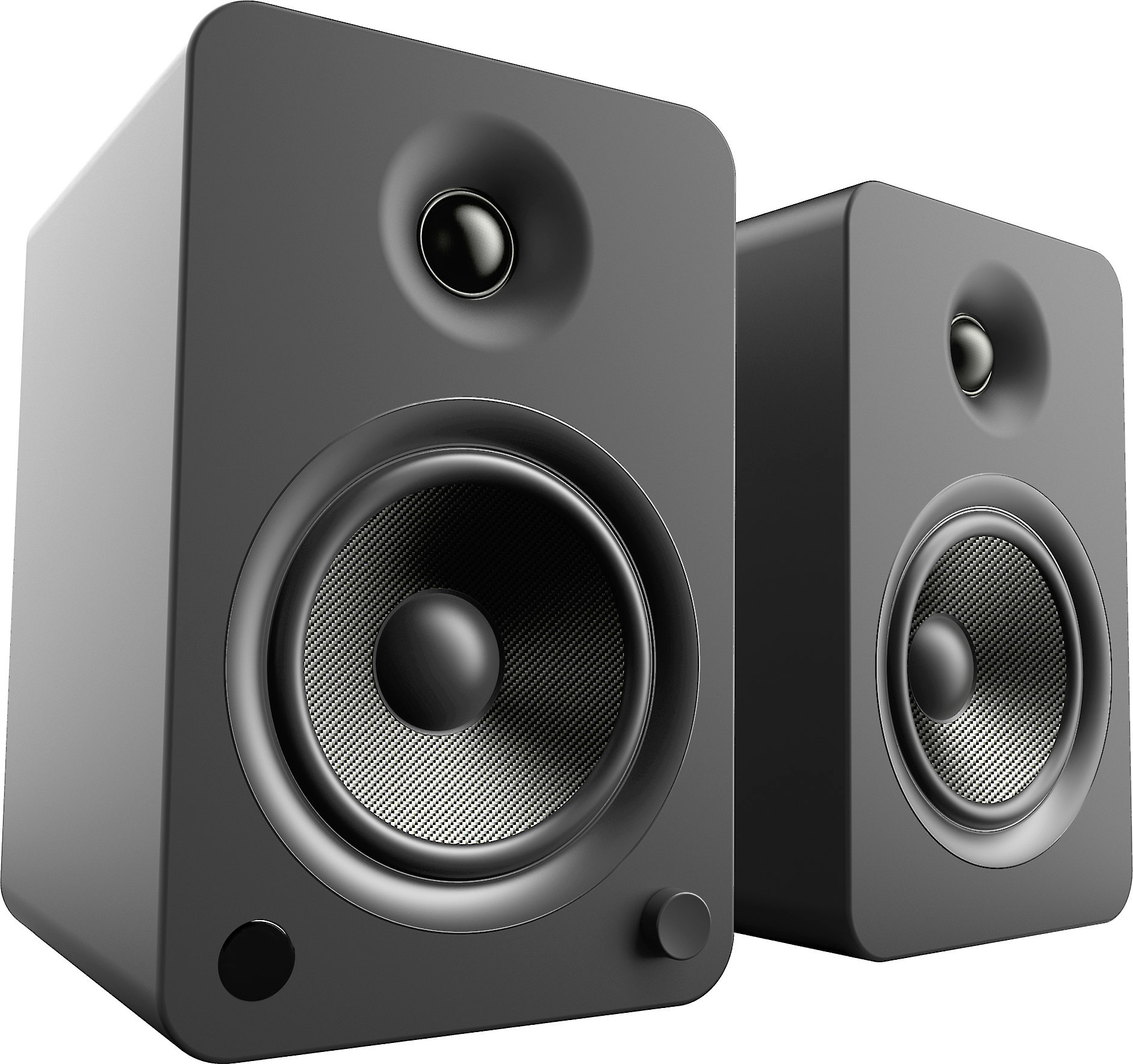
You can use the built-in aptX HD Bluetooth for high-quality music streaming from compatible devices. Back-panel inputs let you connect a TV, record player, CD player, and more. There's also an aux input and an output for a subwoofer.
If you want a trim and tidy system with uncompromising hi-fi stereo sound in your small-to-medium listening space, these speakers are a great choice.
- 1" silk dome tweeter
- 5-1/4" Kevlar® woofer
- built-in Class D amplifier provides 100 watts total RMS power
- frequency response: 50-20,000 Hz
- Bluetooth® 4.0 with high-quality aptX™ audio streaming
- analog stereo RCA input with phono switch, 3.5mm aux input, and 2 Toslink optical digital audio inputs
- mono RCA subwoofer output
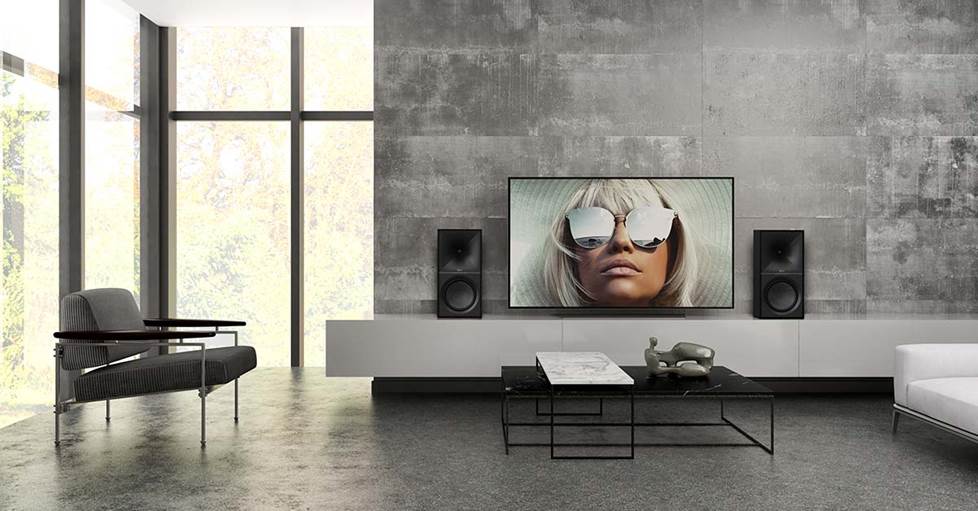
Best powered speakers for TV — Klipsch The Nines
Klipsch excels at making powered speakers that look good, sound great, and have plenty of connections, including Bluetooth for easy wireless streaming. And The Nines do all of that with a somewhat retro look that belies their versatile modern features.
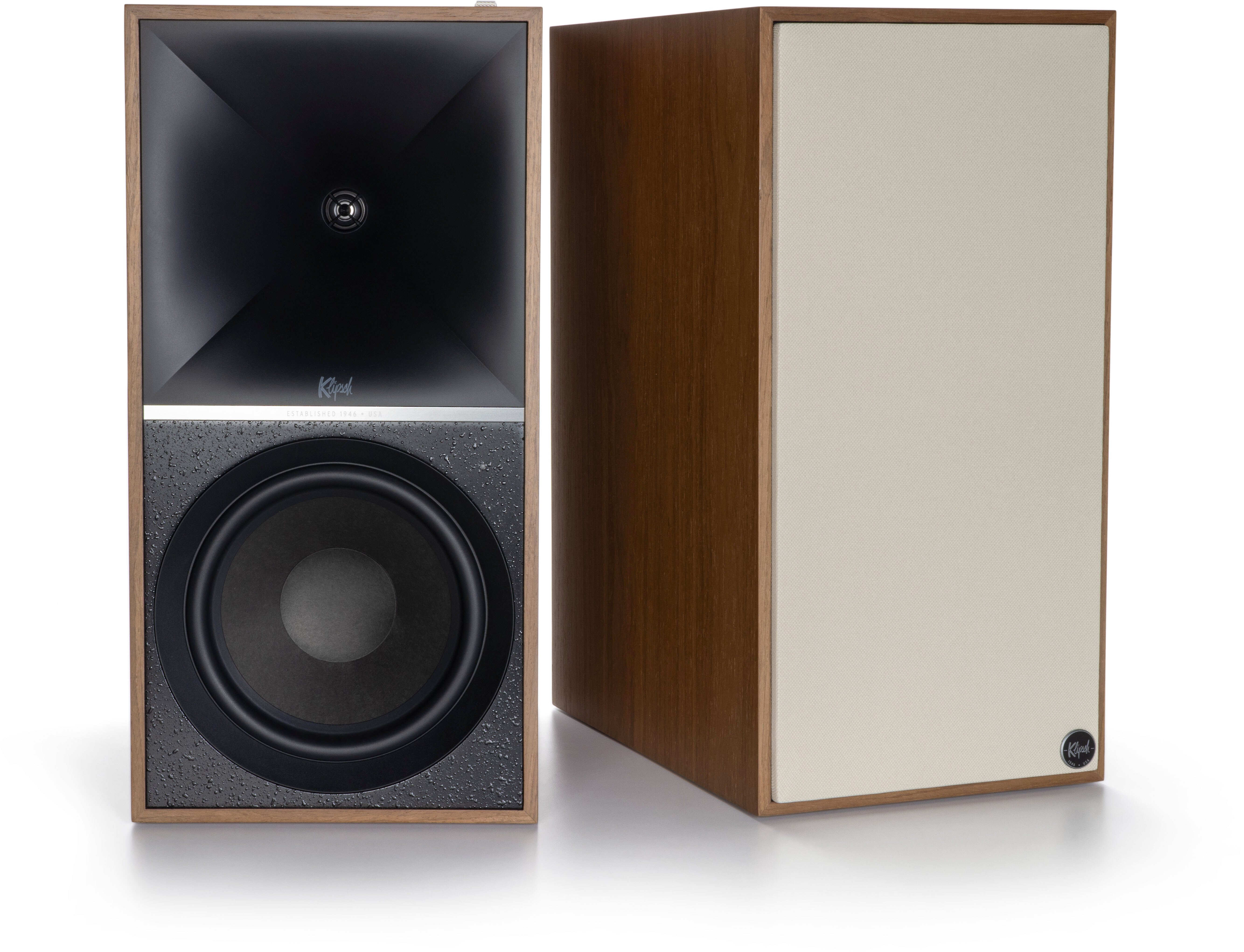
The built-in HDMI ARC port is perfect for connecting a TV. And any other components you have hooked up to your TV via HDMI — like a gaming console or Blu-ray player — can play through the Nines as well. Other inputs let you add a turntable, computer, and more.
I love the lively sound Klipsch's signature horn-loaded design kicks out. I had a chance to hear this system demoed at Crutchfield HQ and found myself lingering, playing track after track from among my favorite reference go-tos. I'm not sure I'd need to use the mono RCA powered subwoofer — The Nines deliver substantial low-end frequencies on their own. But it's nice to know it's there if you want even more bass.
- 1" titanium tweeter with Tractrix® horn
- 8" high-excursion woofer
- bi-amplified design delivers 100 watts to each woofer and 20 watts to each tweeter
- frequency response: 34-25,000 Hz (±3dB)
- Bluetooth 5.0 for music streaming via a compatible device
- analog stereo RCA input with phono switch and 3.5mm aux input
- HDMI ARC, Toslink optical, and USB Type-B digital audio inputs
- mono RCA output for connecting a powered subwoofer
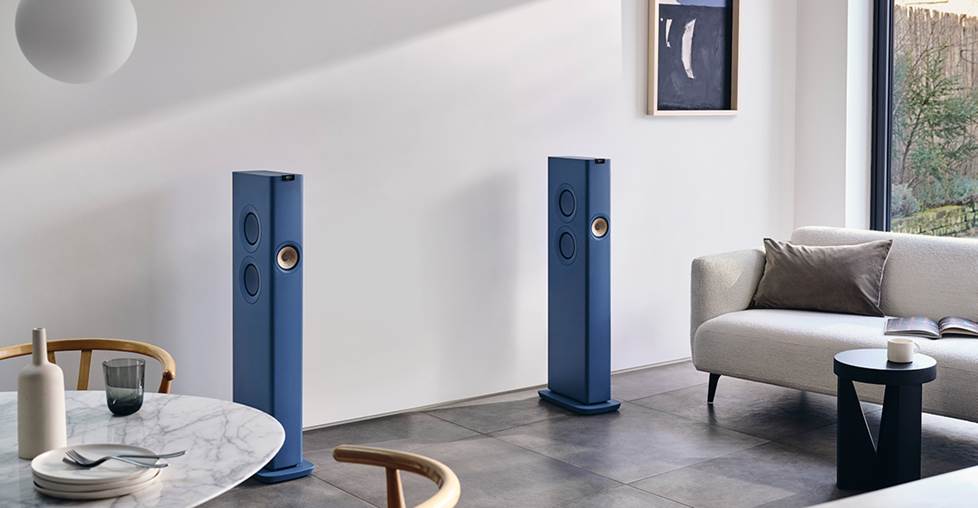
Best audiophile powered speakers — KEF LS60 Wireless
KEF's magnificent LS60 Wireless floorstanding powered speaker system is in a class by itself. It's got flexible wireless features and wired connections that let you connect pretty much any source you want.
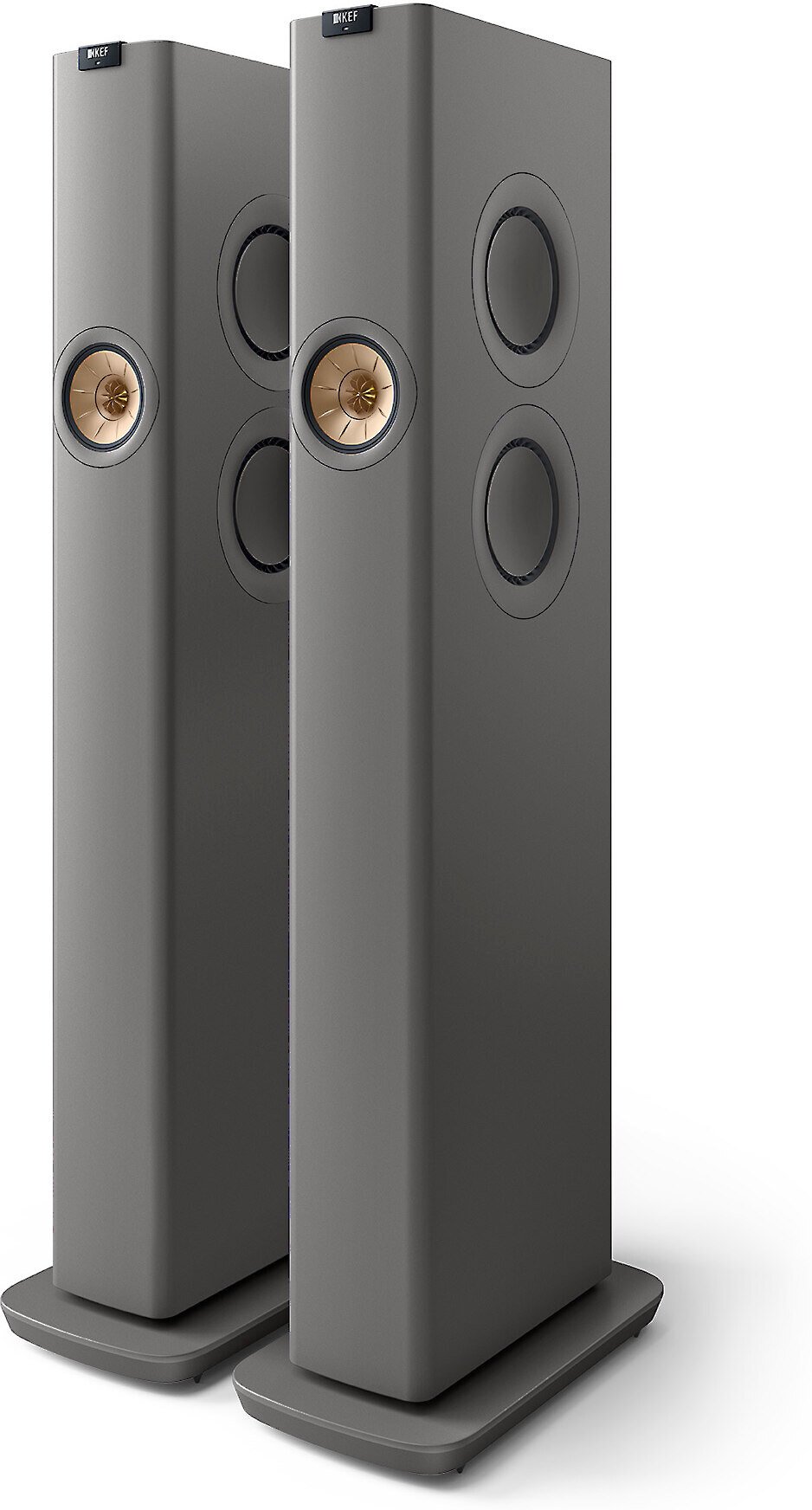
KEF's tri-amped design provides each speaker with its own discrete built-in amplification that delivers perfect power to its tweeter, midrange driver, and quad of woofers. This system can effortlessly reproduce low frequencies with headroom to spare. I auditioned the LS60 at home and it wowed me with its ability to to render fine nuances of meticulously well-recorded albums.
One look will tell you that this system is meant to be seen as well as heard, with a grille-less design that shows off the cool-looking driver array and fun-yet-sophisticated color options. Their beautiful form follows function too: the extremely rigid cabinets use smooth, curved surfaces that help the sound radiate outward without distortion.
And I give KEF special credit for their ingenious boxing of this two-piece, 138-pound speaker system. They make it easy to unbox the LS60s in place — as long as you have a dolly or a strong friend to help you.
- 3/4" vented aluminum dome tweeter with Metamaterial Absorption Technology
- 4" aluminum cone midrange driver
- four 5-1/4" Uni-Core force-cancelling Driver woofers
- tri-amped design delivers 100 watts (Class AB) to each tweeter, 100 watts (Class D) to each midrange driver, and 500 watts (Class D) to each quad of woofers
- frequency response: 31-24,000 Hz (±3dB)
- Bluetooth 4.2 and built-in dual-band Wi-Fi with support for Apple AirPlay 2 and Google Cast
- HDMI ARC, Toslink optical, and coaxial digital inputs; analog stereo RCA input
- mono RCA subwoofer output
- wired or wireless stereo pairing
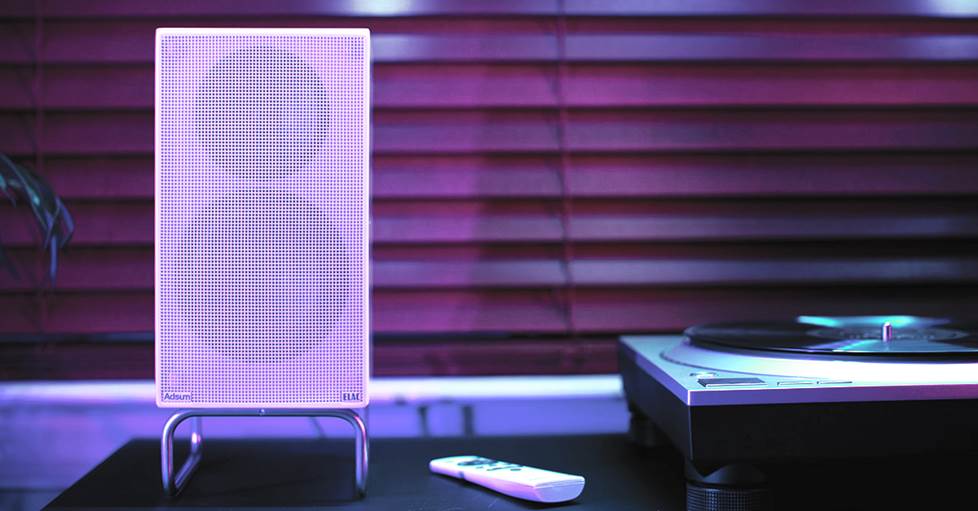
Best powered speakers for turntable users — ELAC Debut ConneX Adsum
For an elegant, simple vinyl setup, the Debut ConneX Adsum powered stereo speakers from ELAC are our top pick. Technically, they're identical to the Debut Connex DCB41, but this version includes möbius-like metal stands and cosmetic design from celebrated Brooklyn clothiers Adsum. They look very stylish flanking an uptown turntable.
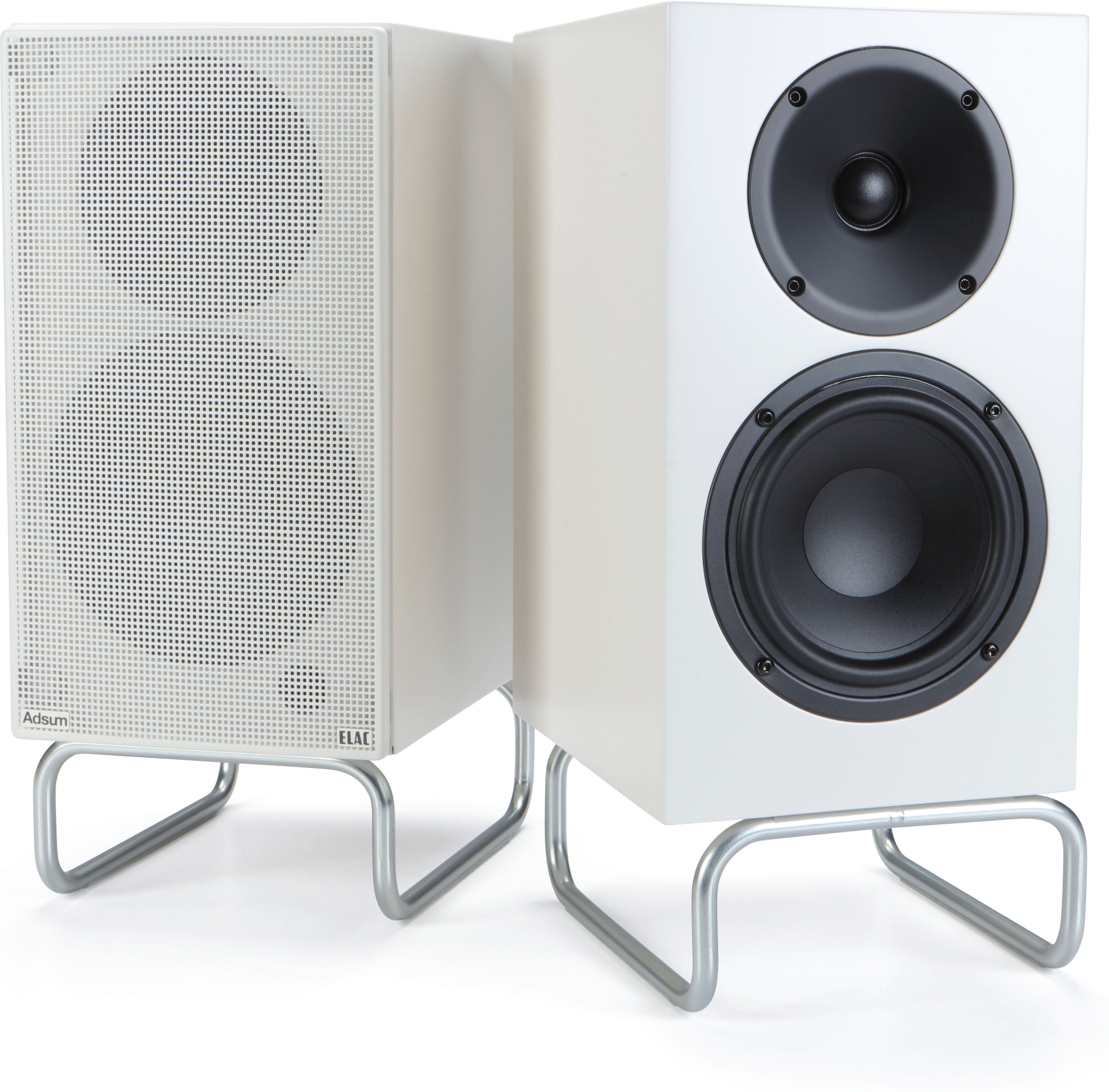
Their smooth, listenable sound has impressed some discerning customers and our video team. When I tested this pair at home, I was pleasantly astonished by the full, clear sound. I found the bass impressive for its depth — considering the 4-1/2" woofers — and clarity. And if you want more, there's an output for a powered subwoofer.
Onboard Bluetooth gives you wireless music streaming convenience. You can also connect a TV, computer, and more, for a do-everything sound system in your small-to-medium listening area.
- 3/4" soft dome tweeter with custom waveguide
- 4-1/2" polypropylene long-throw woofer
- 50 watts x 2 delivered by amplifier in active speaker
- frequency response: 50-25,000 Hz
- Bluetooth with high-quality aptX encoding
- stereo RCA input with switchable phono preamp
- optical, HDMI ARC, and USB Type-B digital inputs
- mono output for a powered subwoofer
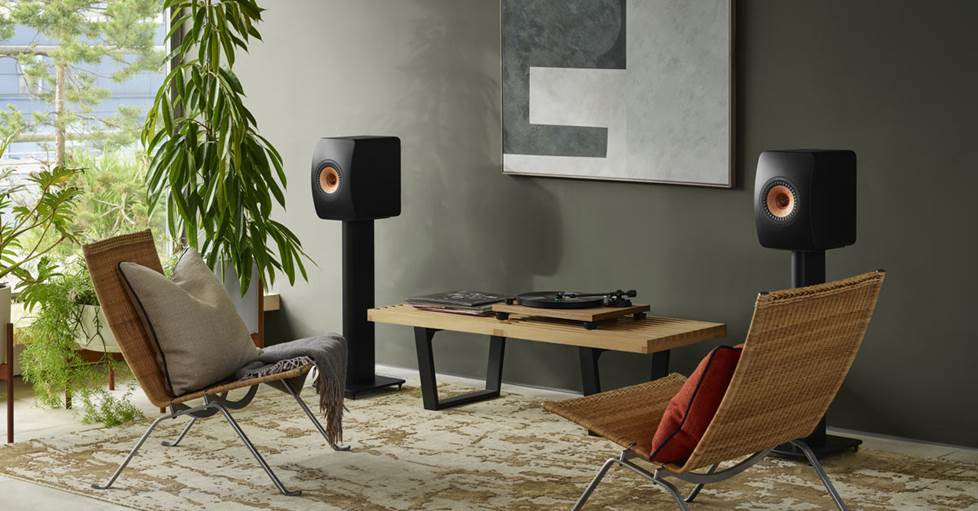
Best overall — KEF LS50 Wireless II
The detailed, lifelike soundstage the LS50 Wireless II delivers has put smiles on the faces of a large number of our customers and employees. It's a sweet Goldilocks powered speaker pair with versatile wired and wireless connections that let you connect all kinds of sources. that makes it an ideal music streaming and TV sound system in beautifully sleek design.
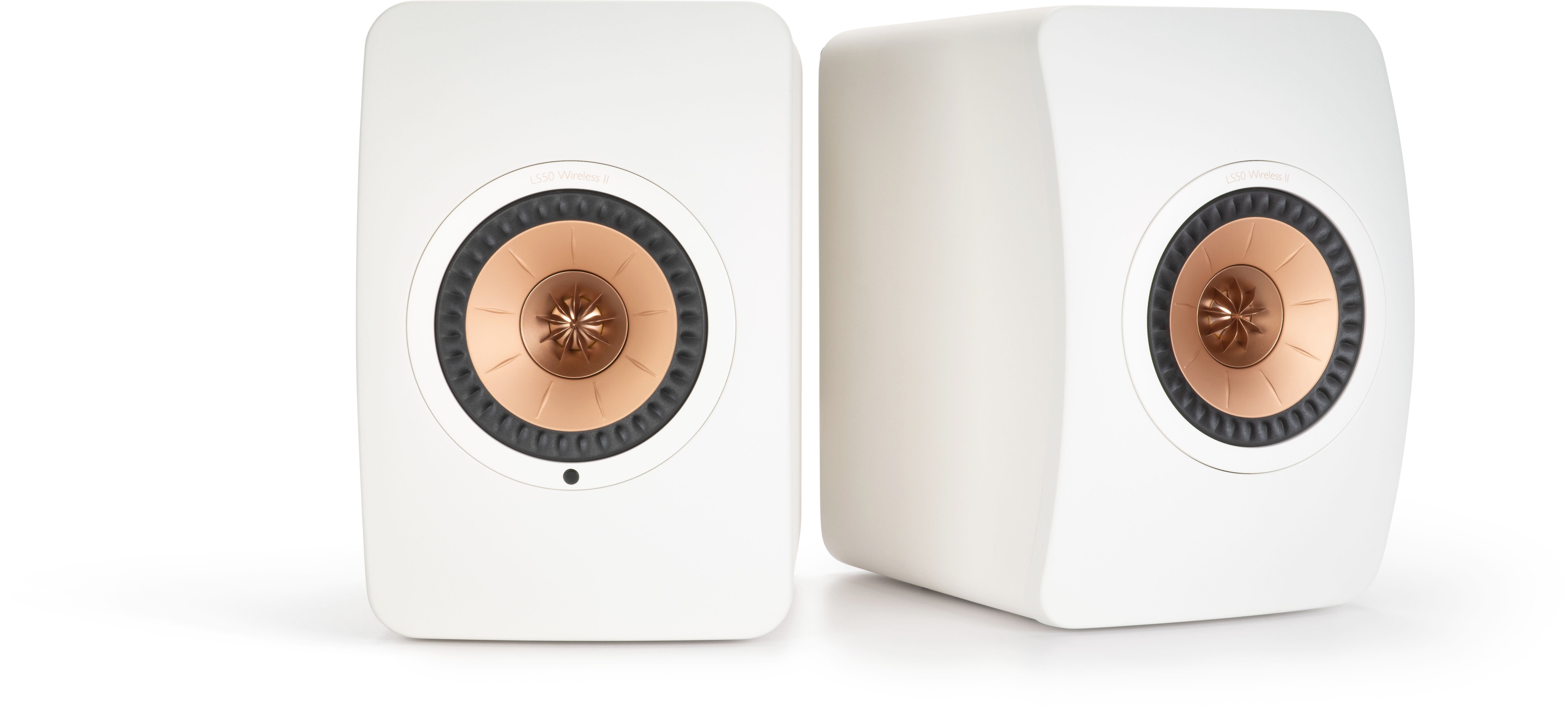
And part of this system's appeal is its innovative design. The Uni-Q driver configuration — with the tweeters mounted concentrically to the woofers — allowed KEF to create streamlined cabinets. That (and optional wireless stereo pairing of the two speakers) gives you flexible placement options for high-quality sound in a wide range of settings.
Bi-amped design provides efficiently managed amplification to the drivers with headroom to spare. And built-in digital signal processing optimizes the sound to help this system produce substantial bass without a subwoofer — although you can add one if you want.
- 1" vented aluminum dome tweeter
- 5-1/4" aluminum cone woofer
- bi-amplified design delivers 100 watts (Class AB) to each tweeter and 280 watts (Class D) to each woofer
- frequency response: 45-28,000 Hz (±3 dB)
- Bluetooth 5.0 with aptX® and dual-band Wi-Fi with support for Google Cast and Apple AirPlay 2
- HDMI eARC, Toslink optical, and coaxial digital inputs; analog stereo 3.5mm aux input
- mono RCA output for a powered subwoofer
- wired or wireless stereo pairing
Need help choosing?
If you've narrowed down your options, but need a little help deciding between two strong contenders, we're here to help. Contact us, and we'll make sure you end up with everything you need.
Popular questions customers ask
Traditional "passive" stereo speakers need to be connected to an external amplifier with speaker wire. Powered, or "active," speakers have built-in amplifiers so you can plug or stream your sources directly into the speakers. Some powered speakers even have built-in Wi-Fi and/or Bluetooth, so all you need to play music is your phone, tablet, or computer.
No. Since the amplifier and preamplifier are built into powered speakers, you won’t need an external amplifier or receiver. That’s one of the most common reasons people buy powered speakers.
Depending on what type of inputs your powered speakers have, you can use pretty much any source — TV, turntable, CD player, tape deck, Bluetooth, Wi-Fi, and more. Some of the different wired inputs commonly found on powered speakers include RCA, XLR, 3.5mm aux, optical and coaxial digital, HDMI, and USB.
It depends. Powered speakers' internal amplifiers are built to match their power needs. Passive speakers require an external amp, but that also means you can upgrade your amplifier to get even better sound. If you’re working with limited space, and/or want to reduce clutter, powered speakers might be a better choice.
Some powered stereo speaker pairs connect to each other wirelessly, but each still needs to be plugged into an AC power outlet. Other powered speaker pairs share one internal amplifier that is built into the primary (active) speaker, which connects to the secondary (passive) speaker with speaker wire. The only completely wireless powered speakers use batteries, so even they will eventually need to be plugged in to recharge.




Ricc from Milan
Posted on 8/8/2023
Hi, why not considering Edifier active speakers like S1000W or S3000 Pro? Thx very much
Mike from Madison, AL
Posted on 6/22/2023
Hello, First off, great write-up. Love the details and passion. I am looking for some computer speakers for near field listening. Are the Kanto TUKs too big? If not, can you recommend a good matching sub for it? Also, do the Audioengine HD5+ wireless not have a headphone output?
Deia Z. from Crutchfield
on 6/26/2023
Scott from Mars
Posted on 12/5/2022
I just purchased the Jamo S 801 PM from Crutchfield for a new turntable set up I'm creating. Kind of surprised they're not on this list somewhere. Should I return them for something listed?
Eric A. from Crutchfield
on 12/6/2022
Matt H from Easton
Posted on 12/4/2022
Hi, I'm looking for a simple setup for tv audio without a receiver. I hear sometimes the HDMI ARC for speakers can not be ideal due to reliability. Would you recommend Klipsch the Fives or PSB Alpha as home theater? Or perhaps, get active speakers with optical hook up to tv? thanks, Matt
Eric A. from Crutchfield
on 12/5/2022
Ron from Hernando
Posted on 7/28/2022
NO PRICE SHOWN ???
Eric A. from Crutchfield
on 7/29/2022
Eric A. from Crutchfield
Posted on 3/21/2022
Peter - I'm not blowing smoke when I say that I love every Bowers & Wilkins speaker I've ever listened to. I'd say the properties that stand out to me for their speakers are accuracy and a wide, enveloping soundstage. I will say that I've never tried to use them in a desktop setting, which might be a little too "in your face," but they're going to be great-sounding speakers without a doubt.
Peter Agnew from Bettendorf, IA.
Posted on 3/20/2022
Eric, I am a highly critical audiophile who does all my music listening in front of my PC, normally with very high end headphones. I have read excellent reviews of the Sony powered speakers, but they have been out of stock for many months. I need an honest opinion comparing them to the Bowers & Wilkens powered speakers. I honestly would like to purchase the Sony speakers, but I can't wait forever. What is your opinion? Accurate soundfield, and clarity of highs are much more important to me than loud thumping bass.
Robert Cochrane from Northville, MI
Posted on 12/23/2020
I've just spent a couple of very pleasant hours comparing the Kanto TUK with Klipsch the Fives. To my ear the Klipsch has a better bass while the TUK has clearer highs. Since I like my music on the bright side, I'll be purchasing the Kantos.
Eric Angevine from Crutchfield
on 12/28/2020
Andrew Senko from Raleigh
Posted on 9/13/2020
For what it's worth, my daily use desktop speakers are a pair of Kanto's that I bought ten years ago. They were originally purchased so that I could connect an iPod directly into the left speaker. This model is no longer sold but since they included the other connections the speakers have continued to provide value beyond the iPod days. Ten years going and they still look and sound as good as when I bought them.
Eric Angevine from Crutchfield
on 9/14/2020
kfhonline from Huntsville
Posted on 7/30/2020
Do any of these speakers have a remote control for volume? I want to connect speakers to a DVD player (primarily for playing audio CDs in my bedroom) and I would like to be able to control the volume via a remote control.
Eric Angevine from Crutchfield
on 7/30/2020